
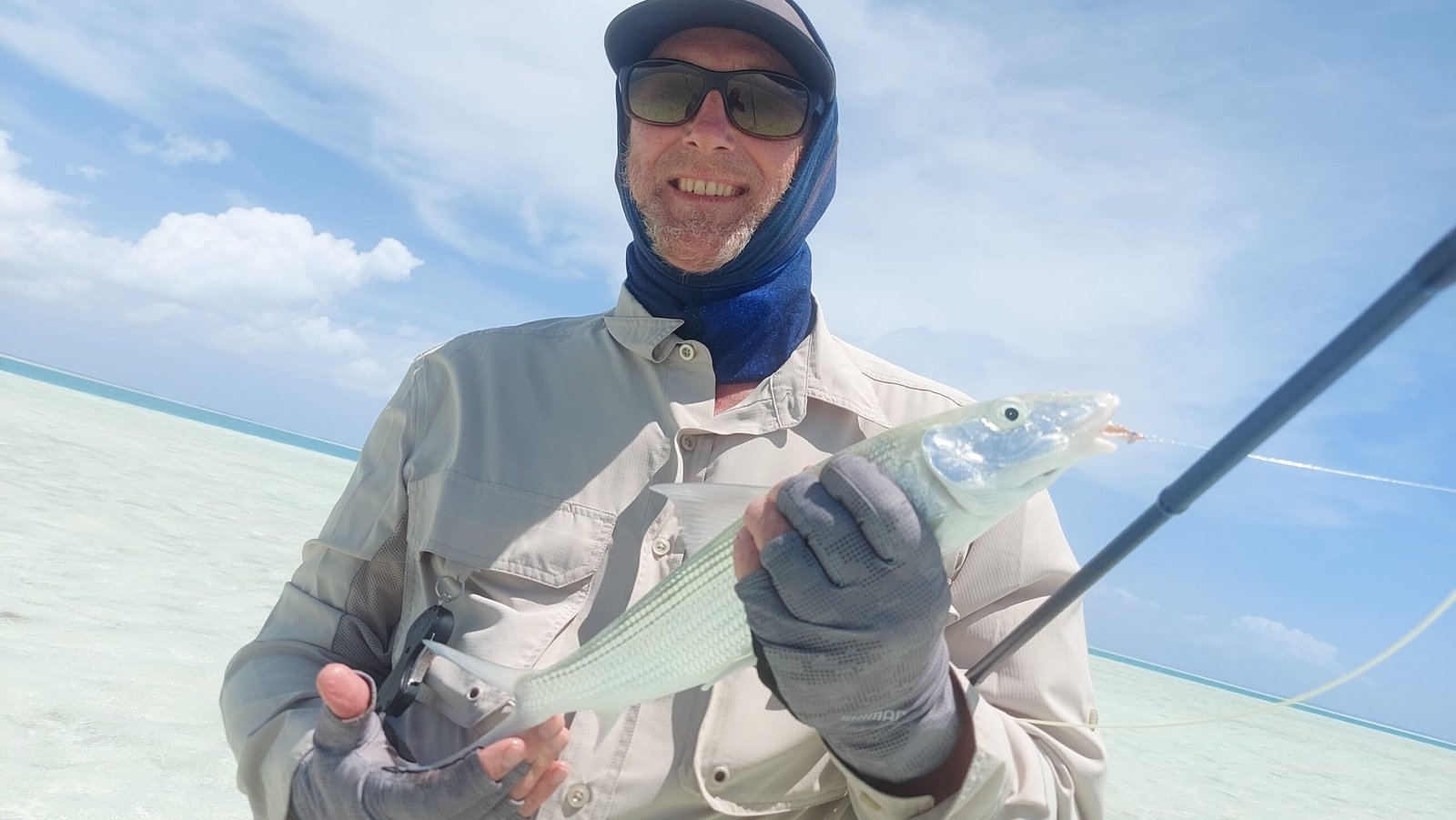
Fly fishing is not easy, it’s very technical with specialised gear. It’s even harder as a beginner when you have signed up to fly to the middle of the Pacific Ocean for your first experience and your three buddies are pros – that’s real pressure.
After months of gathering the recommended fishing gear and weeks of casting practice on the local football field, the four of us, all now in our 60s and well acquainted, headed to Kiritimati Island (pronounced ‘Christmas’ in English), in the tiny Oceania nation of Kiribati. My buddies were Greg, Tony and Ross and it was the beginning of a real adventure for us.
This story is part of our Remote Landscapes series. Read more here.
The history of Kiritimati Island is dominated by its use as a site for a series of nuclear and hydrogen bomb tests by the United Kingdom and United States between 1957 and 1962. The United Kingdom exploded its first successful hydrogen / fusion bomb there, one of eventually 30 detonations over or near the island. Was it safe to be there? According to the British Government, yes, studies had shown little or no health effects and as we were to find out, the local population of about 7,000 were not concerned and were even happy to visit ‘ground zero’.
Getting there took me to Fiji and provided an opportunity to visit another new country prior to boarding the once-a-week flight to our destination – 2,148 km south of Honolulu and 6,400 km to the east of Sydney. Lying just north of the Equator, Kiritimati Island is flat and largely covered in grass, scrub and coconut plantations. An enormous lagoon takes a chunk from the west side of the island, the site of most of the planned fly-fishing activities.
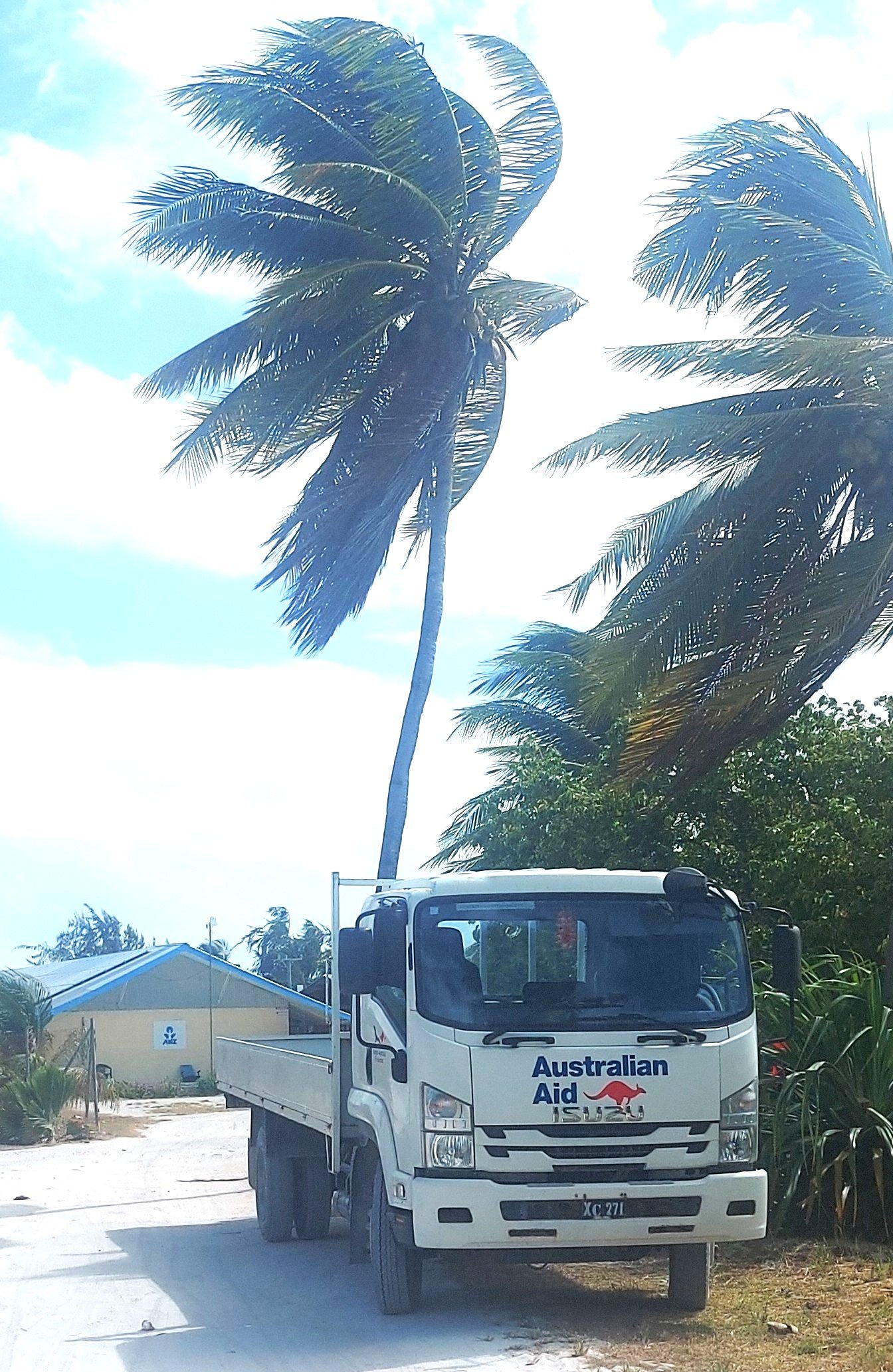
We landed very early in the morning at the World War II-era airfield, now generously known as Cassidy International Airport. It did the job and soon we were on our way to the booked accommodation, Lagoon View Resort near the village of London. We were clearly in the developing world as proclaimed by roaming dogs, pecking chickens, piles of coconuts and numerous potholes along the main road with no curb or guttering. The economy of the island is dominated by tourists, coconuts, infrastructure services, foreign aid and fly-fishers like my group.
Our accommodation was basic; there was no hot water. But on the Equator that was not a big issue. We were self-contained – meals, a clothes washing service, room cleaning, transport and guides for fishing were all coordinated by the wonderfully happy and efficient ‘big Mumma’ who ran the resort. Her staff were fantastic – always happy, hardworking, on time and helpful. The food – three meals per day – was basic but enjoyable. Protein was not in abundance on the island. We ate a lot of carbs and sweets; sandwiches and pancakes were popular.

Day one was only a half day – a shake out. The preferred rod was a 9-foot, 8-weight fly rod with fly reel. On the reel was 100-metres of backing line, just in case, joined to a fly line that had a metre of tapered leader at its end to which a fly was attached. Controlling the fly line was the real skill, achieving the rhythmical back and forth, slowly letting out more line and keeping control was the objective. The crowning glory, the sign of the master, was to then project the line with pinpoint accuracy to the location of the target fish. When done correctly, the fly line would cut through any breeze. After weeks of practice on the football field, the real test was upon me!
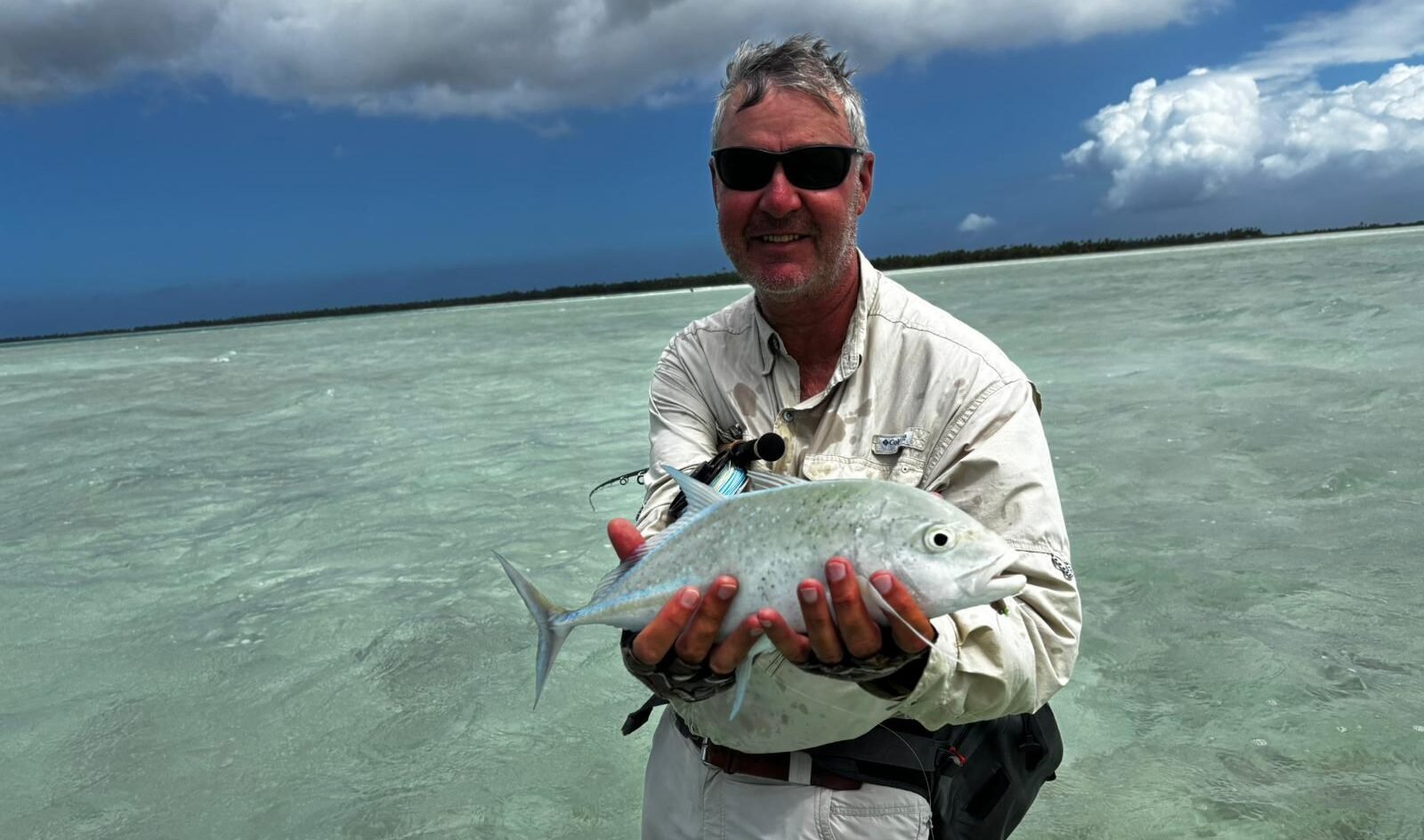
The Jesus nut of the whole endeavour was the fly. In the lagoon, they had to sink to the bottom and mimic either a prawn or a crab. Those mimicking a prawn were preferred by the main target fish, the hard-fighting and more prevalent bonefish. Those mimicking a crab were for targeting the harder to catch but much sought after triggerfish, a larger, more colourful and stronger fish than the bonefish. The island is such an international draw card that particular-to-island flies are available in Sydney. I had stocked up. Bonefish and triggerfish are the two main species; neither are great eating, so it was all about the hunt and the fight. Other fish to catch included great trevally or ‘GT’, the pretty blue-fin trevally, the smaller coral snapper and the queenfish. There were also a lot of milkfish, but they would not take a fly.
The fishing location each day was the expansive lagoon, with numerous coral reefs to choose from. It was hot every day, sometimes a little windy, with the occasional light shower in the late afternoon. Essential gear for head-to-toe protection from the unrelenting tropical sun included gloves, a neck buff, hat, sunglasses and quick-drying trousers and long-sleeve shirt. As we were standing in shin-deep water all day upon coral reefs, it was hard on your feet. Solid-soled boots above the ankles were a must.
It was a 400 metre walk through shallow water from the resort to the local, small outrigger-type boat to begin the fishing. The crew loaded our rods and food, and we were joined by local guides each day. It was a different reef most days, sometimes moving to two or three other reefs during the day depending on wind and tide.
Getting off the boat, I had to be self-contained. I wore a waterproof bum pack to carry the gear – spare tapered leader, flies, scissors, wipes to keep sunglasses clean of salt, sunblock, lip balm and a water bottle. I also needed to know how to tie a ‘no-slip loop knot’ for attaching the fly to the tapered line. Flies were regularly lost.
The guides joined us on the reef. They were essential, having the ability to spot fish much faster than us and direct our casting accordingly. These local men, hardy indeed, often just wore thongs on their feet and wore less sun protection then us. They gave excellent direction and distance details and advised when to pull back on the line to lure in the fish.
How was the fishing in the lagoon? For a beginner, the fly-fishing was challenging, but I eventually mastered the techniques to fish successfully in the conditions, that is, to cast for 20-25 metres, using the unique flicking motion to project the fly line forward to cut through the breeze. I caught four bonefish on day one, the beginner was going to be OK! Over the week, I caught numerous bonefish of various sizes and enjoyed their fighting qualities. I also caught smaller quantities of queenfish, coral snapper, blue-fin trevally, a small ‘GT’ and managed to snare the other prized catch, a triggerfish. Ross, Tony and Greg were as successful, if not a little more so. Collectively, our tally exceeded 140 fish, all ‘catch and release’.
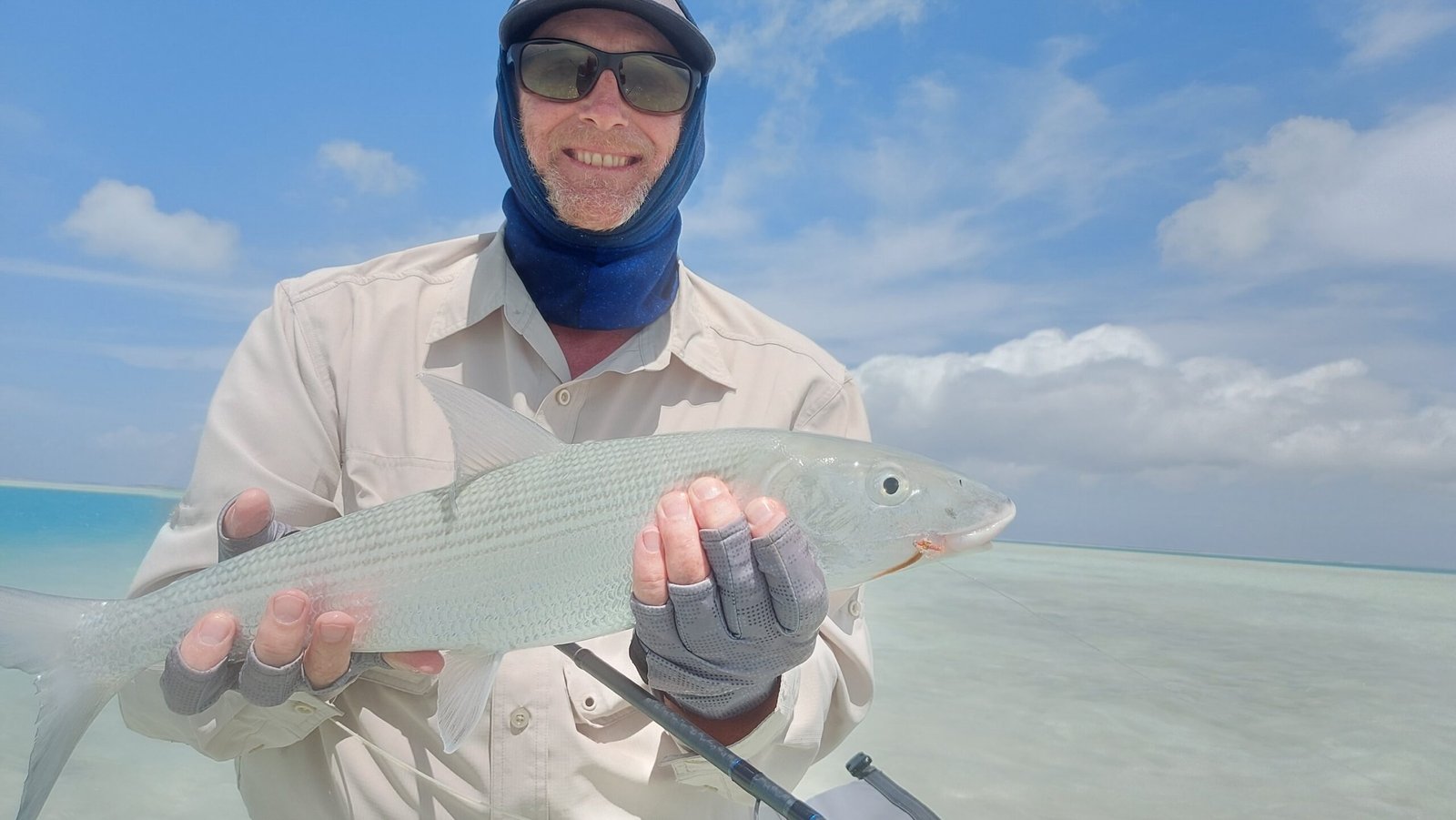
We fished for six-and-a-half days, some of the reefs had sandy islands others had deep drops offs. I caught the queenfish at one of the drop offs. The ‘bones’ were caught in quantity. As the fly sinks in front of them and the tugging on the line mimics the fleeing prawn, the bonefish, lips running along the coral, inevitably surge and strike. There were different shades, some translucent and some green tinged.
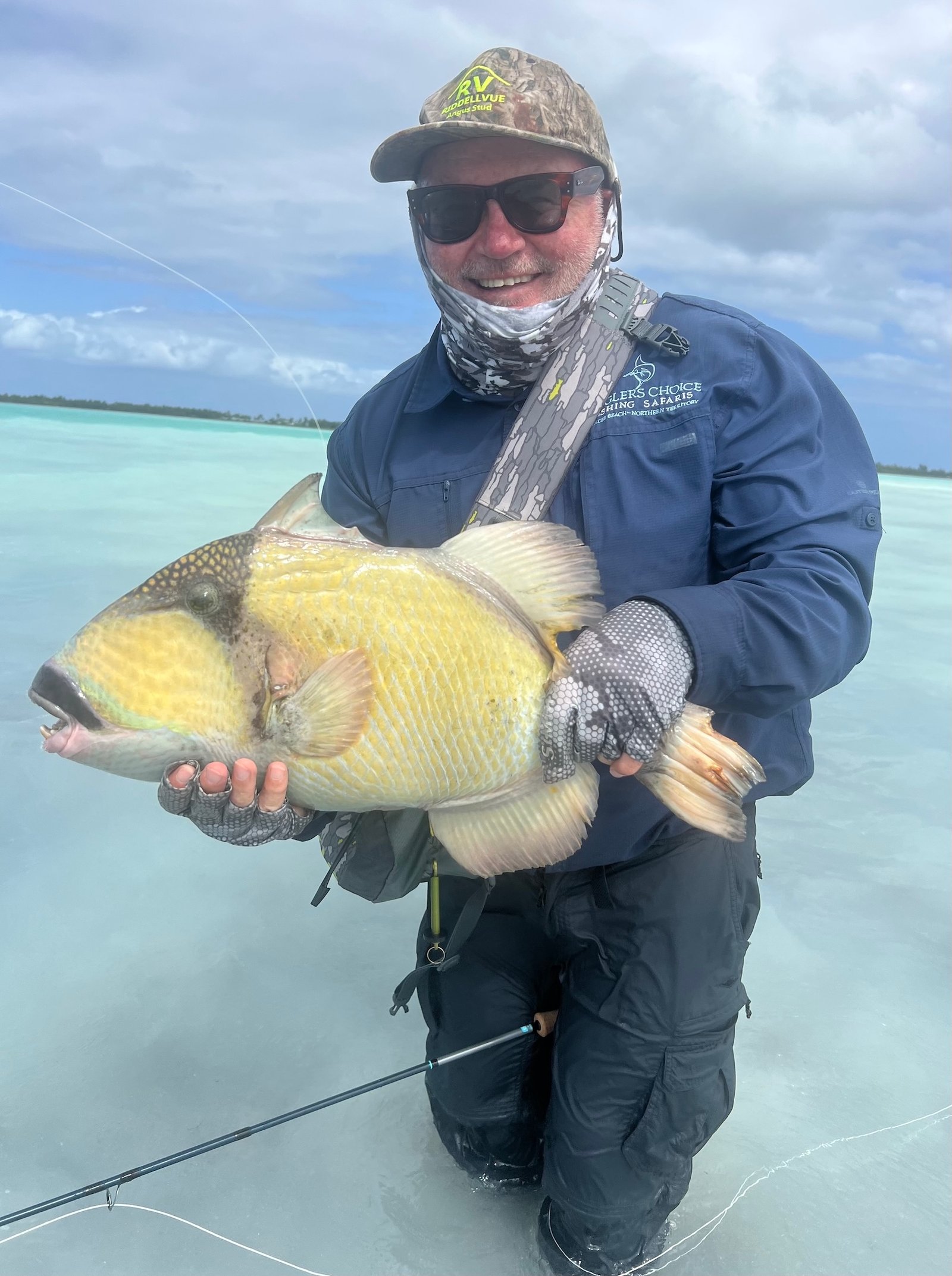
I thoroughly enjoyed a session chasing triggerfish with the guide. They were very hard to snare, so alert and flighty! The guide gave advice when one was spotted, my cast was good, the fish didn’t flee. The calls from the guide lured him in … ‘tug a little more, a little more, hold, hold, then tug again’. Bang, he was on and running. These larger fish have weight, the line spun out, I adjusted the drag. Bang, the line broke, he was off. Bugger! But I had hooked one and enjoyed, briefly, the fight. Something not everyone in the group had experienced.
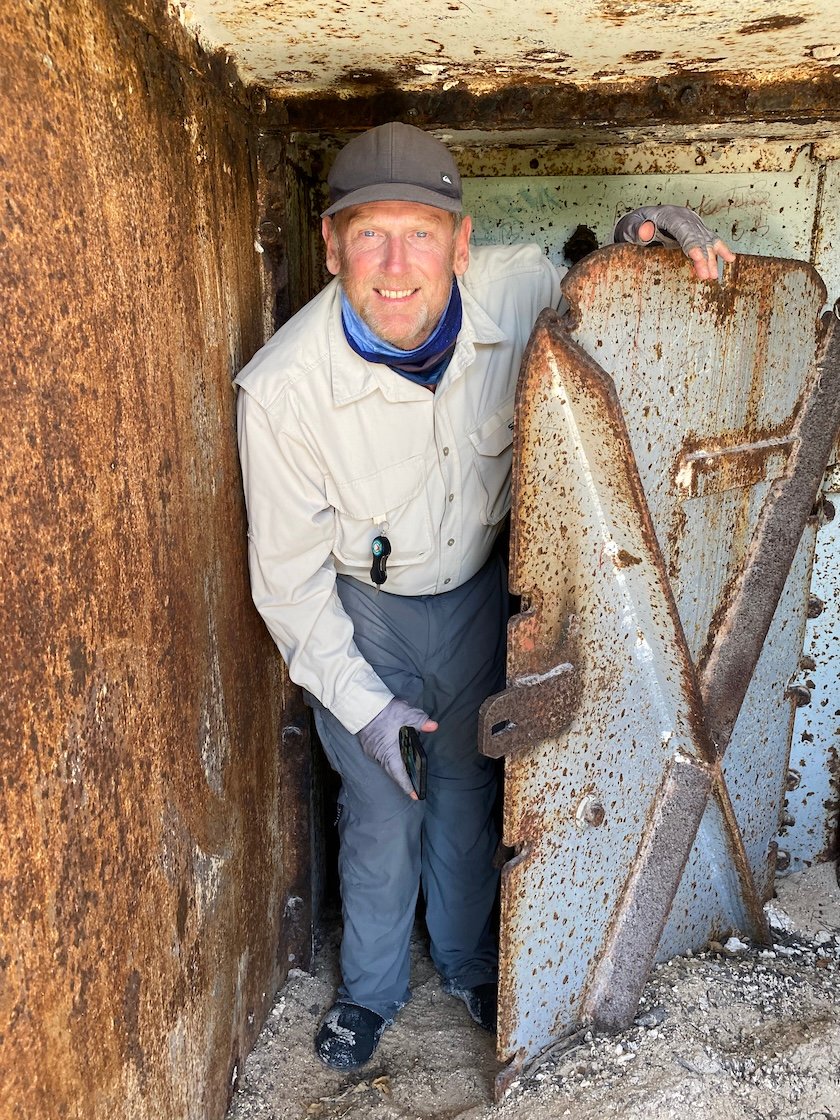
As for the nuclear fish’n, we took a few hours off one day and visited the last vestiges of the British hydrogen bomb tests conducted as part of Operation GRAPPLE. This included bunkers, ground zero, remnants of the British task force barracks and the runway from an abandoned airstrip now incorporated into the road network.

I am a former Army officer and logistics specialist. In retirement I write articles and books ranging across military and naval history, biography and anthropology, which I publish through various association newsletters and websites and on Amazon. I live in Sydney.