
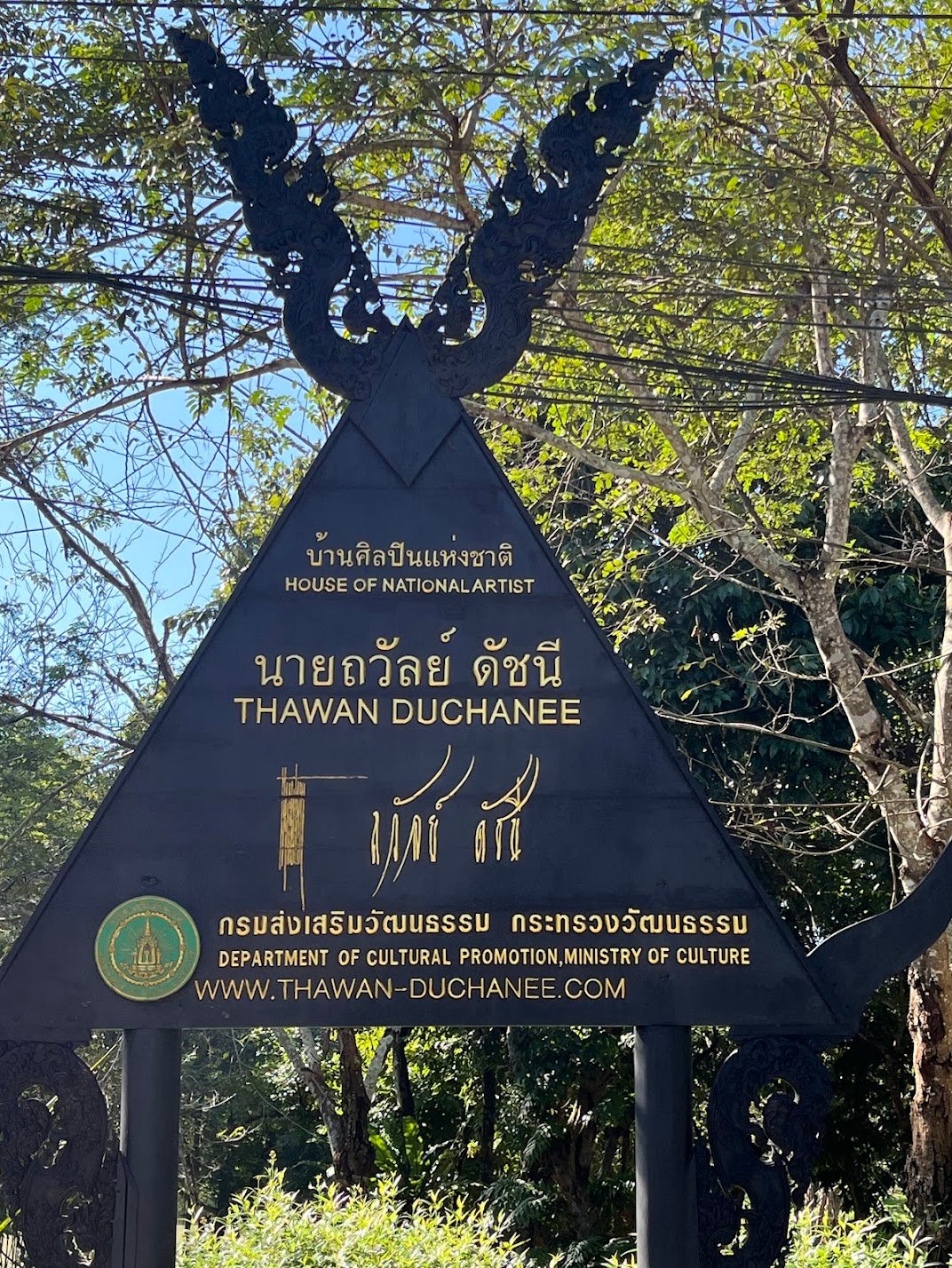
Baandam House Is Well Worth a Visit
Chiang Rai is a great place to visit; most people who come to northern Thailand stay for a day or two to see the temples and enjoy the nightlife. If you venture slightly further afield there are other attractions – waterfalls, hot springs, beaches on the river. But I highly recommend a visit to the Baandam House, just off the highway a 20 minute scooter ride north of the city.
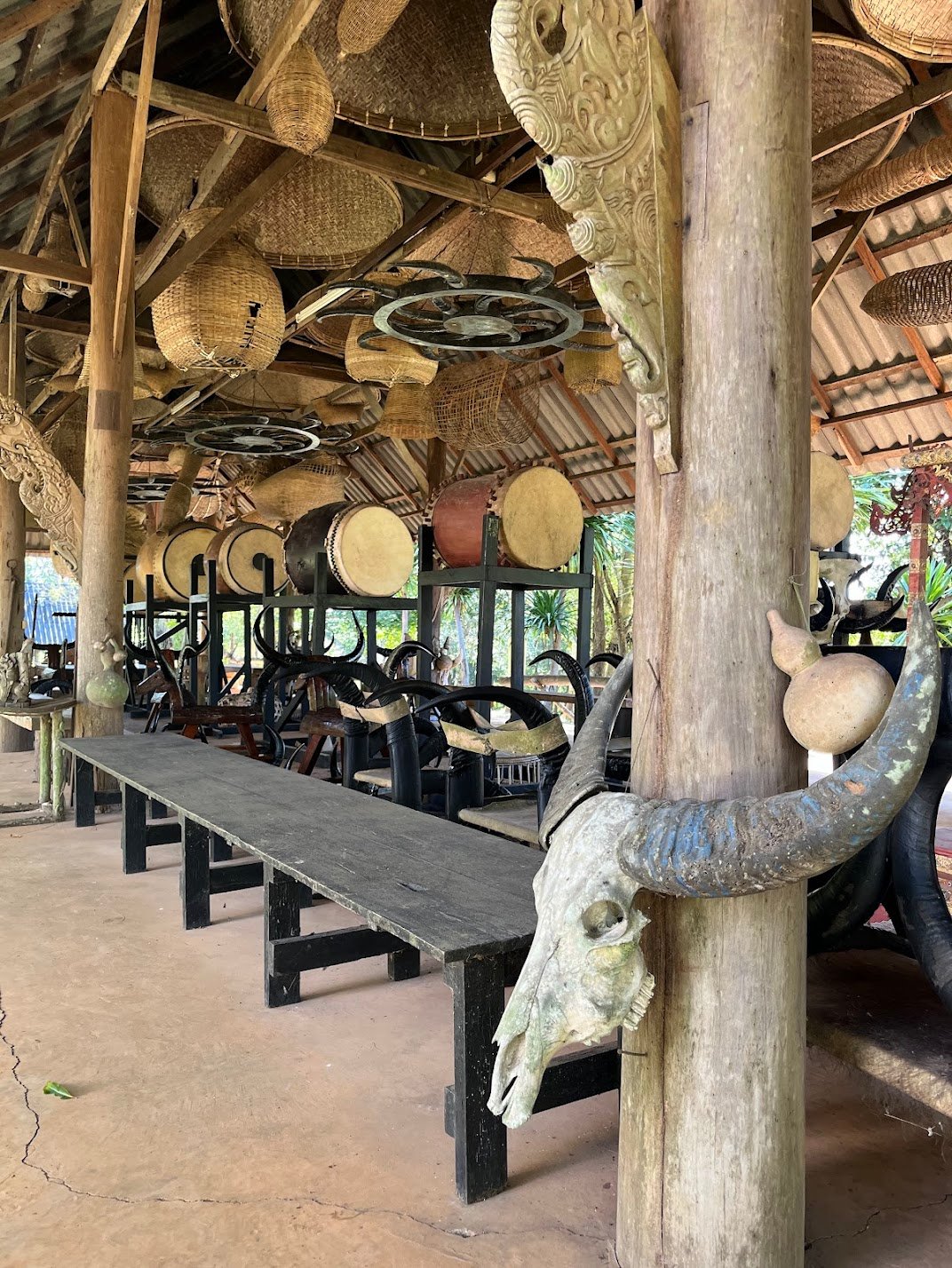
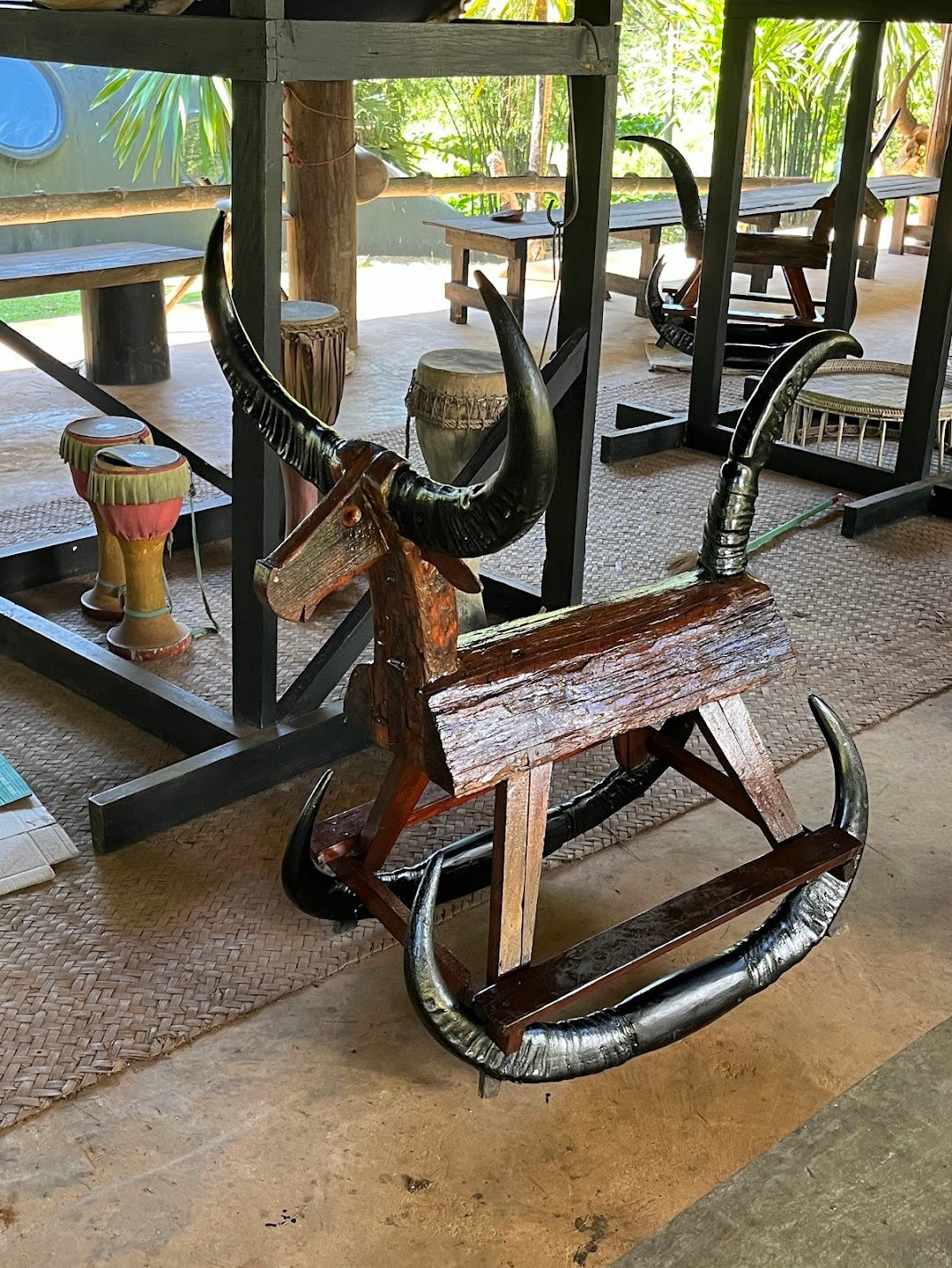
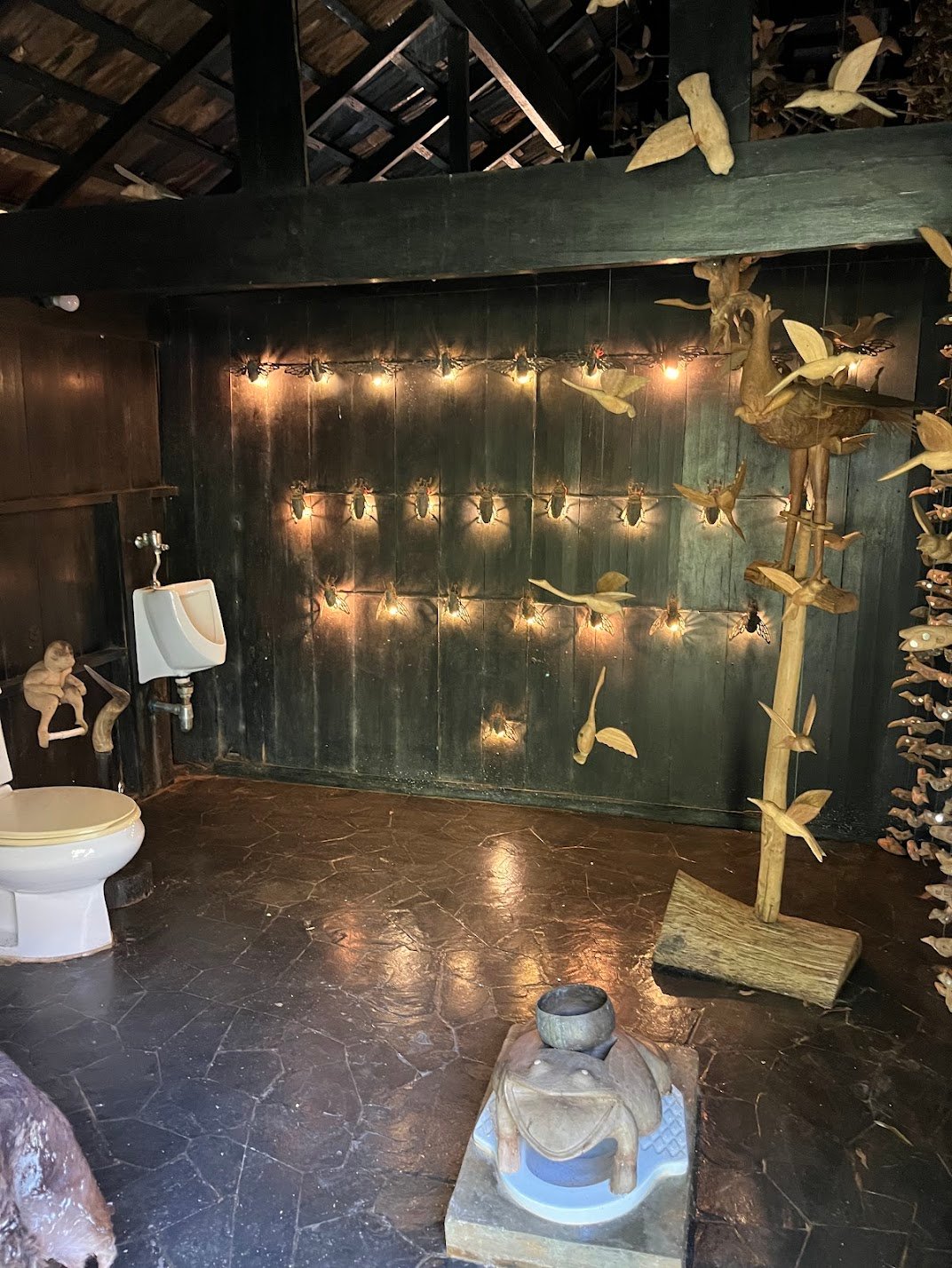
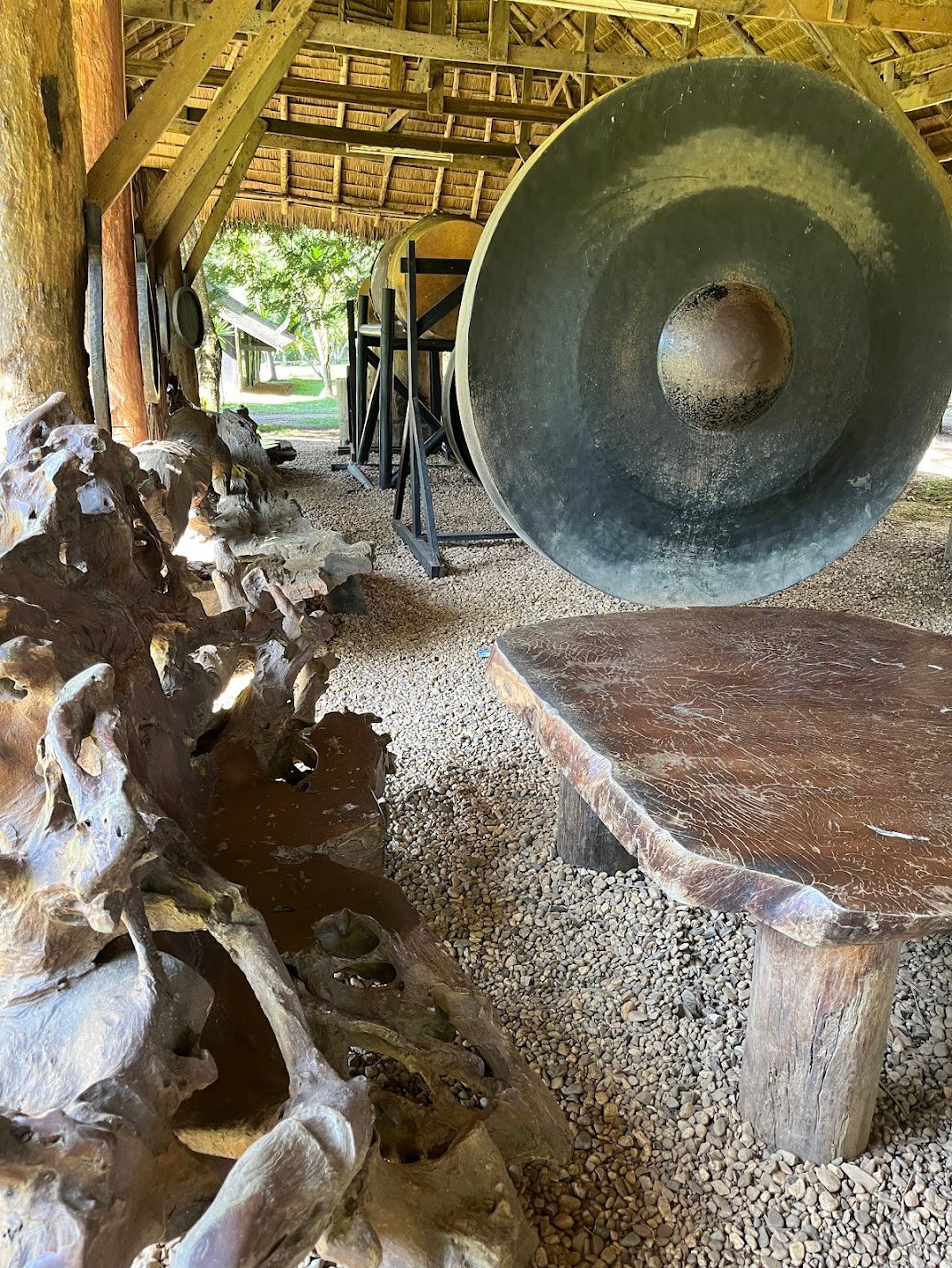
I would describe it as an art estate, consisting of around 40 buildings of varying size arranged around some pleasant grounds. It is sometimes referred to as the Black House (Baandam in Thai), this being the theme colour of the place. It is the legacy of Thawan Duchanee, one of Thailand’s best known artists and architects, who died in 2014.This story is part of our Slow Travel in South East Asia series. Read more here.
This article is part of our Slow Travel in South East Asia series. For other Thai scootering experiences, have a read of our accounts of riding around Sangkhla Buri, Mae Sai, Koh Lanta and Bang Saphan. And for the Dusty Boots guide to renting a scooter and staying safe on the roads, click here.
I could write a lot more about the artist and my impression of the place, but I took some good snaps there so I will let the photos tell the story.
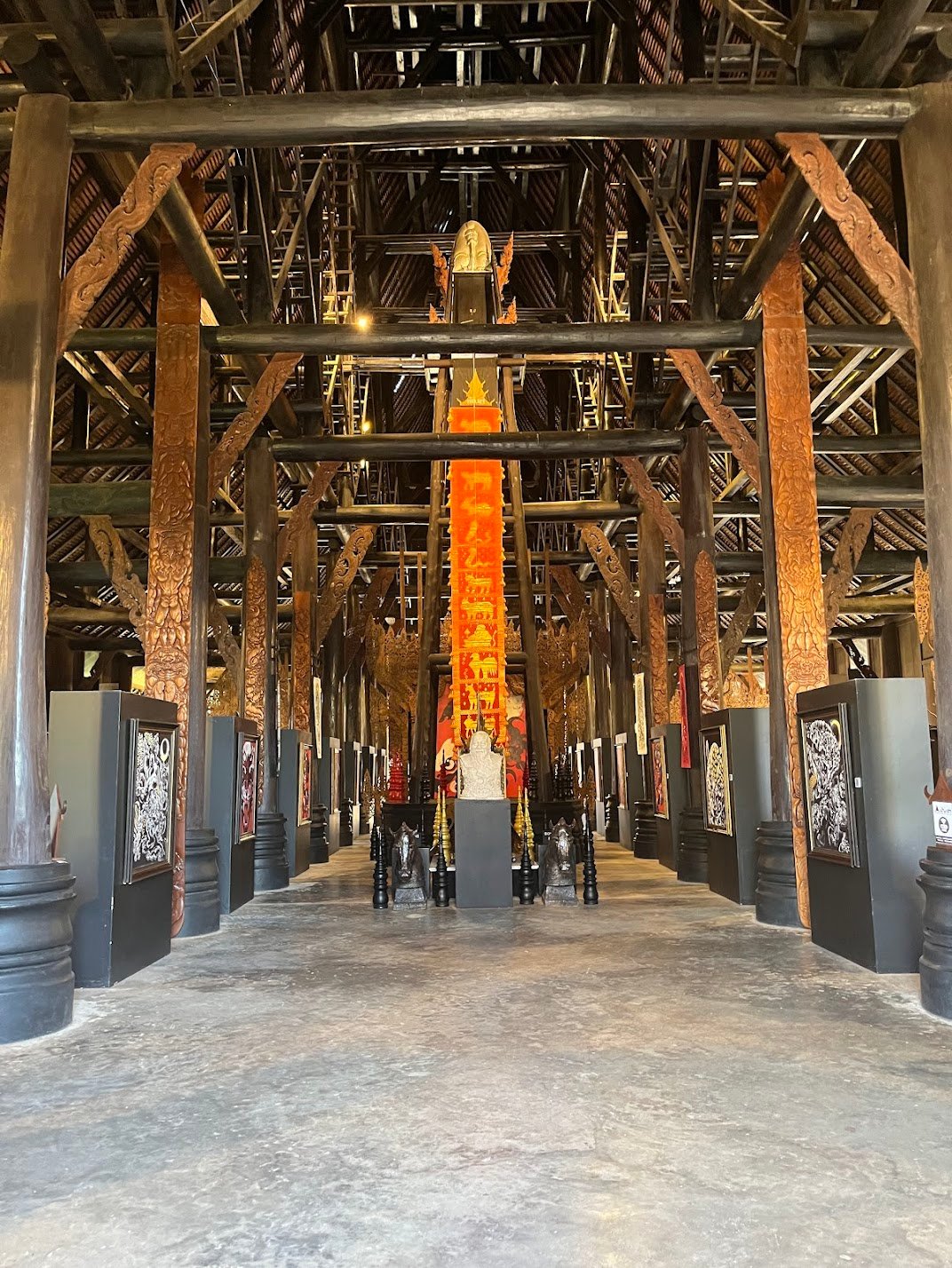
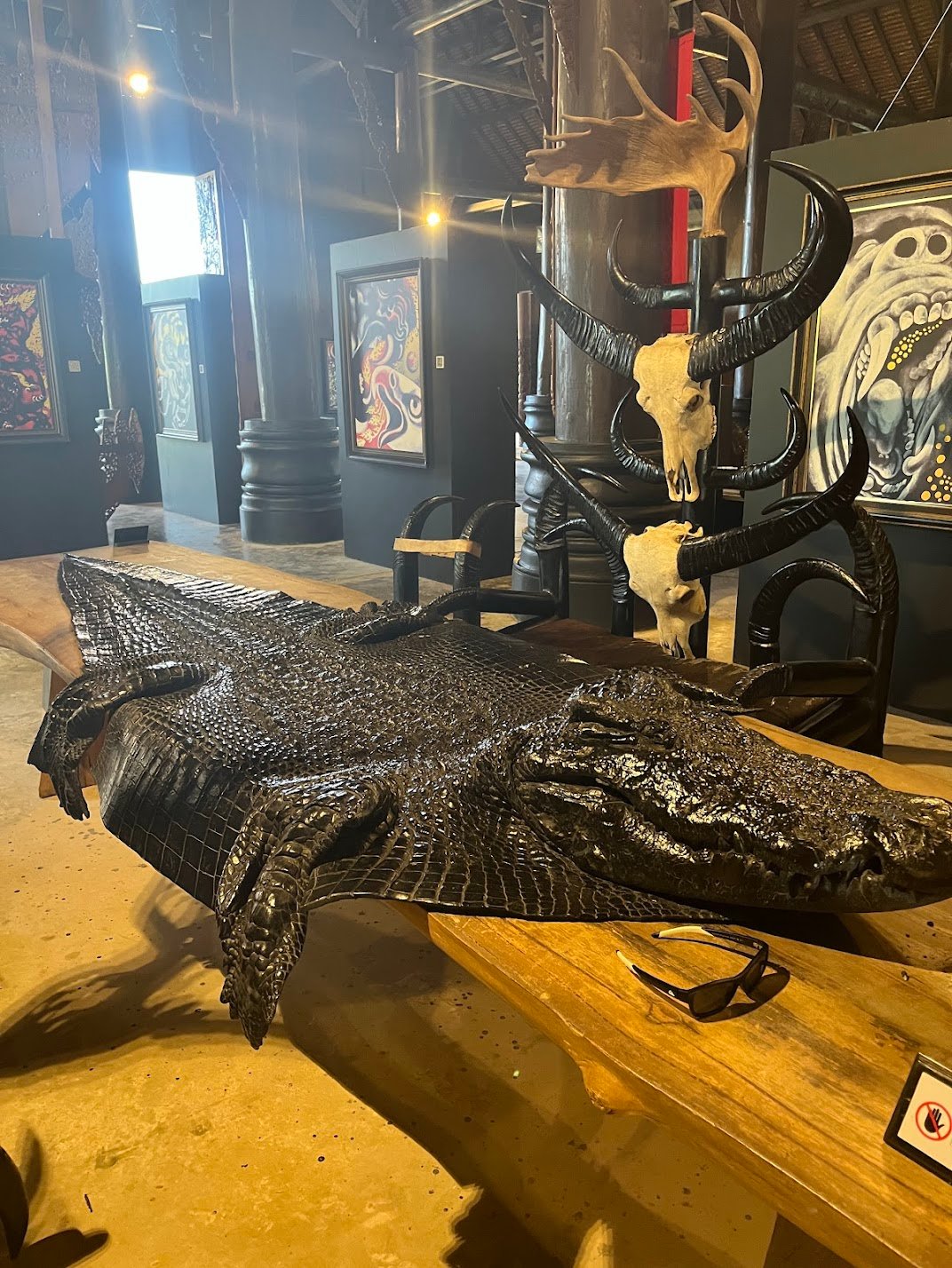
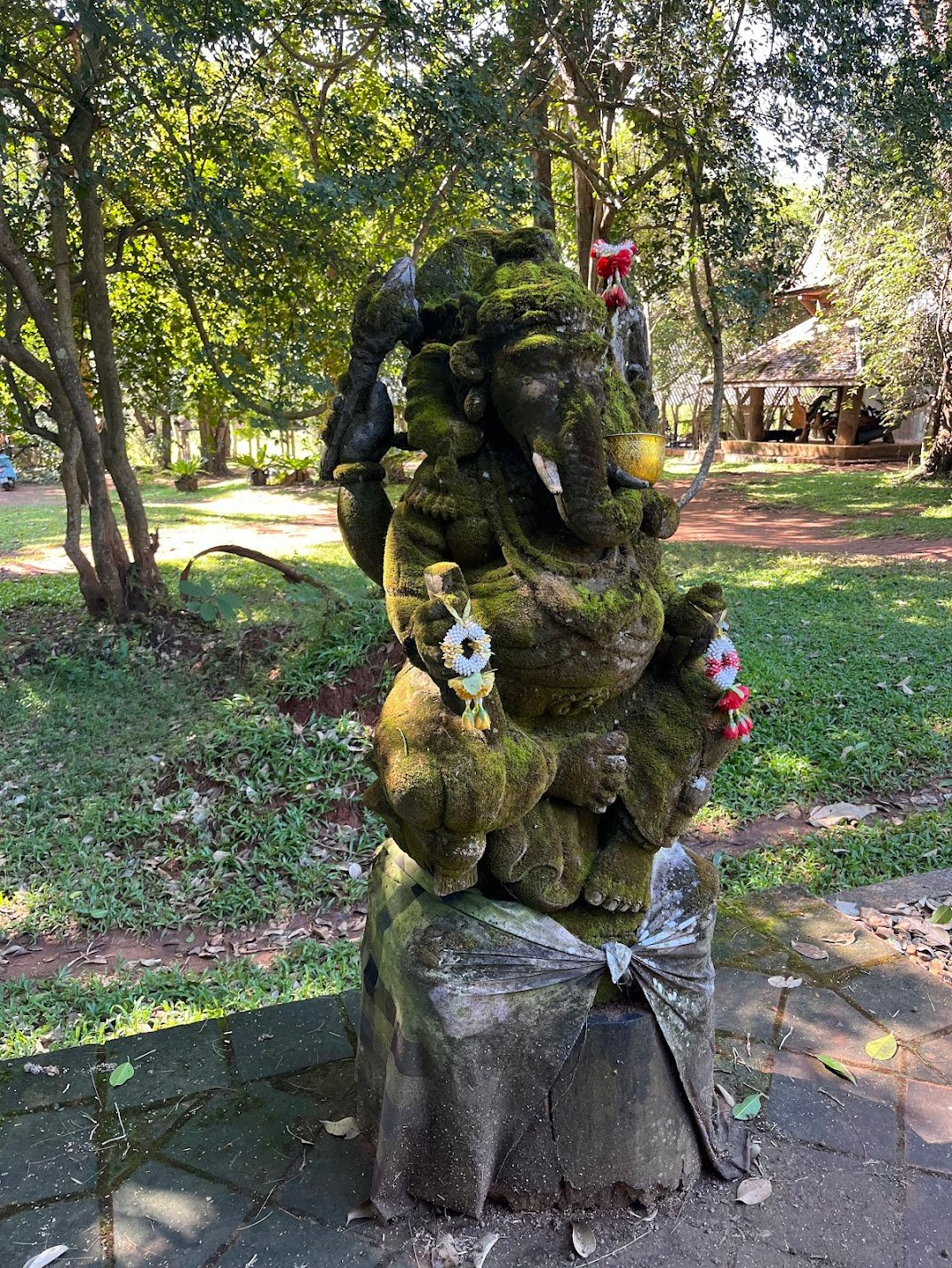
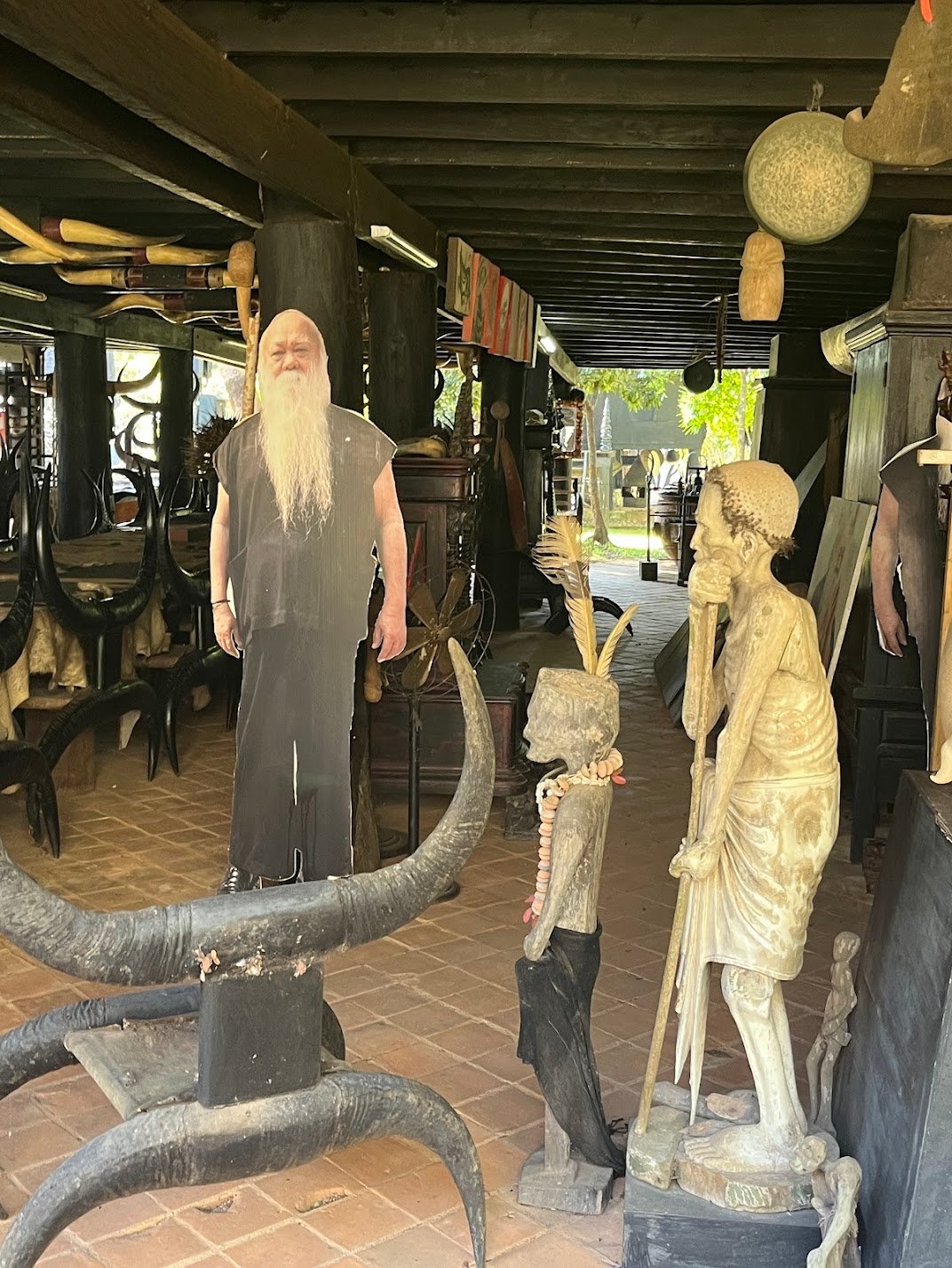
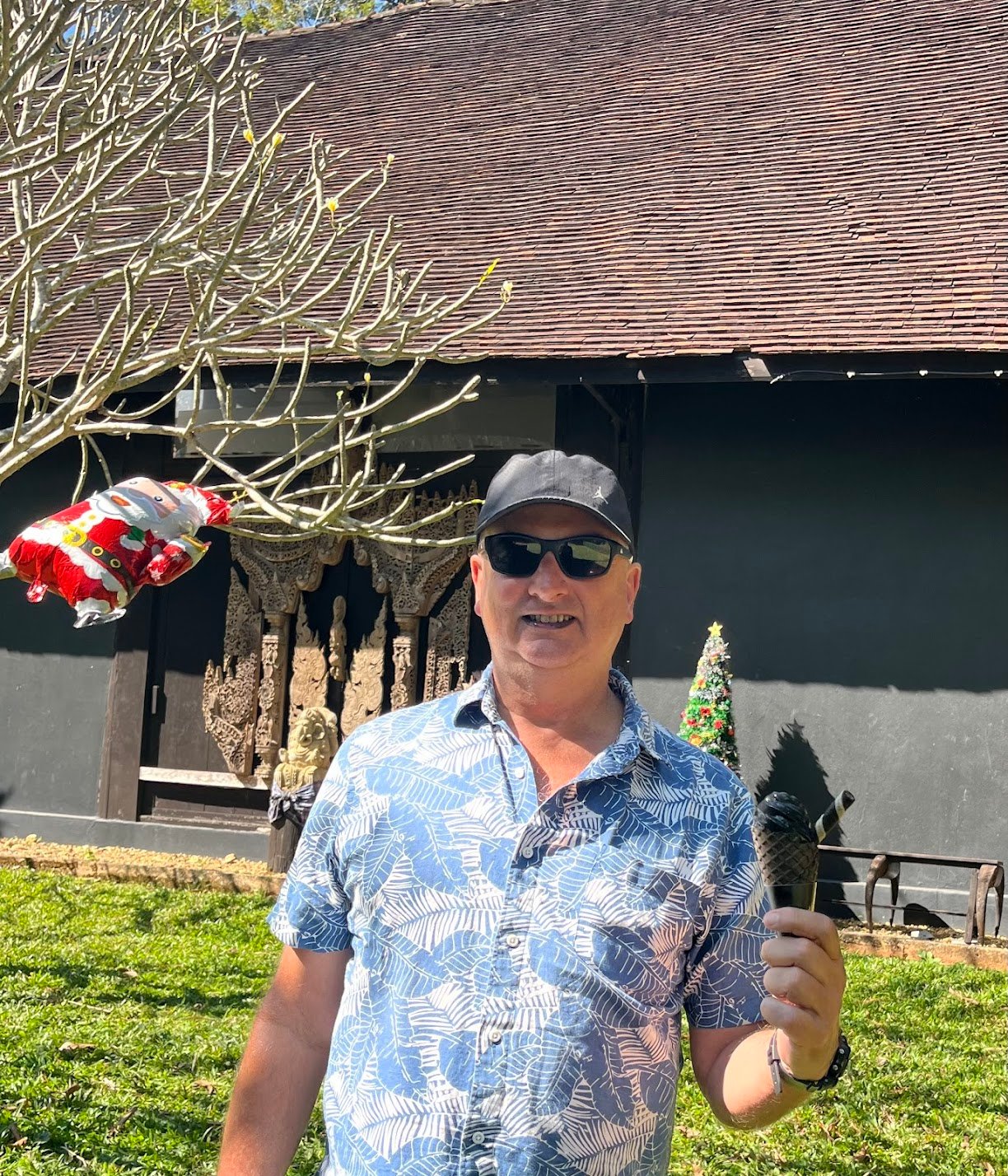
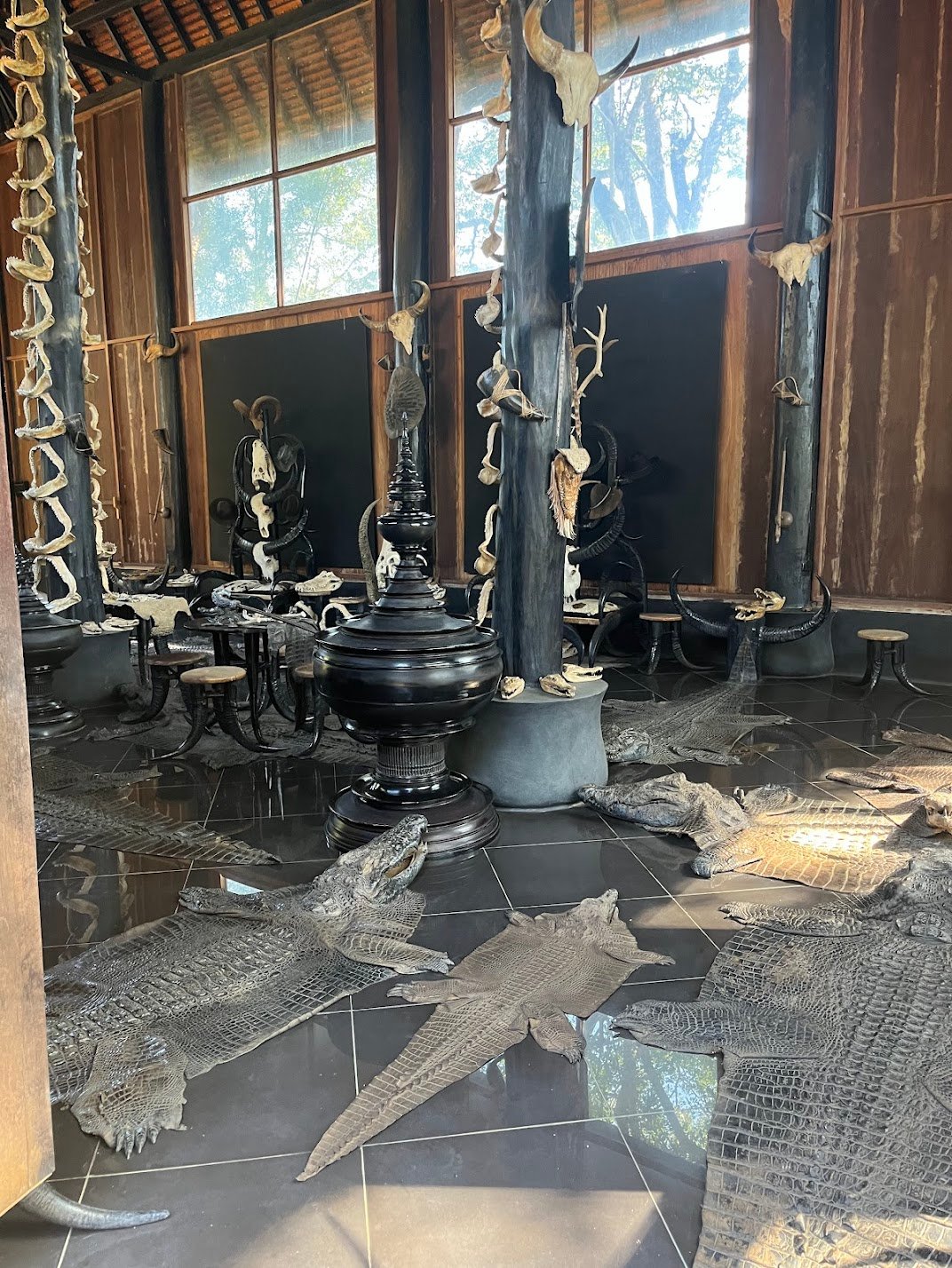
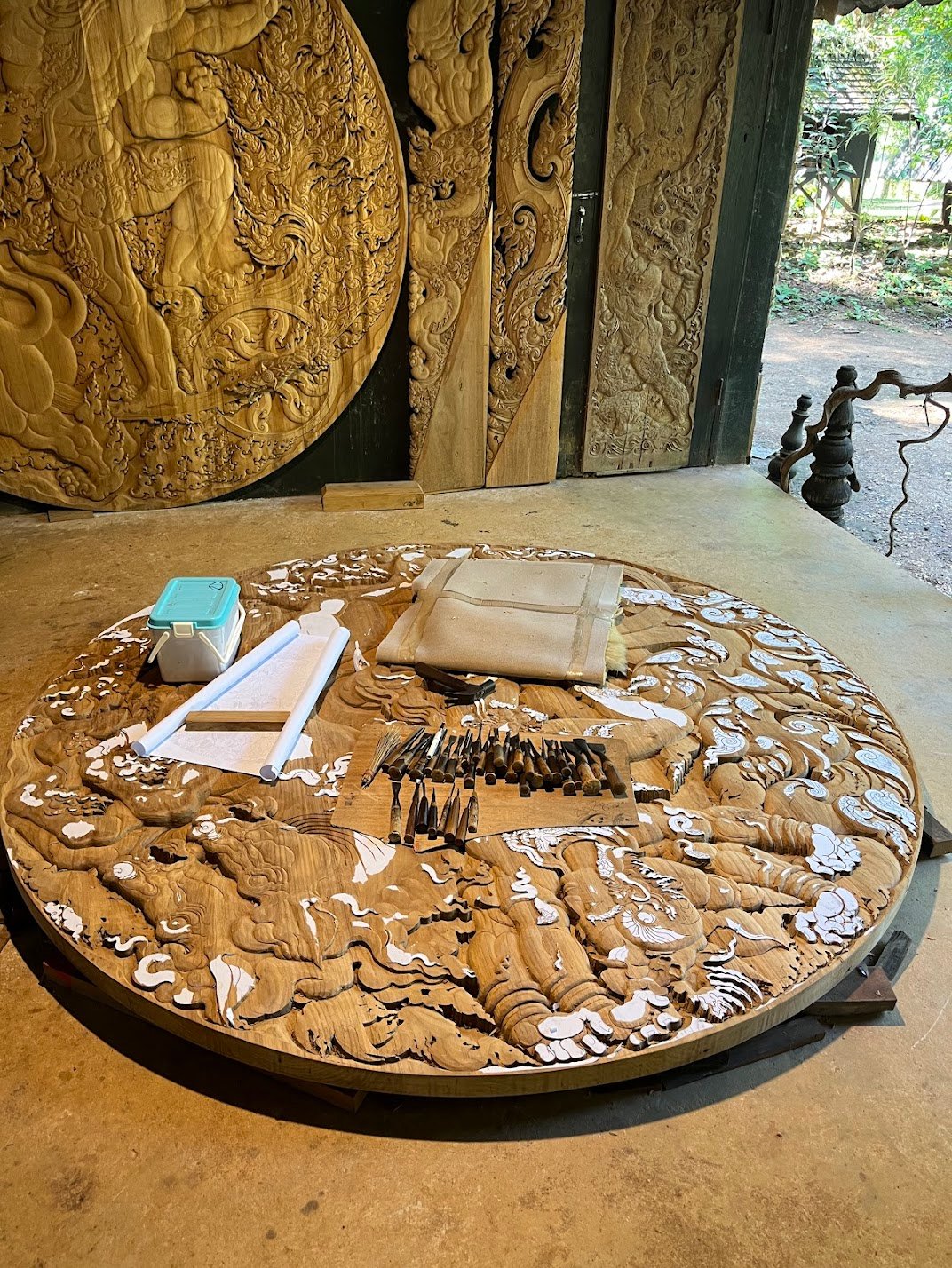

For travellers planning a visit to this captivating art estate, here are the essential details:
- Location: Approximately 10 kilometers (6 miles) north of Chiang Rai city centre. Easily accessible via taxi or songtaew.
- Hours: Open Daily from 9:00 AM to 5:00 PM. Note: The museum may close for a lunch break from 12:00 PM to 1:00 PM.
- Admission: 80 THB per adult. Children under 12 or below 120cm are usually free.
- Time Required: Plan for at least 1 to 1.5 hours to explore the galleries and grounds.
The Hill Tribe and Karen Long-Necked Village – Mixed Feelings
Another 20 minutes of scootering took me to this place. I wasn’t sure if I wanted to go, but Buddha had to witness things in order to understand them, so why not me. The big question is – is it exploitative or not? Of course it is, though others will argue that it shines light onto minority culture and provides much-needed currency to the people. I don’t buy that…the place is tawdry. It consists of six ‘villages’ representing several hill tribes. I wandered around them , but five of them are largely devoid of anything other than a few thatch huts and craft sellers.
I arrived there just as a bus disgorged a chattering pack of iPhone-clutching Germans who were ushered straight to the human exhibits, the colourful Karen (or Kayan) ladies with the gold hoops around their necks, who sit in front of their homes weaving and selling their wares, and who are the main attraction of the enterprise.
This is not the place to describe things in detail or express strong opinions – there is so much I do not understand. I am very aware of how these people were persecuted and displaced from their homelands across the border during my lifetime; and I am sure they now have better opportunities in Thailand – so who am I to judge? I bought one small item and made a donation to the school. I did not take any photos other than of the entrance to the site.
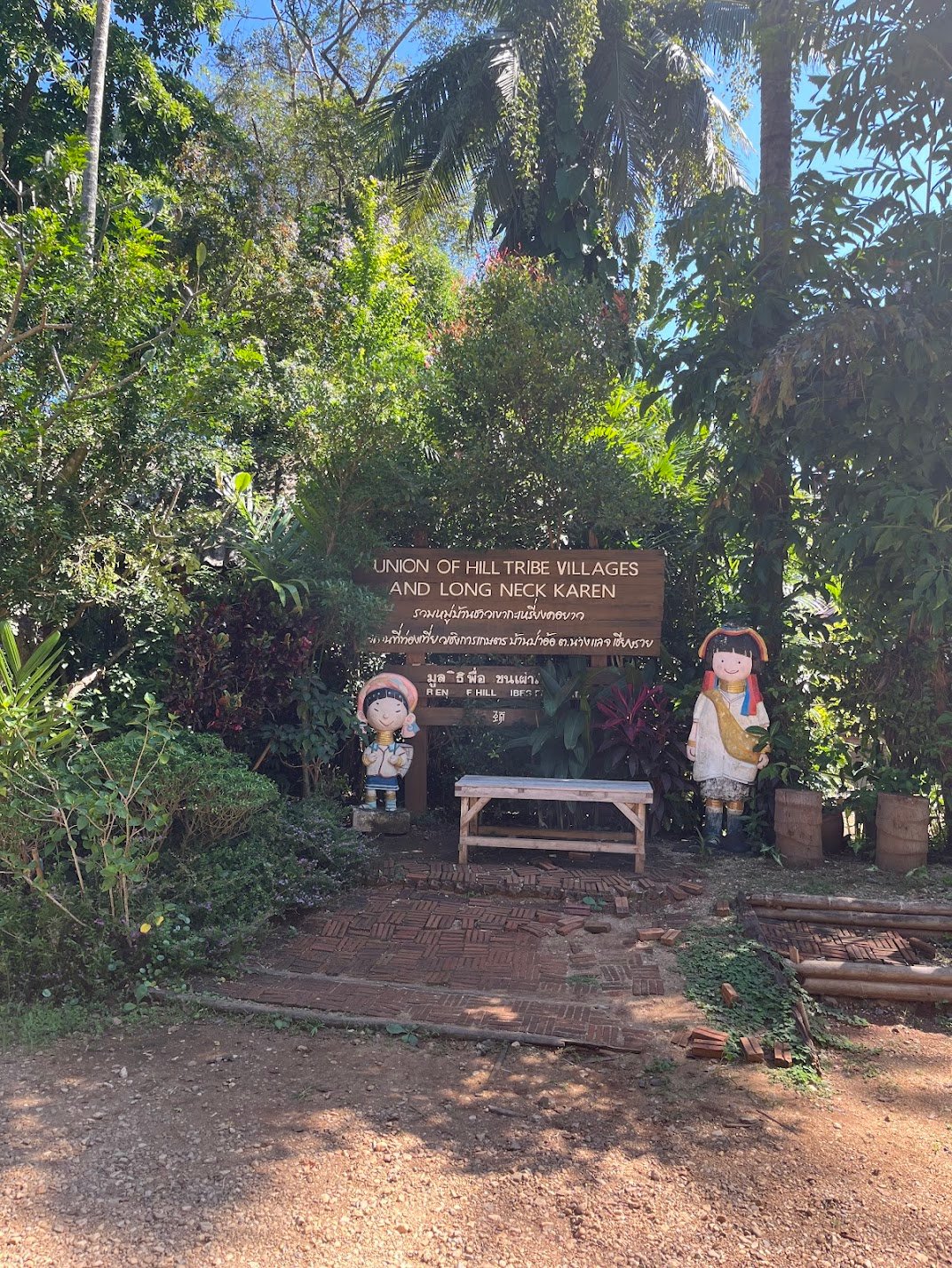
The entrance to the villages site. 300 baht to get in, then you have plenty of opportunities to buy handcrafted scarves, flutes, toys and all sorts of things. Up to you.
Thinking of renting a scooter to get around Thailand? Check out the Dusty Boots guide to scooter rental.

Steve is a former Army officer and technology manager, now semi-retired and living in Melbourne. He enjoys adventurous travel and believes that good stories should be shared. He founded the Dusty Boots Journal as a means to connect those with similar interests.
Steve, re the “cows”. I’m a semantics fan, with a general dislike of bovines (except for eating them) and like to know my enemy. In this case, the swamp water buffalo, native to Southeast Asia and culturally significant in Thailand. Their distinctive feature is swept-back horns curving in a semicircle. They have fewer sweat glands than cattle (relying on mud/water to stay cool) which I’m sure can be seen on really, really close inspection of the photo of the lazy one lying down.
I’m glad you pointed that out, Neale. I did have a close look at the hide of the creature, and was indeed puzzled by the apparent paucity of sweat glands. This clarifies everything.
[…] experiences, have a read of our accounts of riding around Sangkhla Buri, Bang Saphan, Koh Lanta and Chiang Rai. And for the Dusty Boots guide to renting a scooter and staying safe on the roads, click […]
[…] experiences, have a read of our accounts of riding around Bang Saphan, Mae Sai, Koh Lanta and Chiang Rai. And for the Dusty Boots guide to renting a scooter and staying safe on the roads, click […]
[…] experiences, have a read of our accounts of riding around Sangkhla Buri, Mae Sai, Koh Lanta and Chiang Rai. And for the Dusty Boots guide to renting a scooter and staying safe on the roads, click […]