
Unfortunately, as of early 2026, Myanmar is still pretty much closed for tourism. I hope this changes soon, as it is a country full of mysteries, cultural oddities and surprising experiences.
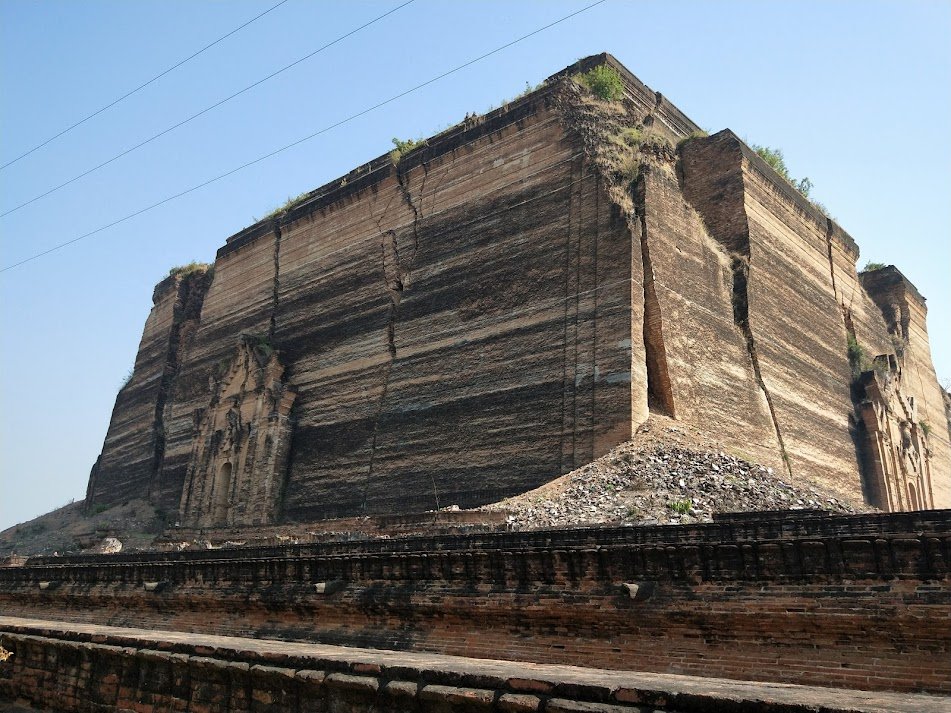
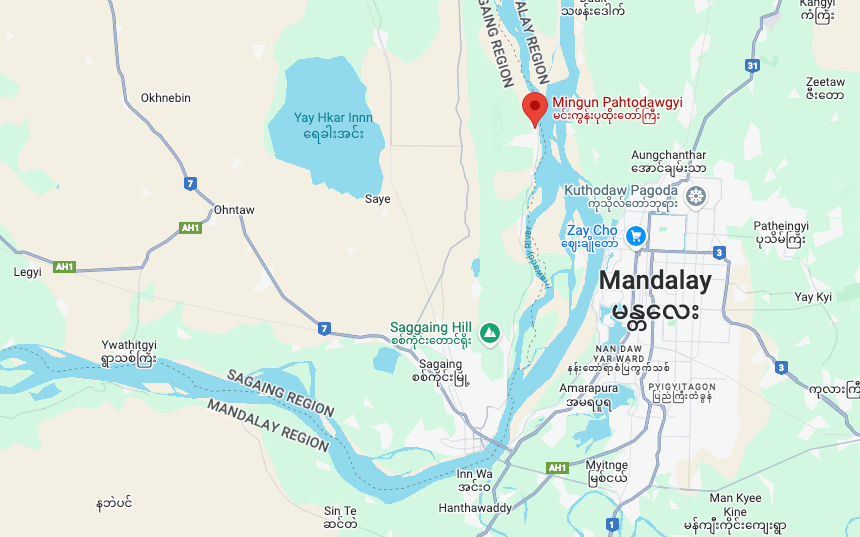
One of these is the Mingun Pahtodawgi (Mingun Pyramid), located 10km northwest of Mandalay. You get there via a ferry across the Irrawaddy River, and you can walk around the site or catch a ride in a bullock cart.
It is basically a huge unfinished edifice, some 50 metres tall and 72 metres wide at the base. It contains around 250,000 cubic metres of brickwork – perhaps 25 million bricks.
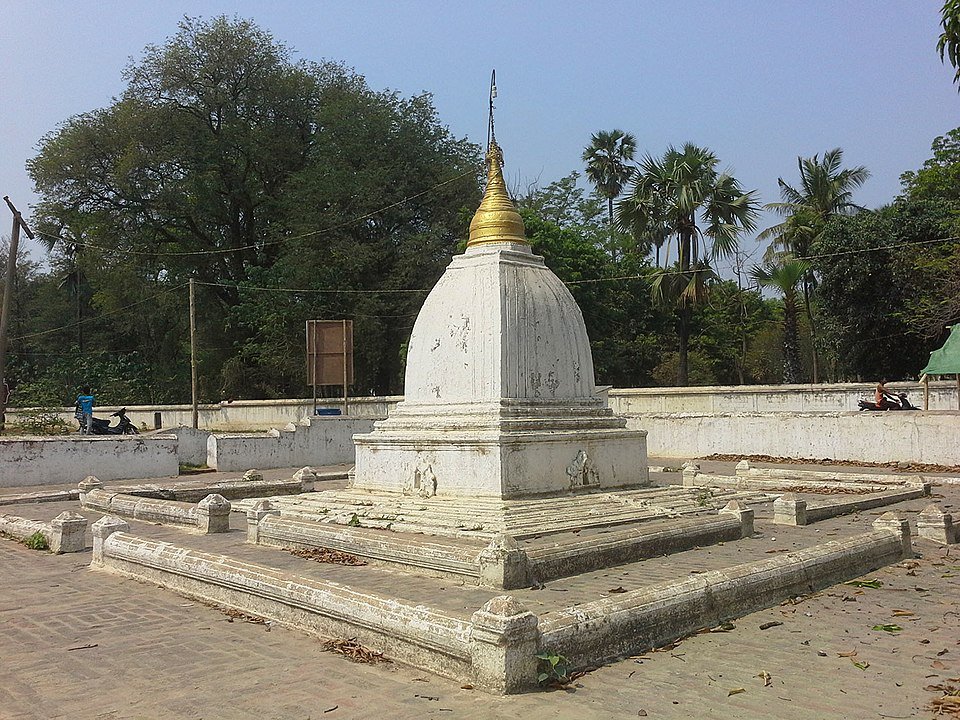
Its history is intriguing. It was commissioned in 1790 by King Bodawpaya, designed to be 150 metres tall. Near the pyramid is the Pon Daw Pagoda, a 15 metre representation of what the finished pyramid may have looked like. But legend has it that it was never intended for completion, due to a prophecy that the king would die or the kingdom be destroyed if the pyramid was finished. So they paused construction after a few years. The king died in 1819 anyway and construction ceased permanently. One could argue to this day whether the kingdom was destroyed or not.
This story is part of our Slow Travel in South East Asia series. Read more here.

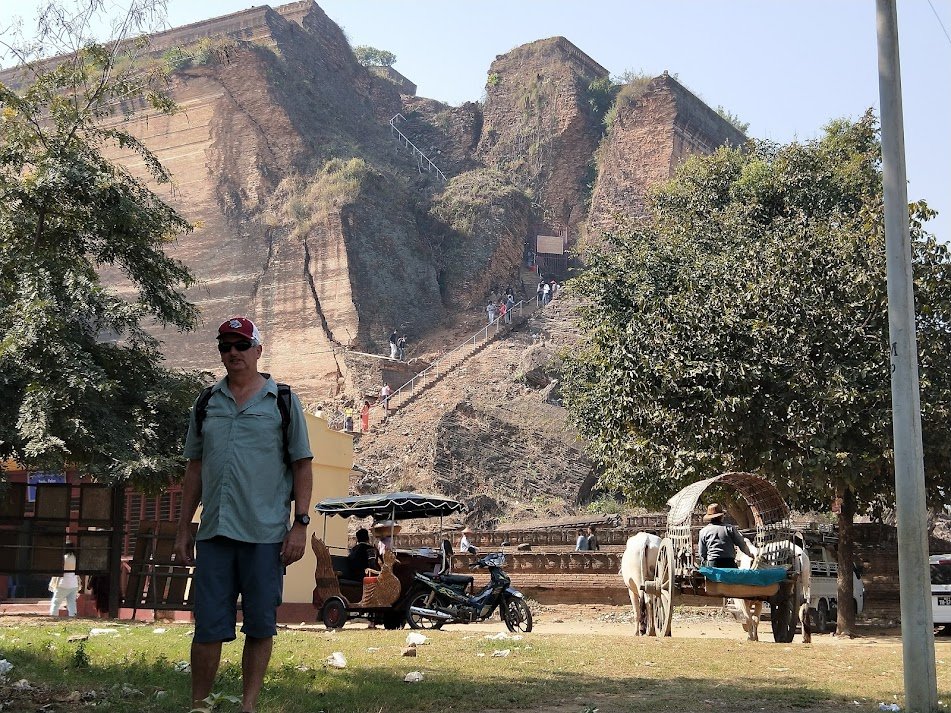
Once you get to the site, you can spend a couple of enjoyable hours. When we were there you could climb about half way up, but I believe ascending has subsequently been stopped. As well as Pon Daw there are several other pagodas and also the Mingun Bell, a 90,000kg bronze alloy bell cast in 1808 under direction of the same king. Throughout most of its history it has been the largest functioning bell in the world, but I think there is now a bigger one somewhere in China.
When we were there, there was a thriving local economy of souvenirs, snacks and drinks, as well as bullock cart rides and boat trips. However it was not geared for modern tourism (not necessarily a bad thing). I didn’t see anywhere that was air conditioned, and toilet facilities were rudimentary.
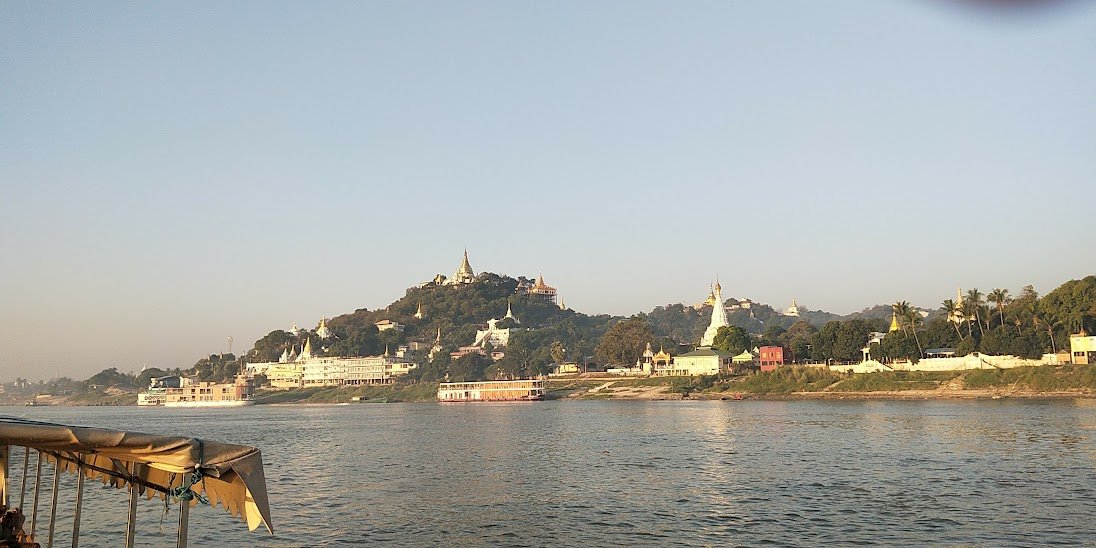
So….put it on your list if you ever get to Mandalay. And if you get there, I highly recommend the boat trip down the river to Bagan. It takes most of a day, and the shoreline scenery and river traffic are well worth the time.

Travel to Myanmar – Current Status
In early 2026, Myanmar remains one of the world’s most complex travel puzzles. While the government is actively courting visitors with Visa-on-Arrival programs (for China and India) and a streamlined e-Visa for others, the reality on the ground is less clear.
The Logistics: International hubs in Yangon and Mandalay are open, and the ‘tourist kite’ – the circuit of Yangon, Bagan, Mandalay, and Inle Lake—is technically accessible. However, infrastructure is fragile; rolling blackouts are a daily occurrence, mobile data is frequently throttled, and the economy remains cash-heavy, requiring pristine US dollars.
The Safety Reality: Despite ‘Open’ signs, major Western governments maintain ‘Do Not Travel’ advisories. While the central tourist sites are relatively stable, civil conflict persists in border states. Security is highly visible, and the 2026 election cycle has brought increased military presence and a heightened risk of arbitrary detention.
The Ethical Dilemma: The prospective traveller has a choice. Activists urge a boycott to avoid legitimizing the regime through visa fees and state-owned services. Conversely, local guides and family-run guesthouses are desperate for the support that only independent travellers provide. If you go, the rule is simple: Stay small, stay local, and stay informed.
Bottom line: The Smartraveller site sums it up here. It can be done, but proceed with caution. Also check whether your travel insurance will cover you.

Steve is a former Army officer and technology manager, now semi-retired and living in Melbourne. He enjoys adventurous travel and believes that good stories should be shared. He founded the Dusty Boots Journal as a means to connect those with similar interests.
Steve,
Is there anything to see inside? Or is it just a solid block?
No, it is just a massive pile of rubble. No mummies, secret passageways or ancient curses.