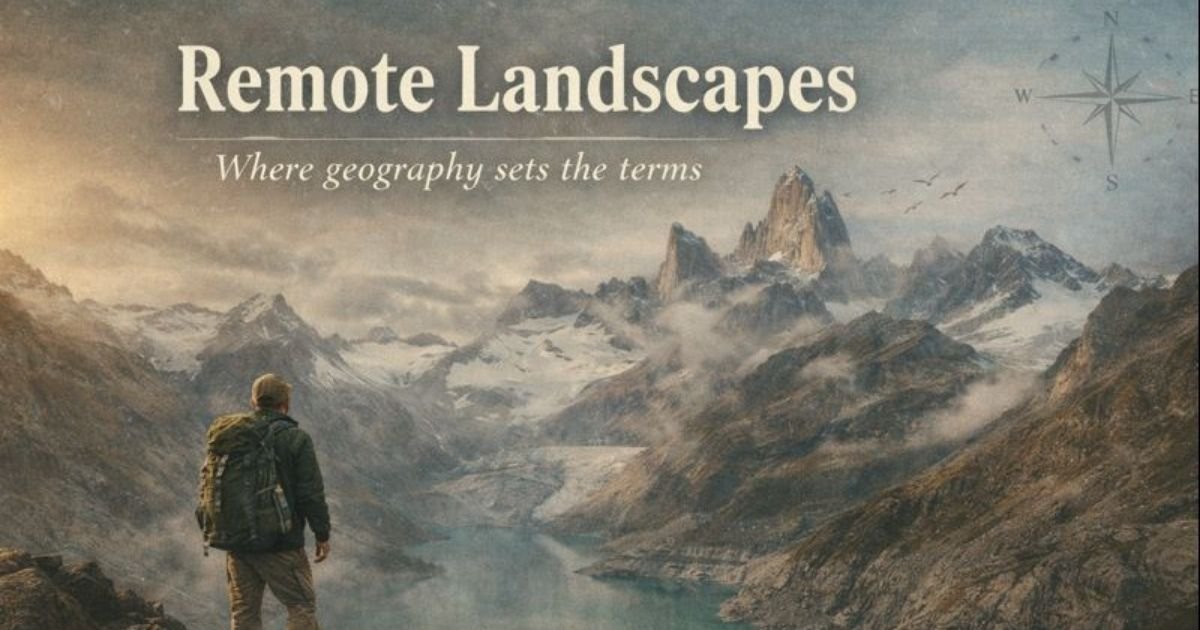
Where geography sets the terms
Some places don’t bend to human plans. They are shaped first by wind, water, distance, and time. Roads arrive late, if at all. Schedules loosen. Daily life adapts to geography rather than the other way around.
This collection brings together stories from remote landscapes and wild places. Not as spectacles to be consumed, but as environments that dictate pace, perspective, and behaviour.
In these places, travel becomes less about control and more about response.
What we mean by Remote Landscapes
Remoteness isn’t just distance from cities.
It’s a condition where:
– geography dominates decision-making
– infrastructure is minimal or improvised
– attention shifts from itinerary to environment
These are places where human presence is temporary, and often secondary.
Featured Remote Landscape stories
Skeleton Coast, Namibia
Where desert meets ocean and survival is uncompromising.
- The Skeleton Coast: An Unforgiving Namibian Landscape
- Namibia’s Desert Landscapes Through a Camera Lens
Mozambique
Travel shaped by memory, risk, and distance.
Pacific Islands: Kiritimati
Life shaped by ocean, isolation, and subsistence.
Nepal: Chitwan National Park
Wildlife and human presence negotiating space.
Patagonia: Glaciers and Weather Extremes
This place was not designed for humans.
Irian Jaya, Indonesia
Some Observations During Famine Relief Operations
Why Remote Landscapes matter to travel writing
Remote landscapes strip away performance. There’s little room for curated experience or manufactured narrative. Stories from these places tend to be quieter, more observational, and more honest.
They remind us that humans are visitors, not owners; scale alters perception; and not every place exists for our convenience.
In these places, travel becomes an exercise in humility.
If You’re drawn to remote places, these stories won’t help you optimise a route or maximise comfort. But they may help you think about:
- preparation over spontaneity
- respect for environmental limits
- when to observe rather than intervene
Sometimes the most meaningful journeys are shaped by what you cannot change.
Contribute a Remote Landscape story
Have you spent time in a place where environment dictated every decision? We’re interested in your story.