On your travels in most countries, especially outside urban areas, there will be snakes. It’s almost certain that you will be near them even if you don’t see them, as they are usually shy and/or pretty sneaky. Generally – you’re big, they’re small, they know they can’t eat you and just want to get away. The main dangers come from stepping on them, being in their way when they’re trying to escape, or if they otherwise feel threatened. Snakes can be entertaining and, with a small amount of common sense, they usually don’t pose a great threat to you unless you are a bad luck magnet.
Its not all about the venom
Depending on whose list you use, Australia has about eight of the top 10 most venomous snakes in the world – ie, the most potent venom, so the most likely to kill you if you get envenomated. But being bitten doesn’t condemn you to an agonizing demise…the snake may bite without injecting venom, known as a dry bite. This happens between 4 and 80% of bites, depending on the species. Taipans are at the 4% end, and Eastern Browns at the 80% end, with other species in between. No species injects venom with every bite.
If you can follow all that, you can understand that the most venomous snakes are not necessarily the most dangerous/deadly – ie, those that actually kill the most people. The most deadly snakes are usually found in densely populated, less developed countries where many people live closer to nature, often wearing snake-inappropriate or no footwear. Leading the pack are snakes such as the Indian Cobra, and the kraits and vipers of Asia and Africa. India has about 50,000 snakebite deaths a year, of which some 10,000 are probably from the cobra, which is only about the tenth most venomous snake.
Slithering around in Australia
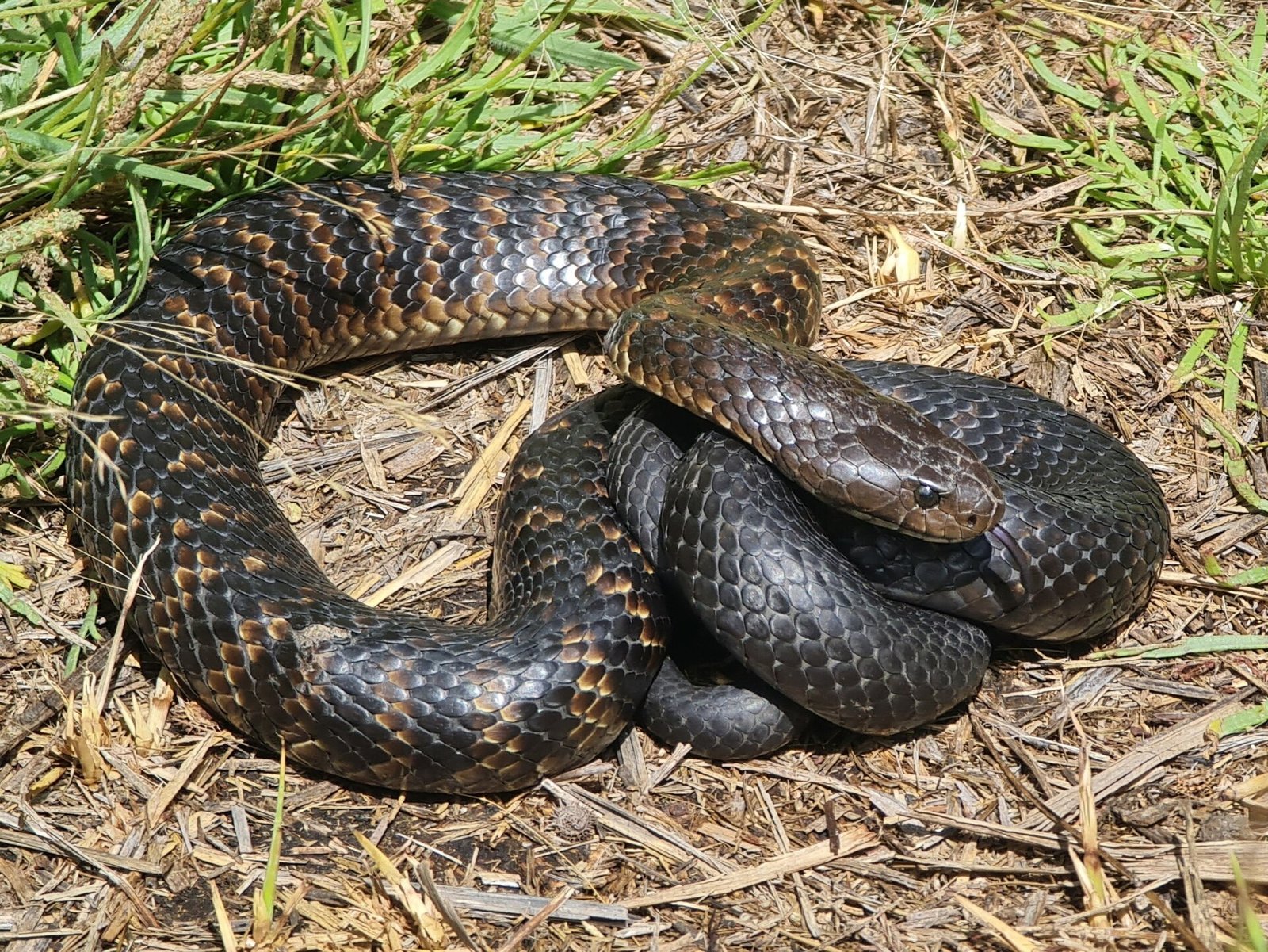
In contrast, Australia has about two snakebite deaths a year, the vast majority being from the Eastern Brown (second most venomous) and about 20% from the Tiger Snake (fifth most venomous). Deaths from Taipans (three species – first, third and fourth most venomous) are extremely rare, with no recorded deaths from the Inland Taipan, which is the world’s most venomous snake.
So, you need to watch out more for the most dangerous snakes, not the most venomous. Although in Australia the two converge somewhat with the Eastern Brown, which can also be pretty aggressive (it even has a grumpy face with frowning eyes). This snake is fairly common, and needs to be given a wide berth. An untreated, envenomated Eastern Brown bite typically results in death in two to six hours but can be as fast as 15 minutes. So if you don’t know your snakes, steer clear of them all.
In Australia, we can be a bit blase about the snakebite risk, probably due to the low death rate. For example, deaths from copperheads are extremely rare although the Lowland Copperhead is the ninth most venomous. Their venom is, by Australian standards, only moderately toxic (equal on a per-mg basis to that of the Indian cobra). So, while the copperhead and cobra are nearly even for venom toxicity, one kills thousands of people a year and the other rarely kills any. Australia has about 3000 snakebites reported annually, with about 500-550 needing hospitalisation or antivenom. Our low death rate is greatly assisted by a sparse population and access to antivenom.
Be serpent-aware
Keep your eyes open and be aware of what’s going on around you. Be careful if you feel the need to stick your hand in a hole or hollow. If there are snakes around, wear decent footwear (dusty boots are good), long pants, and even snake gaiters where the risk of encountering snakes is high – like summer in the NSW/Victorian high country. Carry a snakebite bandage – they now have indicator markings for correct firmness and are available online from about $4.00. For overseas trips, Google the snake situation where you are going (and snakebite treatment generally); your life may depend on it.
Personal encounters
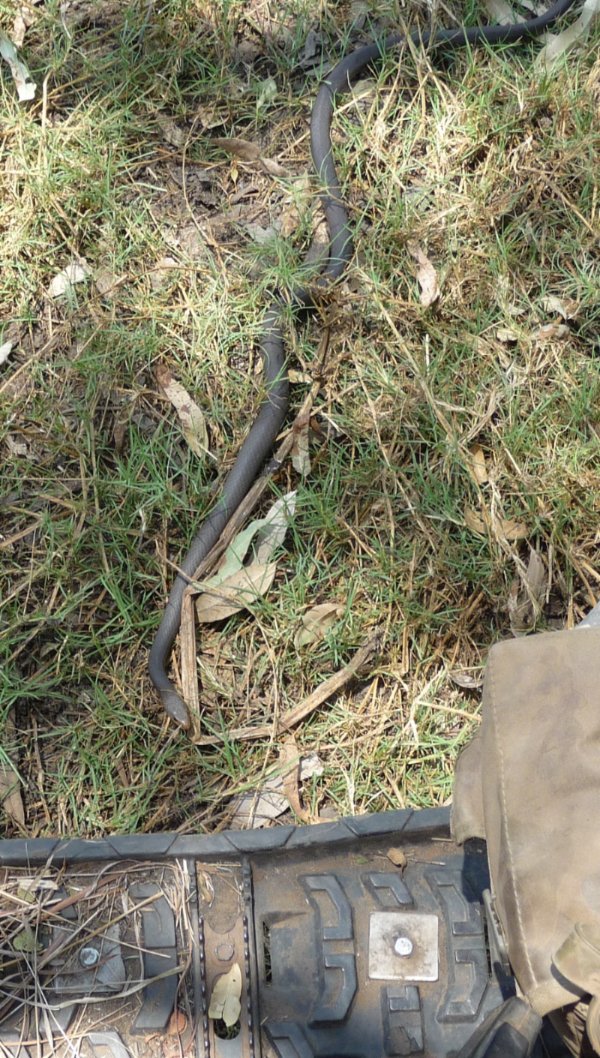
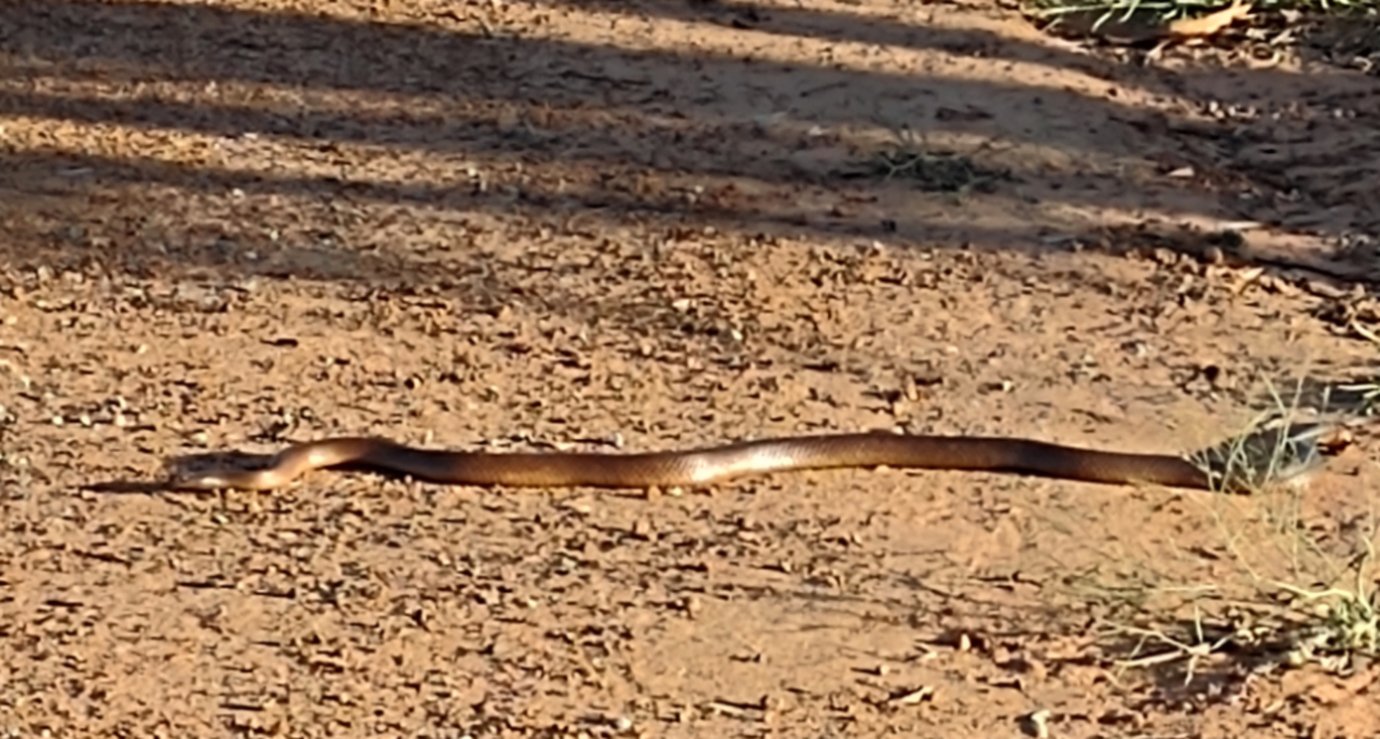
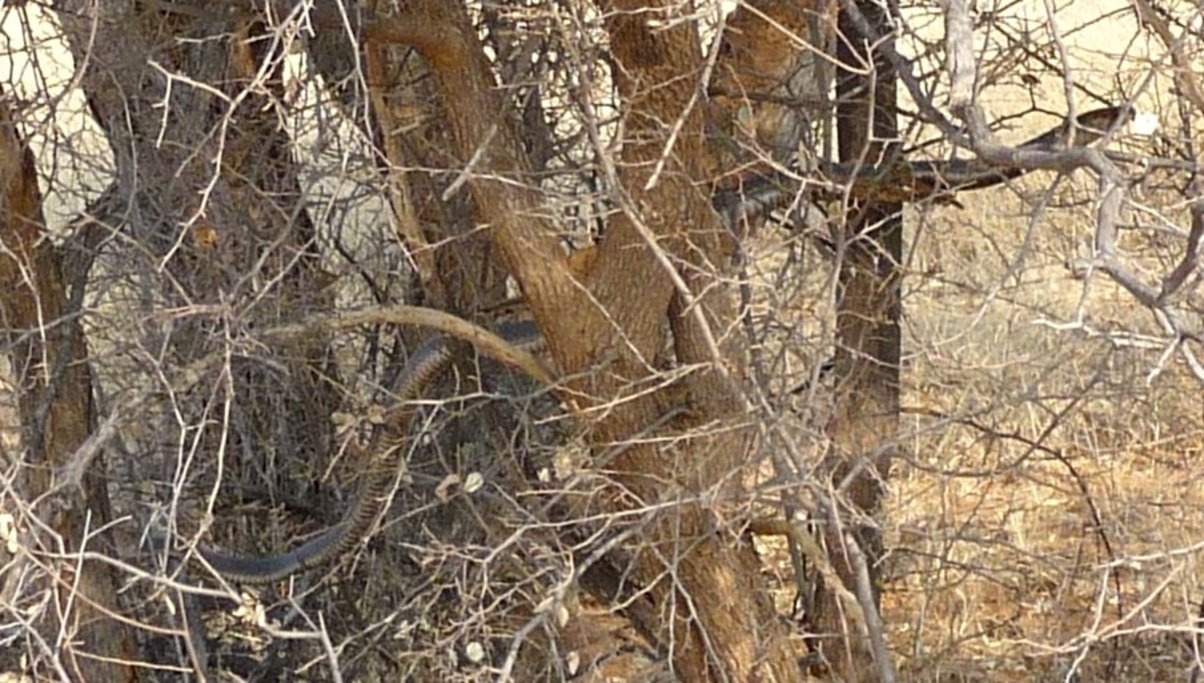
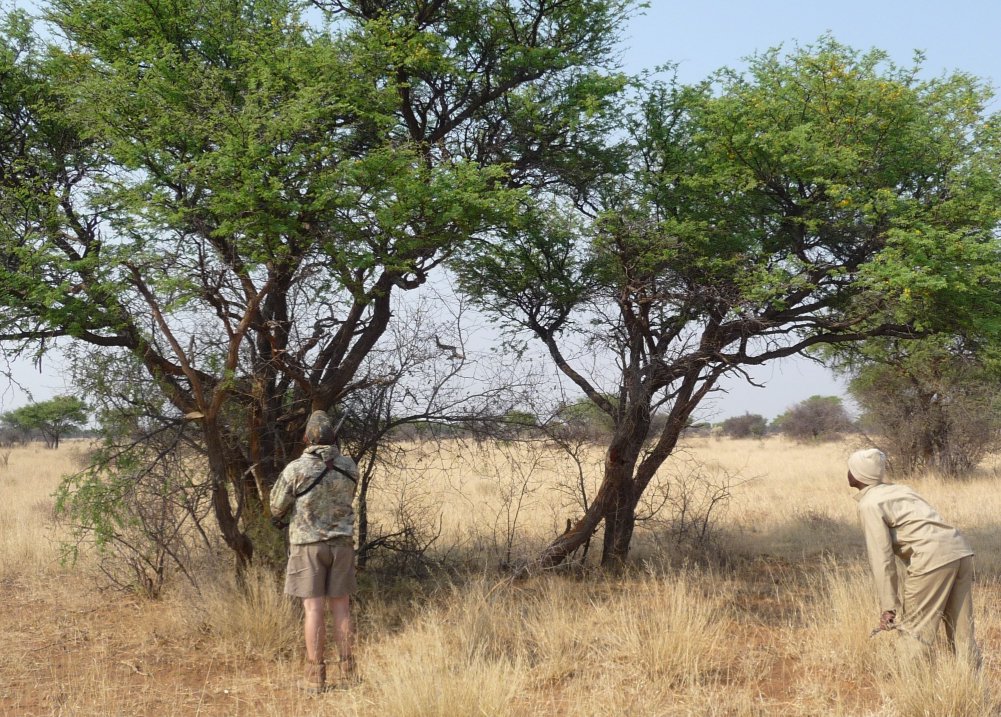
In my travels I’ve come across many snakes, with only a few encounters closer than I would have liked. In Namibia, I had three brushes with cobras. One came into the lodge kitchen and two out in the bush climbed trees to get away. My guide hated cobras and had his tracker throw sticks at them to knock them out of the trees to kill them, but he was unsuccessful in this endeavour. While attempting to visit the cemetery at Lake Grace, Western Australia, a venomous Dugite slowly cruised between the graves in the late afternoon sun. We concluded that seeing a cemetery wasn’t worth dying for and went for drinks instead. In the Northern Territory bush, while having a rest on a quad bike, I was checked out by an inquisitive venomous whipsnake, which determined I was pretty boring and went on its way. I did move my right leg onto the fuel tank for safety during the encounter.
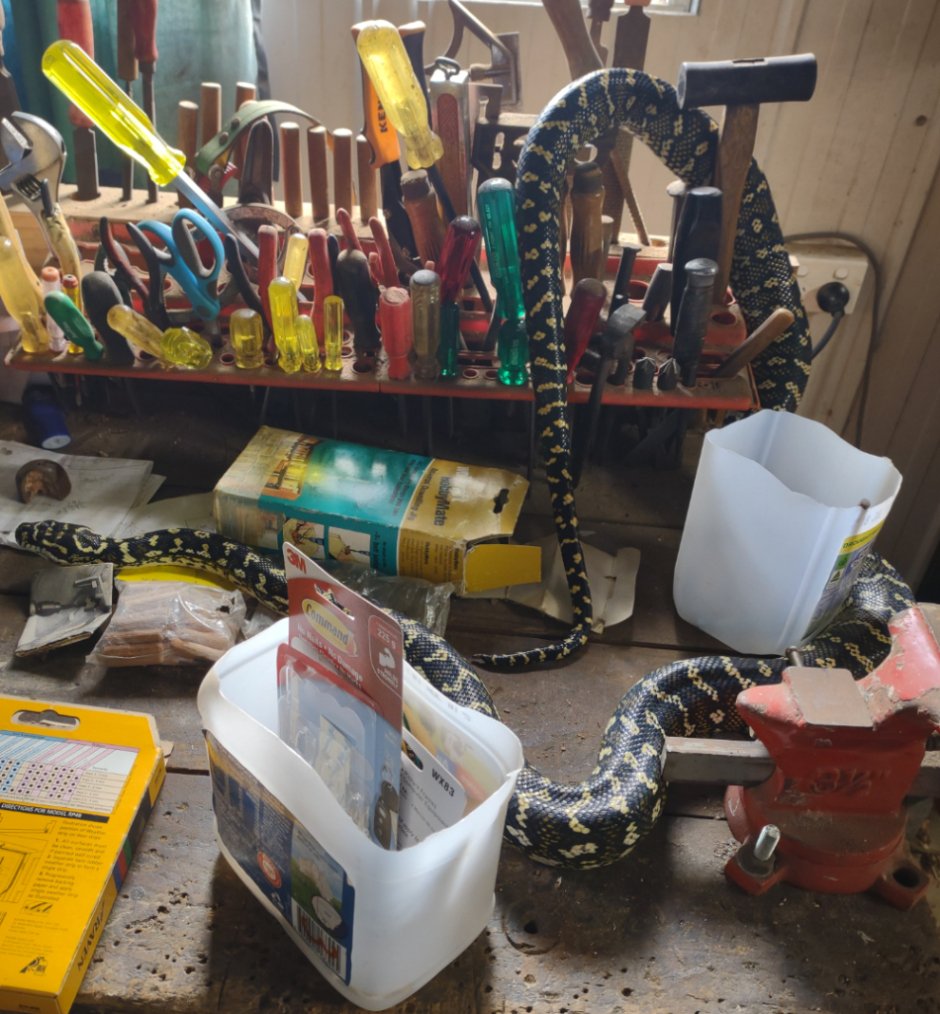
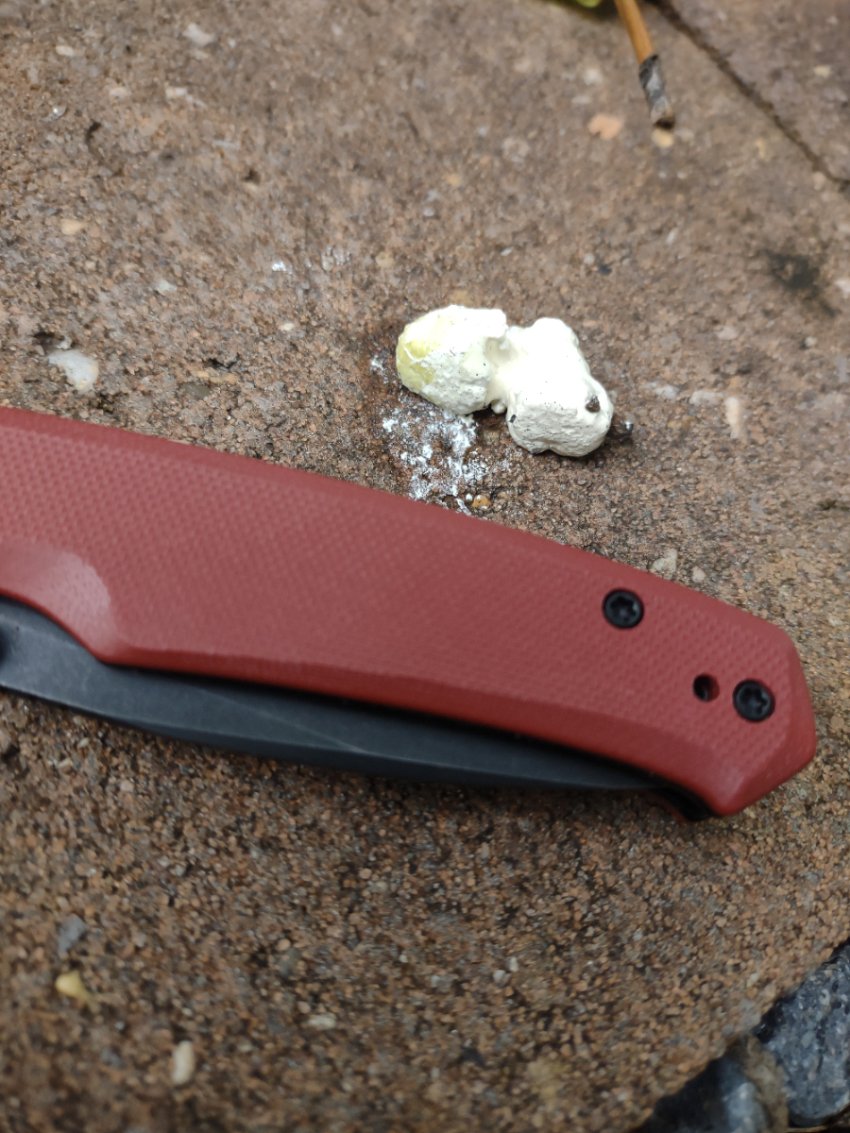
Australia has lots of pythons, and they like living in house roofs as well as in the bush. Pythons are non-venomous and you have to try really hard to get one to bite you. They will usually totally ignore you. I’ve even had one give me a hand at my work bench (or it would have if it had hands). Fun fact – instead of liquid urine, snakes produce solid chalky lumps of urate. While standing under a tall tree I was hit on the shoulder by such a lump from a python. I pondered that I’d been pissed on from a great height many times in my career by human snakes, and now once by an actual snake.
My last advice for the traveller is to just be snake aware and, the experience of Samuel L Jackson notwithstanding, the chances of meeting snakes on a plane are very close to zero.
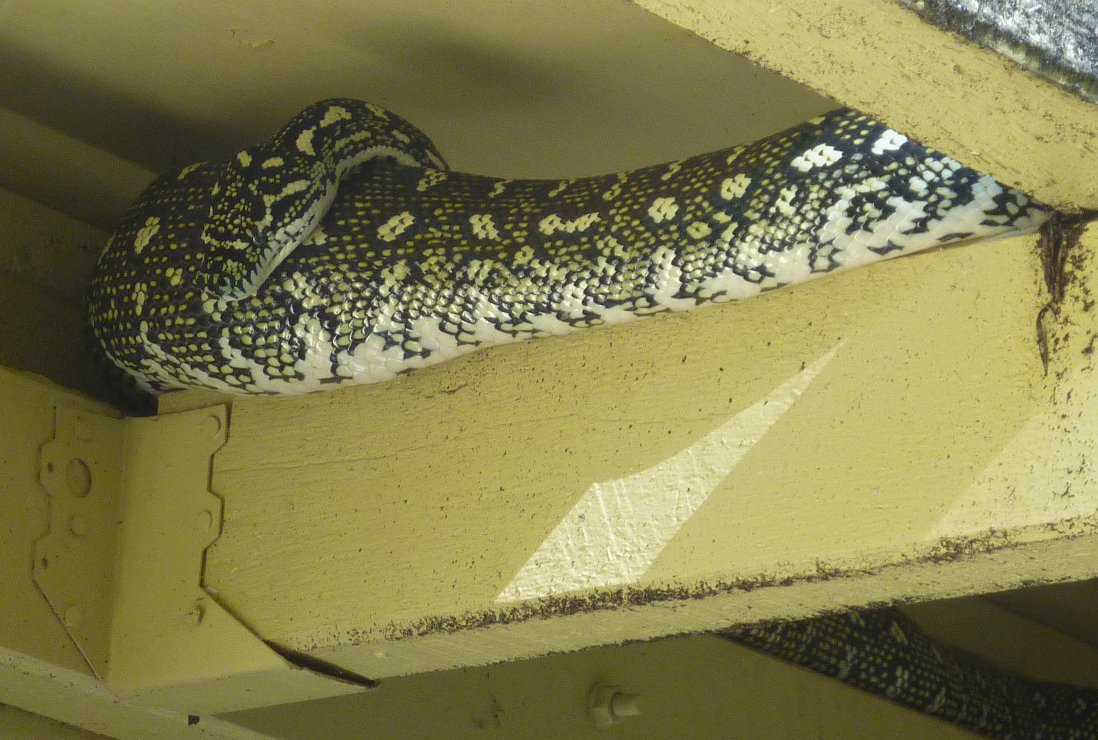
Feature photo courtesy Max Tibby. All other photos taken by Neale.
If you enjoyed Neale’s serpentine reflections, you might also like his articles on his outback travels along the NSW/Queensland border to Cameron Corner, or his observations of day to day things in South Korea.
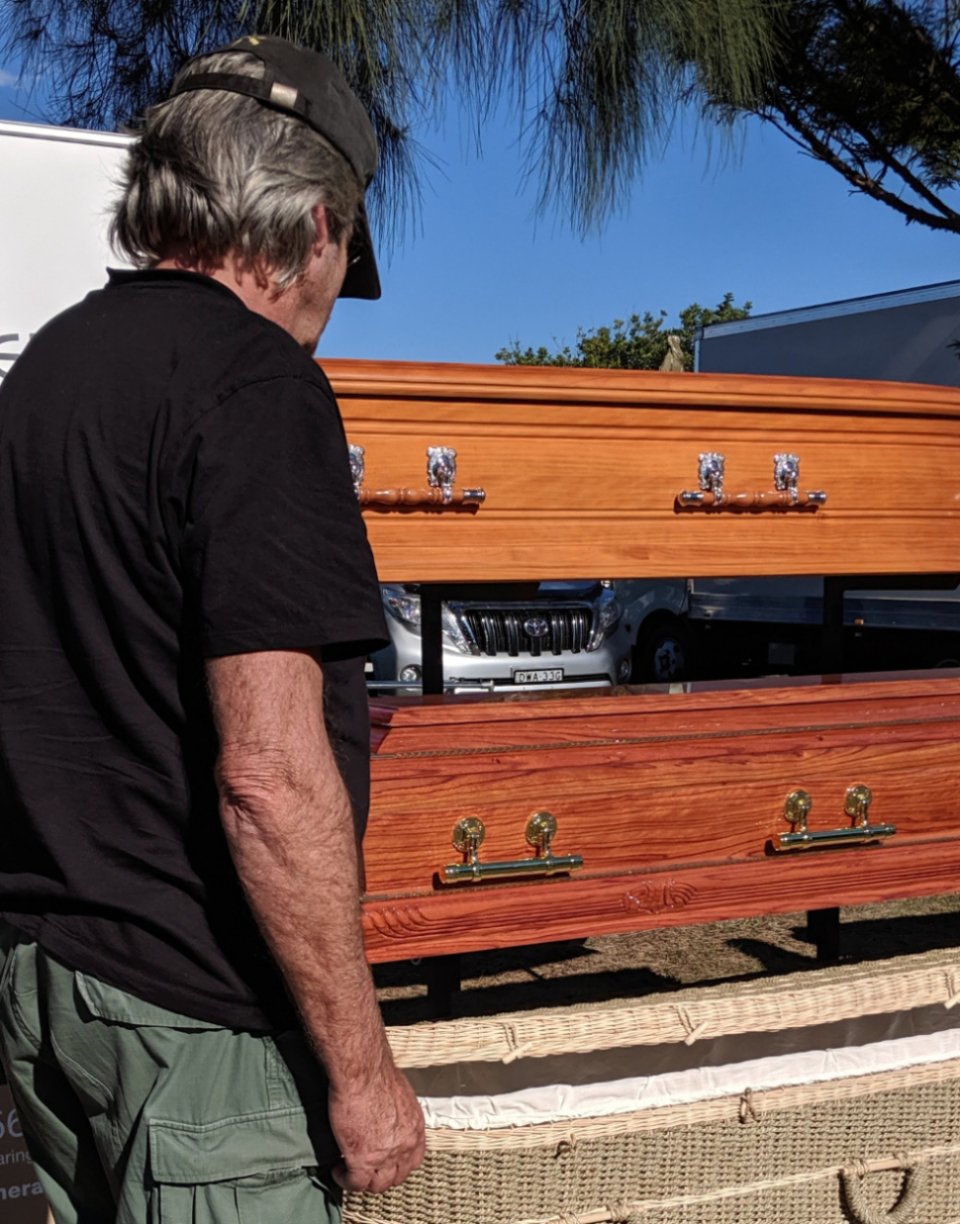
Neale is a former defender of the nation with a natural inclination to avoid most people. He enjoys travel to random, hopefully sparsely populated, locations with interesting architecture, old trains and cemeteries. He is retired and lives near Newcastle in a large patch of vegetation.