
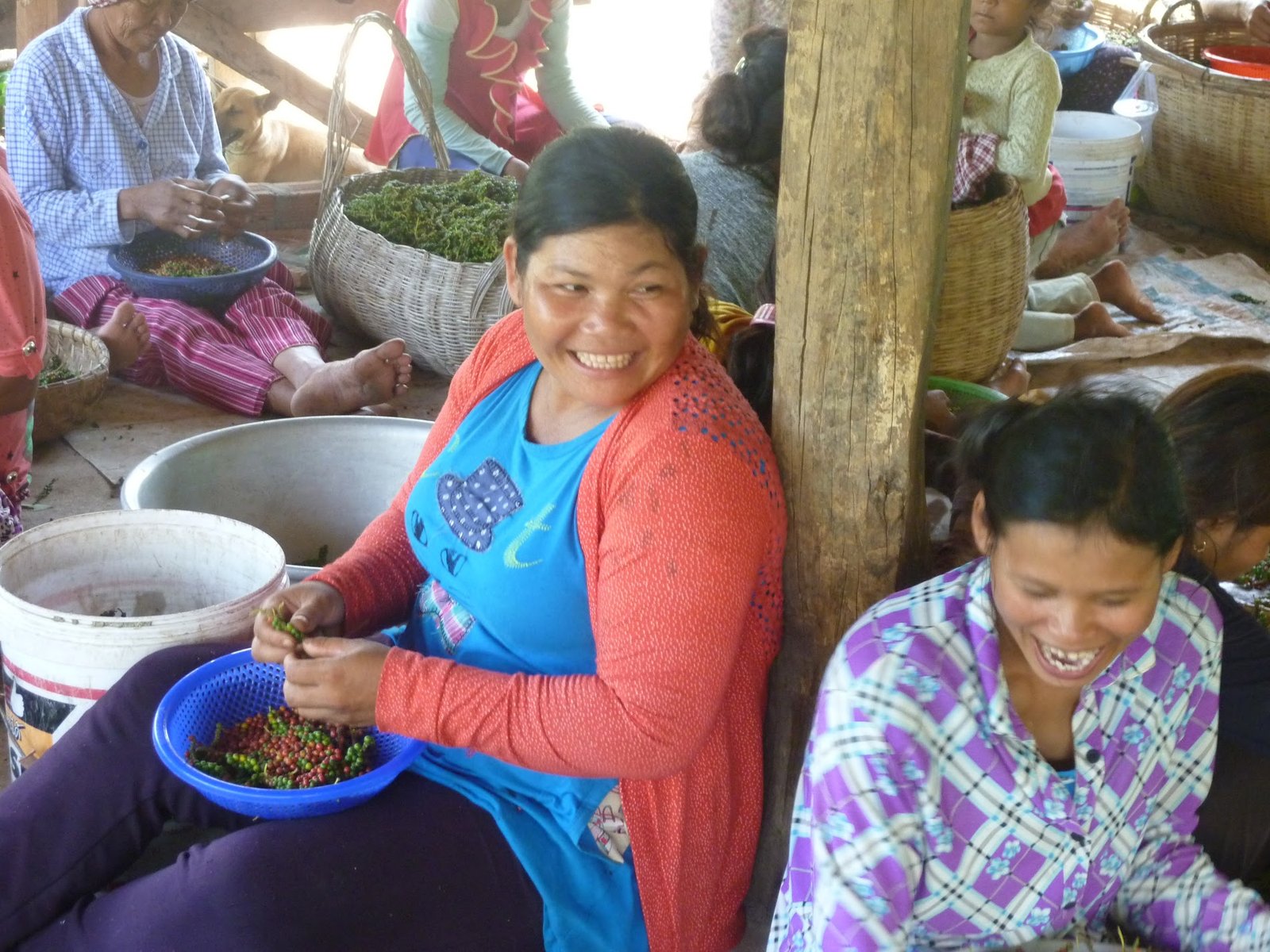
Do you ever think about where stuff comes from? Our supermarkets are full of imported produce and something I like to do when travelling is to seek out where some of it originates.
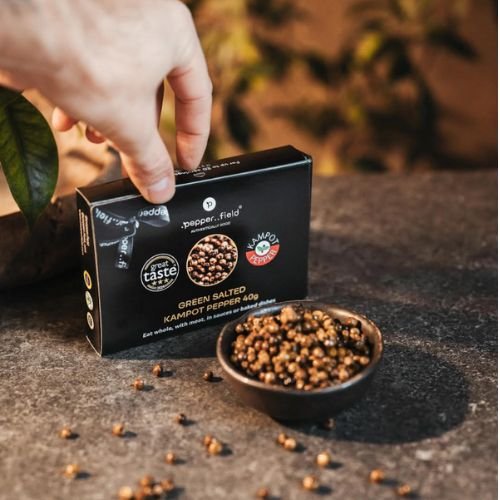
Pepper from the Kampot region of southern Cambodia is regarded as the best in the world. It is something about the soil, and the climate in the gentle hills just inland from the Gulf of Thailand. Kampot pepper has always been in demand. The French established the original plantations and continued to manage most of them through to the 1970s. But then along came the Khmer Rouge, who of course knew better. The pepper plants were destroyed and the workers enslaved. The expatriates fled and few returned. The industry is recovering, but is a long way from where it once was.
This story is part of our Slow Travel in South East Asia series. Read more here.
And the pepper is good. The peppercorns (red, white and black) have a unique piquancy and strength. You can buy a 100 gram vacuum sealed pack of red peppercorns online in Australia for between $35 and $59, and a little less for the black or white. Yes folks, that is a retail price of up to $600 per kilo. Prices come down if you buy larger packets. All figures cited in this article are in AUD.

So where does it come from?
Plantations are dotted throughout the district. The one I visited was Starling Ridge, a 30 minute drive along a dirt road from Kampot. I meet Anna, the owner, a Khmer lady from Kampong Cham who moved to Kampot in the early 2000s with the vision of establishing a high quality pepper business owned and operated by Cambodians. She is generous with her time and explains the working of the plantation and the pepper business to me. I can spare the details but it is not much more than a break-even operation. Farm gate sales of black pepper cover much of her operating costs, but the profit is in the premium white and red pepper, which she sells to a co-branded wholesaler in Phnom Penh.
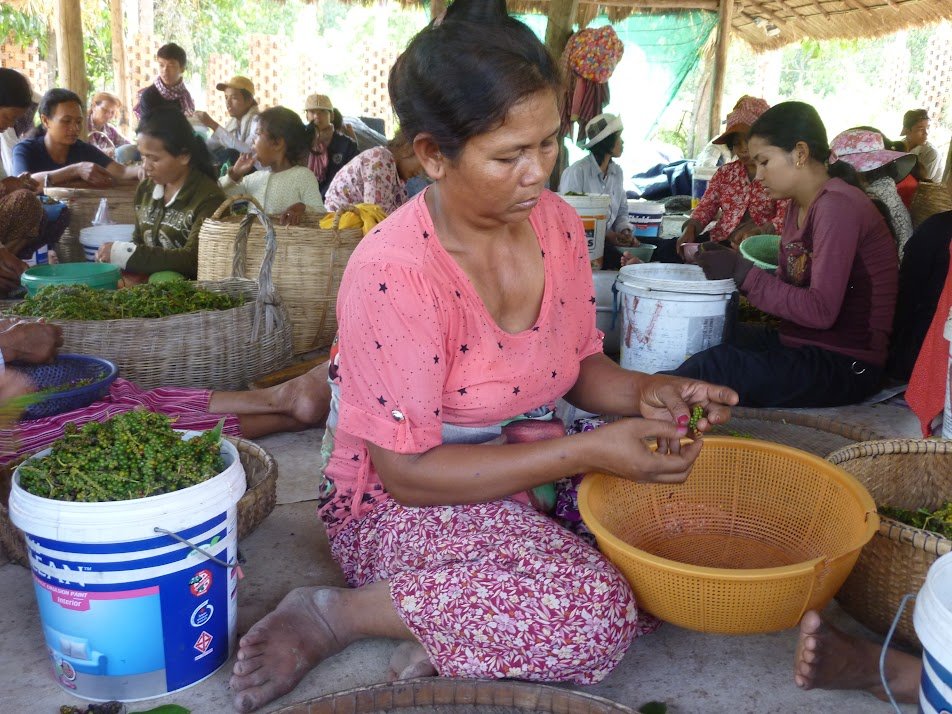
About 100 metres down the hill is an open air shelter. It is not hidden from view – it was clearly visible when I scootered in. Under the shelter are around 30 people from the local area, about two-thirds women. It is the peak of the picking season, and these people have work at Starling Ridge for four to six weeks. They are paid around $6 per day for their efforts, plus room and board if they need it. They sit on the ground or on small stools in the shade in groups of four or five, surrounded by buckets of freshly picked pepper stalks. They chat away as they pluck the red peppercorns off the stalks, then return the rest (which are all green) to the buckets. The red corns will be dried in the sun and then whisked away to the packing plant; the remainder will have additional processing on the farm to become white and black pepper. To create white pepper, there are additional steps to boil the corns then remove the outer layer.
I spend the next three hours sitting with some of the older ladies, plucking peppercorns and chatting through an interpreter.
Each of them has their own story, experiences and worries, most of which I have no hope of comprehending. But there are common threads running through the discussion. They know little of the world beyond their farms and families, and have no interest in broader issues. All of them have clear recollections of war and famine, but they laugh a lot and there is a sense of serenity about them based on faith, family and food. They all go to the Wat when they can. There is no shortage of food because they live in a place where the climate is kind and food plentiful. And they all have big families who will look after them as they age. Compared to the horrors and deprivations they experienced as younger women, life is now good.
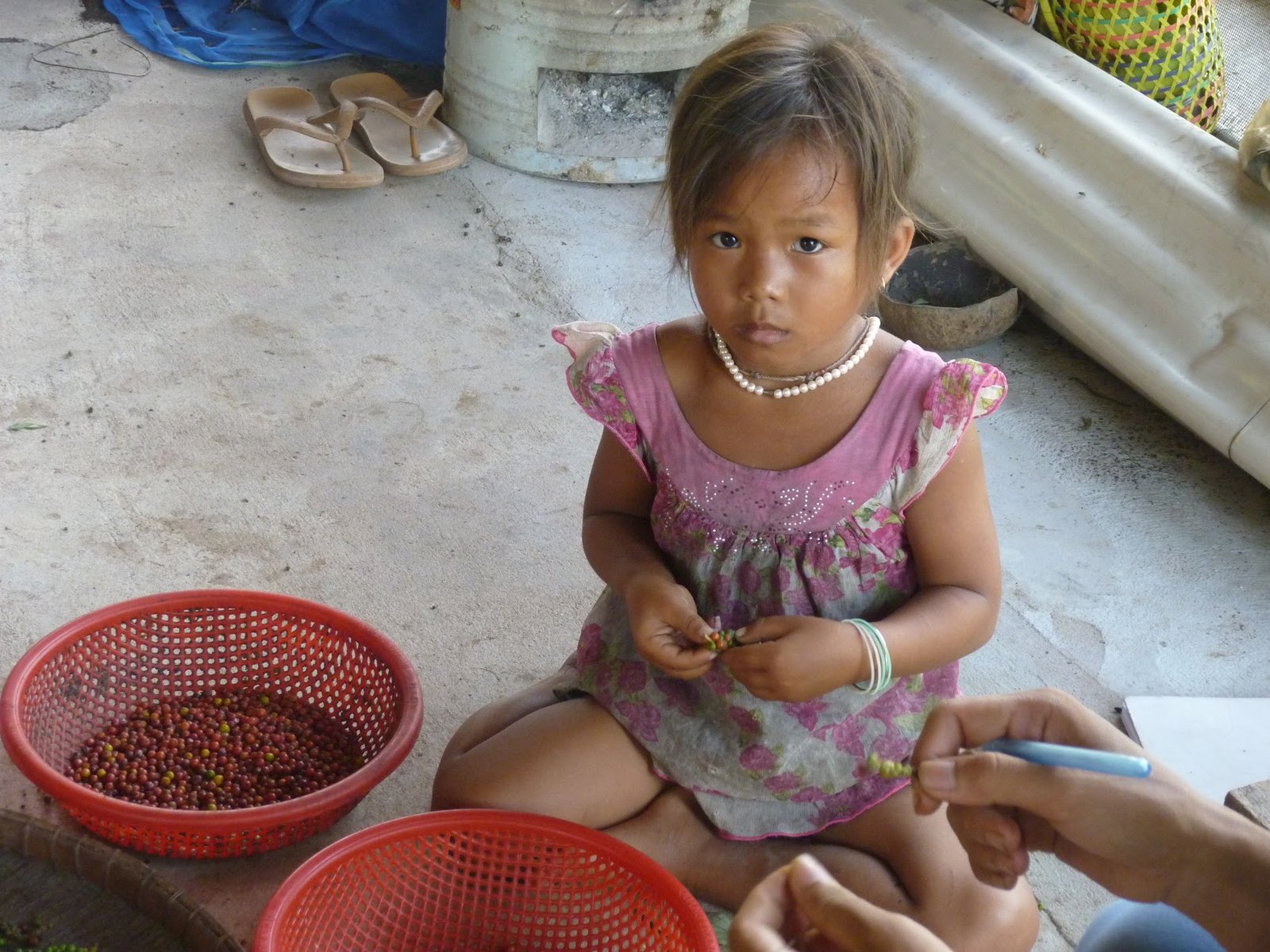
Much of our discussion is about family. They all have children who have moved to the cities, typically for manual labour jobs. Other offspring have remained in the district. Very little earnings come back to the families, but the ladies don’t seem to care. Parents cannot give children better opportunities if they don’t know the opportunities exist. No government or benefactor is going to help them. Cambodia does not yet have the leadership and resources to tackle poverty and illiteracy on a broad basis. In most cases, particularly in the countryside, it is up to the individual families to change their circumstances – or not. None of these ladies or their families would know what to do. In these communities it takes an exceptional parent, or an exceptional child, to take the bold step to move themselves out of poverty.
And Anna’s attitude to the men and ladies over the hill? I would say genuine affection. Anna is determined to maintain the business in Cambodian hands, and to look after the people who work for her. She knows what the ladies went through. She pays the workers slightly above what other farms do, and at the end of picking season she will put on a party with food, music and beer.
So back to the money. Anna sells her red peppercorns to the wholesaler for around $30 per kilo, a little less for the white and black. I did visit the wholesaler, and their selling price is about twice what they pay Anna.
Given the asking prices in Australia and elsewhere, it is clear that the main profits are being made beyond Cambodian shores. If I buy a 100 gram packet of white peppercorns online for $45.00, only around $3.00 finds its way to the Starling Ridge farm. And a miniscule fraction of that ends up in the homes of the ladies plucking the peppercorns in the shade.

Steve is a former Army officer and technology manager, now semi-retired and living in Melbourne. He enjoys adventurous travel and believes that good stories should be shared. He founded the Dusty Boots Journal as a means to connect those with similar interests.