
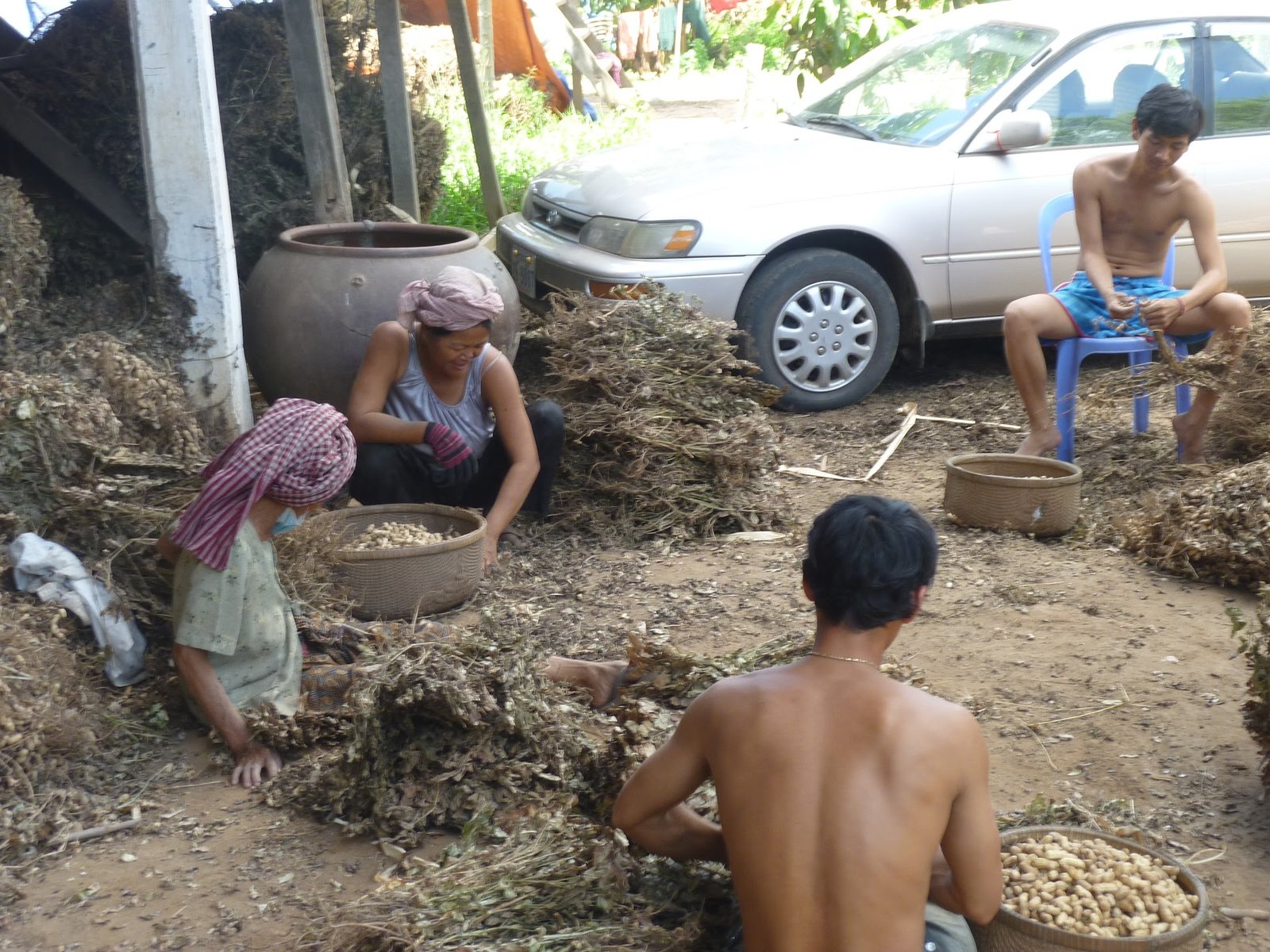
This is another of my ‘Where does stuff come from?’ ramblings. We may not think much about the humble peanut or where it originates, but I have been to a village that makes almost its entire livelihood out of the ubiquitous legume.
I have no idea where any individual peanut comes from and I defy anyone to do so. They are grown all over the world and distributed through massive wholesaling networks. Peanuts are a fairly homogenous product and a Cambodian peanut is pretty much the same as a Thai or Egyptian one. By global standards, Cambodia doesn’t produce much, and exports are via Thailand. But that doesn’t matter – what is interesting to me is the dynamics and economy of the villages in Saang district, an hour and a half by tuk-tuk south east of Phnom Penh. I spent a day in Phom Prek village.
This story is part of our Borderlands & Crossings series. Read more here.
The Bassac River is the artery of the community. It provides the many villages with bathing and drinking water, fish and various aquaculture products such as water lilies and lotus. The river floods annually, leaving silt and nutrients in the fields. It is fertile country which produces a range of crops including rice, sugar, tropical fruits, chillies, sesame, and just about any vegetable you could think of. But above all else, Phom Prek is a peanut village.
It is hard to judge the size of the village. There is a small marketplace on the main road and a number of streets running in all directions. The main road is sealed, all other streets are dirt, and in May it is the dry season and the air is filled with dust. Houses are typical of this area of the country, with the sleeping rooms elevated and the living and eating areas in the open air below. There are children everywhere and as I walk conspicuously along the street I am obliged to respond to the incessant calls of ‘Hello!’ Apart from this one word, no English is spoken.
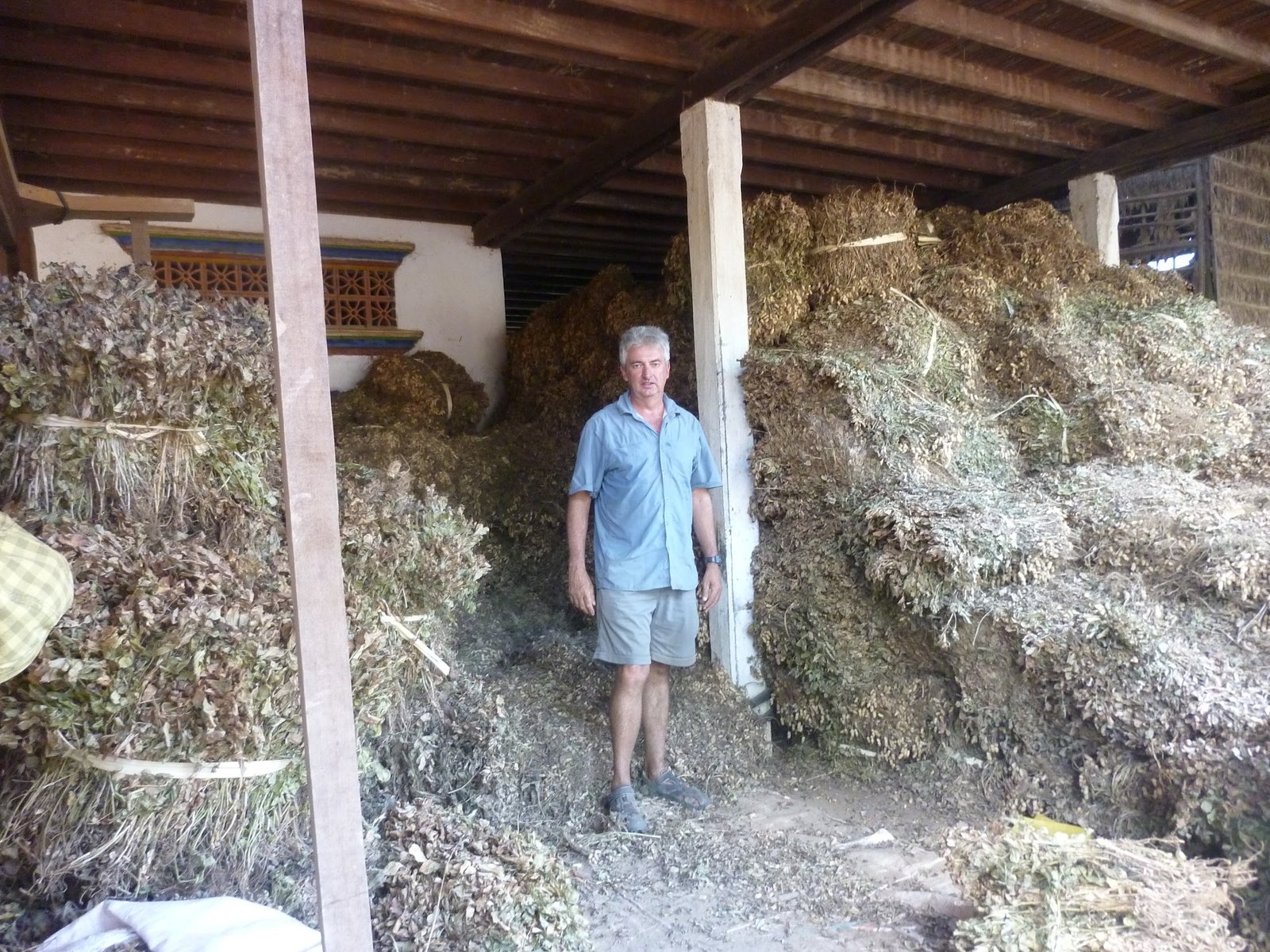
My interpreter and I spend a day being hosted by Nai Houy Son and her family. The peanuts have been pulled from the fields in the previous weeks, and every house in the village has bales of peanut stalks stacked underneath. Hundreds of people work long days for eight weeks pulling the peanuts off the stalks. It is dirty, monotonous work, and I joined in for a day.
Nay Houi’s house in the village is on a hectare of land, which grows enough fruit and vegetables to feed the family, and trade at the village market. Her two hectares of farmland are three kilometres away on the floodplain. The farm has been in Nai Houy’s family for many generations, though they were lucky to recover it after the Khmer Rouge occupation. Nai Houy and her brothers share ownership and use of the farmland. Peanut seed is sown in December and the peanuts are ready for harvest in March and April. It only takes a couple of days to rip the stalks out of the ground and dry them in the sun. Then they are tied into bales and moved by truck to the village for picking.
Nai Houy is fairly certain she will produce about 2000kg of unshelled peanuts this year, a good crop. She thinks she will get 80c per kilo, but this is by no means assured. Therefore, she is expecting to gross US$1600 for her crop. I asked her if she understood how much it cost her to produce her crop. She gave an embarrassed shrug and said no. So I pulled out a piece of paper and we figured it out. Skipping over the detail the bottom line is she will make a profit of about $600 for the year, and if the price drops below 50c per kilo, her crop will have cost her money.
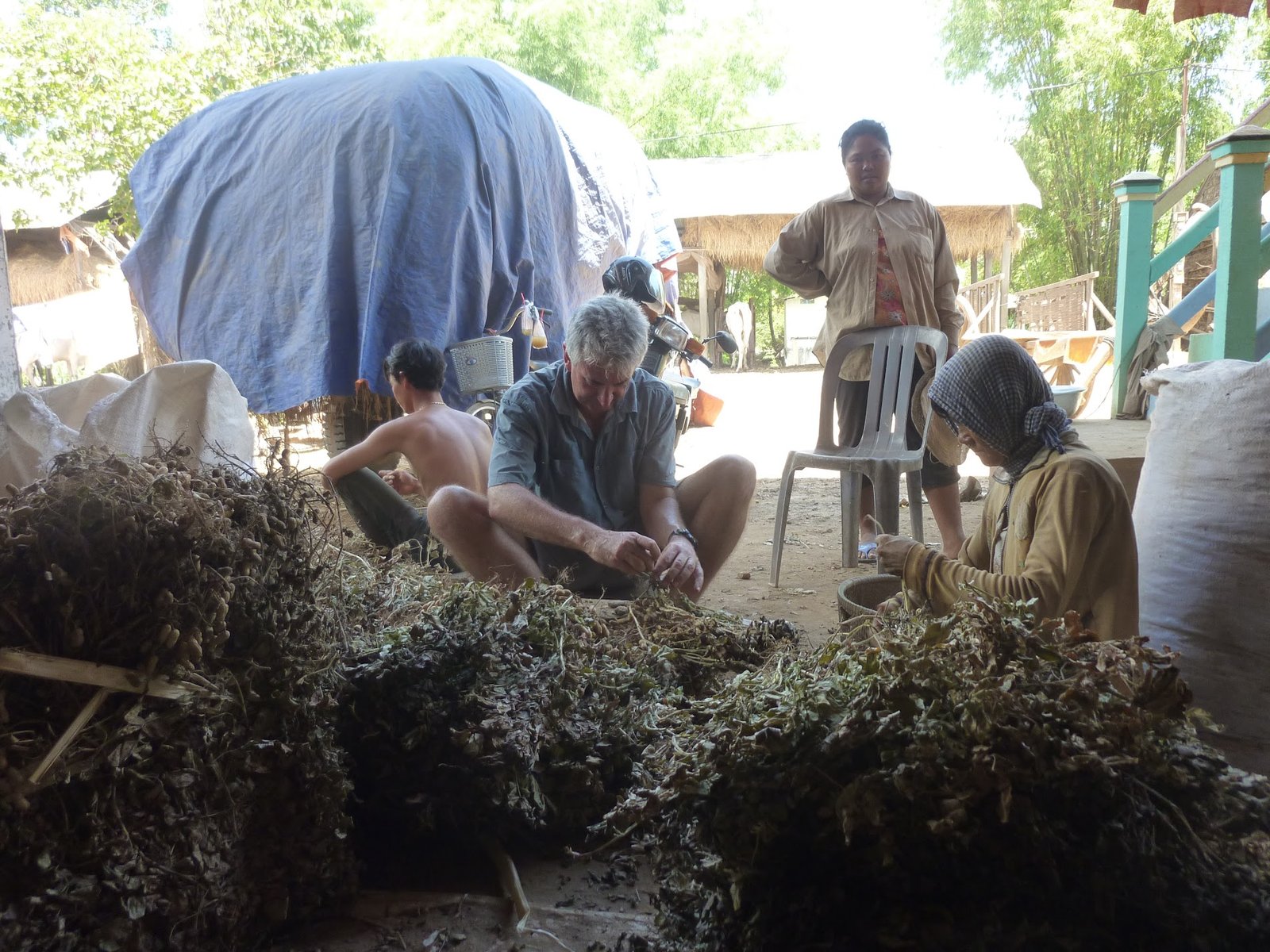
So I sit with Nai Houy and two other ladies under the house, stripping peanuts off stalks and putting them into baskets. The stripped stalks will be feed for the family’s seven cows for the next year. With skill developed through repetitive work, the ladies work quickly, and the faster they work, the faster and louder they talk. I start off clumsily but gradually get into a rhythm. After a couple of hours my hands are red and blistered.
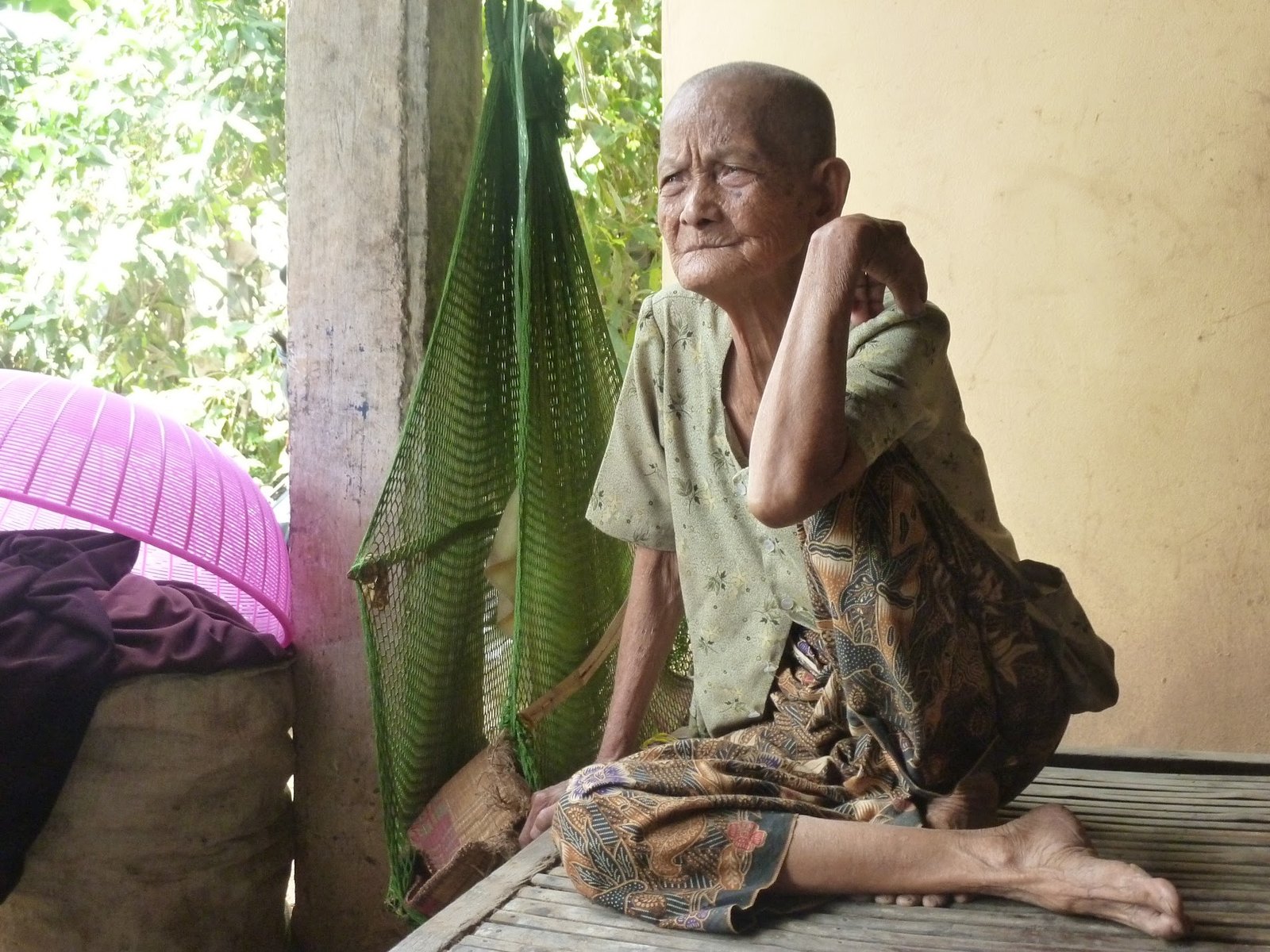
One of my companions is Nai Houy’s mother, Song Heang. She gave birth to six children, the last one when she was 49. She has much to say about the Khmer Rouge days and considers herself lucky to be alive. Before the revolution she had been a fabric wholesaler. When the Khmer Rouge arrived they confiscated all her assets and put her to work in the rice fields, planting and harvesting and keeping the birds away. Knowing she was a business person, the child soldiers tortured her employees and forced them to denounce her. She thought the denouncements would mean the end of her, but the local commander stepped in and showed mercy. She is not sure why, but she thinks it may have had something to do with her sister’s connections. She said that it was hard to know who was working with the Khmer Rouge, and who was not.
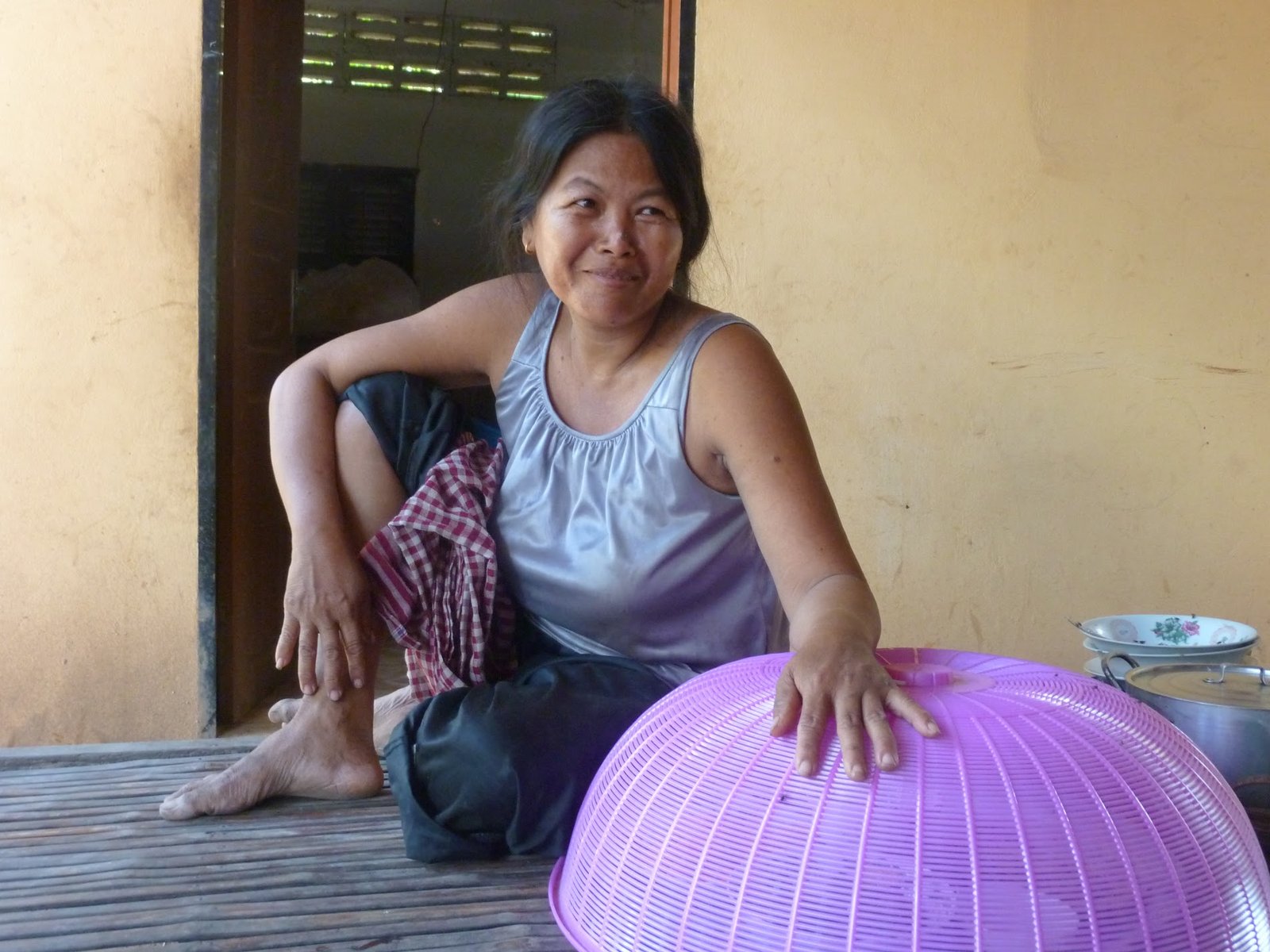
The discussion reveals how simple their lives are. None of them had any schooling. Nai Houy can read and write a little, the others are illiterate. Nai Houy’s son Raksmey finished school, went to university on a scholarship and lives in Phnom Penh. His mother and grandmother are immensely proud of him, and while they realize he is lost to the farm, they believe that he is living in a better world.
Nai Houy’s other great success has been to hold onto the farm all her life despite the war, and being deserted by her husband after one child. She credits the support of her brothers and their families. When she is no longer able to work the farm she will pass it on to someone else in the family.
None of them know anything about the rest of the world and they say they like it that way. Nai Houy and her mother have been to Phnom Penh to visit Raksmey and his family, and while they say it is fun, they also find it exhausting and cannot wait to get home. They all watch a little television, but only the drama shows. None of them have tried food other than what they make themselves, and none drink alcohol, tea or coffee. They have no social life as we in the west understand it. For them, life is about work. Neighbours will visit, but rarely for meals; there are no structured social events other than weddings. They all go to the pagoda every eight days. I ask them what Buddha means to them and Nai Houy responds that Buddha has taught her how to be a good person. She knows she is poor but that the next life may be better.
But somehow these women, and the other people in the village, have managed to combine efforts to turn their poor surroundings into a viable life which brings them some intrinsic satisfaction. They barter amongst themselves and minimize the need for cash. They have the good fortune to live in a place where food is naturally plentiful, and the place is not overcrowded. Nobody goes hungry and family and neighbours look out for each other.
Before we leave the village we pay a visit to the peanut wholesaler, or ‘middle man’ – a term I hear frequently in Cambodia. He works out of a tin shed which is stiflingly hot inside. In one corner is a peanut shelling machine, and bags full of shelled peanuts, each 30 to 40 kg, are piled high. The bags are destined for the markets in and around Phnom Penh. Nai Houy may get 80c per kilo for her unshelled peanuts; the shelled nuts wholesale for $1.30 per kilo which is a modest markup given that the weight of the shells has been removed. At this point the peanuts are ready for retailing and need no further processing other than packaging. Most Cambodian peanuts are consumed domestically, but a proportion are bought by Thai and Vietnamese brokers for onselling. By the time they reach western supermarkets they are selling for about $10.00 per kilo. I wonder what Nai Houy and her mother would think of this.
If you enjoyed this story you might also like Cashew Farming in Cambodia: Lives Shaped by Land and History.

Steve is a former Army officer and technology manager, now semi-retired and living in Melbourne. He enjoys adventurous travel and believes that good stories should be shared. He founded the Dusty Boots Journal as a means to connect those with similar interests.