
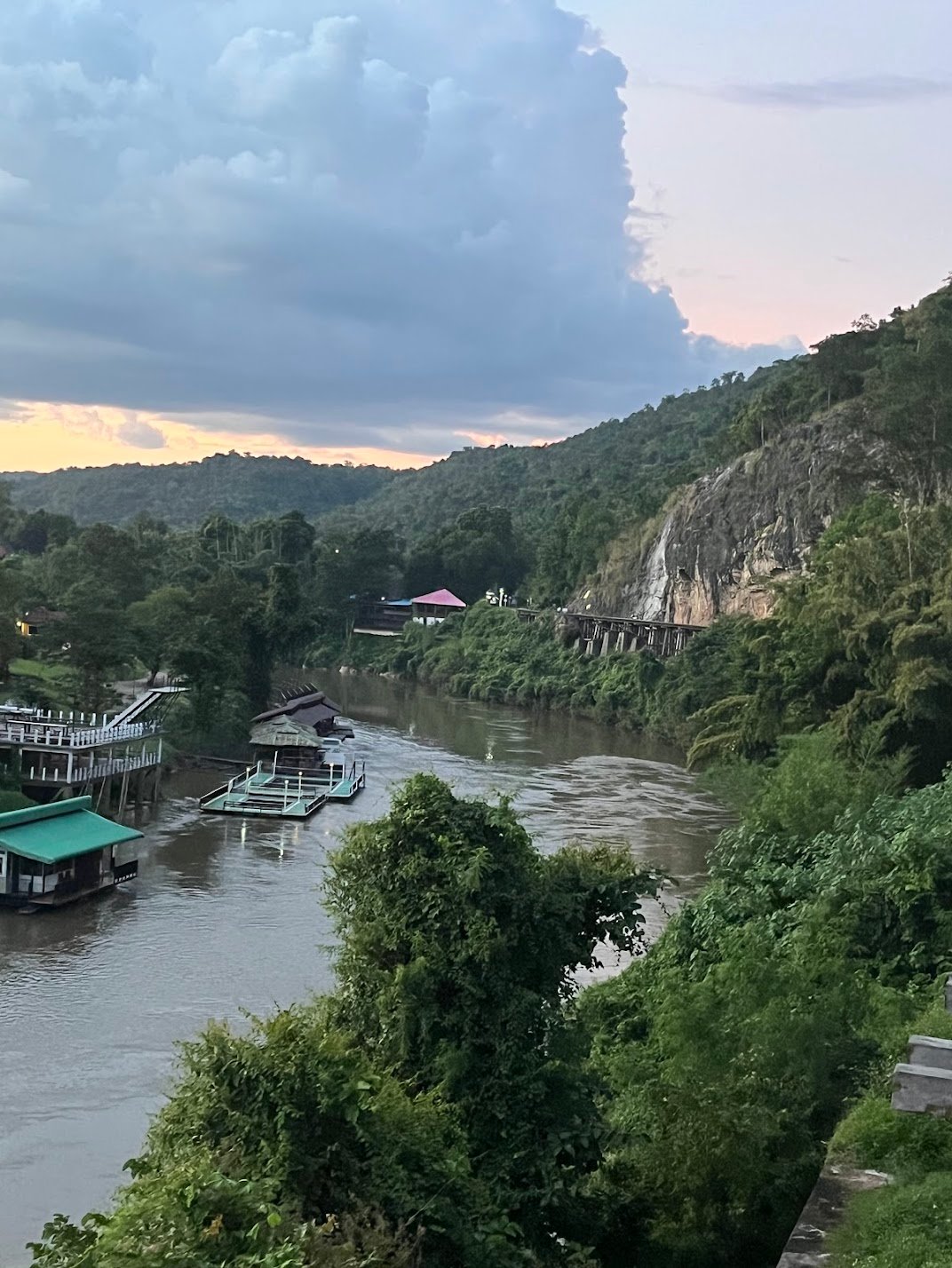
Some quick background for those unaware…this train trip in Thailand is a tourist train. It is still called the Death Railway out of respect to the thousands of prisoners of war and forced labourers who perished during the construction of the 415km Thailand-Burma Railway during the Japanese occupation in 1942-43. The rail line these days starts at Thonburi station in Bangkok. It picks up the wartime rail route at Nong Pla Duk and goes as far as Nam Tok. So it follows about 130km of the wartime route, including crossing the famous River Kwai bridge at Kanchanaburi.
I’m not going to describe the trip itself – it is well documented. Those considering taking the train should read about it on Richard Barrow’s excellent Thai Train Guide website here. Richard’s information is current and correct, and a fine guide to the journey.
This story is part of our Travel Writing & Reflection series. Read more here.
What I will do is relate a few aspects of my trip. I arrived at Thonburi about an hour before departure. Not really necessary but you never know with the traffic. My ticket cost 100 baht ($5). I picked up some boiled peanuts, a packet of small cakes and some water from the market stalls nearby and sat on a platform bench, just as a tropical thunderstorm started. There were maybe 40-50 people on the platform, mostly Europeans – not a big crowd. A number of them got onto the train 40 minutes before departure, obviously to secure a good seat. I took my chances, stayed in the fresh air and got onboard about 10 minutes before whistle time.
The carriages are not air conditioned, but there are old ceiling fans at regular intervals, grinding away with determination. The air conditioning in the train is provided by open windows and is great when it is moving. But sitting in the station with windows closed against the storm, it was a sweatbox. I prowled through the train and discovered that some carriages have padded seats and some have bare wood, many of them occupied by perspiring Europeans who clearly did not comprehend the benefits of prowling. I found a good padded spot, wrestled the window open and off we went.
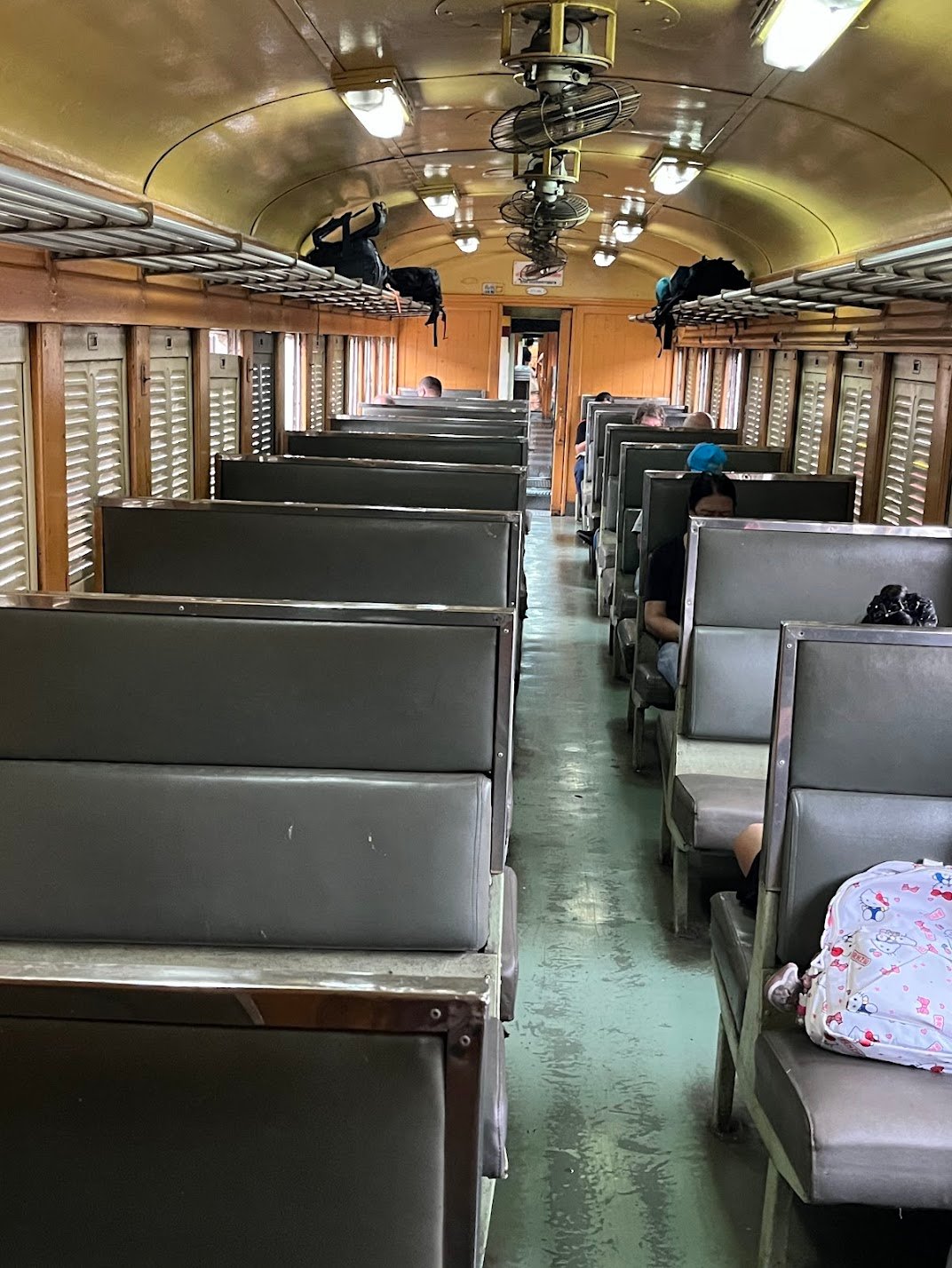
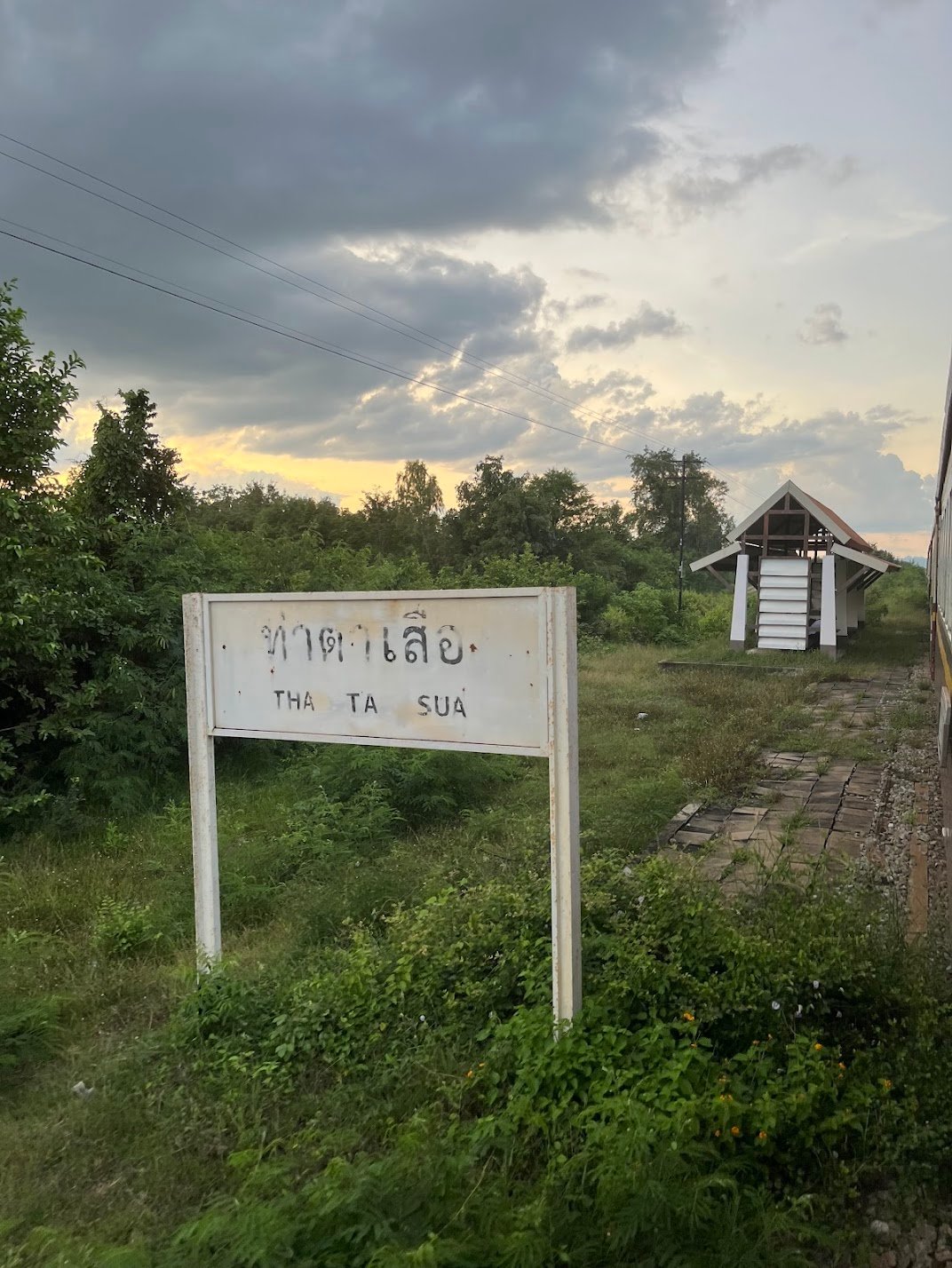
The rain stopped after 30 minutes and all windows were opened. The first hour is through the metro districts of Bangkok and then we were in the countryside. It was a brilliant trip through farmland and villages, stopping frequently as it is also a commuter train for locals.
We crossed the famous River Kwai bridge at Kanchanaburi and from there the track began to wind around the hills, including over the spectacular Tham Krasae wooden viaduct. I rode the train all the way to Nam Tok and stayed there overnight before continuing my travels further west. A few days later I returned via Kanchanaburi and picked up the train there for the return trip.
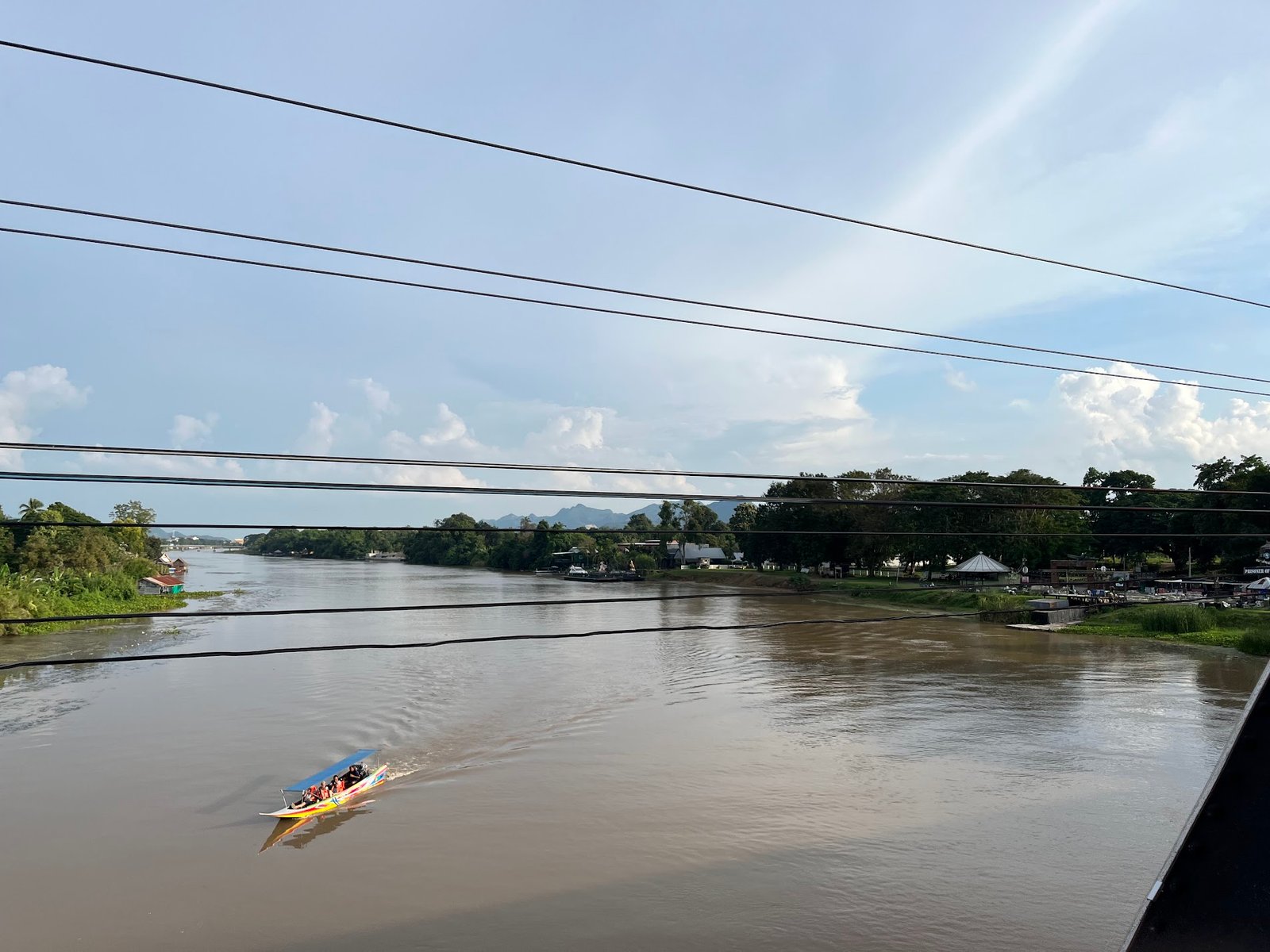
All through the trip I witnessed normal life – sugar cane fields, villages, kids playing soccer. The war was 80 years ago and the local people have no recollection and little reason to care. But taking the trip is a small way of honouring those who suffered and perished so terribly all those years ago. To get an understanding of those years, visit the Hellfire Pass centre, and the museum and cemetery at Kanchanaburi. And there have been plenty of books written including original memoirs.
One thing that occurred to me is that it is still possible to die on this railway. I counted three ways to perish, particularly for those seeking a Darwin Award. Firstly, people have died falling from the Tham Krasae viaduct, and I can see why. Nobody stops people from crossing over, hopping across the sleepers. An approaching train whistle when near the midpoint would present a compelling dilemma. Second, on the train itself. There are no real safety standards. Windows are open and you can sit on the ledge, leaning out, with obvious hazards of toppling or thumping into some immovable object. I leant out a few times but only at very slow speeds.
And thirdly, on the bridge at Kanchanaburi. It is a tourist hotspot and people swarm across the bridge all day long. As a train approaches it stops, toots and waits for the bridge to clear before proceeding slowly. At intervals along the bridge there are alcoves where people can stand and take pictures of the passing train. However, some people do like to play chicken. When I was there I witnessed a rather broad-beamed and loud-voiced French woman stand on the track, iPhone clicking as the train approached her at slow speed. She jumped into an alcove just in time, but I felt for the poor train driver. What must they think of us sometimes?
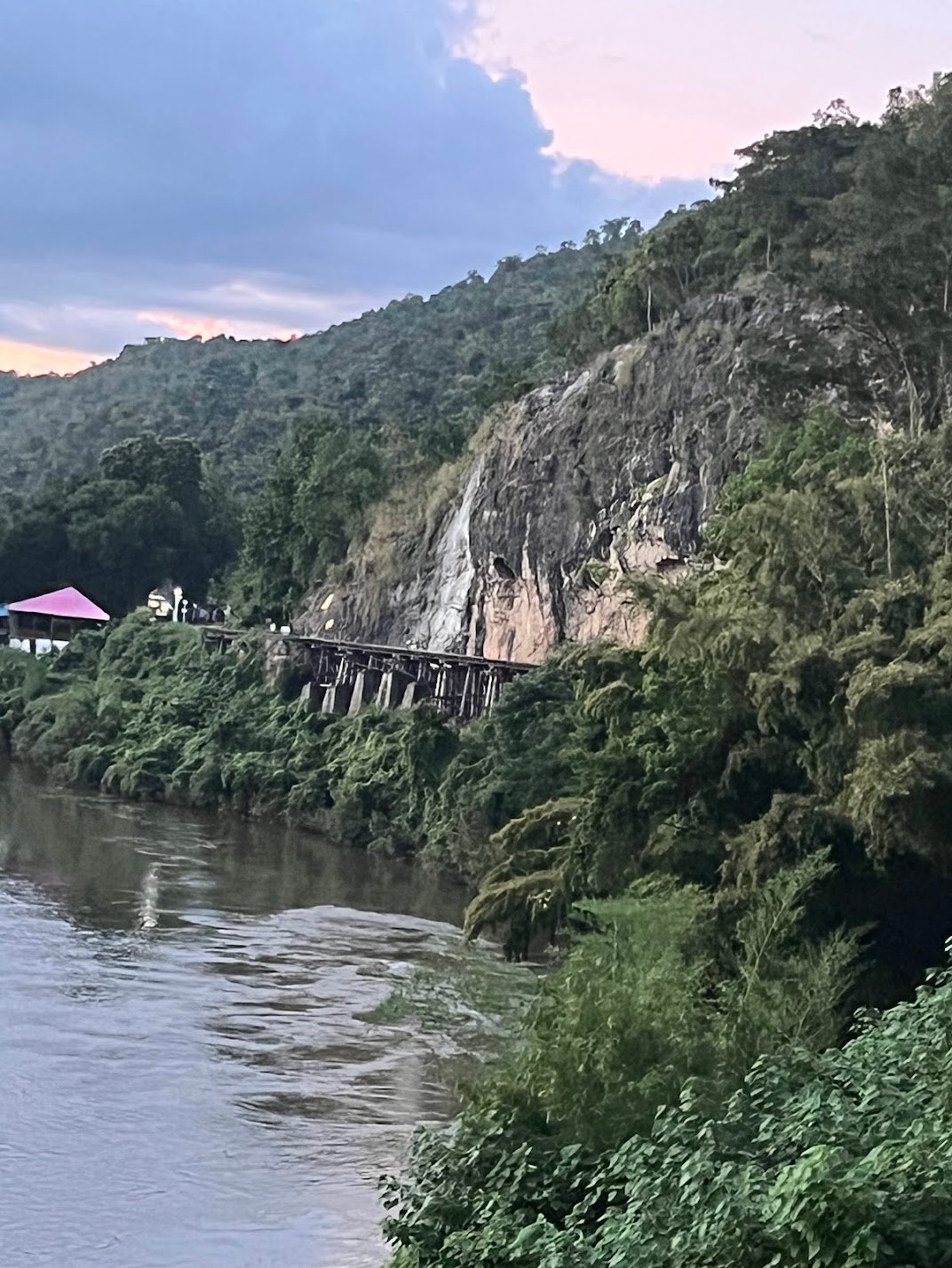
View from the train as it approaches the Tham Krasae viaduct. The original viaduct was constructed by prisoners.

Steve is a former Army officer and technology manager, now semi-retired and living in Melbourne. He enjoys adventurous travel and believes that good stories should be shared. He founded the Dusty Boots Journal as a means to connect those with similar interests.