
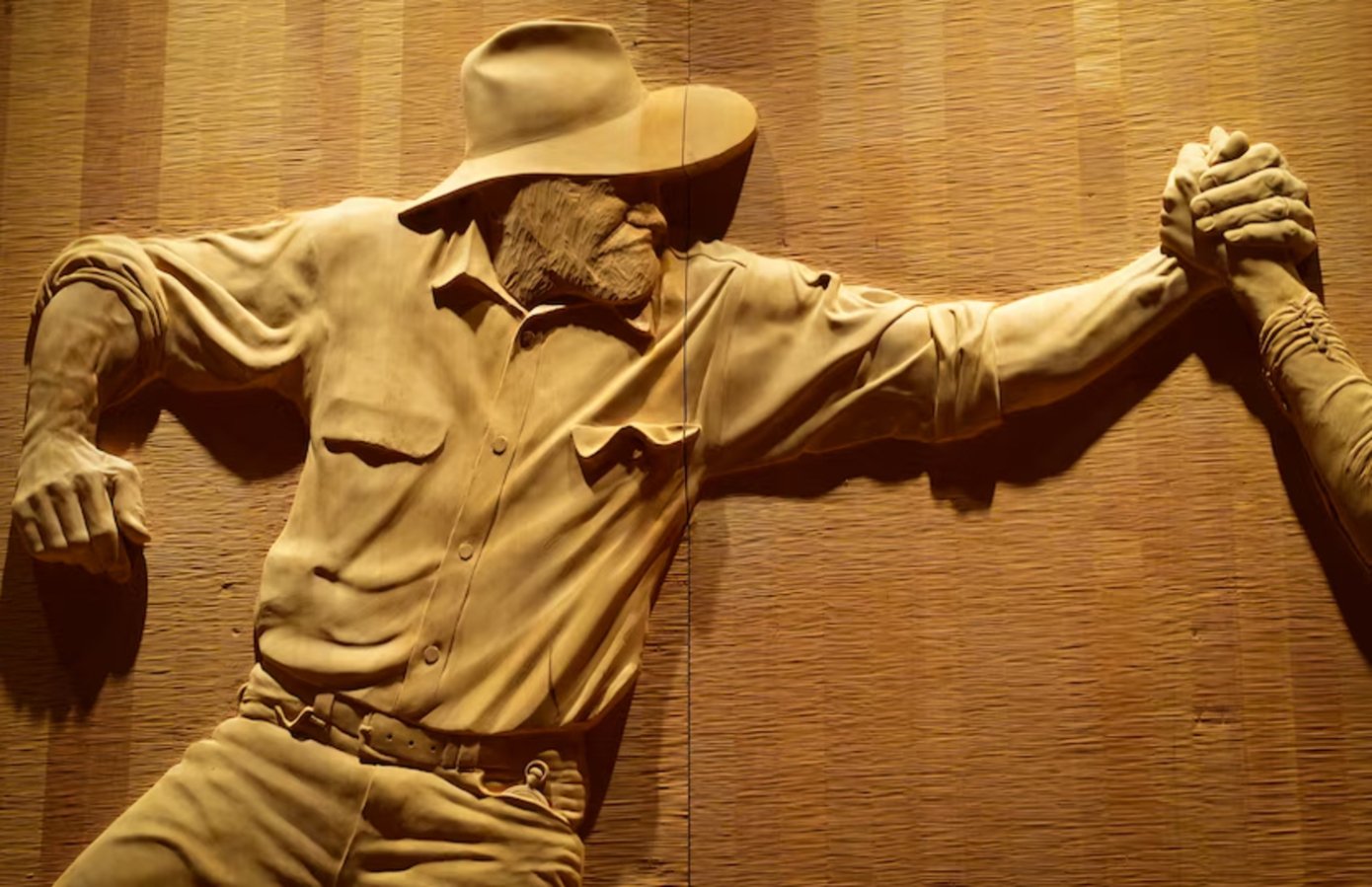
For over 50 years I have played with wood – made things with it, marvelled at the wood carvings in ancient European cathedrals, and visited wood fairs, turning displays, suppliers, saw mills and woodcraft sales. I’ve probably seen more wood than an aging porn star, but all that paled when I saw the Wall. If Banjo Paterson could see it, he’d probably say ‘I have seen full many woodworkers since I first commenced to roam, but nowhere yet such a woodworker have I seen’ (probably copyright AB Paterson, The Man from Snowy River). The Wall in the Wilderness, to give it it’s full name, exceeds my ability to adequately describe it – it’s impressive.
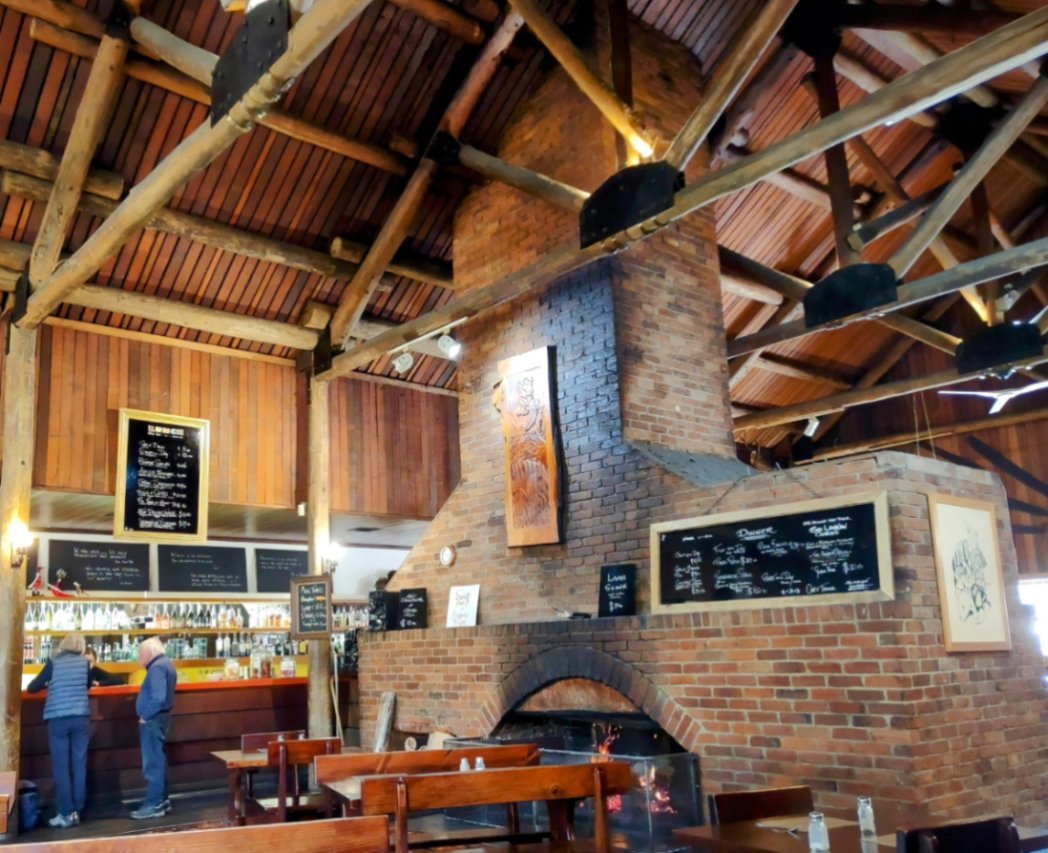
A few weeks driving around Tasmania saw us overnight in Derwent Bridge, which is pretty much in the middle of Tasmania and not close to anywhere. The town isn’t big – a roadhouse, hotel and about 20 buildings, for a population of about 40 people. We stayed at the hotel which had a rather large open fireplace, which was handy as the room it heats was very big, the ceiling was very high and the temperature outside was bracing. We arrived mid-afternoon and settled into a pair of comfy chairs. I whipped out a book and we got into some day-drinking.
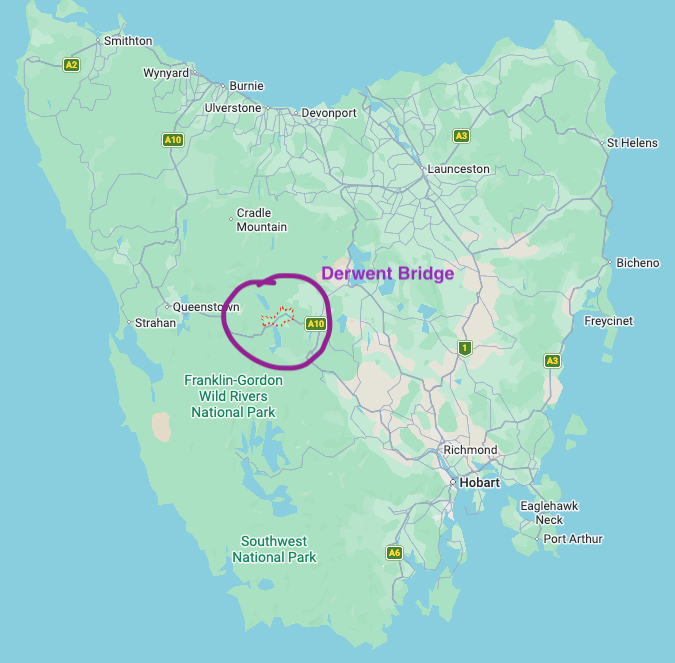
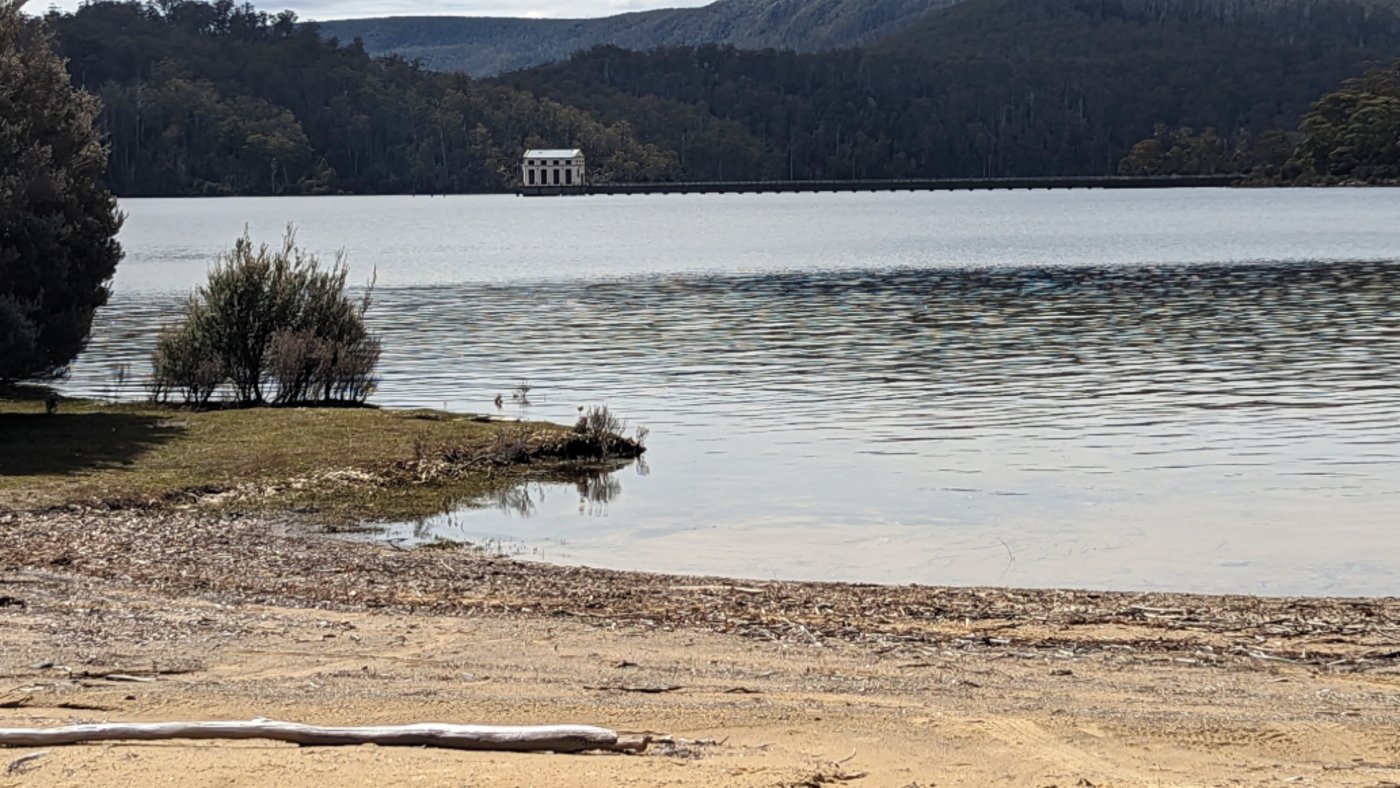
The next day we checked out nearby Lake St Clair – very scenic, and Australia’s deepest lake. The visitor’s centre was very busy, being the start/end point for busloads of overnight trekkers who, for whatever reasons, wander the surrounding mountains. Then it was off to see the Wall, located on a bush block about a kilometre out of town.
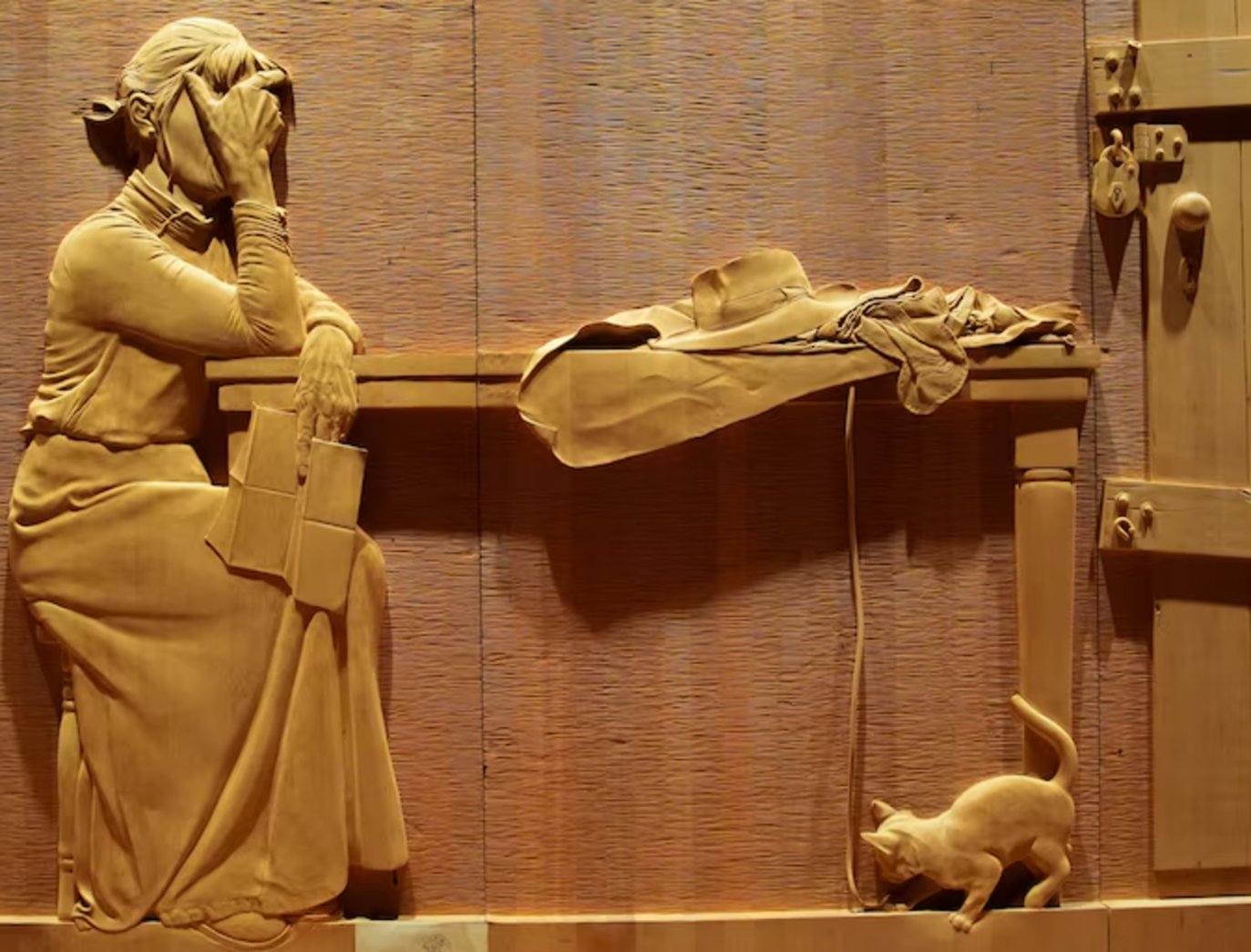
The building and surrounds are an interesting collection of metal and wood sculptures, architecture and furniture. Photography isn’t allowed but you can Google it or go to this ABC site, from which I unashamedly acquired the accompanying photos. The Wall itself is made from large Huon Pine panels, depicting Tasmanian history and animals. Huon Pine is a pretty special wood and has been rare and expensive for some time. The sculptor, Greg Duncan, has done a good job just gathering that much in one place. Then he’s done an even better job of carving it.
As usual, I only got around to Googling it after the event. The reviews, while 95% positive, have 5% of visitors bitching that it’s expensive (it didn’t break the pension), that it’s appalling that signs state ‘Badly behaved children will not be tolerated’ (great, I don’t tolerate them either), and that photography isn’t allowed (not ideal, but I’ve visited other tourist attractions with such restrictions). It does have fairly random opening hours and their website isn’t the best. But these aren’t significant when compared to what you get.
This story is part of our Australian Back Roads & Remote Travel series. Read more here.
If You Ever Get To Derwent Bridge….
Located in the high country of the Central Highlands, Derwent Bridge serves as the literal and metaphorical gateway to the Tasmanian wilderness. Situated on the Lyell Highway, it marks the crossing of the Derwent River near the southern tip of Lake St Clair, Australia’s deepest freshwater lake.
Historically, the area was a vital transit point for early explorers and surveyors moving between Hobart and the rugged West Coast. In the mid 20th century, it became a hub for the Hydro-Electric Commission workers who sculpted the surrounding landscape to harness Tasmania’s water power.
The essentials:
- Elevation: 730 metres above sea level (pack that rain coat).
- Location: 175km northwest of Hobart; 235km from Launceston.
- The Gateway: Known as the southern entrance to the Cradle Mountain-Lake St Clair National Park, a UNESCO World Heritage area.
- The Deep End: Just 5km from Lake St Clair, which reaches a depth of over 160 metres, making it the deepest lake in Australia.
- Climate: Classified as sub-alpine. Fog and cold snaps are common even in summer. In winter it’s a legitimate snow zone.
- The Vibe: A high-country outpost where you have to slow down – mostly because you’ll want to stay by the pub fireplace.
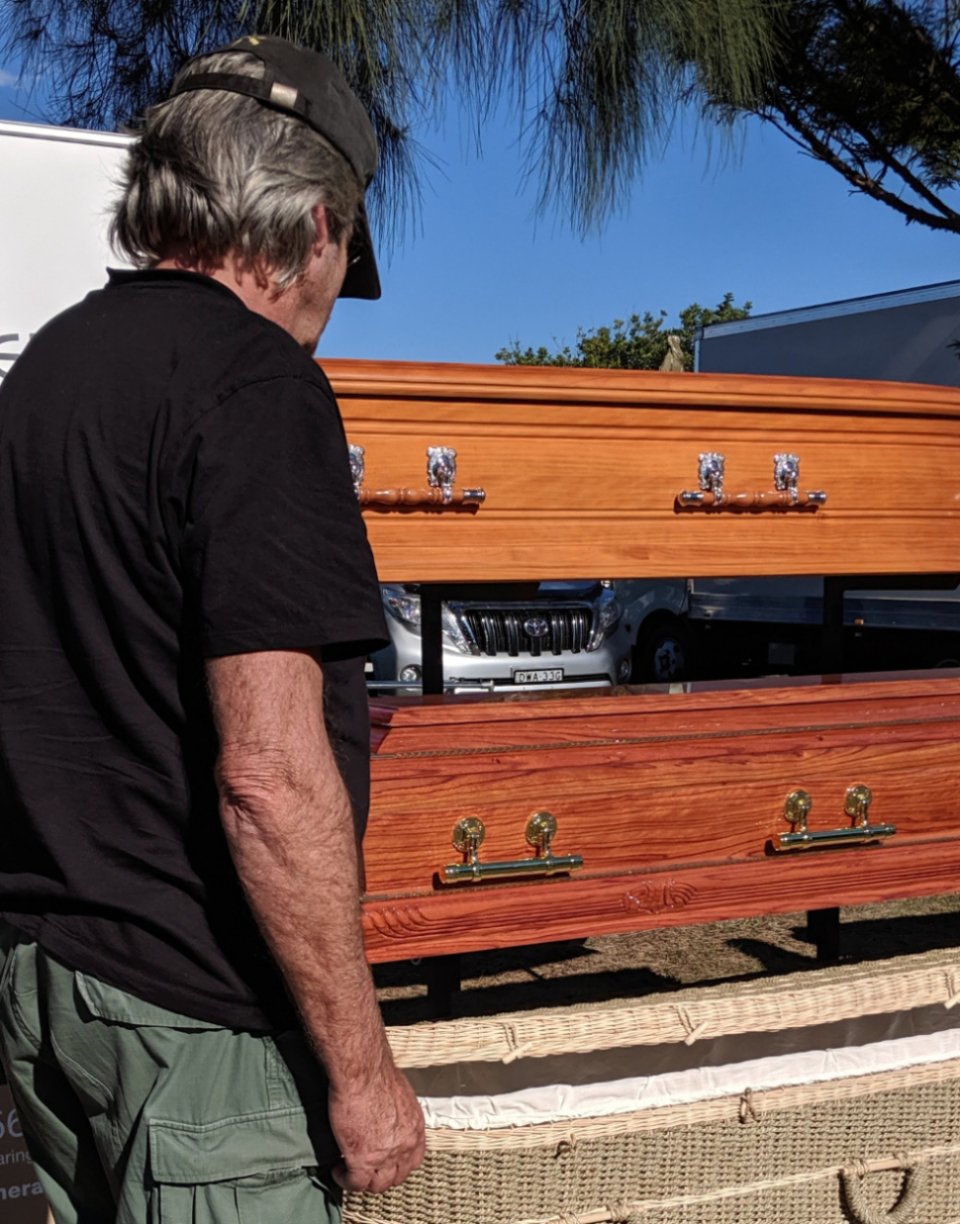
Neale is a former defender of the nation with a natural inclination to avoid most people. He enjoys travel to random, hopefully sparsely populated, locations with interesting architecture, old trains and cemeteries. He is retired and lives near Newcastle in a large patch of vegetation.
The man in that feature photo looks very familiar, Neale!
Well spotted Al, holding that pose for the time it took him to carve it was a tad tiring on my left bicep.