
A call from Muz confirmed a two-day adventure was on. I couldn’t make the first day due to a prior engagement to see Swedish punk band Viagra Boys. Coincidentally, my favourite song of theirs is called ‘Worms’. We were to encounter many ‘worms’ on our trek from Narara to Yarramalong.
I recently found out that a worm (taxonomy class Clitellata) is effectively a cylindrical taste bud. It was to be a tasty walk as we encountered an astounding number of cylindrical taste buds in the form of leeches – nasty relatives to the segmented worms we find in our gardens.
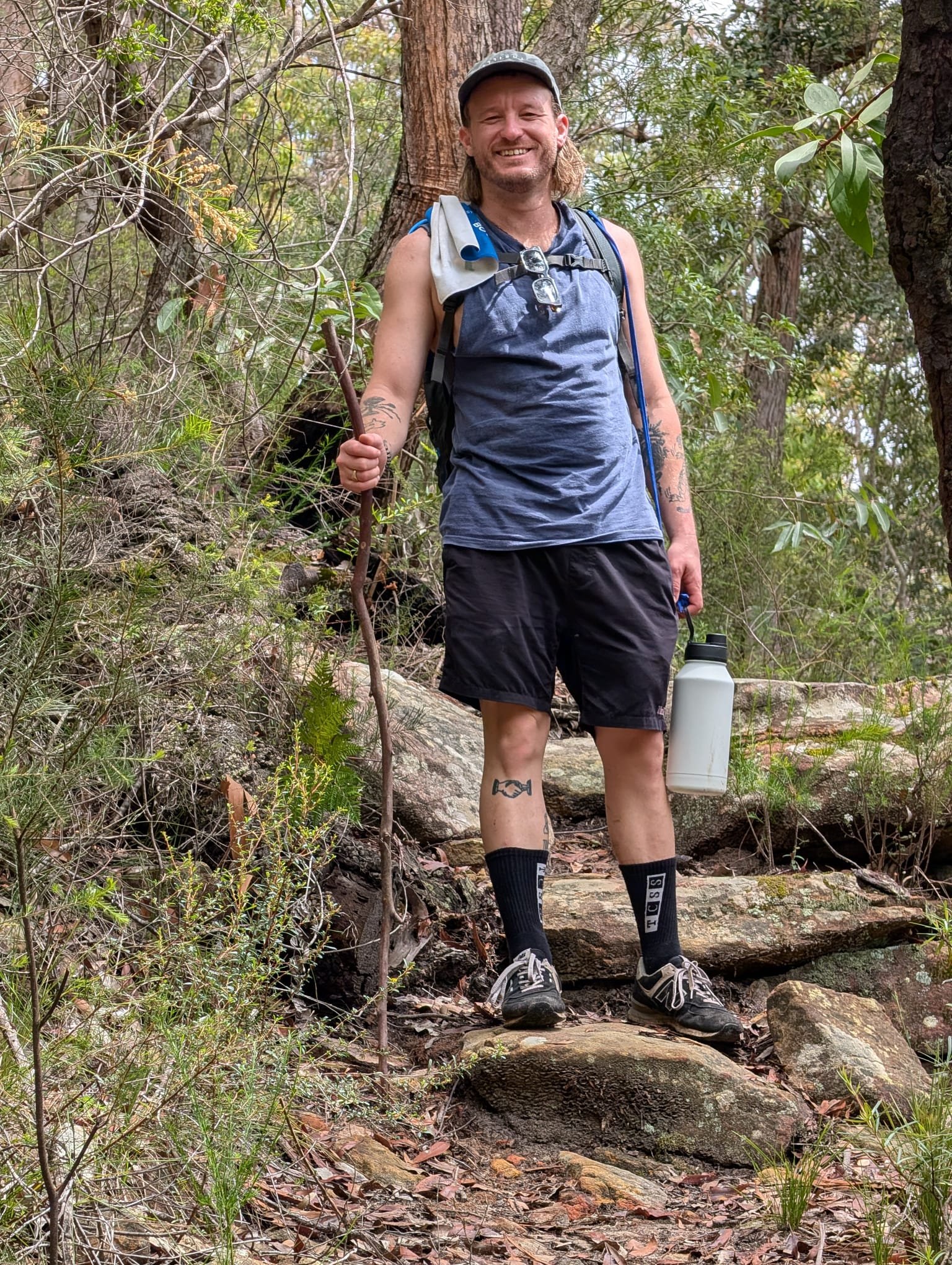
Our AirBNB host and main man Ashok drove us to our start point at Somersby. I was mildly hungover and should not have swilled half my water on the drive. But Muz was raring to go. Everyone needs a spark plug in their hiking group.
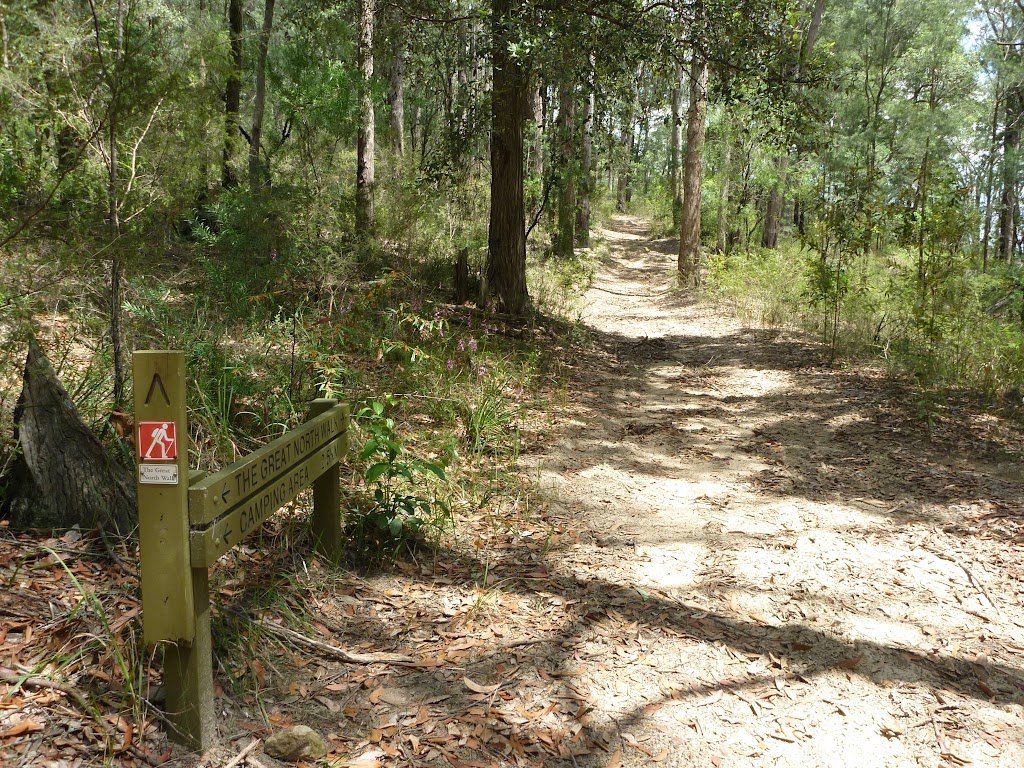
Easy steps initially, crisp, sun shining and head soothing. The first signpost promised tranquillity – sandstone, rivers, and a pleasant walk.
All downhill for 20 minutes to the first creek and that’s where the leeches began to take hold. Before the day was through, I lost three walking sticks which was mostly the leeches’ fault as I struck at them or they carried them away. Maybe it also had to do with me absentmindedly leaving said sticks at various locations.
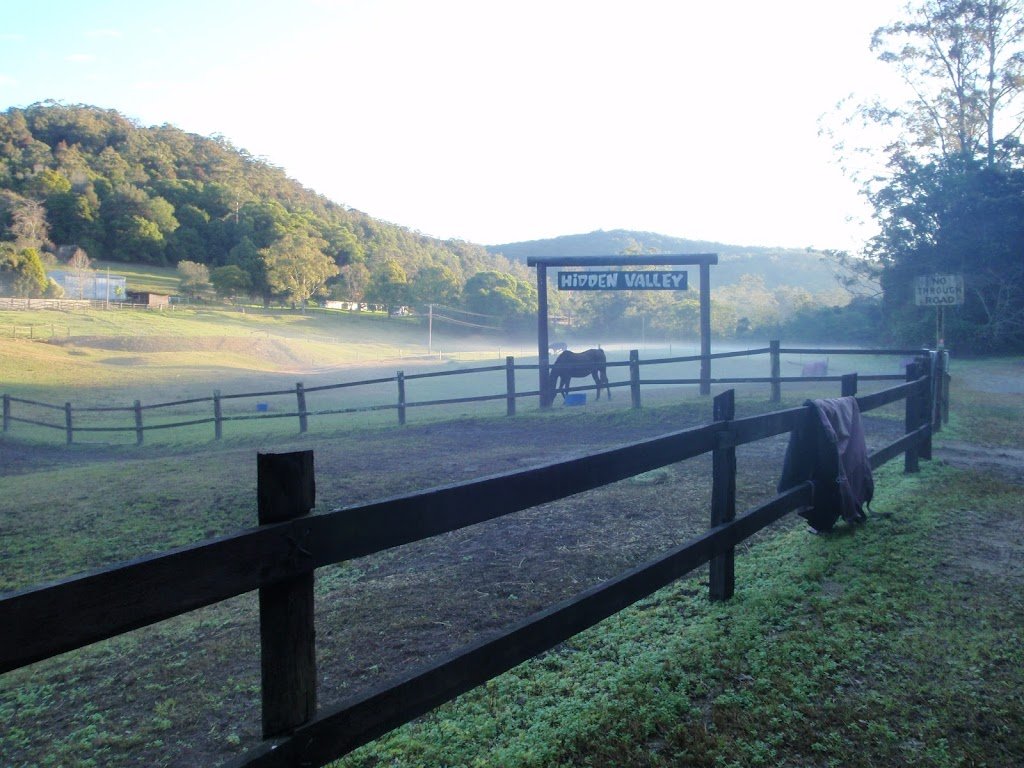
We defeated the leech masses and arrived at Ourimbah Creek Road. Beautiful bitumen, solid and dry underfoot. The farmhouses were lovely. One was named after the valley itself – Hidden Valley. All the houses were high on the hills, as flooding is a big risk. The weather was good and we enjoyed the gentle valley stroll.
Our solitude was briefly interrupted by an amplified, smooth American voice. Turns out someone has a job armed with a microphone ringside coaching people how to ride horses. Who even knew that was a career option? Wonder if it pays well?
On Muz’s advice I had packed an umbrella, which honestly is a great piece of advice for hiking. Way better than a raincoat – not steamy and no need to repack the wet item. I thanked Muz after a few light showers.
Easy living on the road for about 3kms. I filled my water bottle in a clear creek, treated it with iodine, and definitely did not leave my walking stick there. Well maybe I did.
Into the forest and we had a great chat with the owner of Forty Acres. He was grading his driveway (a few kilometres) and bemoaning that it was really the job of the local council, State Forests, Bushfire Brigade or the Gosford Women’s Bowling Club. We nodded solemnly in agreement and promised to write a letter to these errant organisations. In response to our complaints of leeches he affirmed leeches were the sign of a clean environment. I love the environment but his statement left me with uncomfortable and contradictory thoughts. Not wishing to cause offence we smiled in agreement and parted.
This story is part of our Australian Back Roads & Remote Travel series. Read more here.
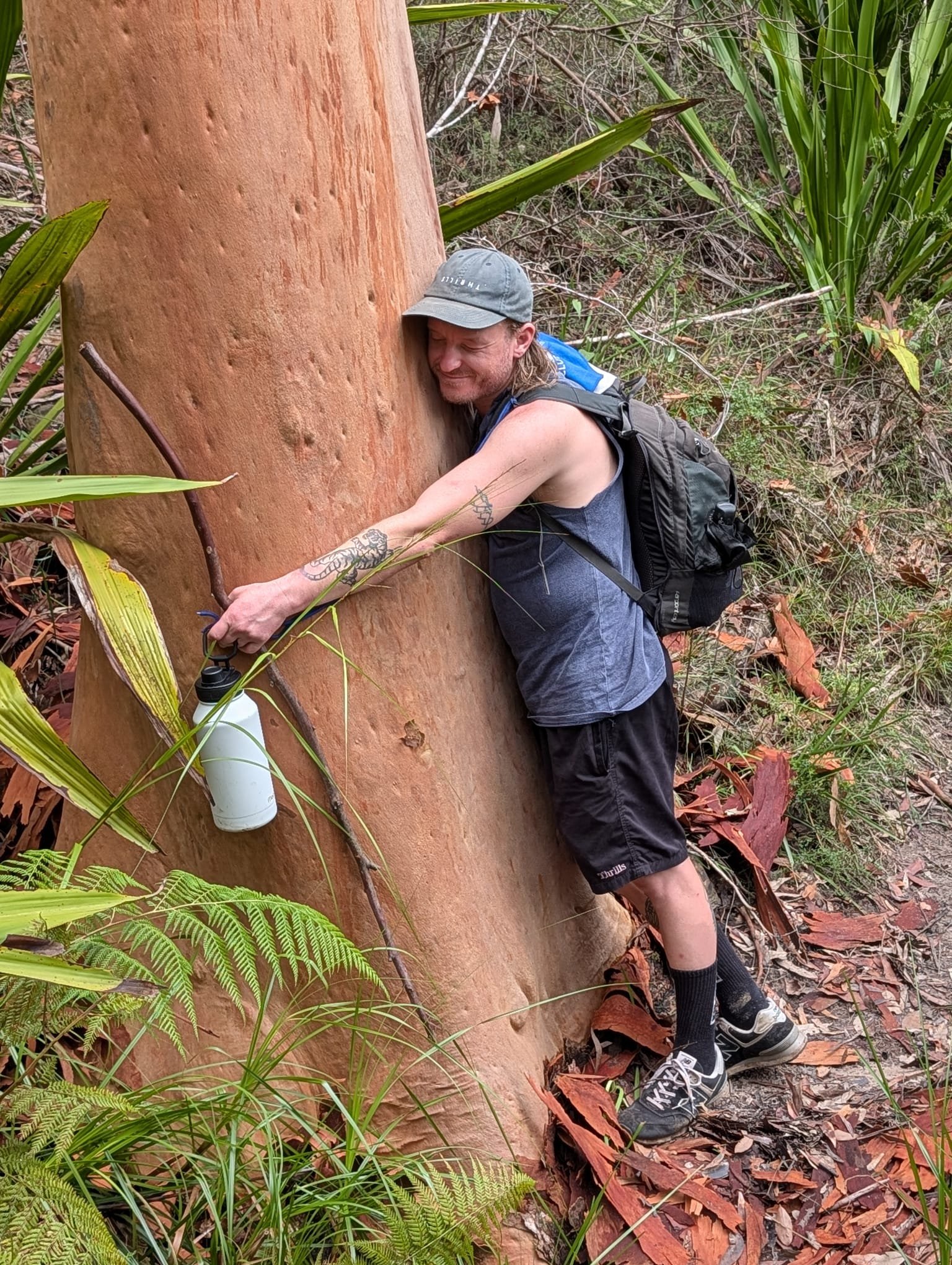
A bit farther on we made a fortuitous error. We continued into Forty Acres rather than turning left on to the Cedar Brush Track. Forty Acres is a private campsite and although an unwitting trespasser, I got to fill up my water bottle from a real tap so I didn’t get dysentery. Massive win, gotta celebrate those. Additionally, there were real toilets available, with a view and all. Jackpot!
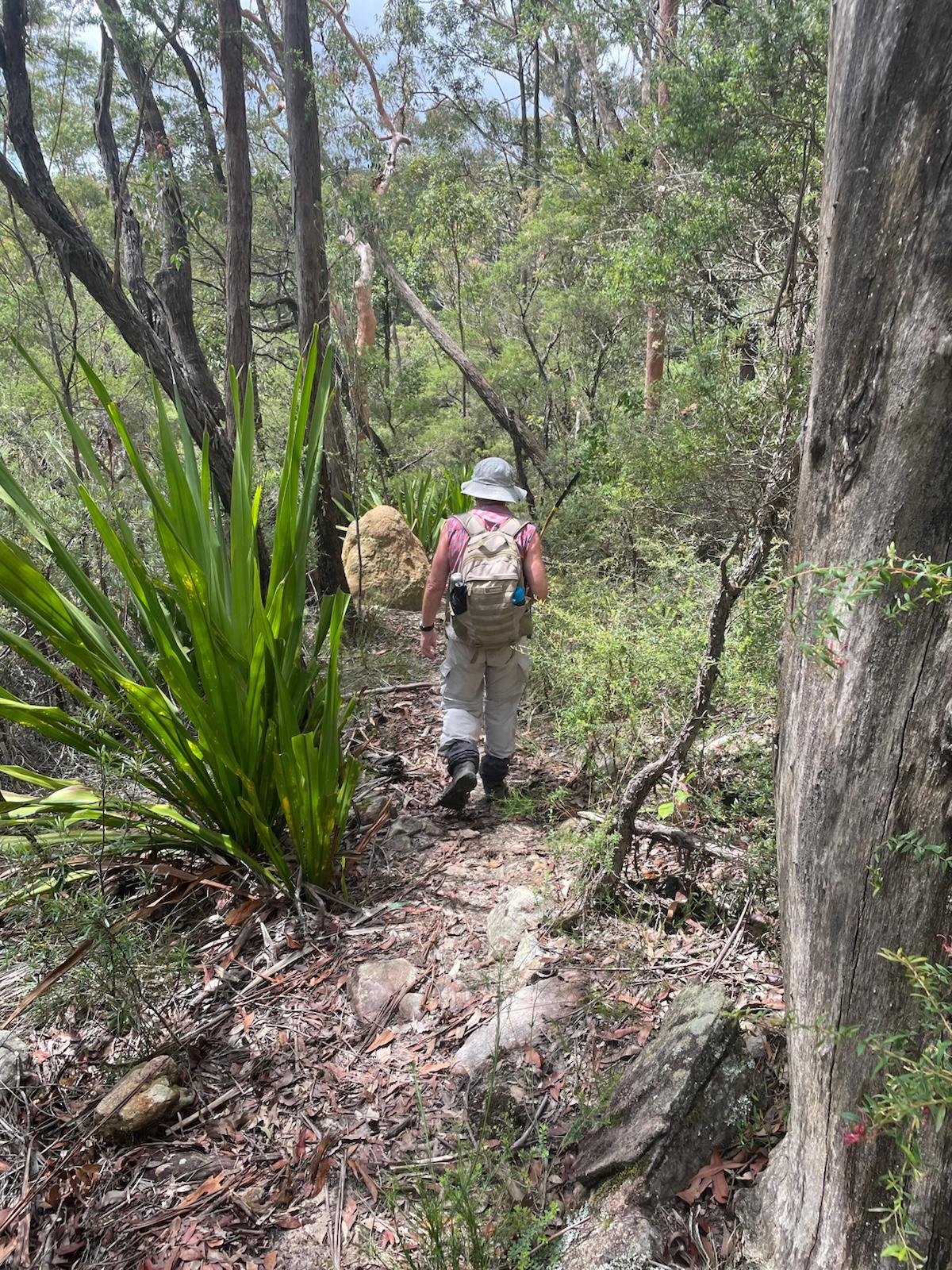
We had misplaced the guidebook page that related to our current position, but we had my brand new compass, Muz’s feverish orienteering skills and true grit, so we marched on into the glorious unknown. Actually, we were going in the right direction but on the wrong track. We were on a gravel fire road. Steep but dry and shady.
We figured things out and found that our misstep had circumvented more leech territory, with the price being paid in full with 45 degree hills. I tried to be positive, but to be honest, I had no reference or experience of the ramifications of adding extra kilometres to an already long day. Muz had been down that garden path before and was less concerned. After some effort we linked up with the Cedar Brush trail.
A cup of tea tasted better knowing our location again. Down through more lecherous territory, but we were armed with tropical strength repellent on our boots and it staved most of them off – I felt like a true bush person!
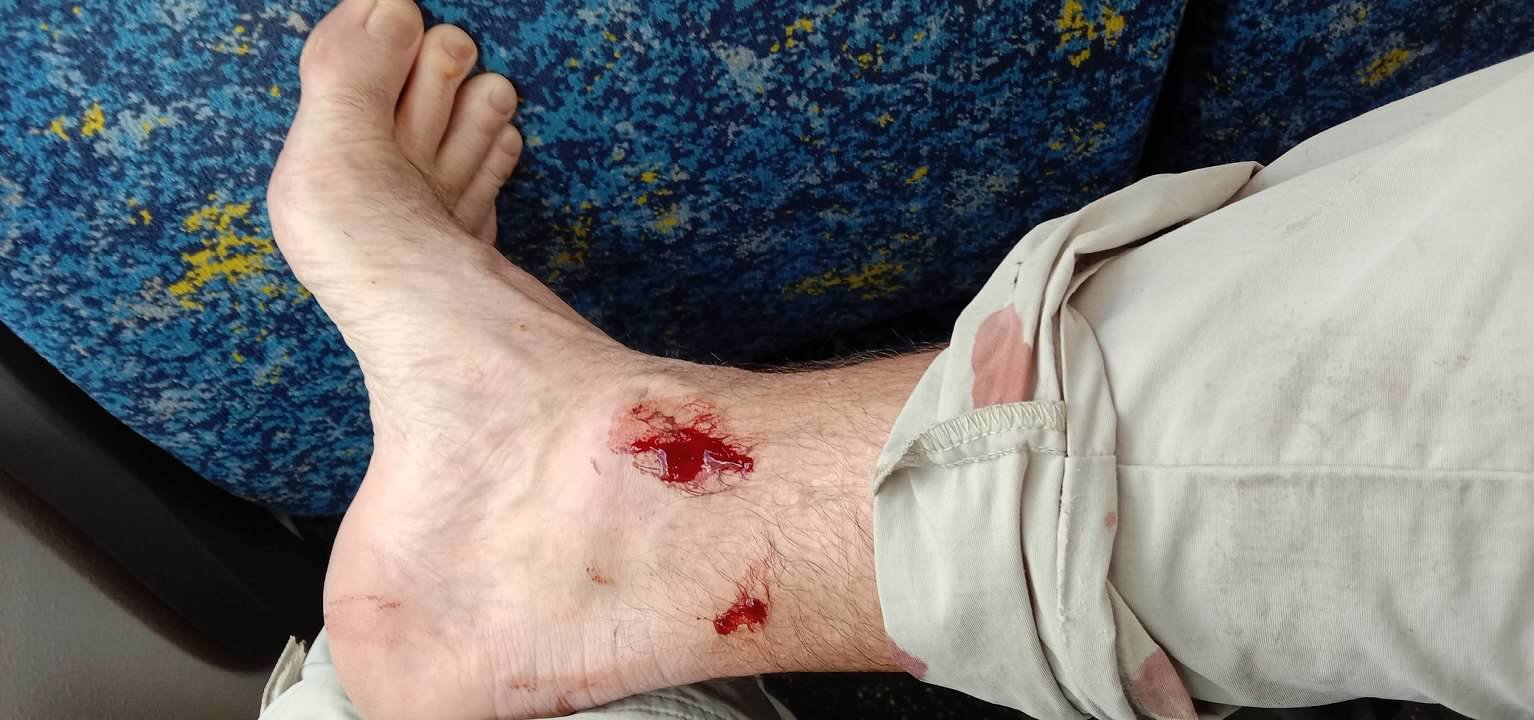
We emerged from the forest onto Cherry Lane. Make sure you have your stick on Cherry Lane, as we were accosted by dogs that should have been tied up. All’s well, we emerged as top dogs.
We rested and I had another stick stolen by the Clitellata. They are cunning little characters. Or maybe I forgot to pick it up. Third stick down. This was my fault, I’ll admit it. I found a new one fairly quickly.
I am a ‘sweaty betty’ at the best of times, and I was perspiring like a hippie at Woodstock. A waterfall provided my final water resupply for the day and a cool fresh shower.
The last few kilometres seemed endless. 32kms with 1100m ascent is a tough day. But we had adventures, had rain, were attacked by wild things, and solved some problems enroute. Yarramalong (population 329) here we come. The lovely Helen (our AirBNB host) greeted us, and sent us scampering to the liquor store, which was closing soon, for some cold rewards.
The next day Helen (what an angel) drove us to Wyong station and two fatigued mates dozed the hour or so back to Sydney. Great times with Muz and Jono on tour.
Everything You Need To Know About Leeches
Leeches often get a bad reputation as simple, blood-sucking pests, but there is much more to know….
They are anatomical marvels
- 32 Brains: A leech’s body is divided into 32 separate segments, and each of these segments has its own brain.
- 10 Eyes: Most leeches have five pairs of eyes, though they primarily use them to detect light and movement rather than for high-resolution vision.
- Hundreds of Teeth: The medicinal leech (Hirudo medicinalis) has three jaws, each lined with about 100 tiny teeth. When they bite, they leave a distinct Y-shaped mark.
Their saliva is a bio-cocktail
When a leech bites, it injects a complex mixture of chemicals to ensure its meal goes smoothly:
- Anticoagulants: This prevents the host’s blood from clotting, allowing it to flow freely.
- Anaesthetics: They inject a numbing agent so the host doesn’t feel the bite, which is why people often don’t realize a leech is attached until they see it.
- Vasodilators: These widen the blood vessels to increase blood flow to the bite site.
They are still used in modern medicine
While the medieval practice of ‘bloodletting’ to balance humors is dead, leeches are still used in microsurgery. Surgeons use them after reattaching fingers, toes, or ears. The leeches drain excess blood buildup that can cause tissue death, keeping the blood circulating until the patient’s own veins regrow.
Not all leeches drink blood
Contrary to popular belief, only about 25% of leech species are blood-sucking parasites. Many species are actually carnivores that swallow smaller invertebrates (like snails or other worms). Some feed on decaying organic matter at the bottom of ponds and lakes.
They are voracious eaters
A leech can ingest up to five to ten times its own body weight in a single feeding. Because they have specialized bacteria in their gut to slowly digest this massive meal, a single feeding can sustain a leech for up to a full year without another bite.
My friends call me Jono. I’m a fan of nature, and enjoy an equal dash of silent contemplation and waxing lyrical with my friends while walking. I love to tap poetry on my Remington Portable – the very same typewriter as used by Hemingway and F. Scott Fitzgerald. I have strong opinions about nature and the environment, and disdain for those destroying the nature we love to dust our boots in.