
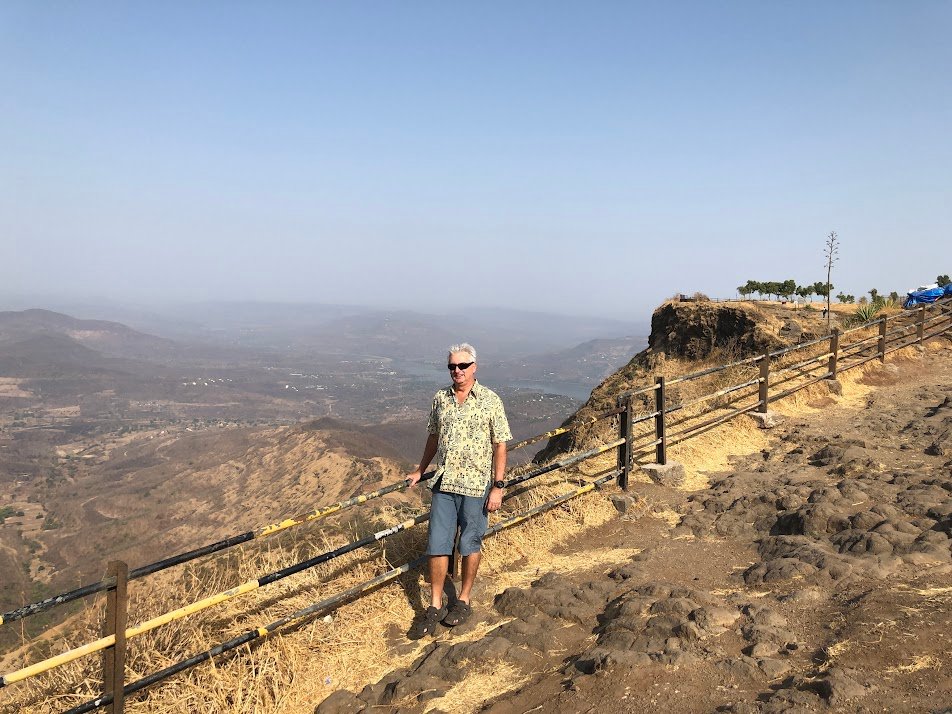
Fort Sinaghad (Lion Fort) sits atop a plateau around 30km southwest of the Indian city of Pune. It is one of several forts scattered across the Sahyardi mountains. Like many such edifices, its origins are lost in mythology and time, but we do know that the original fort is at least a thousand years old. From the 14th century it changed hands frequently between various Sultans, Maharajas and Maratha kings. The Mughals took control in the mid 17th century, and thus began 150 years of well documented conquering and re-conquering involving legends of bravery and sacrifice, eye-watering cruelty, and mystical lizards. The British East India Company put an end to the fun in 1817 via its private army, and Britain retained the fort until Indian independence in 1947.
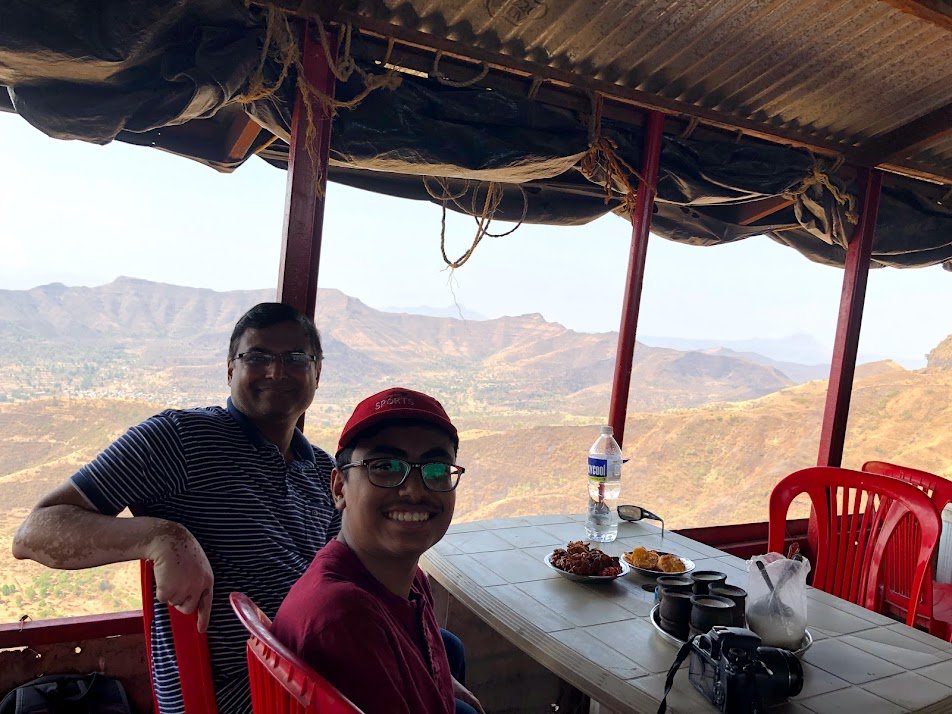
The fort today is well worth a visit if you are in Pune. You can trek up the 700m high escarpment, or take a car. Once there you can explore the various battlements and staircases, look at the statues (many disappointingly new) and indulge yourself with chapatis, samosas and vegetable curries in the restaurant, which has an incredible view over the plains to the east. It is a popular spot for couples and families on day trips from Pune, so you can expect to feature in many selfies.
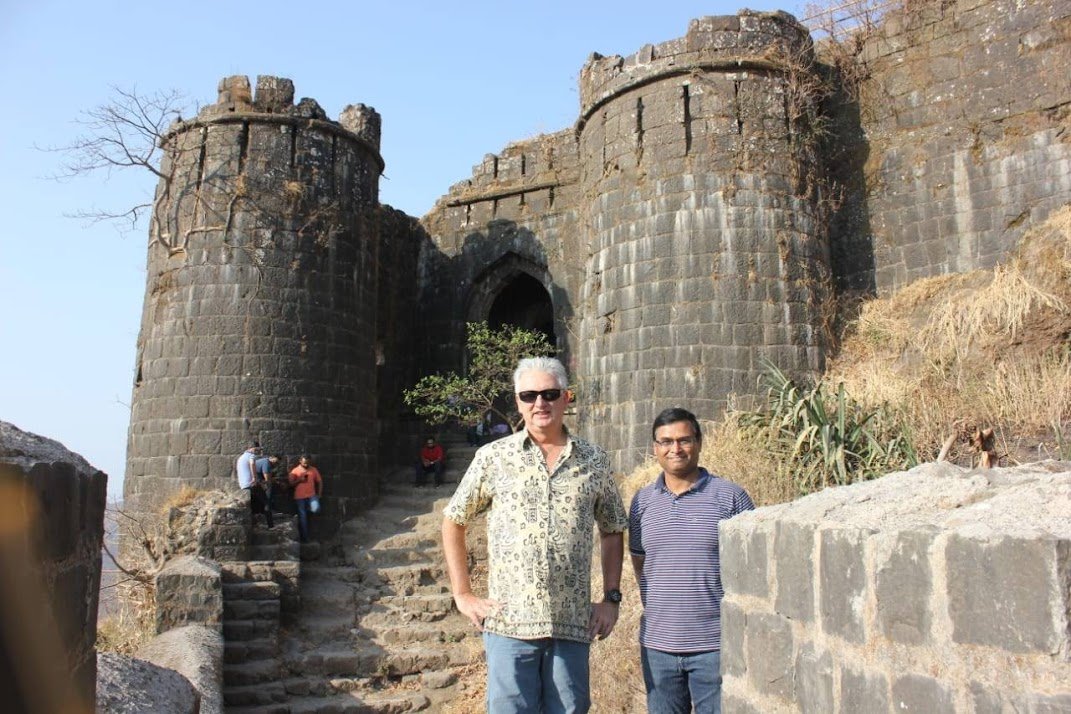
I went there with my friend and colleague Sudhir and his teenage son. As we walked around inspecting the signs and engravings, Sudhir explained to me the intricacies and rules of Sanskrit. It was an impressive lesson, most of which I promptly forgot. What I did remember was what he showed me of the various levels of construction of the fort, and how the battlements were sited to rain maximum misery on invading armies.
Parts of the fort are gradually being restored, but it is an endless task. There are other similar forts in the area in similar condition, and there is never enough money to do it all. There is a small but diligent workforce there repairing walls, fixing safety hazards and clearing litter.

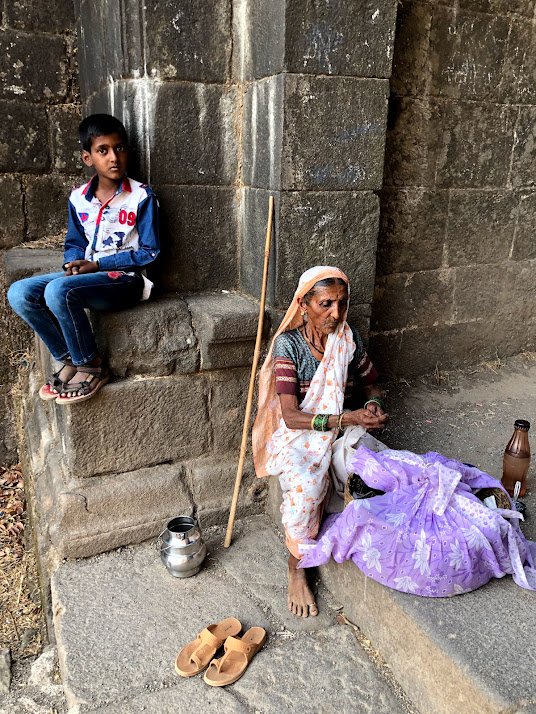
There were a number of local people selling their wares around the fort. Sudhir and I sat with a lady and her grandson who had walked 5km from their village and climbed the escarpment with a basket of rice cakes to sell. On a good day she will make about $US8. She told us a little about her life and how ownership of her family farm had become fragmented across the generations to the point at which virtually everyone needed to supplement their income. The boy, who was 10, rides a bike or catches a bus 12km to school each day. He does his homework under a kerosene lamp.
At the end of our visit I spent a few minutes staring to the east, at the smoke and dust rising over the plain, obscuring the hills. I pondered the lives of the millions of people down there and the effort and expense it will take just to get all those kids some decent lighting by which to do their homework.

Steve is a former Army officer and technology manager, now semi-retired and living in Melbourne. He enjoys adventurous travel and believes that good stories should be shared. He founded the Dusty Boots Journal as a means to connect those with similar interests.