
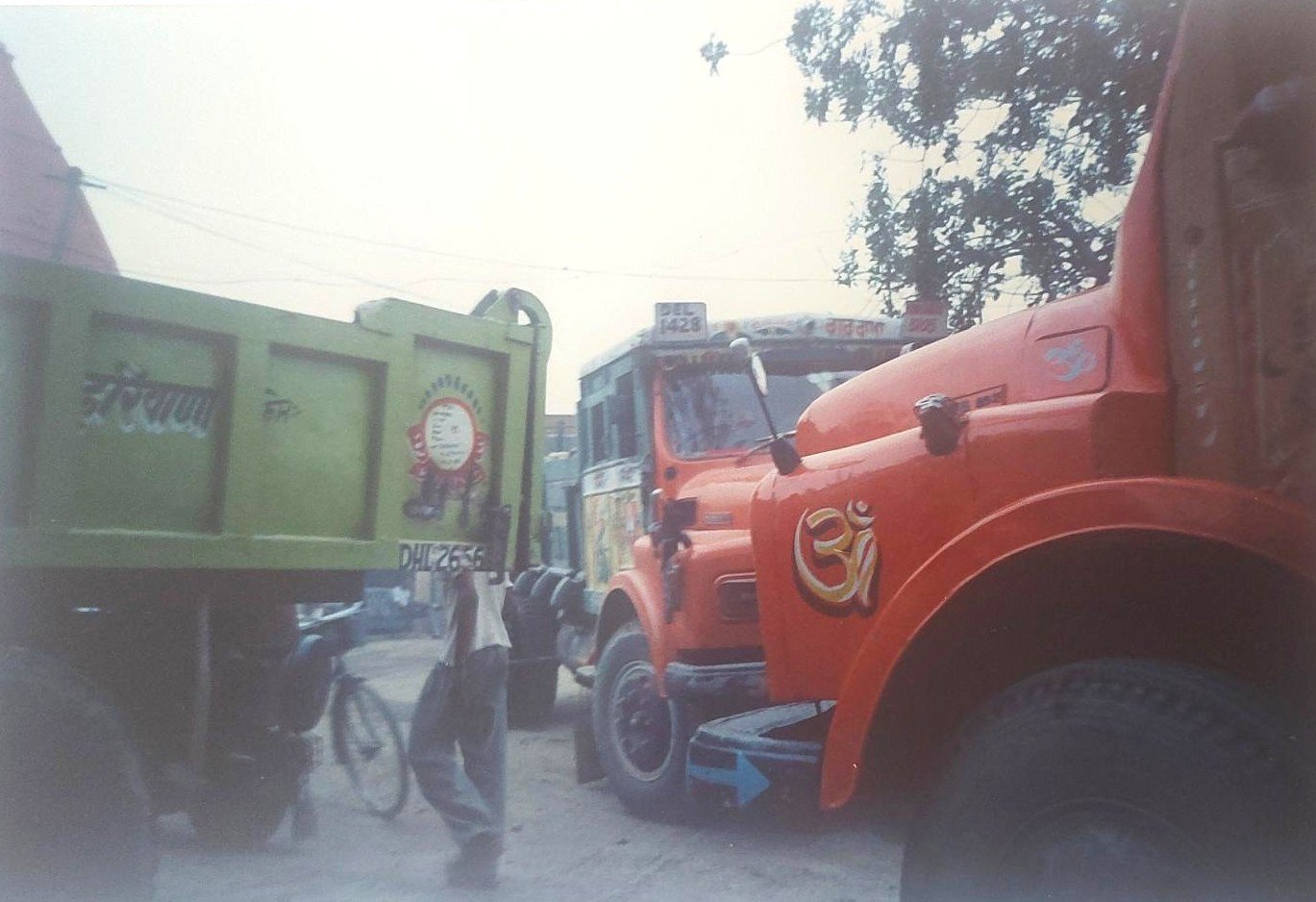
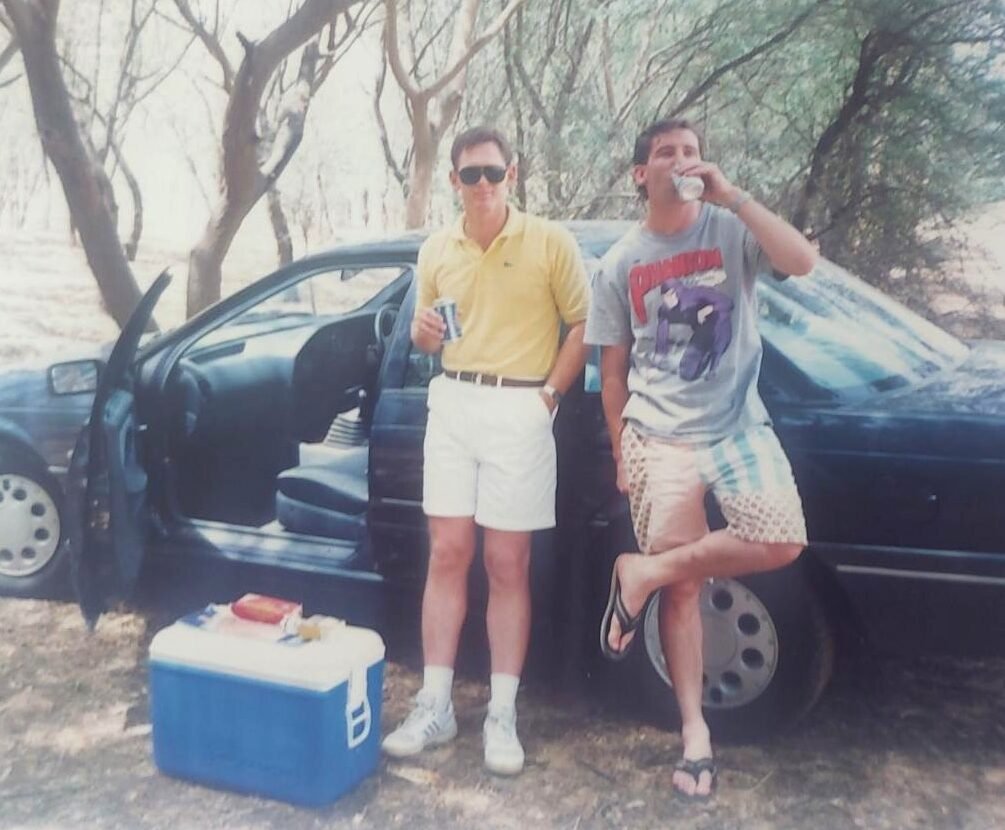
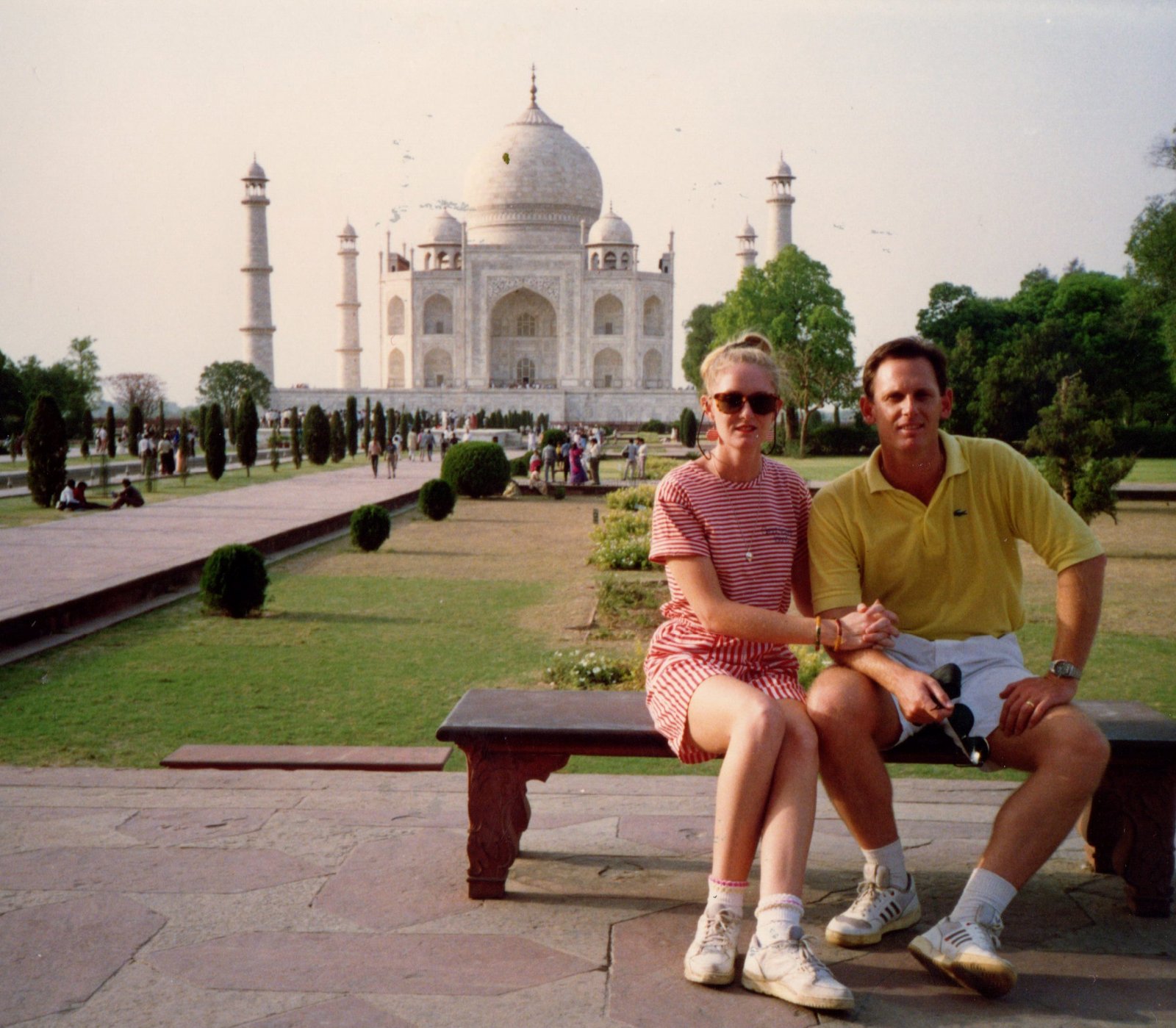
In the early 1990s, Ingrid and I were in India spending time with a mate who was working at the Australian High Commission in New Delhi. We were on a road trip in his Australian-made Ford Falcon, a rare sight in India, and had just arrived at Agra. It was mid-afternoon and we were engulfed by the worst traffic jam I can recall, en route to the Taj Mahal. My memory of the experience is as follows …
The sun over northern India doesn’t just shine; it interrogates. A lunch stop en route to Agra proved this and cold drinks offered little respite. By 3.00 pm, the heat was a physical weight. Soon we were two kilometres from the Taj Mahal, a monument built for eternal love, but we were trapped in an infernal gridlock. Pressing my forehead against the cool glass of the air-conditioned Falcon provided some temporary relief.
“Don’t worry,” said my mate, Guy, flashing a toothy grin while simultaneously leaning his entire body weight onto the car horn. “This is India, they will work it out.”
We were at a three-way intersection that defied every known law of physics and civil engineering. There were no traffic lights. There were no painted lines. There was only a vortex of Indians, animals and machinery.

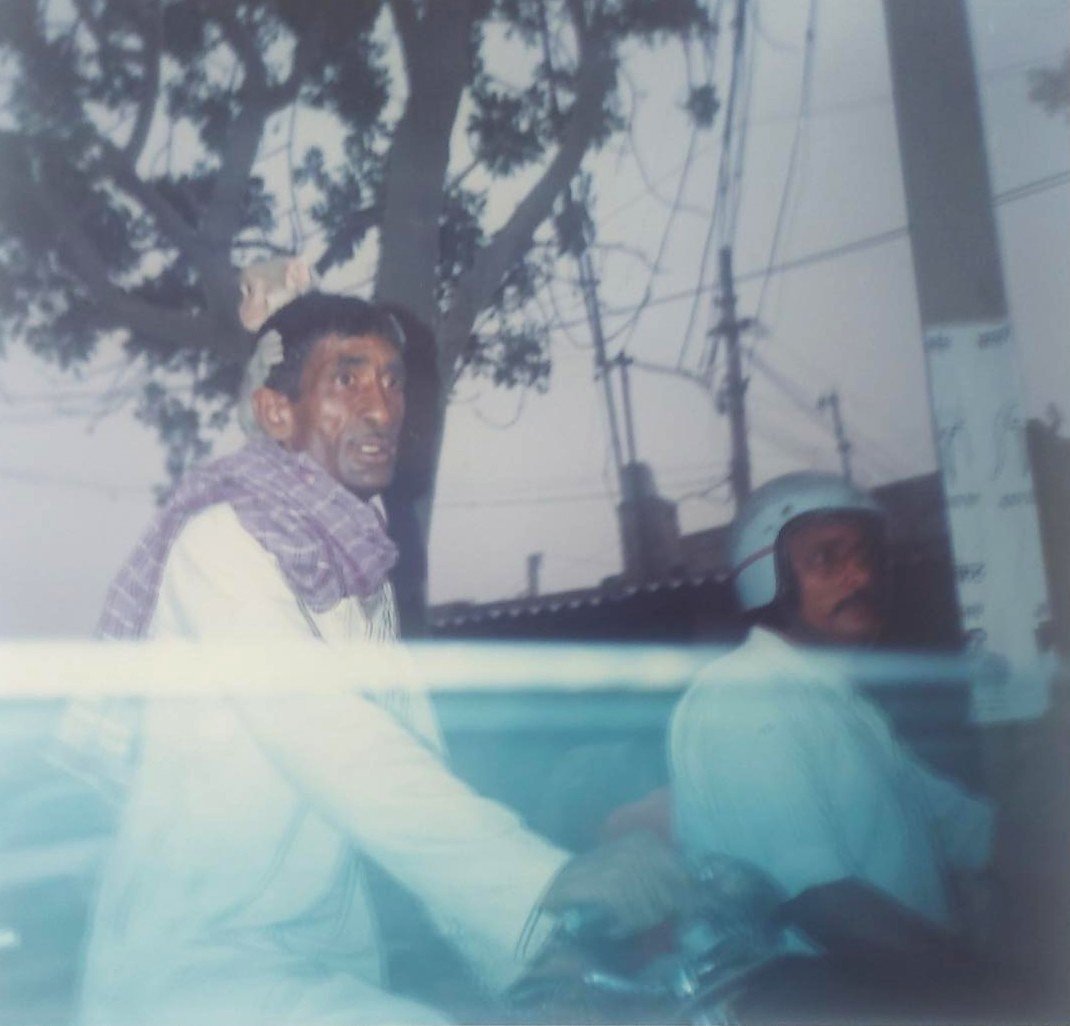
At its centre was a battered public bus, overflowing with passengers hanging out the windows. It had attempted a rogue turn and in doing so had cut in front of a fully loaded cargo truck laden very high with hessian-wrapped goods of types unknown. The intersection was blocked, neither vehicle could progress and the drivers would not reverse. To my left and right, a sea of bicycles and motorbikes filled every square inch of available space. Their riders, including a man with a monkey on his head, inched forward relentlessly, building the congestion.
And then there were the camels.
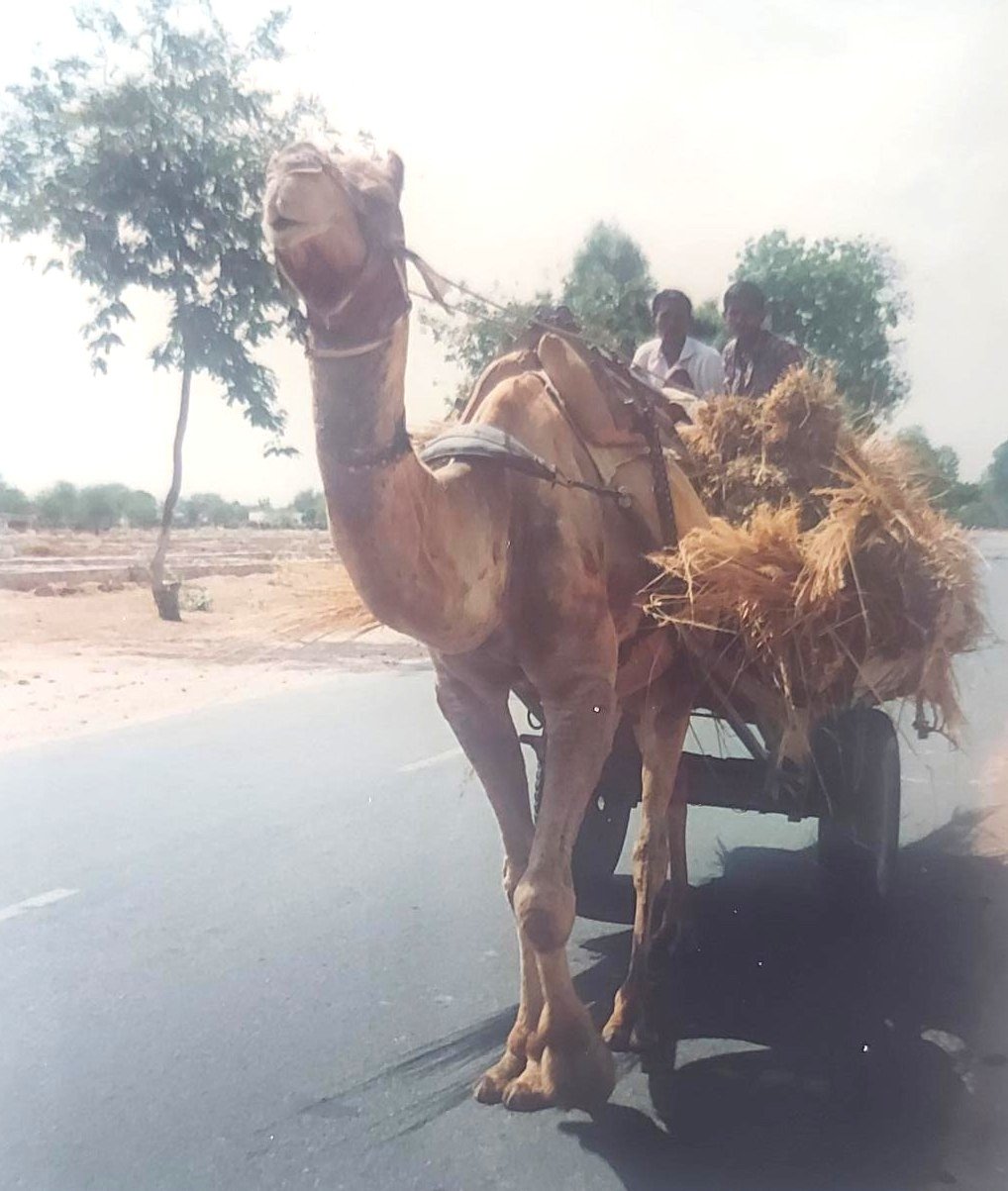
Two majestic, utterly unimpressed dromedaries, each pulling a two-wheeled cart and disheveled driver, had found themselves at the very centre of the intersection. And they sat down, their long necks swaying as they watched the enmeshed humans with detached boredom.
“Forty minutes,” I groaned to Guy, checking my watch. “We had moved just a few metres in forty minutes.”
“It’s India, they will work it out!” Guy turned off the engine to save fuel, though he kept his hand on the horn just to maintain the ambiance.
Suddenly, there was a new energy. From the sidewalks, a dozen local men merged into the machinery on the streets. They weren’t police; they were just citizens who had reached their breaking point from all the car and bike horns and decided to take matters into their own hands.
One man, head waving from side-to-side, began blowing a shrill whistle. He stood directly in front of the cargo truck, screaming instructions in rapid-fire Hindi while furiously waving his arms. Another man joined him, then another. They were determined. This wasn’t a crisis to them; it was just a puzzle to be solved.
They gesticulated for the truck to go back. The driver responded by leaning out his window and engaging in a high-decibel retort, probably about the bus driver’s mother. Meanwhile, some motorbikes managed to wiggle a metre forward. Occasionally one would thread the needle between the bus and truck and escape the jam.
The scene was car and bike horn-filled madness. All that was needed was for a cow to wander into the mix, or a man selling sliced fruit to knock on the window of the Falcon.
Just as I was resigning myself to not seeing the Taj Mahal that day, a breakthrough was achieved. The truck went back, the bus mounted the curb to complete the rogue turn, the camel-drivers made a move, and more gaps appeared.
The whistle reached a fever pitch. The men in the street were sweating, laughing, and shouting orders. The bikes and motorbikes swarmed forward like a hive of bees. Guy started the engine; his face lit with trademark competitive fire.
“Hang on!”
He drove into a gap that was barely centimetres wider than the Falcon. We passed bikes, motorbikes and camels, but no cows. The men in the street rejoiced as if we were racing at Le Mans.
As we cleared the vortex and finally saw clear air, I looked back. The intersection was still chaotic but moving. For forty minutes, we hadn’t just been in a traffic jam; we had been in the beating, chaotic, beautiful heart of India. And as Guy predicted, they worked it out. To this day, based on recent traffic indexes, Indian cities experience some of the most severe traffic congestion in Asia; significant time is lost annually to traffic jams. With rapid urbanization, high vehicle ownership among the enormous middle class, inadequate infrastructure and chaotic conditions, visitors to the sub-continent today can still look forward to having their own gridlock experience.
Road Traffic in India – Some Interesting Facts
India’s road infrastructure presents a paradox of rapid expansion and chronic gridlock. As of late 2025, India boasts the world’s largest road network, spanning over 6.62 million km. Despite the completion of major high-speed corridors, urban congestion remains among the highest globally.
Key Traffic Statistics (2025-2026):
- Global Congestion Rankings: According to the 2025 TomTom Traffic Index, Bengaluru ranks as the 2nd most congested city globally behind Mexico City ,with an average rush-hour speed of just 13.9 km/h. Pune followed at 5th, while Mumbai (18th) and Delhi (23rd) also featured prominently.
- Time Lost: Commuters in Bengaluru lose approximately 168 hours (7 days) annually to traffic delays.
- Vehicle Volume Growth: Passenger vehicle sales reached a record 4.3 million units in FY25, further straining urban arteries.
- Economic Impact: Logistics costs in India remain high at roughly 7.8–8.9% of GDP, largely due to congestion-induced delays in road freight, which carries 71% of the nation’s cargo.
To combat this, the government has allocated approximately $US33 billion to the Ministry of Road Transport and Highways for 2025-26, focusing on “access-controlled” expressways to bypass urban choke points.
Have a look at this YouTube video about traffic chaos in Bengaluru. Note the newsreader trying not to laugh.

Allan is a former Army officer and logistics specialist. In retirement he writes articles and books ranging across military and naval history, biography and anthropology. He publishes through various association newsletters and websites and on Amazon. He lives in Sydney.