
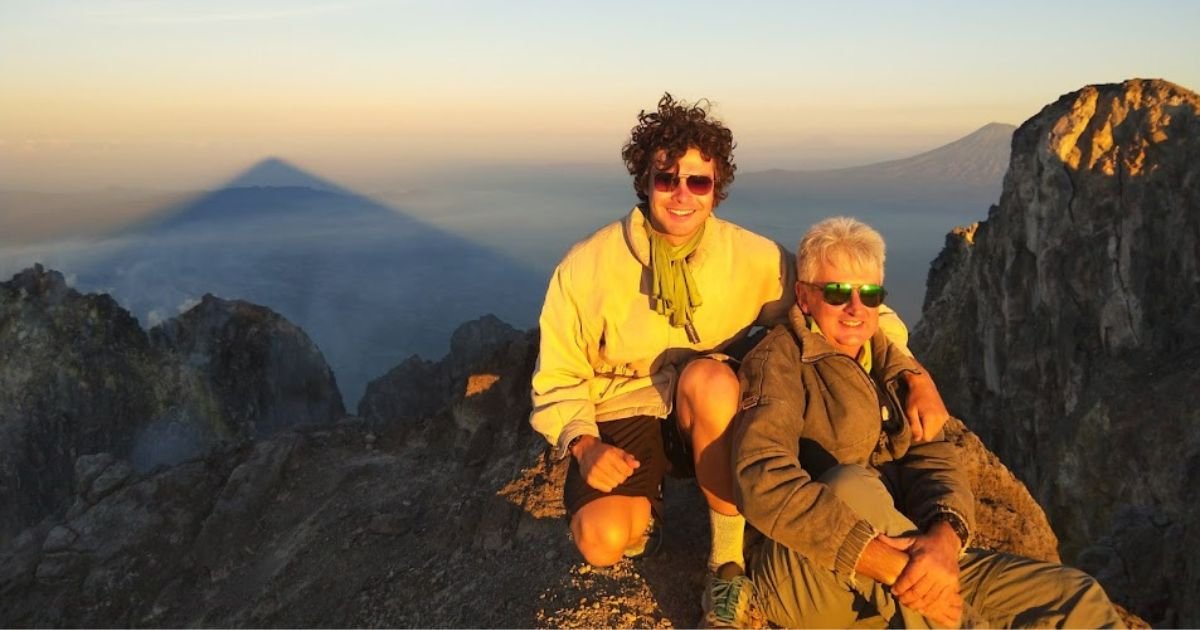
Mount Merapi (Fire Mountain in Bahasa), north of Jogjakarta, on Java in Indonesia, is one of the most active volcanos in the world. It and its dormant neighbour, Merbabu, rise imposingly from the fertile and highly populated central Java plains, and you can see its permanent plume of vapor from over 30 kilometres away. And the best thing is, you can climb it and stare down into the crater, inhaling the sulphur and heat and pondering the power of the Earth beneath.
To get there, my son and I took a circuitous road route from Borobudur. There are climbing routes from the north or south. We did it from Selo village on the northern slope of the mountain. Selo is at an altitude of 1600 metres and the Merapi crater is at 2910, so it is a sharp climb.
This story is part of our Walking, Hiking and Meaningful Routes series. Read more here.
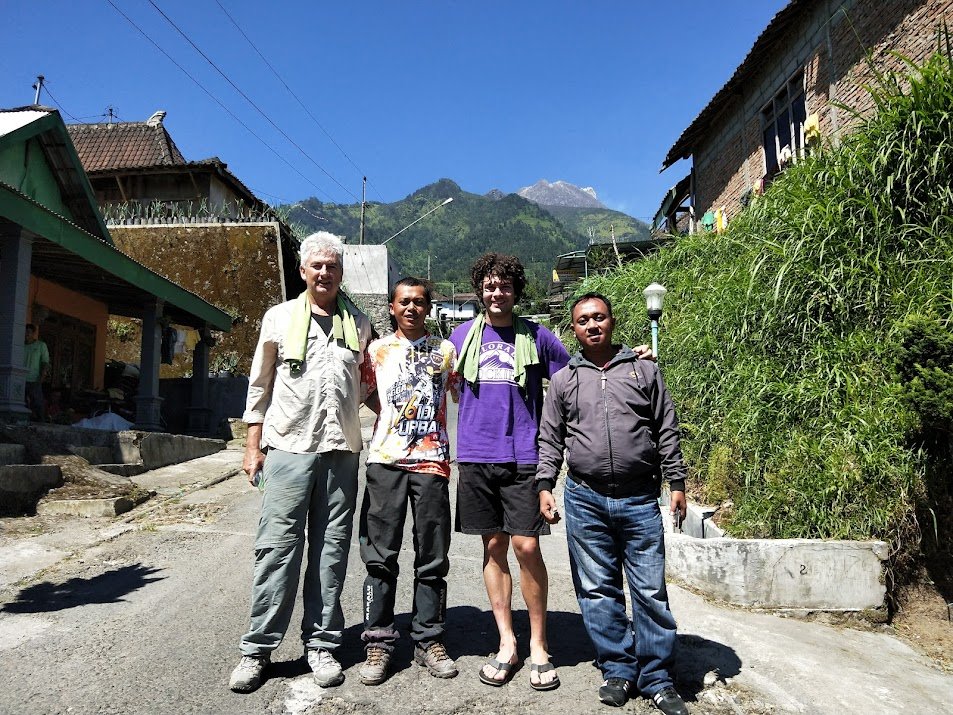
We had not been planning to do this climb – it was an impulse, and we were ill-equipped. No problem; we found ourselves in the hands of Radi, who with his wife run a home stay for trekkers. We arrived at the village in the early evening and Radi decked us out in some warm gear, and gave us a meal and a room in which to rest for a few hours. At around 10pm we took a steep car ride to a carpark at the top of the village and commenced the climb.
We started up a paved track for a few hundred metres and then into the scrub. It was a clear moonlit night in May so we could see our way quite well. It got colder and windier the higher we went. We had that high altitude feeling – sweating with exertion beneath layers of clothes while getting chilled on the surface. We crossed several creeks, clambered over fallen logs and displaced boulders, and paused at a couple of lookouts from which we could see the lights below for a great distance.
Not far below the treeline, Radi led us into a small cave where we huddled, shivering, for a couple of hours – had to get the timing right for the final climb. We got moving again and hit the schist in the predawn gloom, ascending through the dusty lunar landscape for an hour or so. The smell of sulphur got stronger the higher we climbed. As first light approached we could make out a number of tents scattered across the ash field – it is ok to camp overnight for a fee if you want to do it that way.
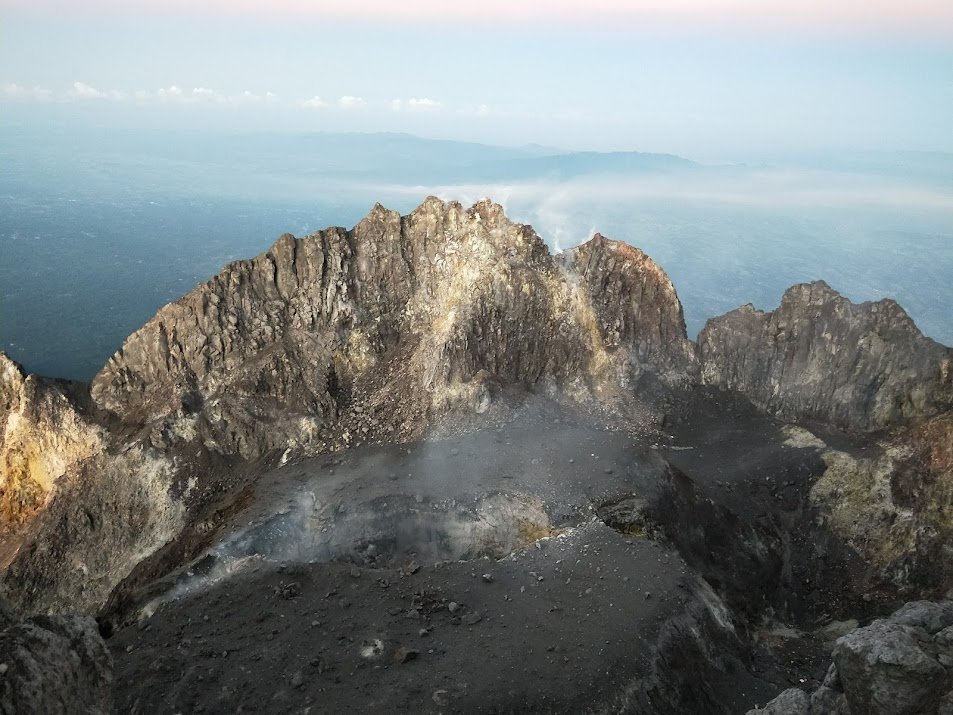
A final steep scramble up lava rocks and we were at the top. We stood on the edge of the caldera as the sun broke over the horizon. There were a number of spots where we could lean out and look down into the pit where the lava bubbled and the steam and sulphur hissed. I felt very small.
We explored the edge of the crater for an hour or so as the rising sun warmed us. Then it was time to descend – the hardest part for those of us with older knees. It took three excruciating hours to get down to the carpark. Radi, an excellent guide and host, took us back to his home for a Javanese breakfast of fried rice and banana pancakes, with eye-wateringly strong coffee.
It was a great way to bag a peak, and the total cost for us was about $300, including the car and driver from Borobadur and back to Jogjakarta, park fees and Radi’s excellent guiding and hosting.
Merapi is an active volcano, and there are frequent eruptions. An eruption in 2010 killed almost 400 people and caused 350,000 to flee their homes. There have been at least four eruptions with significant lava flows since then. Earthquakes are also common in the region and can be devastating. There are a number of cameras and seismic sensors on the crater rim, monitored remotely in the hope of providing some early warning.
So spare a thought for those who live in the shadow of nature’s ferocity. Go climb the mountain, but get to know some locals, and tip generously.

Steve is a former Army officer and technology manager, now semi-retired and living in Melbourne. He enjoys adventurous travel and believes that good stories should be shared. He founded the Dusty Boots Journal as a means to connect those with similar interests.