
The Living Relics
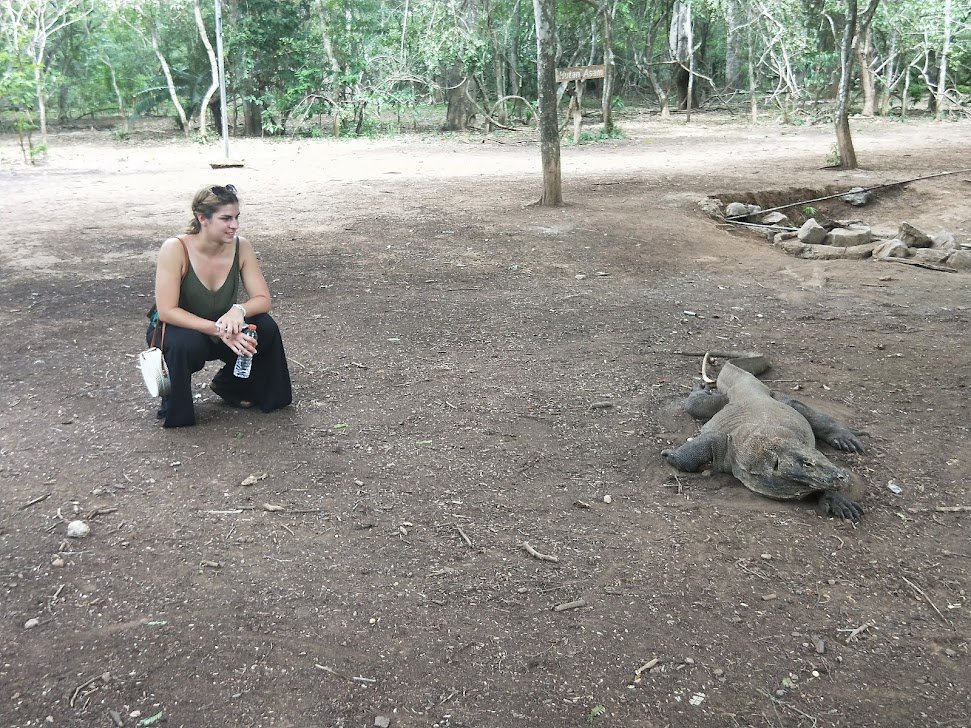
Long before the first European sailors told tales of “man-eating lizards,” the Komodo dragon (Varanus komodoensis) has reigned over these arid islands. They are the last survivors of a lineage of giant monitor lizards that roamed Indonesia and Australia millions of years ago. To walk among them isn’t just a wildlife tour; it’s a step back into a Pleistocene landscape that refuses to vanish.
My adult daughter and I took a trip to Komodo National Park in Indonesia a few years back. We didn’t over-plan – we flew into Labuan Bajo and took a cab to the dock area. After haggling here and there we found Captain Yusuf, who agreed to take us one-way to the island for around $60, assuring us that there would be plenty of boats coming to and from the island the next day. It was a three hour trip and we had the boat to ourselves. I spent much of the trip with Yusuf as he regaled me with tales of deadly currents and sea monsters – I think more for his own amusement than to worry me.
We got to the dock at the national park, Yusuf departed and we spent the next few hours doing the lizard thing. It was low season so we had one of the park rangers as our personal guide. Everyone knows about the dragons and they really are worth seeing. Get within a couple of metres of one and you realise you are in the presence of something ancient, deadly and totally without fear.
As the sun dipped we turned our attention to where we might spend the night. We had done some research and was aware there was a village – Kampung Komodo – which advertised homestays. So we boarded a small boat full of locals, paying the 400% markup foreigner price, and puttered along the coast to the Kampung.
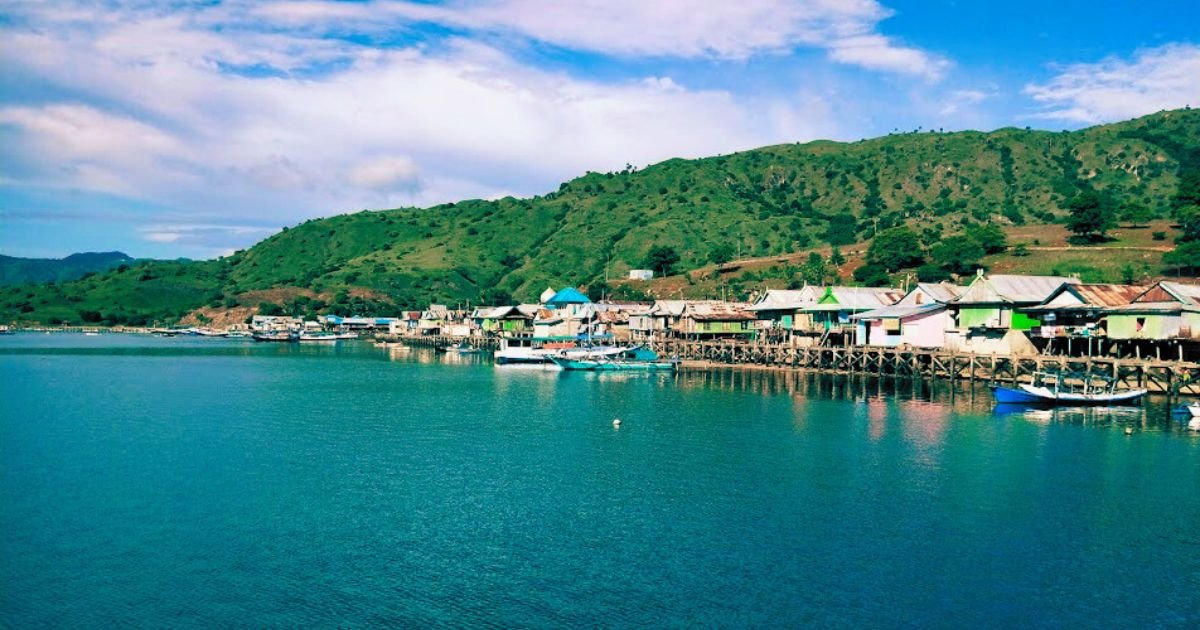
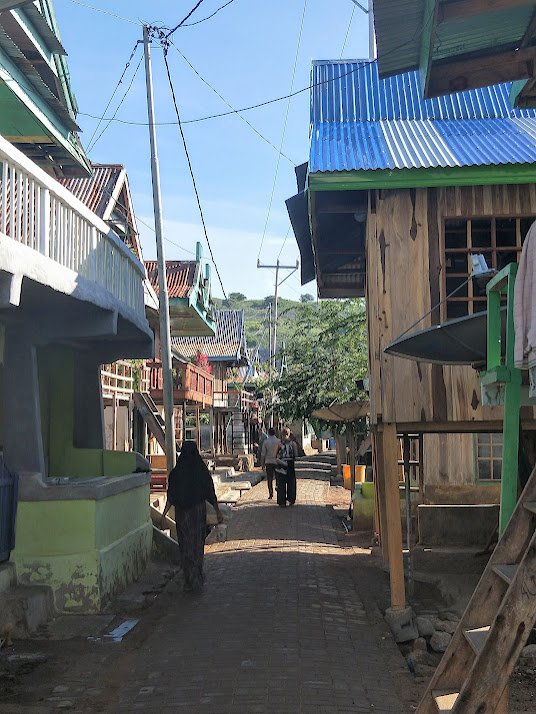
It didn’t take long to find a place to stay; I suspect we had been spotted well before the boat docked, and we were swamped with offers. We selected one lady who was not too pushy and she led us to her home, which like all buildings in the village was on high stilts. Hers had a retractable staircase as an additional dragon-proofing measure. The dragons like to sneak into the village at night, and poultry and goats are secured behind strong wire at sunset.
The stay was basic but enjoyable. We each had a mattress on the floor segregated by curtains, same as the family. We shared a meal and played some cards. I think it cost us about $30. After the inevitable rooster-induced arousal we had a morning walk around the village, and we could see the claw and tail prints left by the dragons during the dark hours. I guess the villagers are used to them as a daily hazard – much as we have gotten used to reckless Uber Eats drivers on electric bikes.
This story is part of our Slow Travel in South East Asia series. Read more here.
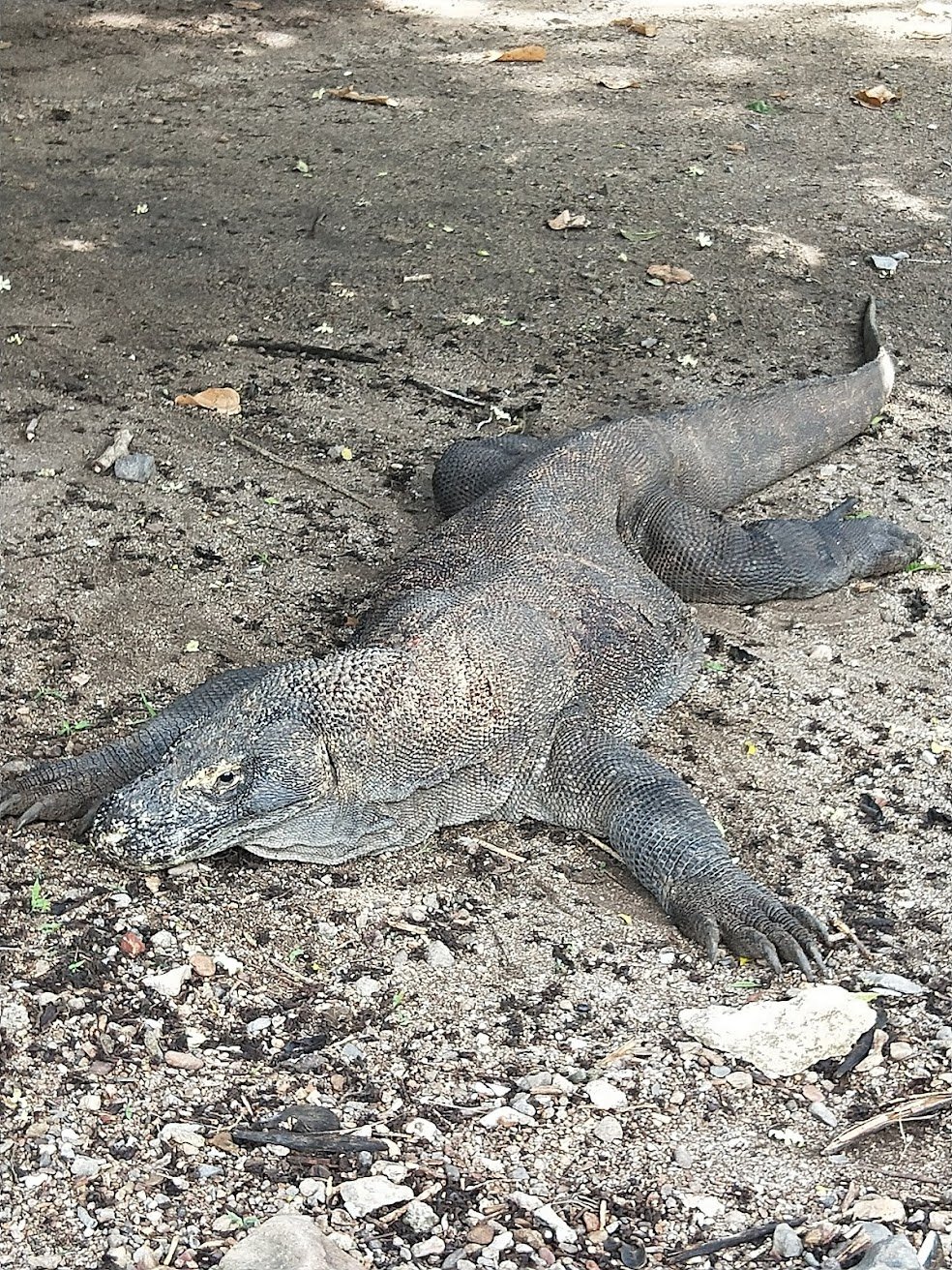
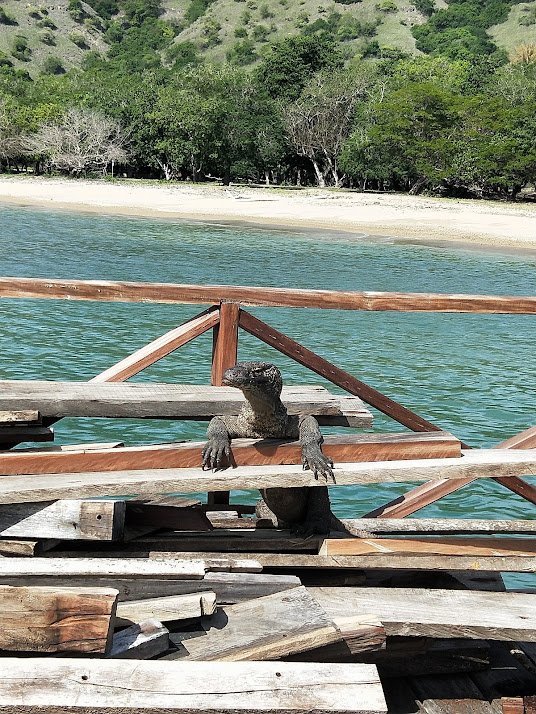
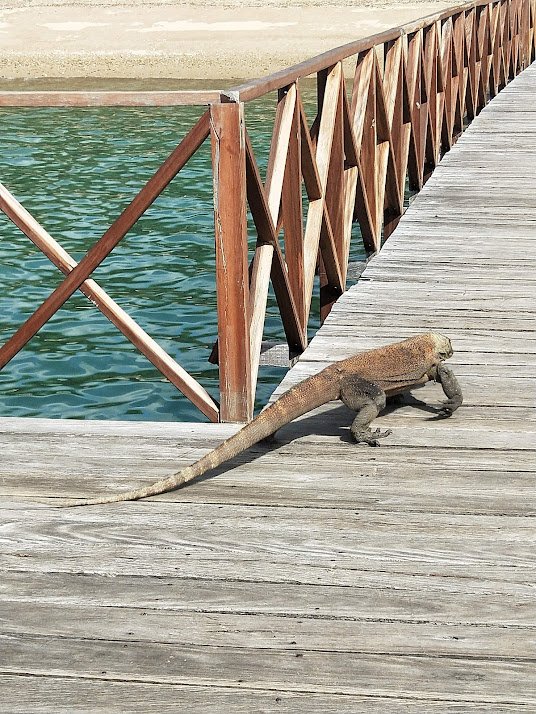
We farewelled the family and took a boat back along the coast to the national park. We secured tickets for a fast ferry that was arriving and leaving in a couple of hours. Just before we departed we had one more rather bizarre dragon encounter. After walking out to the end of the ferry dock I sat down on a pile of discarded timber. And right next to me popped up a large reptilian head. He had been snoozing under the wood and I don’t know who was more surprised – me or him. I will never understand what caused this creature, lord of his domain, to walk 150 metres along a narrow dock over the water to find a place to rest. Maybe there are things about lizard society that we don’t comprehend.
As the ferry chugged up to the dock, the dragon crawled out of the timbers and ambled back along the dock towards the island, just another lazy morning for him.
A Quick Visitors Guide to Komodo
Getting There: The Gateway to the Giants
Labuan Bajo (LBJ) is the base of operations.
- By Air: Direct flights from Jakarta (2.5 hours) and Bali (1 hour) are frequent. In 2026, several regional carriers have increased capacity, so expect to pay around $120–$180 AUD for a return trip from Bali if booked a month out.
- By Sea: For the true slow traveler, the 4-day/3-night boat trek from Lombok is still popular. Ensure you vet the operator for safety standards – look for those with functional GPS and life vests.
2026 Cost Breakdown (AUD)
Indonesia has streamlined the ticketing process into a single National Park ‘Dragon Tax’ Pass. Expect to pay around $60 which covers park entrance fee, ranger/trekking fee and conservation tax. For your boat trip, expect to pay between $60 and $90 for the return trip, depending on the boat and number of people. A night in Kampung Komodo will set you back around $35.
Restrictions & Regulations
The Indonesian government is strictly managing human-dragon interaction to prevent habitat stress.
- Daily Cap: There is a limit on the number of visitors allowed on Komodo and Rinca islands per day. Pre-booking your boat tour is no longer optional; it is essential., and you have to do so online via the SiOra app.
- Closed Zones: Certain parts of Komodo Island are occasionally closed for mating season or nesting (usually July–August). Rinca Island typically remains open as an alternative.
- Drone Use: Strictly prohibited within the National Park unless you have a commercial permit purchased in advance from the Forestry Department (approx. $100 AUD).
- Plastic Ban: Single-use plastic bottles are banned on the islands. Bring your reusable canteen; most tour boats provide large water jugs for refills.

Steve is a former Army officer and technology manager, now semi-retired and living in Melbourne. He enjoys adventurous travel and believes that good stories should be shared. He founded the Dusty Boots Journal as a means to connect those with similar interests.