This recollection was jointly written by Allan A. Murray and his wife Ingrid Murray.
It is not hard to climb continental Australia’s highest peak, Mount Kosciuszko; or so we thought. At 2,228 metres it is not among the most challenging summits in the world, and in summer we expected to see little snow and to be more focussed upon the heat than the cold. We were to learn, even in the summer, to be prepared.
Mount Kosciuszko was a comfortable day trip from Jindabyne, New South Wales where there were plenty of accommodation options. It was January and the heavy ski season demands upon hotels was not there. We chose a warmish day – noting we were already at 950 metres – for the scoot down the flat and straight Alpine Way to the Mount Kosciuszko National Park: a distance of 34 kilometres (or 29 minutes driving) to get to the alpine village of Thredbo. It took us through the rural hamlets of Crackenback and Bullock Flat.
This story is part of our Australian Back Roads & Remote Travel series. Read more here.
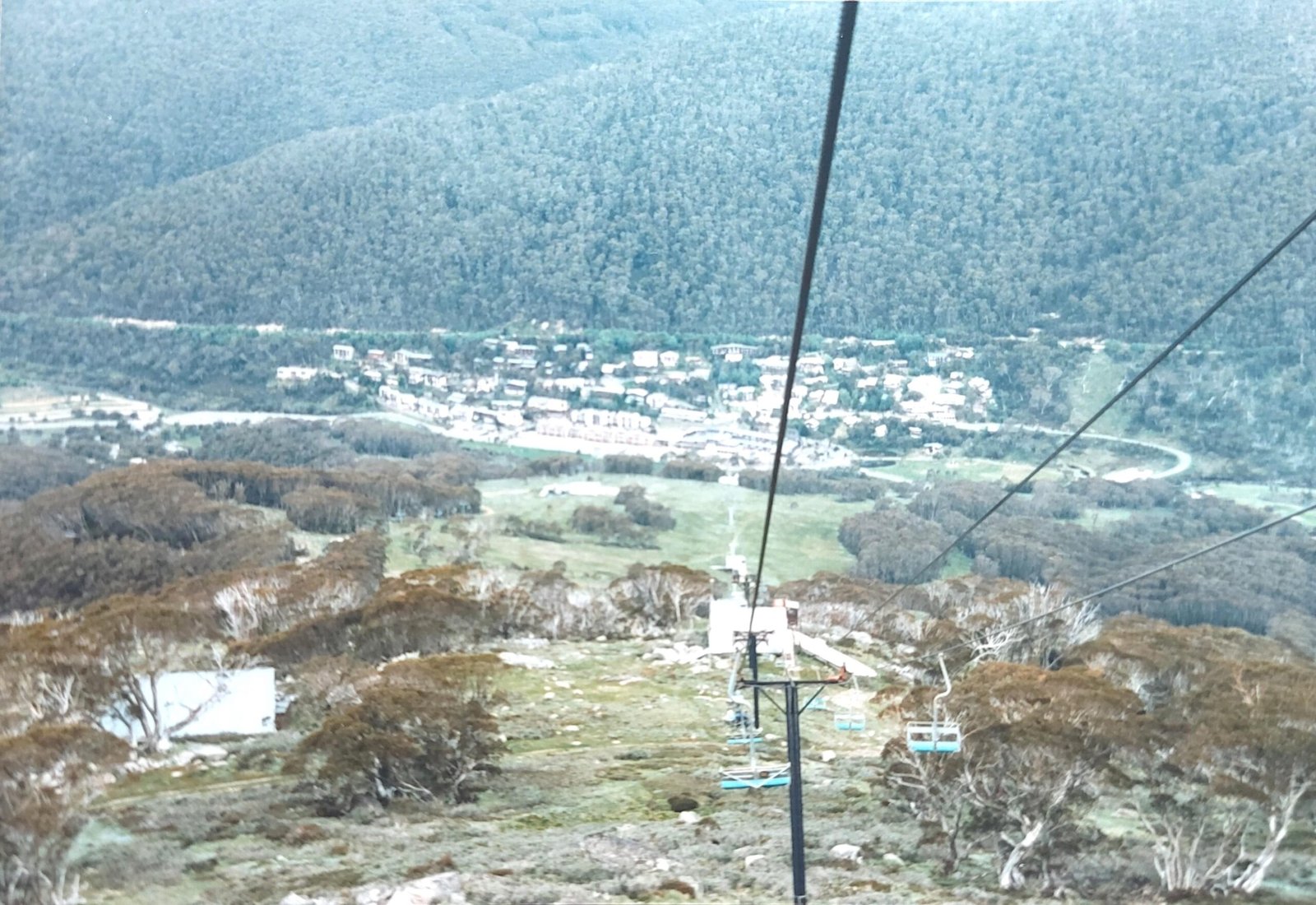
Thredbo was only partially open, but for our purposes, the Kosciuszko Express Chairlift heading towards the summit of Mount Kosciuszko, was operating. For a fee considerably cheaper than a daily ski season ticket, we were able to take one of the double-seaters to the Eagles Nest, the top station. For a longer walk, there are other options for example, starting at Charlotte Pass. The chairlift wasn’t busy, and the 360-degree views showcased the Australian alpine landscape in the absence of snow; lots of grass, rocks and weathered snow gums. With the ride over, the trekking began. It was still pleasantly warm as we headed upwards.
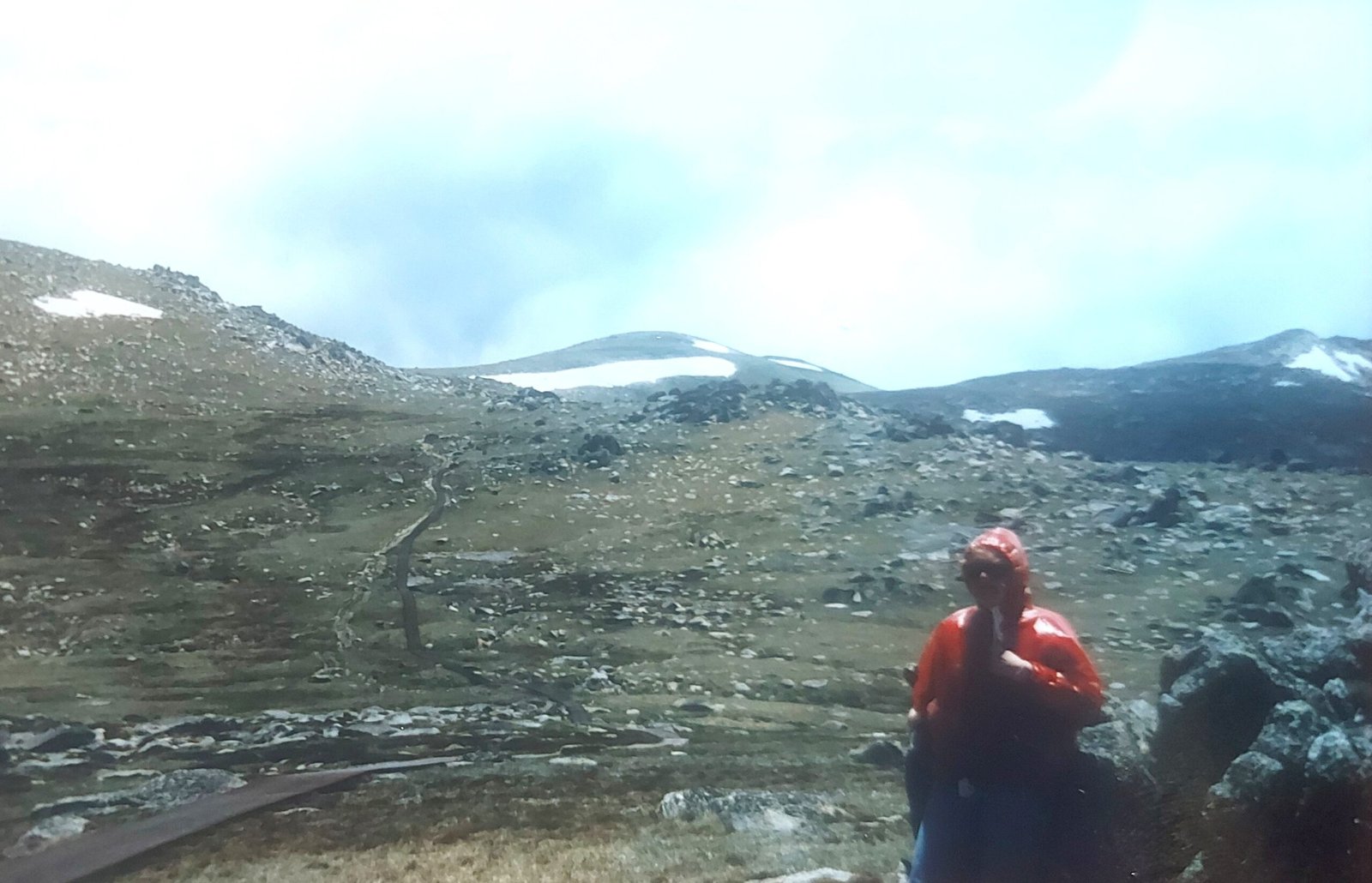
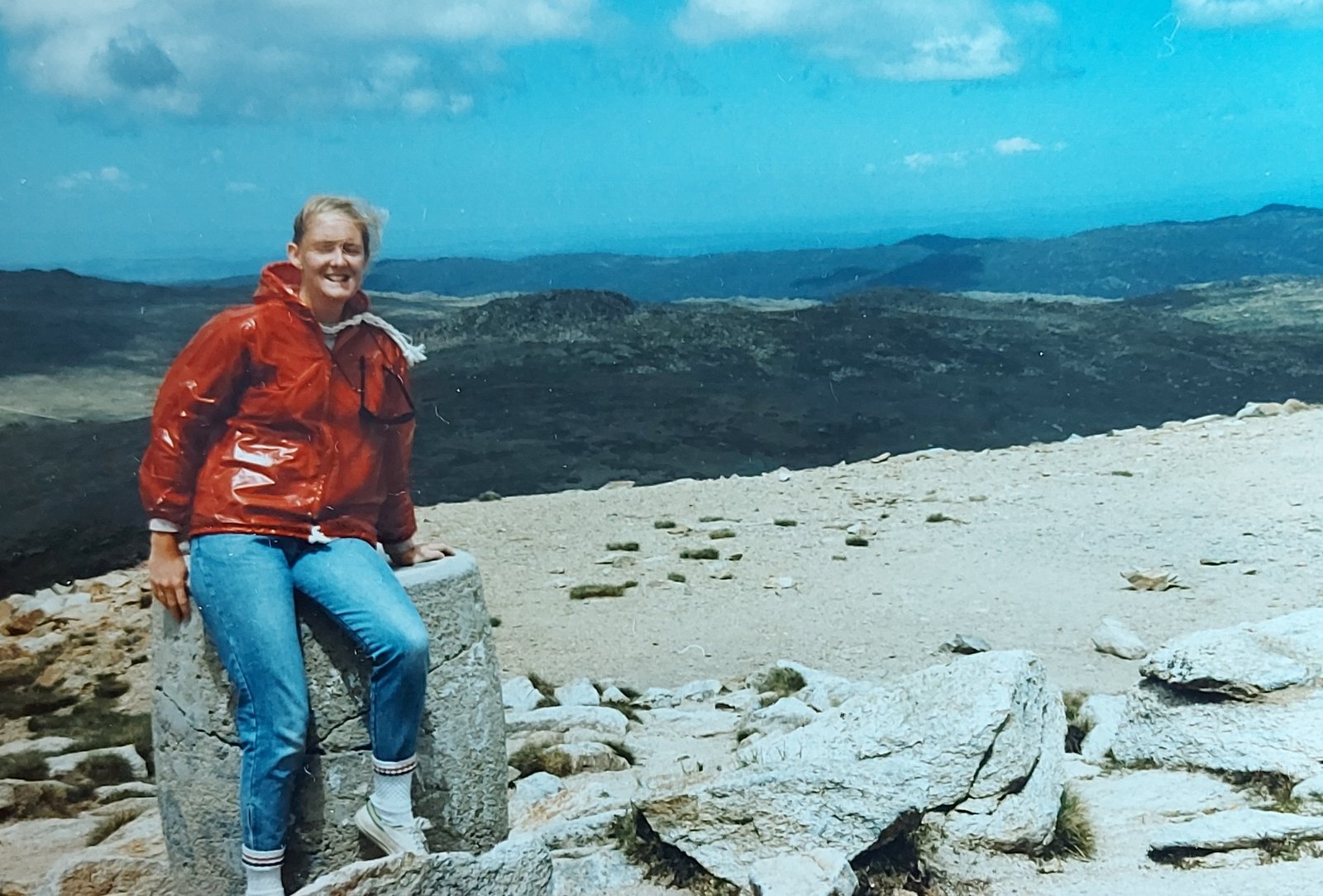
The 13-kilometre return walk was mostly along an elevated metal path built to protect the fragile alpine environment and make it accessible for all ages and abilities. It was known, unsurprisingly, as the Kosciuszko Walk. We planned for five hours of walking including a brief stay at the summit. We had water, a trekking mix of dried fruit and nuts and light spray jackets in our small day pack. Our shoes were not rugged, just joggers. The initial slope was constant but not dramatic, we snaked our way along, crossing slow flowing, small creek lines before coming to the Kosciuszko Lookout. The Mount was distant, but visible, as the first patches of snow appeared. The occasional wildflowers, which Ingrid really enjoyed, like brightly coloured marsh marigolds and pretty, silver snow daisies, began to disappear. Worryingly, the wind was picking up, and it had a chill to it. Ingrid put on her bright red coloured spray jacket. We took a photo at the Lookout and proceeded upwards.
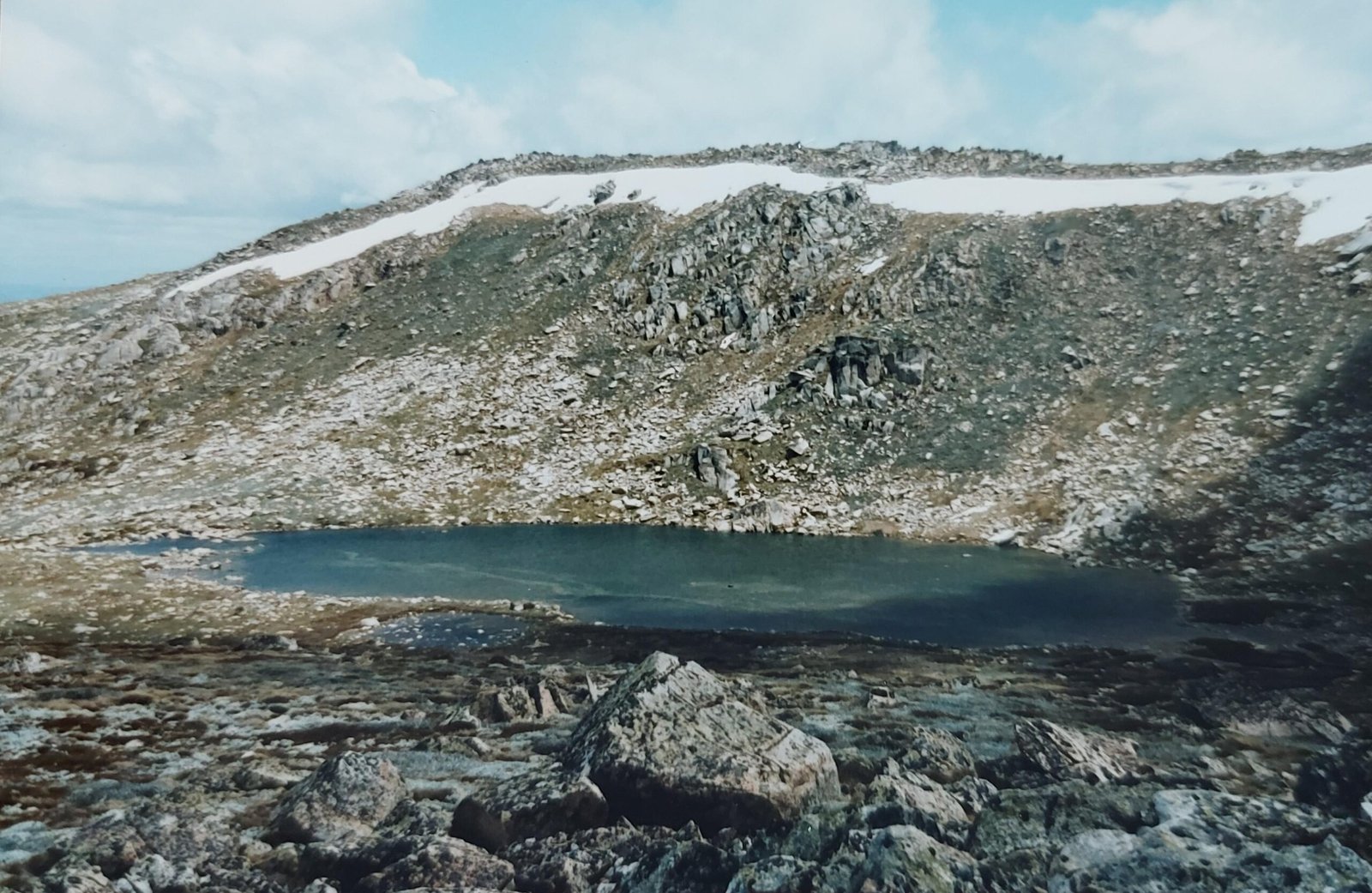
Soon we crossed the headwaters of the legendary Snowy River; a river that has bathed Australia in rich, character-filled stories of brumbies, high country cattle and jackeroos delivered by poets like the revered Banjo Paterson. A further 1,500 metres and we were at the tiny and perhaps highest lake in Australia, Lake Cootapatamba. It means … ‘the place where eagles drink’ in the local indigenous language. More patches of snow were appearing. On the other side of the lake, the Mount was nearby. Ingrid’s observation was that … “we had entered a moonscape”. The winds were picking up and chilly. Ingrid dug into our trekking mix for some additional energy. The elevated metal path gave way to a narrow gravel roadway which had come in from the north-east. It gave the National Park workers vehicle access to the summit and provided some reassurance should there be an emergency. We carried on. The greenery gave way to a rocky landscape and to now call the breeze a howling gale was no exaggeration. We both had to really lean into the wind. Ingrid was beginning to doubt the wisdom of our decision to walk to the summit. It was now past lunchtime, and the trekking mix was nearly exhausted.
It was not far to go, the appeal of reaching the summit drew us in like moths to a lantern. Fortunately, it was not raining. Looking around, the views were, to quote Ingrid … “glorious”. As often occurs in Australia when you climb up high, enormous flies began to appear. Flies not seen lower down in the coastal areas.
To get to the top of the Mount, which did become a little steeper, we had to do a circumnavigation. It did not take long and suddenly we were there. The top of continental Australia! Nothing higher to impede our views. It was thankfully clear; we could see great distances in every direction. It had taken just over two-and-a-half hours from Eagles Nest station, certainly it should be quicker on the way back, and it was.
It had been very windy for the past hour and we were starting to feel the cold. Ingrid sat on the high point marker, or trig point. As she grimaced, I took some happy snaps to remember the adventure, took some rocks as souvenirs and we headed down. Ingrid was relieved, she did not want to stay there a moment longer in the increasingly cold wind. We were just sufficiently prepared with water, jackets and nourishment. Had it rained, the balance would have swung against us. Interestingly, about 400 metres from the peak, at Rawsons Pass, were some public toilets, no doubt the highest in Australia. They were very welcomed.
Lesson learnt, when trekking, always be prepared. Talk to the locals or check the local weather. We should have carried a jumper in our small pack so that we could layer up and perhaps some additional fruit. We did this walk quite a while ago, but little has changed in the intervening years.
Visitor Information: Climbing Mount Kosciuszko (Summer)
For those planning to reach Australia’s highest peak during the main hiking season:
Check the NSW National Parks website for current information https://www.nationalparks.nsw.gov.au/visit-a-park/parks/kosciuszko-national-park
Preparation: The weather is highly unpredictable, even in summer. Always carry layers of warm, windproof, and waterproof clothing, plenty of water, sunscreen, and a printed map.
Location: Kosciuszko National Park, New South Wales (NSW).
Starting Point (Most Common): The Kosciuszko Express Chairlift at Thredbo Resort.
Route Options:
Thredbo Track: The most popular route. Take the chairlift up, then it’s about 13 km return (4–5 hours walking) from the top of the lift to the summit.
Charlotte Pass: Longer, more traditional route (18 km return, 6–8 hours walking).
Park Entry Fee: Required for entry into Kosciuszko National Park. Fees vary depending on the season and vehicle.
Operating Hours: The Thredbo chairlift operates seasonally; confirm lift times before your trip. The tracks themselves are accessible during daylight hours.
If you enjoyed this story you might also like A Drive Along Queensland’s Southern Border.

Allan is a former Army officer and logistics specialist. In retirement he writes articles and books ranging across military and naval history, biography and anthropology. He publishes through various association newsletters and websites and on Amazon. He lives in Sydney.
I enjoyed this story and was reminded of my own climb up Mt Kosciusko years ago: loved the descriptions of the changing landscape, alpine views, wildflowers, snow patches and strong winds. The weather can quickly turn bad up there and it is good reminder to come prepared.
Thanks Ali, it is great how adventures that challenge at the time, become more exciting and memorable with the passage of time.
[…] If you are enjoyed this story you might also like Climb Mount Kosciuszko in Summer, but be Prepared. […]
[…] If you enjoyed this story you might also like Climb Mount Kosciuszko in Summer, but be Prepared. […]
[…] If you enjoyed this story you might also like Climb Mount Kosciuszko in Summer, but be Prepared. […]
[…] If you enjoyed this story you might also like Climb Mount Kosciuszko in Summer, but be Prepared. […]