
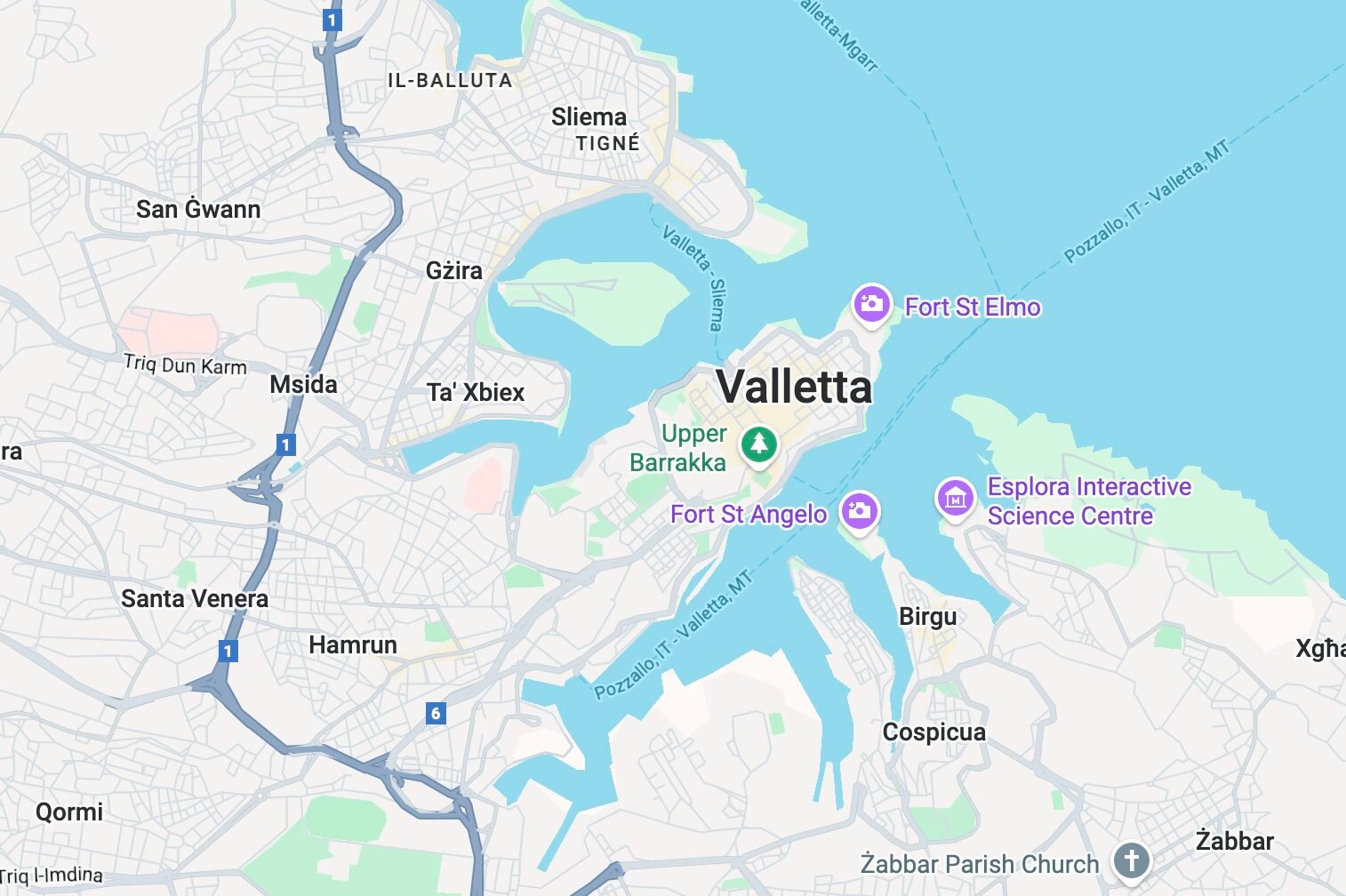
I arrived in Sliema, Malta in June 2025 with my wife Ingrid, and my younger brother Collin, for a 10-day Malta immersion. I had one goal with Ingrid, to swim frequently in the Mediterranean Sea, and one goal with my brother, to see the history. This included to pay homage to the George Cross, Malta’s most famous piece of metal – other than the average ornate Maltese balcony railing.
The medal, awarded collectively to the Maltese people in April 1942 for their extraordinary bravery during World War II, now rests in the National War Museum inside the historic Fort St Elmo. One day, armed with sunscreen, curiosity, and a piece of fruit, Collin and I caught the Sliema-Valletta ferry, completed the steep 15-minute uphill walk from the ferry terminal to Valetta, then trekked the 500 metres towards the sea and Fort St Elmo.
Where History and Heat Collide
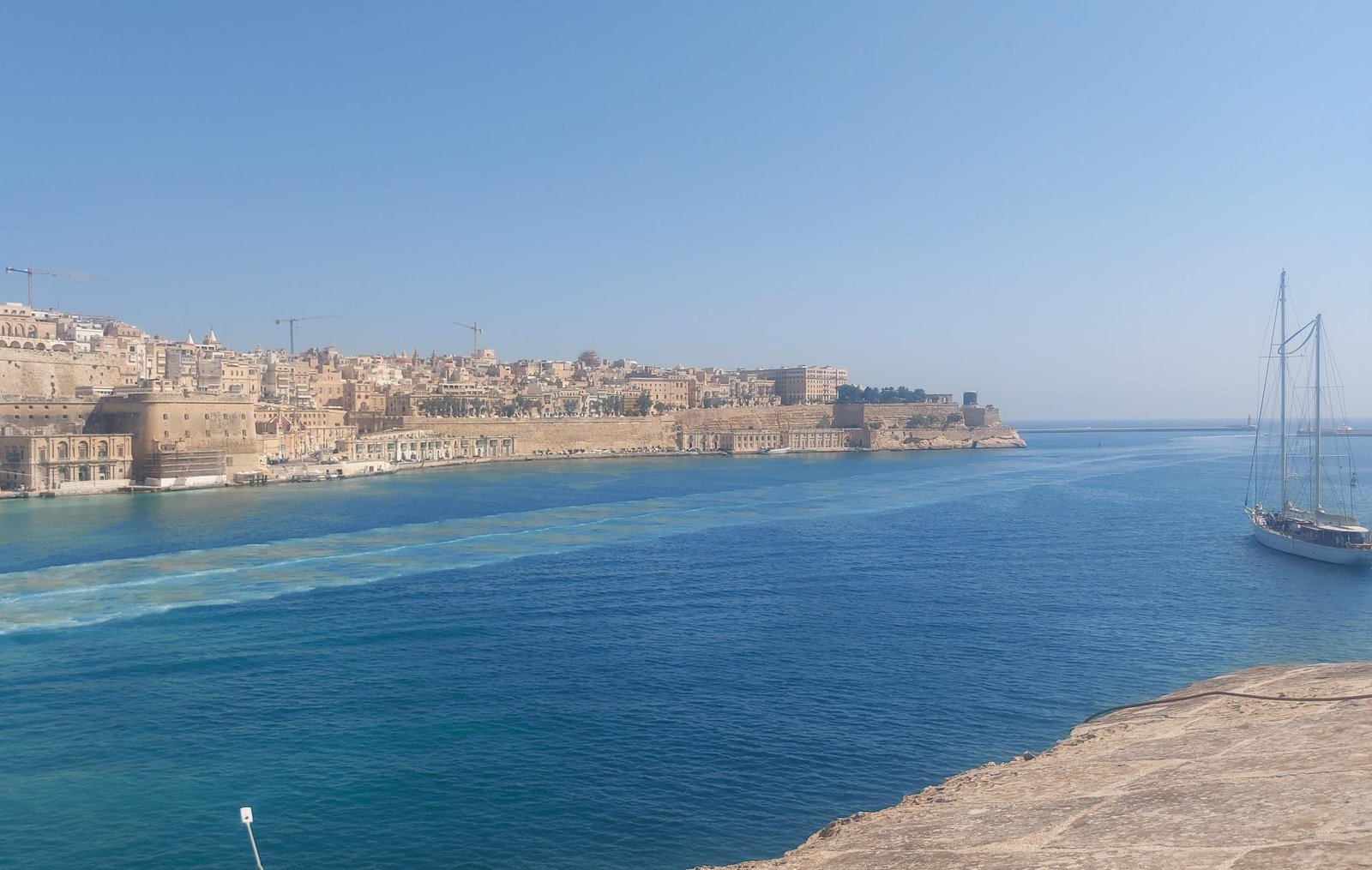
Fort St Elmo sits at the tip of Valletta like a stone guardian, watching over both harbour entrances and silently judging tourists who underestimate the Maltese summer. It is hot! Built in 1552, the fort has survived sieges, bombardments, and centuries of Mediterranean drama. Today it houses the National War Museum, which showcases Malta’s military history from the Bronze Age to the modern era.
Walking through the fort’s star‑shaped bastions, I felt like I’d stepped into a history book – except with more selfie sticks. The museum’s galleries are arranged chronologically which is helpful if, like me, you occasionally forget whether the French came before or after the Knights of St John (answer: it was after).
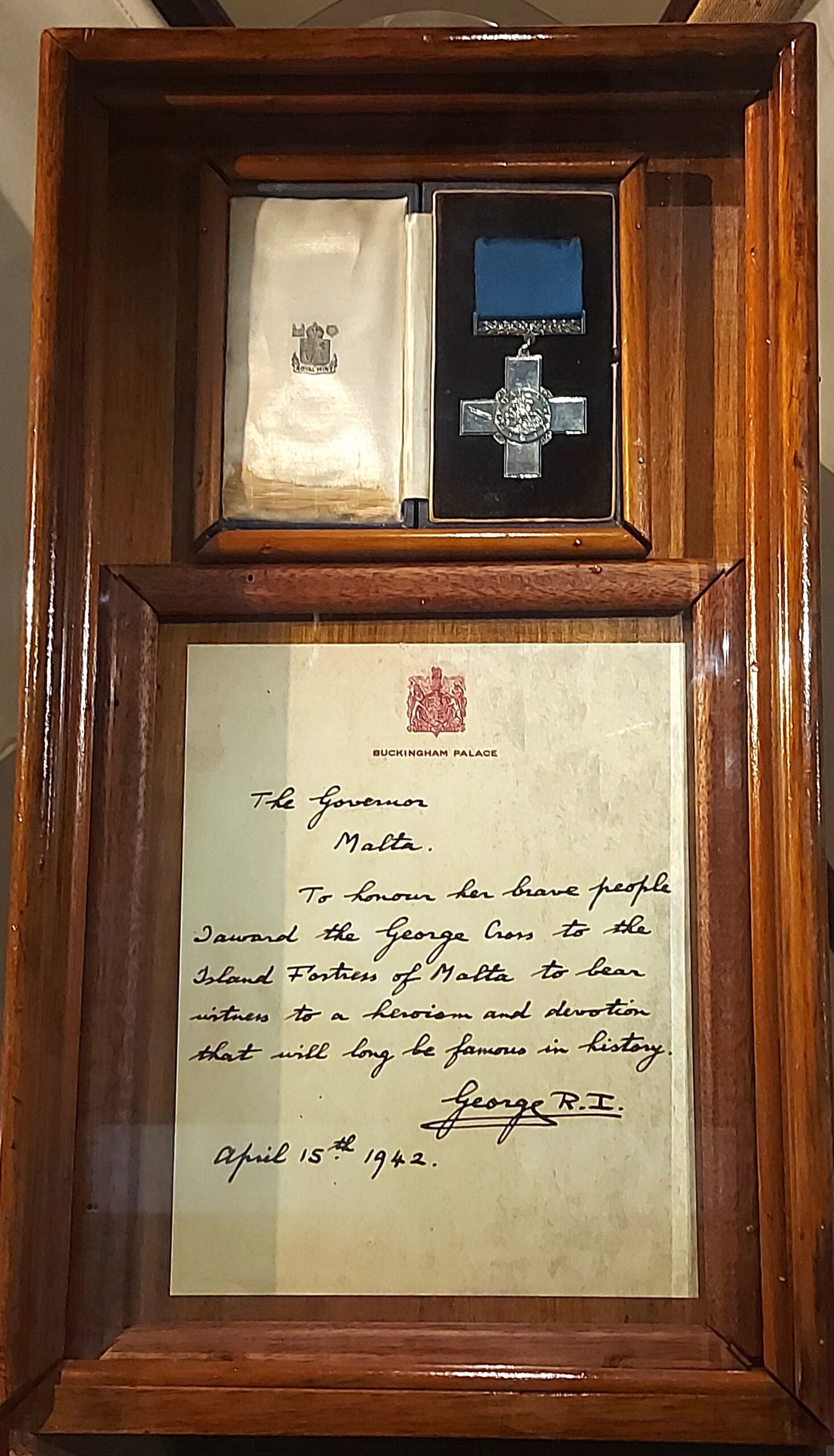
The George Cross itself is displayed in a dedicated section, lit with the reverence usually reserved for holy relics. It’s a solid silver cross bearing St George slaying a dragon – a fitting symbol for the equally determined Maltese who spent 1940 to 1942 being bombed so relentlessly that many on the island were forced to live underground for long stretches.
Britain’s King George VI awarded the medal to the entire population of Malta for their ‘heroism and devotion’ during the siege, when the island endured more than 3,000 air raids and severe shortages. The original citation sits with the medal, a reminder that Malta didn’t just survive the war – it did so with grit and stubbornness.
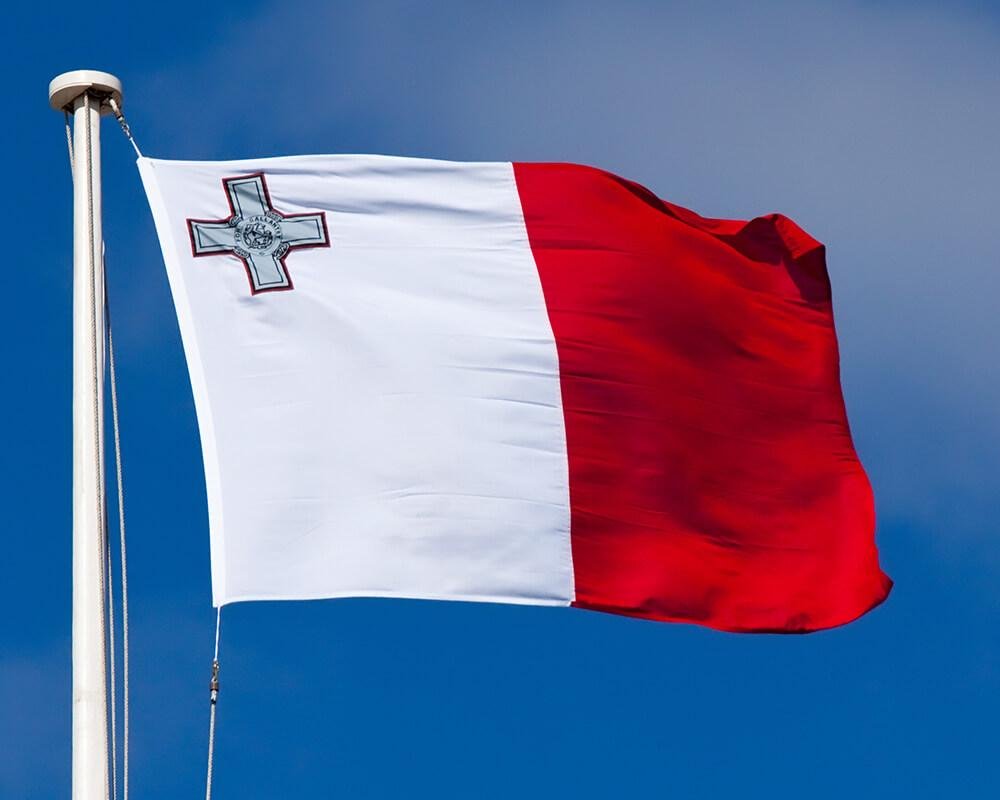
The George Cross on the Flag
One of my favourite details is that the Maltese were so proud of the award that they literally stitched it onto their national flag. On the upper hoist corner of the white half, you’ll find a tiny representation of the George Cross outlined in red. It’s the only national flag in the world to feature a British gallantry medal – a subtle way of saying, ‘Yes, we’re small, but we’re mighty.’
More Wonders Inside the National War Museum
The George Cross may be the star, but the museum is packed with other treasures:
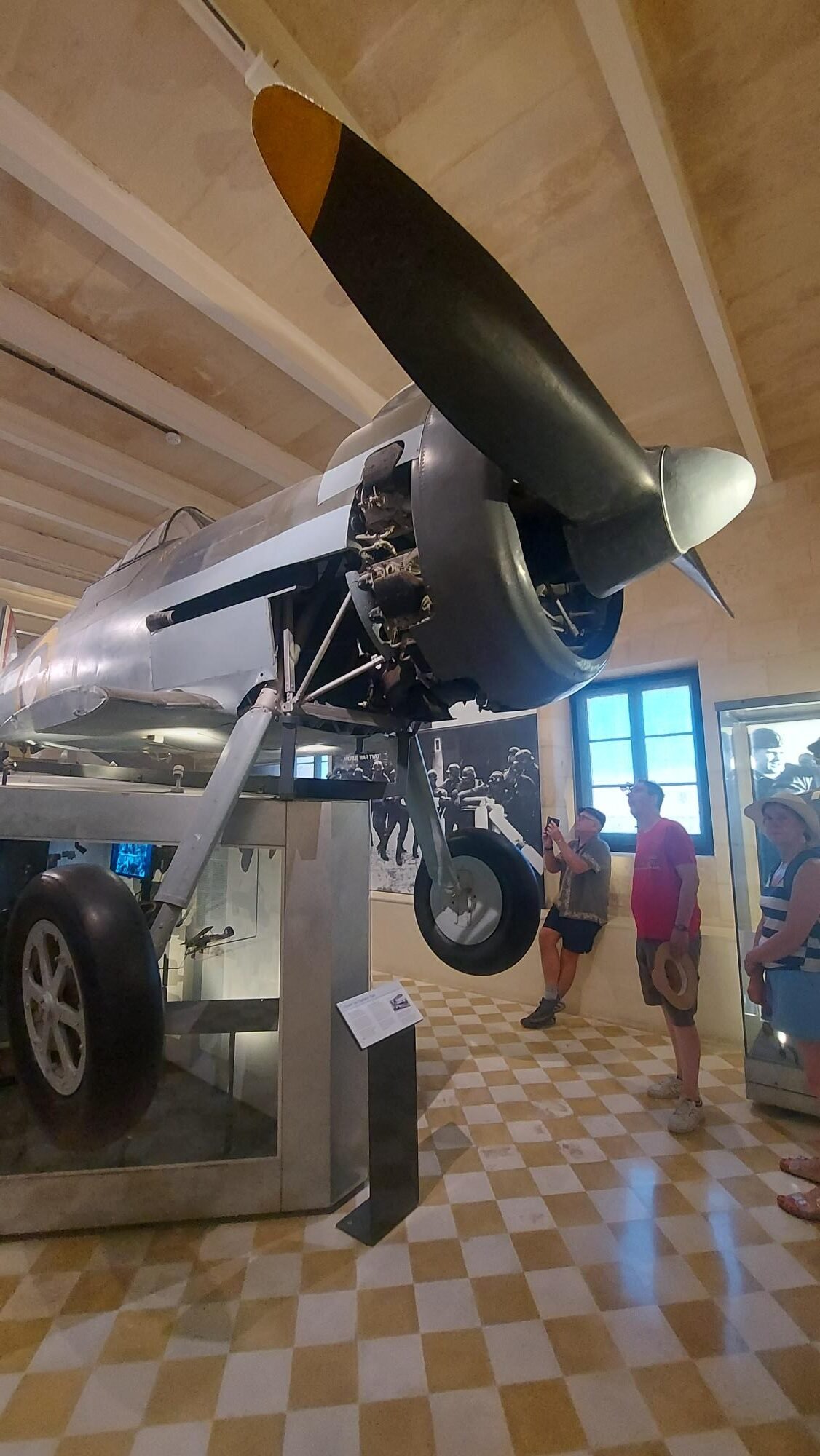
- The Gloster Sea Gladiator ‘Faith’, one of the legendary fighter planes that defended Malta during the early days of WWII.
- Roosevelt’s Jeep ‘Husky’, which looks exactly like the kind of vehicle a wartime president would bounce around in.
- Artifacts from the Great Siege of 1565, when the Knights of St John held off the Ottoman Empire.
If you enjoy military history, you’ll be in paradise. If you don’t, you’ll still enjoy the air‑conditioning. At one point, I attempted to take a dramatic photo of ‘Faith’ only to be gently reminded by a museum attendant that flash photography is not allowed. I apologised with the sincerity of someone who had just been scolded by a very earnest primary school teacher.
When to Visit
The museum is open daily, with longer hours in summer. The best time to visit? Morning – before the crowds and before the Maltese sun turns Fort St Elmo into an historical convection oven.
If you go on a Sunday between October and June, you might also catch the ‘In Guardia Parade’, a vibrant military re‑enactment outside the fort. Think marching, drums, armour, and moustaches – lots of moustaches.
Leaving the Fort
As Collin and I stepped back into modern day Malta, we felt a renewed appreciation for Malta’s resilience. The George Cross isn’t just a medal in a glass case; it’s woven into the island’s identity, its flag, and its collective memory. Malta may be small, but it has stood firm against empires, sieges, and the might of the Luftwaffe.

Allan is a former Army officer and logistics specialist. In retirement he writes articles and books ranging across military and naval history, biography and anthropology. He publishes through various association newsletters and websites and on Amazon. He lives in Sydney.