
Climbing Mount Maunganui is usually a story of sunshine, sea breezes, and the steady rhythm of footsteps rising toward one of New Zealand’s most beloved coastal summits. But on 23 January 2026, a devastating landslide struck the Mount Maunganui Beachside Holiday Park at the base of the mount, killing six people and injuring others.
In the weeks since the rescue and recovery, a multi‑layered restoration effort has taken shape. The New Zealand Government has launched a formal inquiry into the causes and emergency response, while WorkSafe is conducting a workplace health and safety investigation into conditions at the holiday park. At the local government level, Tauranga City Council has commissioned an independent geotechnical review of the slopes and initiated planning for long‑term resilience measures. Community groups and local volunteers have organised memorial events, fundraising efforts, and support networks for affected families, ensuring that healing is shared and grounded in collective care.
You cannot currently climb the mount. What follows is Allan and Ingrid’s experience and observations from before the tragedy. The hope is that in the not too distant future climbers will return to the mount.
This recollection was jointly written by Allan A. Murray and his wife Ingrid Murray.
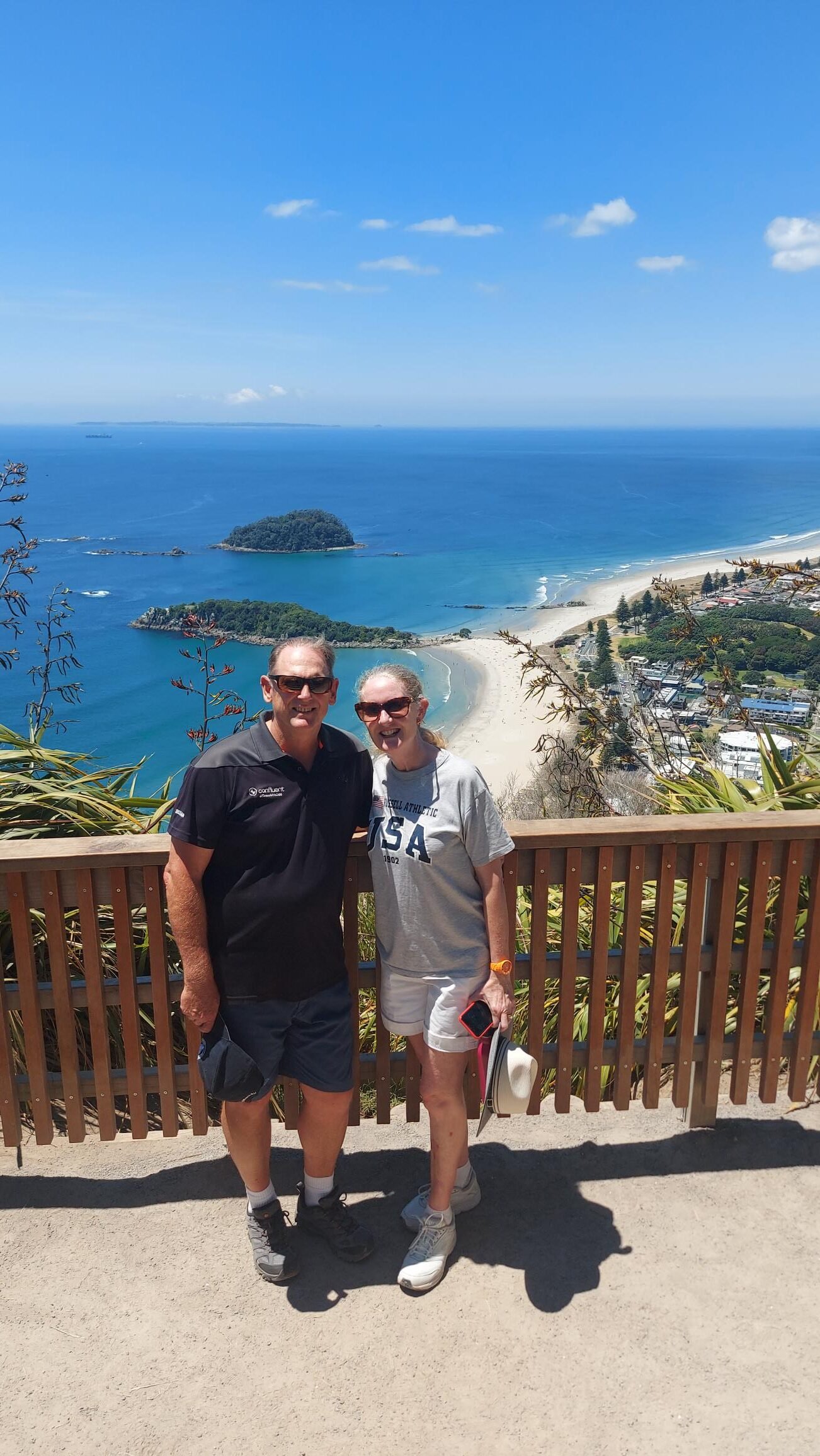
Ingrid and I were in New Zealand in 2024, and the zeitgeist just grabbed us and dragged us in. So, off a-climbing we did go. We climbed Mount Maunganui.
The trek gave us three unique views that showcased the essence and beauty of the Tauranga region. There are three paths to climb – a steep goat track; a winding, dusty service road; or the longer circumnavigation via a combination of steps and footpath. Ingrid voted for the steps and footpath, and thus out-voted me. About an hour was the estimate to climb the 232 metres according to the signs. It was a hot day and we took our time – a leisurely 90 minutes.
It was morning and we were largely climbing with the locals – typically fitness and adventure focussed Kiwis out for their morning stint of exercise by jogging, walking their dogs, or getting their boots dusty as part of a longer trek or by mountain biking. Some jogged all the way to the top. Occasionally we could discern a foreign language.
I suspect most of the foreign tourists were on Maunganui Beach, where we started. It was a glorious day, and the waves were even and gentle. The steps firstly wrapped around the eastern face, and the view of the beach and its little tombolo just kept getting better, especially the island and the white sands. We had great views down to the Tauranga beach resorts. It was drop-dead gorgeous; I had to stop Ingrid from wanting to take pictures on her mobile phone as I was getting a sore mouth from smiling. The beach was a very popular attraction, the suburbs around the beach densely populated with Air BnBs, serviced apartments and restaurants.
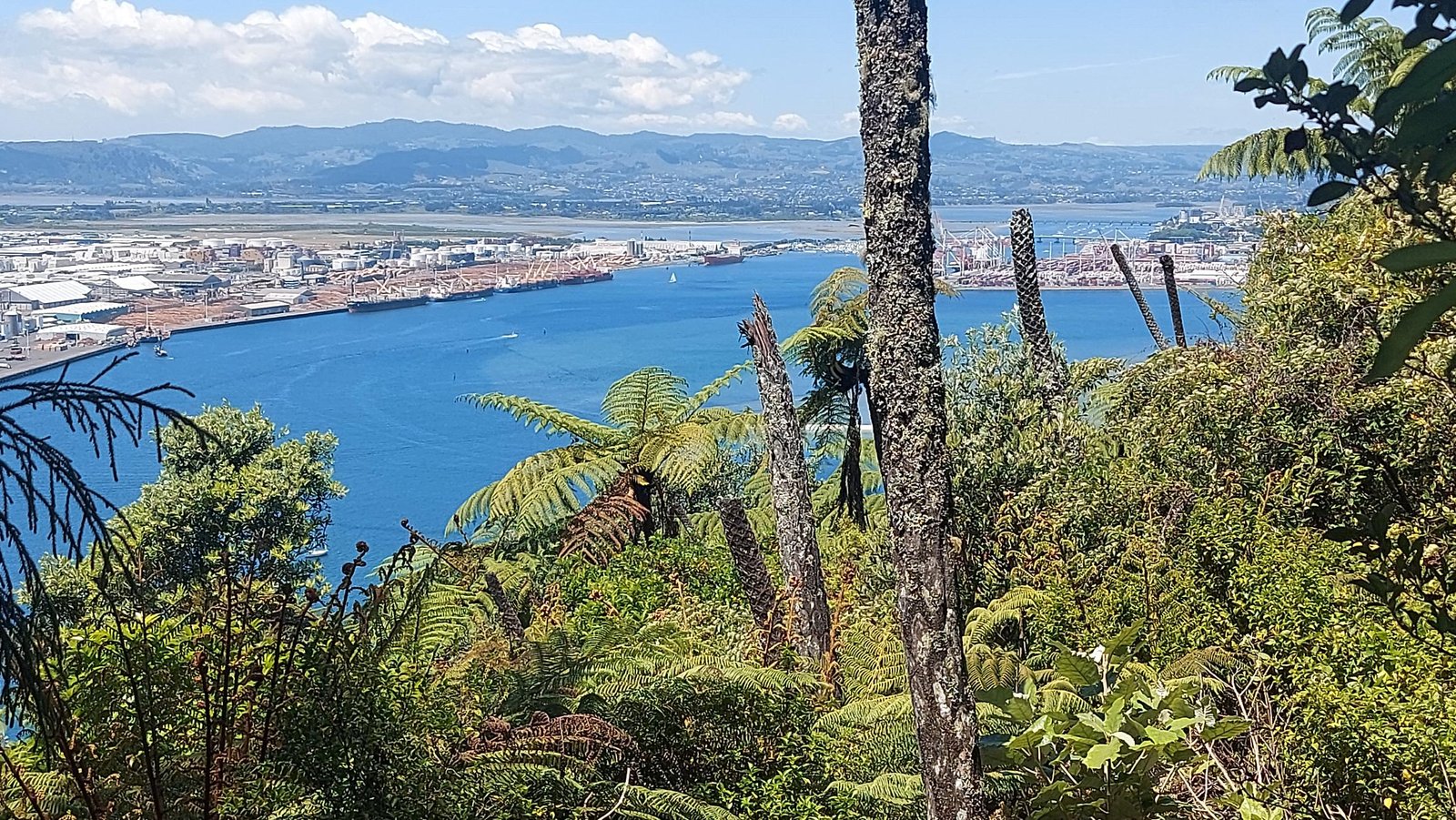
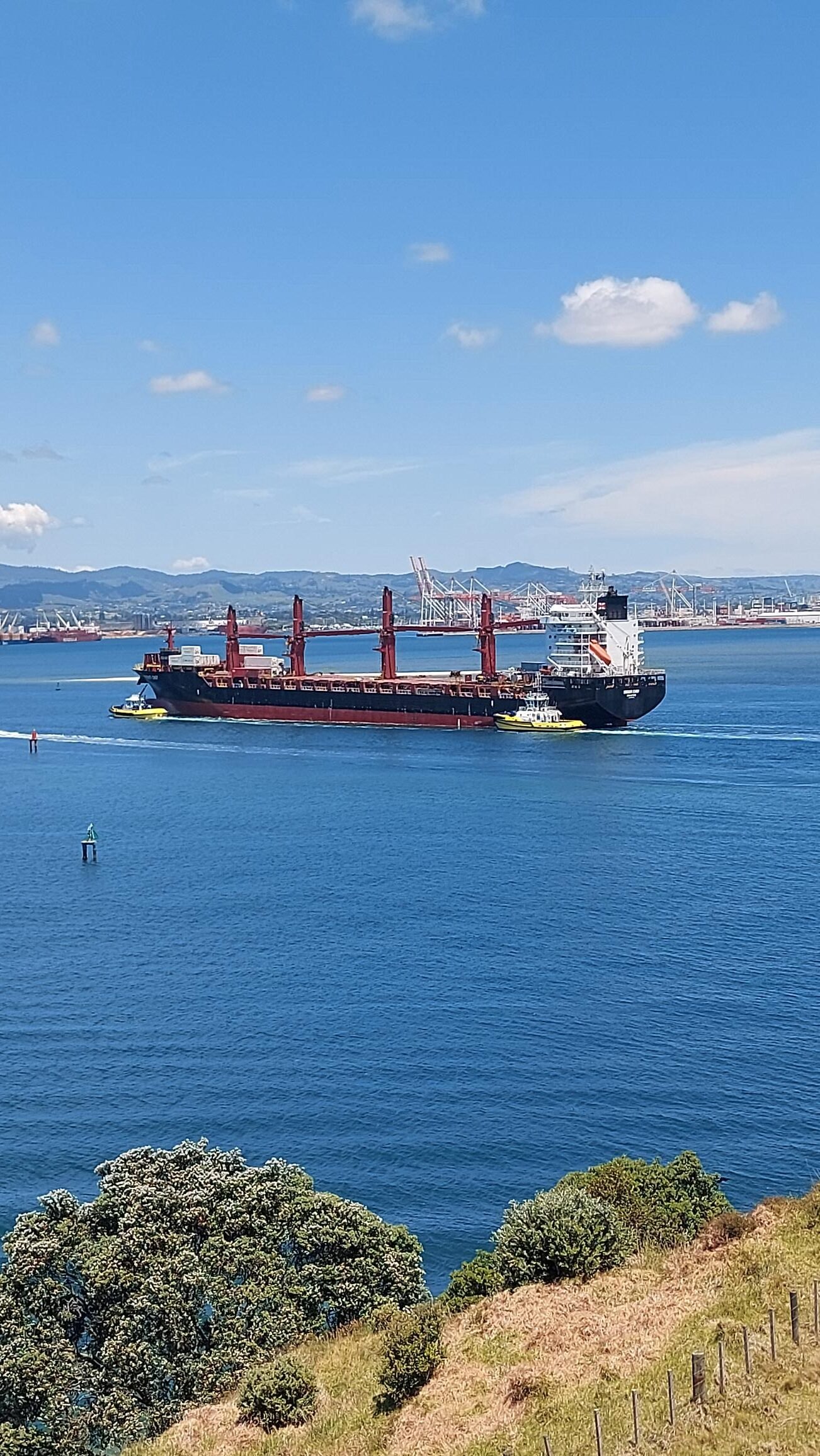
Then the steps curved around the southern face of the mount. An enormous and spectacular harbour emerged through the lush New Zealand forest, dense with ferns. The second view of Tauranga is as New Zealand’s busiest port. There was a regular flow of ships in and out. The water was a bright blue, such a contrast to the miserable brownish look of many harbours. Harbours with working ports are so entertaining to sit and gaze at from a height – ship movements, pilot boats, tugboats, cranes operating, pleasure craft, fisherman. It was a scene of constant, purposeful movement. We enjoyed it.
We were now at the top, which was a bit disappointing. From the peak it is hard to see over the forest. The best views are enjoyed in the ascent and descent. At the top we regrouped, had a rest and a drink on the large, grassed area and watched the locals who were either passing by, picnicking, sunbaking or taking photos. It was getting hotter; the beach was calling.
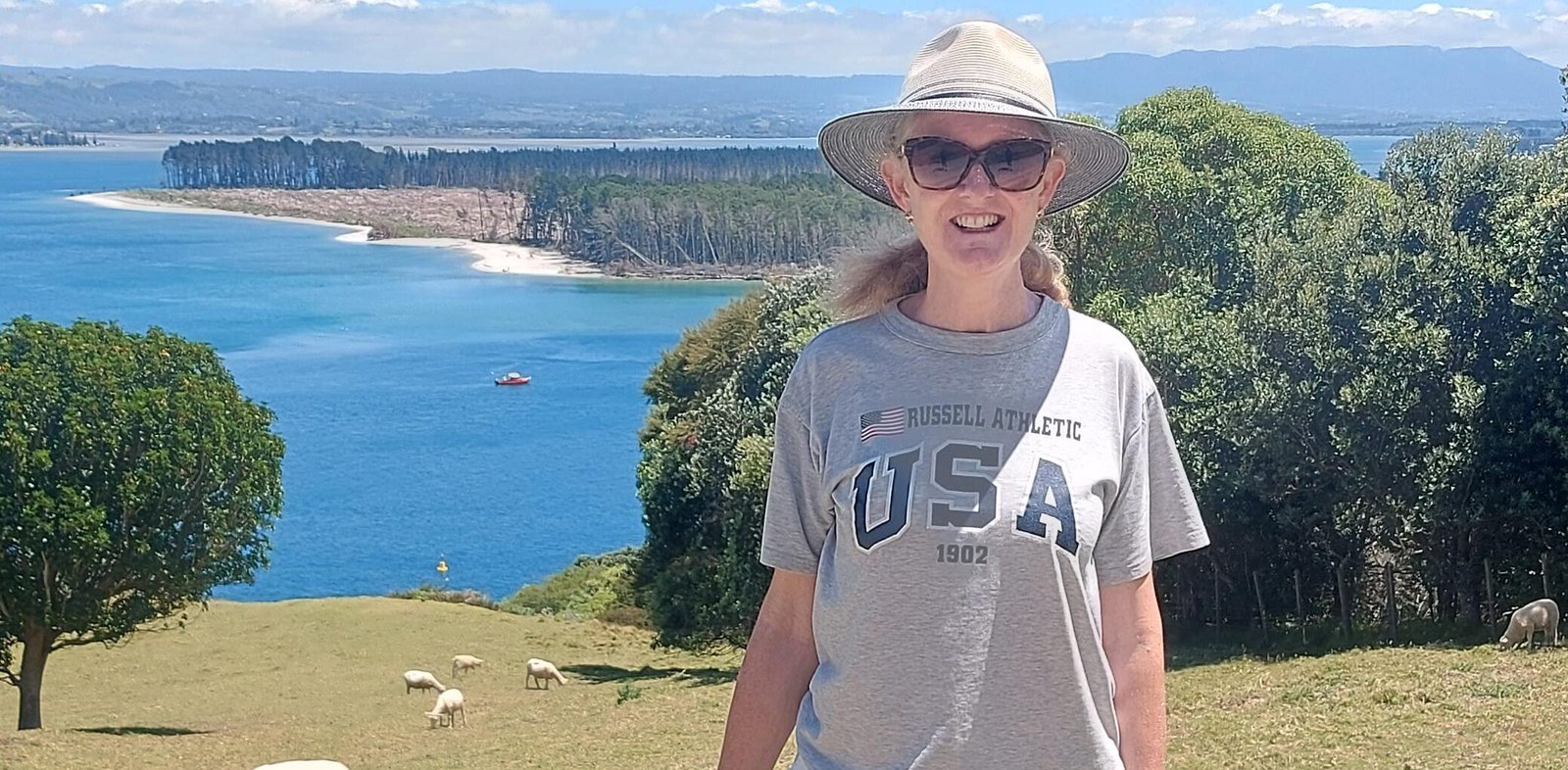
We elected to return via the service road; it took 40-50 minutes. It largely went down the western face before curving to the east at the bottom. The third view of the Tauranga region was revealed looking inland – forest plantations mixed with grazing areas for sheep and cows. This export bowl sustained the port – timber exports, mainly to China, and dairy products. Sending New Zealand’s finest butter, cheese and yoghurt to the world. Ingrid enjoyed … “seeing the rainforest with tree ferns and other lush vegetation then looking through it to the idyllic pastoral charm of grazing land and sheep.”
Covered in a layer of sweat by the end of the morning of exertions, the beach called loudly, so off we went. From adventurers with the locals, to voyeurs, to holiday makers, all in one morning. It was a wonderful climb, do it if you can!
New Zealand is a wonderful destination. As pretty as a picture everywhere that you go: and friendly people who speak English. We truly love visiting New Zealand.
The Legend of the Spirit of Mauao
Before it was known as the main mount of the Bay of Plenty, the 232-metre peak was the subject of Māori legend. According to the story, a nameless slave was spurned in love by the beautiful Pūwhenua. Heartbroken, he asked the spirits of the forest to drag him into the Pacific to end his grief. But as they reached the shore, the first rays of the sun struck. The spirits fled, and the mountain was fixed forever at the harbour entrance – named Mauao, the one ‘caught by the dawn’. It is a story that captures the relationship between the ocean, the volcanic mountains, and the people. You can see a YouTube account of the story here.
If you enjoyed this story you might also like Climb Mount Kosciuszko in Summer, but be Prepared.

Allan is a former Army officer and logistics specialist. In retirement he writes articles and books ranging across military and naval history, biography and anthropology. He publishes through various association newsletters and websites and on Amazon. He lives in Sydney.