Pre reading for my planned trek to Patagonia consisted of the most interesting book, “Across Patagonia” written by Lady Florence Dixie following her 1878-1879 expedition through the then unexplored and wild landscapes of southern Chile and Argentina. I shared Lady Dixie’s desire to escape from civilisation due to a busy and often stressful job and my time in Patagonia did just that.
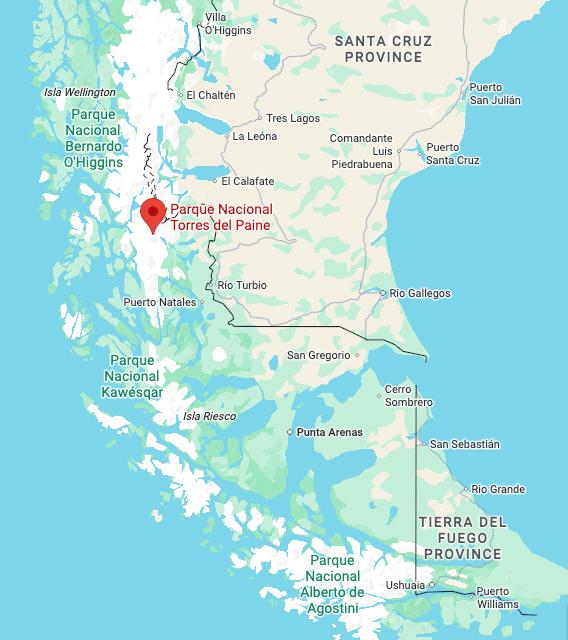
My first stop in January 2016 was Santiago, Chile for the opportunity to meet the 15 member group brought together by Free Spirit Adventures – a well organised adventure business that had facilitated a few of my previous treks. Check out their website here. The next day we flew southwards, following the majestic Andes towards the Strait of Magellan and then landing at Punta Arenas – one of the world’s southernmost (and windiest) cities. After a good night’s rest I enjoyed the five-hour coach drive to Port Natales, chatting most of the time to a friend whilst the driver navigated the rather monotonous steppe landscape on our way to the daunting looking ice capped mountains.
Shortly after lunch on arrival at Port Natales (gateway to the magnificent Torres del Paine National Park) the coach drove us the two hours to our Eco Camp. The accommodation consisted of geodesic domes – environmentally friendly and comfortable structures, notwithstanding the cold temperatures outside (ranging from -1C to -5C). The food provided for breakfast, box lunches and dinner was of very good quality, as was the Chilean red wine. My favourite was and remains the Carmenere.
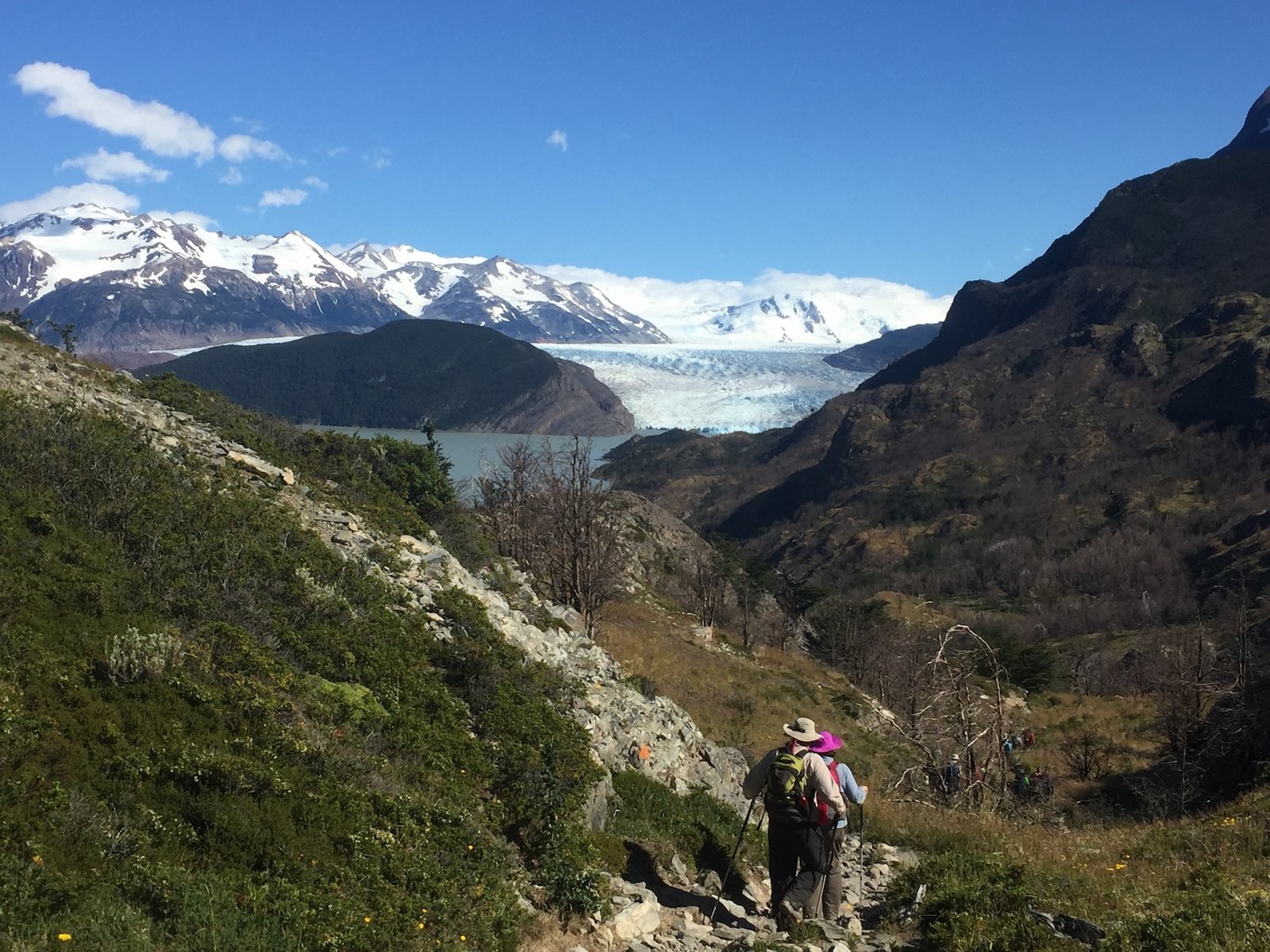
The next few days involved trekking through this beautiful part of the world, including the challenging walk to Mirador Base Las Torres – an iconic hike which captures extraordinary views of the three granite towers and turquoise lake. On one of the rest days the coach took us to the Blue Lagoon (Laguna Azul). On the way we passed many wild guanacos (related to llamas) and emu-looking nandus, with the pumas thankfully well out of sight.
This story is part of our Remote Landscapes series. Read more here.

Up until about the fifth day the weather was superb – blue skies and minimal wind. The planned couple of days in a kayak on the Serrano River were unfortunately cancelled due to poor weather, so we spent a few nights back at Port Natales, allowing us the opportunity to explore some ( the majority) of its small bars.
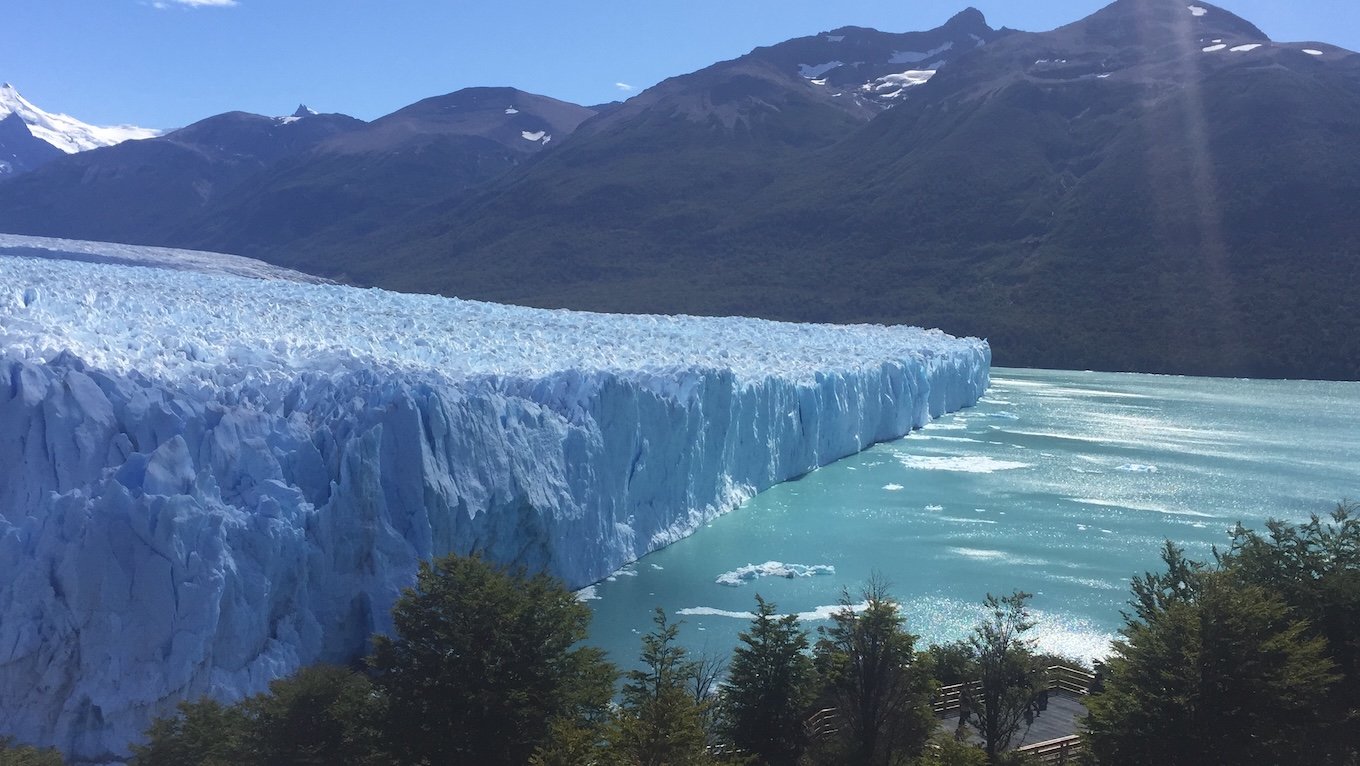
We enjoyed a pleasant coach ride to El Chalten, Argentina’s trekking capital, located in the spectacular Los Glaciares National Park. The park’s name refers to a huge ice cap, the Southern Patagonian Ice Field – the largest outside of Antarctica, Greenland and Iceland. It is also the world’s third largest reserve of fresh water. The ice cap feeds 48 glaciers – one of them is the Perito Moreno Glacier. In 2016 this glacier was advancing rather than retreating and many of us thoroughly enjoyed the opportunity to walk on this incredible glacier wearing crampons and t-shirts. Some of the males thought it appropriate to take our t-shirts off for a photo opportunity. The photo has not surfaced, nor the reason why we thought it a good idea.
A few days were spent trekking this beautiful National Park with one day hiking the slopes of Loma del Pliegue Tumbado – the top offering amazing views of the massifs of Cerro Torre and Fitz Roy together with the Patagonian Steppe. I remember It was terrific to see numerus ladies trekking, either with friends or by themselves. Lady Dixie would have been equally impressed.
Our last evening in Patagonia was spent at El Calafate, a small city in the province of Santa Cruz and on the shores of the largest lake in Argentina, Lago Argentino. Many beers, wines and laughs were had as we enjoyed each other’s company, reflecting on what had been a magnificent adventure. The next day was spent on a flight to the Paris of South America, Buenos Aires, where we spent a happy night followed by the plane trip home. The flight to Sydney took the southerly route over Antarctica.
I felt so very fortunate to have experienced this beautifully raw and rugged paradise and if I return I would consider the following:
- Whilst we were quite fortunate with the weather, the “roaring 40’s” can cause some persistently strong winds. The ability to layer one’s clothing is important.
- Ensure you have an Argentinian visa – you will need it to cross the border, even in remote areas. The border force are strict (and will be very interested in any food you may be carrying).
- Ensure your phone/camera is of reasonable quality. Some of the views we experienced were quite spectacular.
- Make the most out of any time spent in the towns – they provide a wonderful insight into Patagonian culture and the ability to sample more Carmenere.
Know Your Llamas
The camelid family, often referred to as the ‘llama family’, consists of four distinct species all native to South America: the domesticated llama and alpaca, and their wild ancestors, the guanaco and vicuña.
- Llamas are the largest of the group, traditionally used as pack animals due to their strength and endurance.
- Alpacas are smaller and bred specifically for their soft, luxurious fleece.
- Guanacos are the wild counterparts to llamas, known for their ability to survive in harsh, high-altitude environments.
- Vicuñas produce the finest and most expensive wool in the world; they were once considered sacred by the Inca.
What is the connection with camels, I hear you ask.
Well, while the dromedary camel (single-humped) and Bactrian camel (double-humped) share the same taxonomic family (Camelidae), they diverged from their South American cousins millions of years ago. All camelids are social herbivores characterized by long necks, slender legs, and a unique three-chambered stomach. They are famous for their intelligence and their tendency to spit when feeling threatened or annoyed.
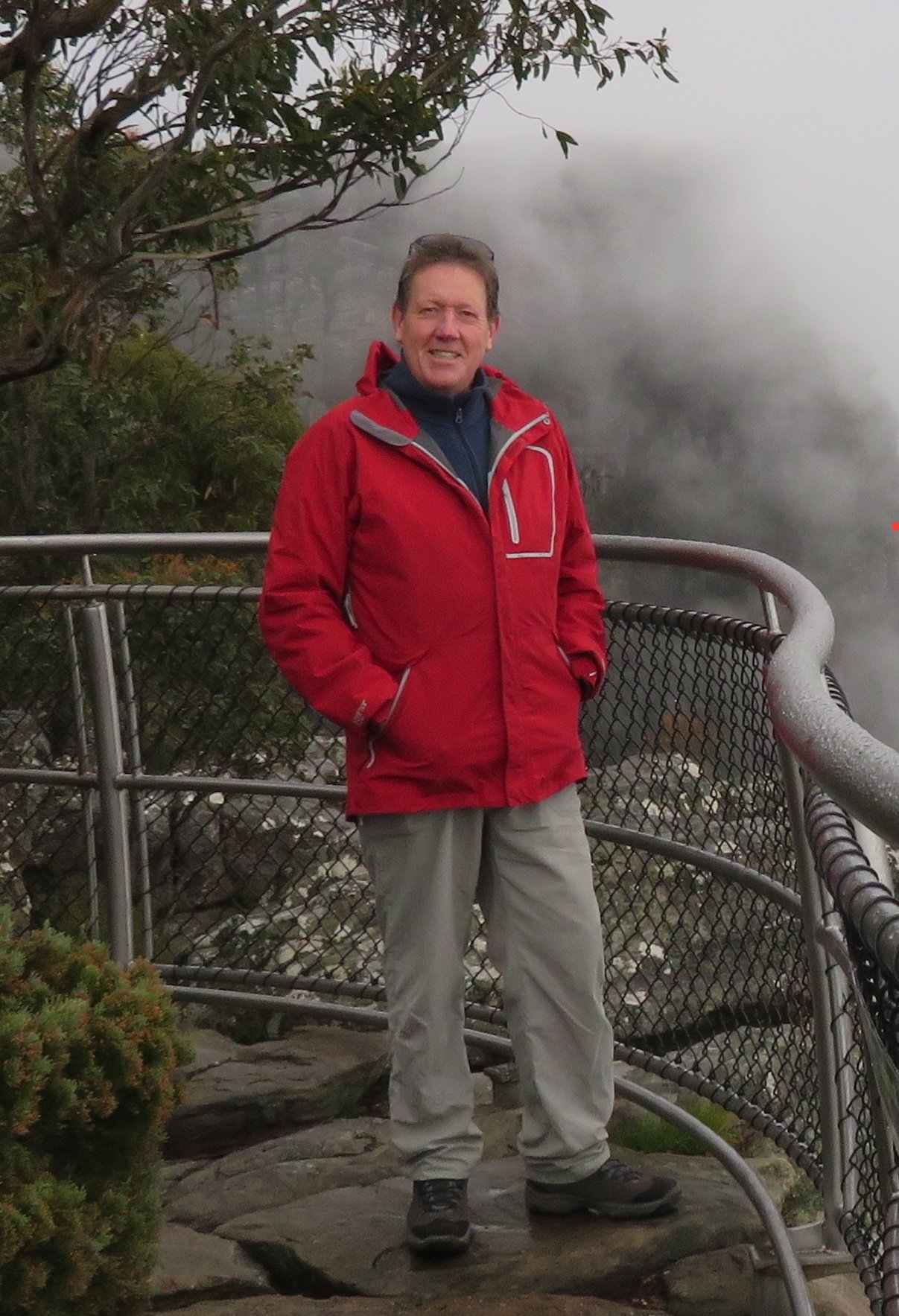
Following a nomadic upbringing due to his Dad travelling throughout Australia and overseas as an officer in the Royal Australian Navy, David has settled into Melbourne life with his wonderful family. The relative stability and comfort over the past 20+ years has been thankfully punctuated with various treks and other adventures with friends and family. These adventures have preserved his sanity, given him great stories to tell, and provided a zest to explore more of this extraordinary globe.
Dave, thanks for sharing your story, a place I know little about. Pics indicate a spectacular place. Stay well, Al.