
This story is part of our Travel Writing and Reflection series.
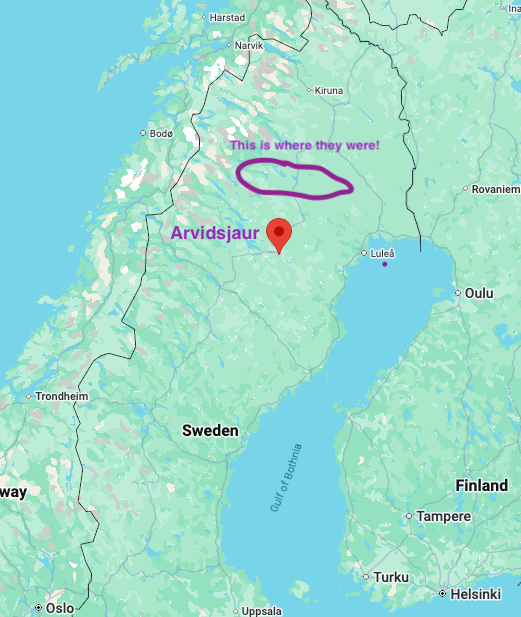
I recently watched the movie Sámi Blood, a stark, beautiful film about discrimination against the Sámi people of Sweden during the 1930s. The memory came back of the time Ingrid and I travelled 100 kilometres north of Arvidsjaur, deep into Swedish Lapland, to spend time on a Sámi reindeer farm. It was Ingrid’s idea to travel there.
We arrived in the afternoon, our Swedish friend, Pier Olaf, drove us.
The people who welcomed us so generously had lived with a heavy history. But on our trip, we were unaware of any of this except the promise of reindeer, forest treks and fishing with people who knew how to survive in the Arctic.
It was May in Lapland, the days were long and the air was sharp. Our host greeted us with a warmth that cut through the chill. He was a typically short, Sámi man with a moustache and dressed in gákti – the traditional clothing that looked both ceremonial and entirely practical. It was the kind of outfit that says, ‘yes, I can herd reindeer.’
We trekked deep into the forest. The host moved with the kind of ease that comes from generations of living in harmony with the land. The Sámi relationship with nature is practical, respectful, and deeply rooted. I watched our host read the forest – every trail, every broken twig, every shift in the wind carried meaning.
We stood among the dominant birch trees, listening to our host speak about ancestral lands and migration routes. It is easy to visit a place without understanding the history beneath your dusty boots. Whilst our host had a farm for his reindeer, he still participated to a lesser extent in the migratory life.
Watching the film Sámi Blood, the memory of that walk and discussion in the forest returned. The film’s themes of discrimination – towards the racially different Sámi who were treated as culturally inferior – cast a long shadow back upon our experience. Our Sámi host was proud, resilient, and quietly dignified, despite the history of national policies that tried to diminish him.
Fishing and the goahti
On the way to the lake, our host led us along a narrow trail, pointing out plants used for medicine, food, and – in one memorable case – “only if you want to hallucinate for three days.”
The lake water was as still as glass and framed by dense forest. On a narrow pier, following some brief instructions, we optimistically cast a fishing line into the lake for 30 minutes. We caught no fish, but it was peaceful, almost meditative.
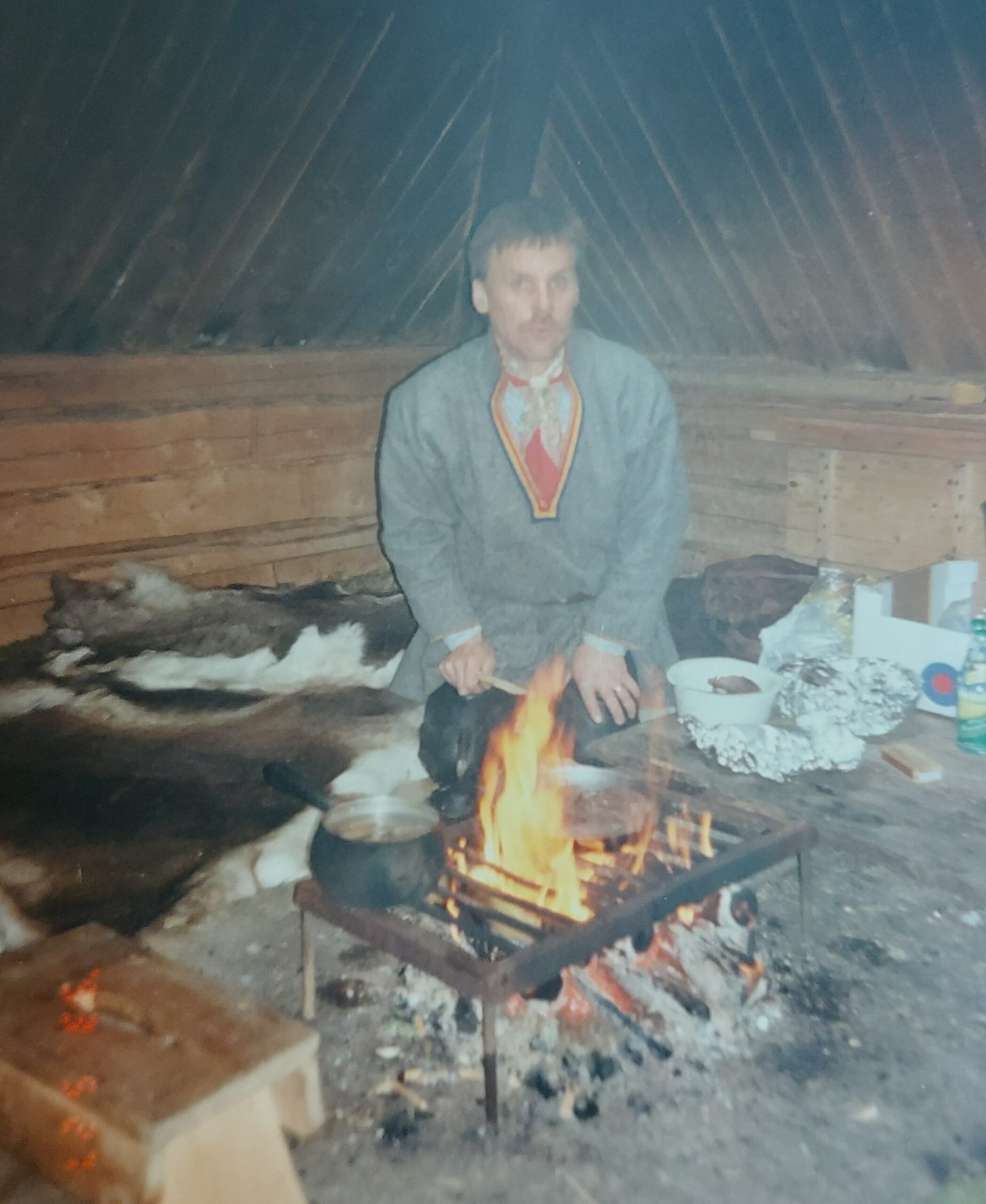
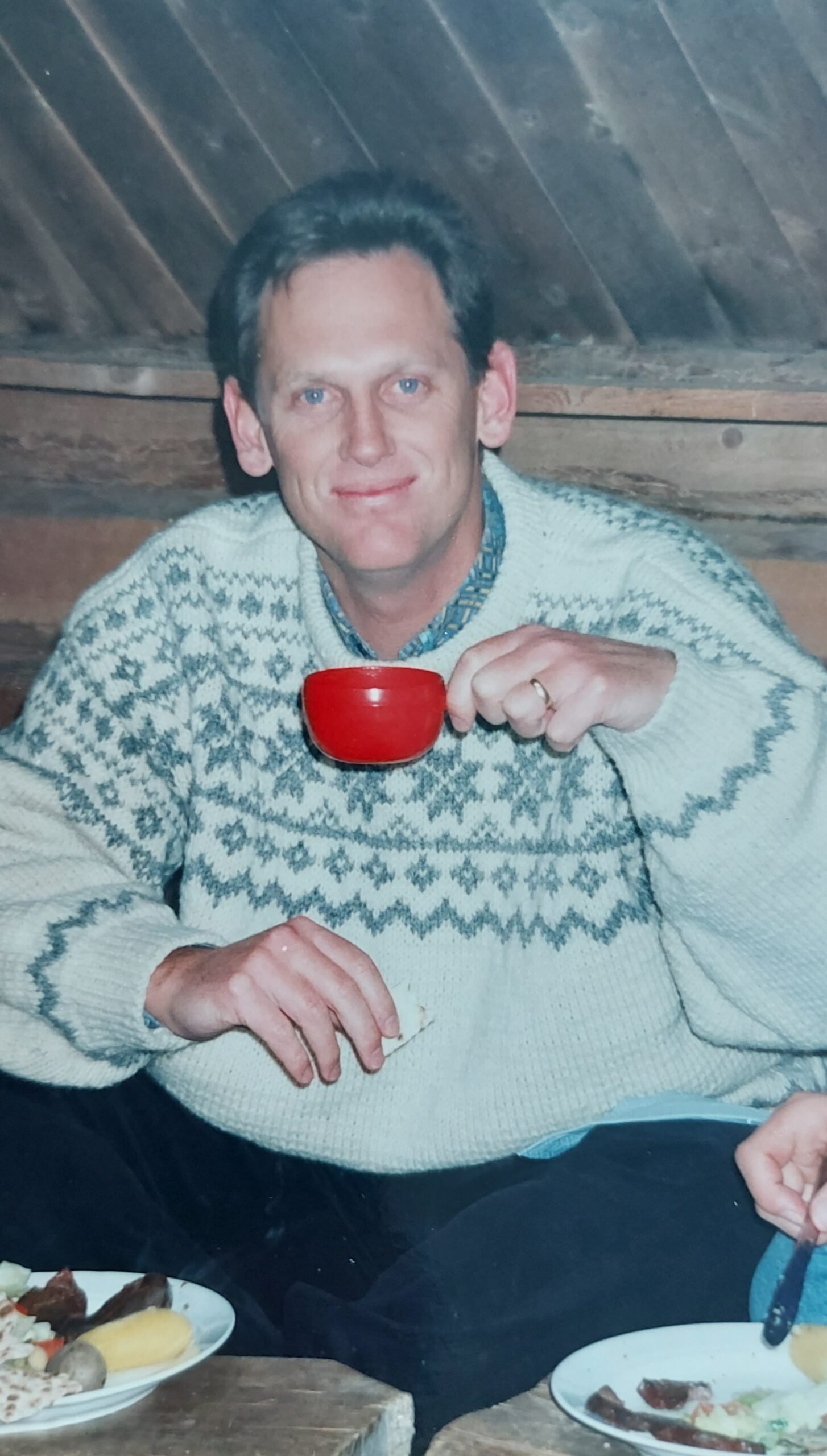
Our accommodation for the night was a goahti – the traditional, timber dwelling that has sheltered generations of Sámi through winters far harsher than anything we’d experienced in Australia. At the entrance, we were handed woolen jumpers, typical of northern Sweden. Thick, patterned, and clearly designed for people who actually know what ‘cold’ means, they made us look like we’d stepped out of a book on Nordic folklore. Ingrid wore hers with effortless style.
Inside, a fire crackled in the centre and smoke drifted upwards through the opening in the roof. The scent of woodsmoke was strong. Our host shared stories of winter storms and the uncanny ability of reindeer to navigate landscapes that would leave most humans hopelessly lost. He then demonstrated some leather work and helped us set up for the night, including preparing warm drinks.
Dinner was reindeer steak warmed on the fire. It was hearty and rich. We finally crawled into our sleeping bags, very content.
Lassoing and reindeer
Morning arrived early, or perhaps the dark never really left, given the long northern light of May. After breakfast of bread, cheese, and a warm drink, we were handed braided leather lassos.
It was the time of the year when the reindeer shed their antlers, so we practiced on some antlers screwed to a birch log. I had imagined lassoing a reindeer would be a graceful affair, a smooth throw and a perfect loop around the antlers. Instead, my first attempt landed well short. Ingrid managed to rope the antlers on her second throw, earning a grin from our host.
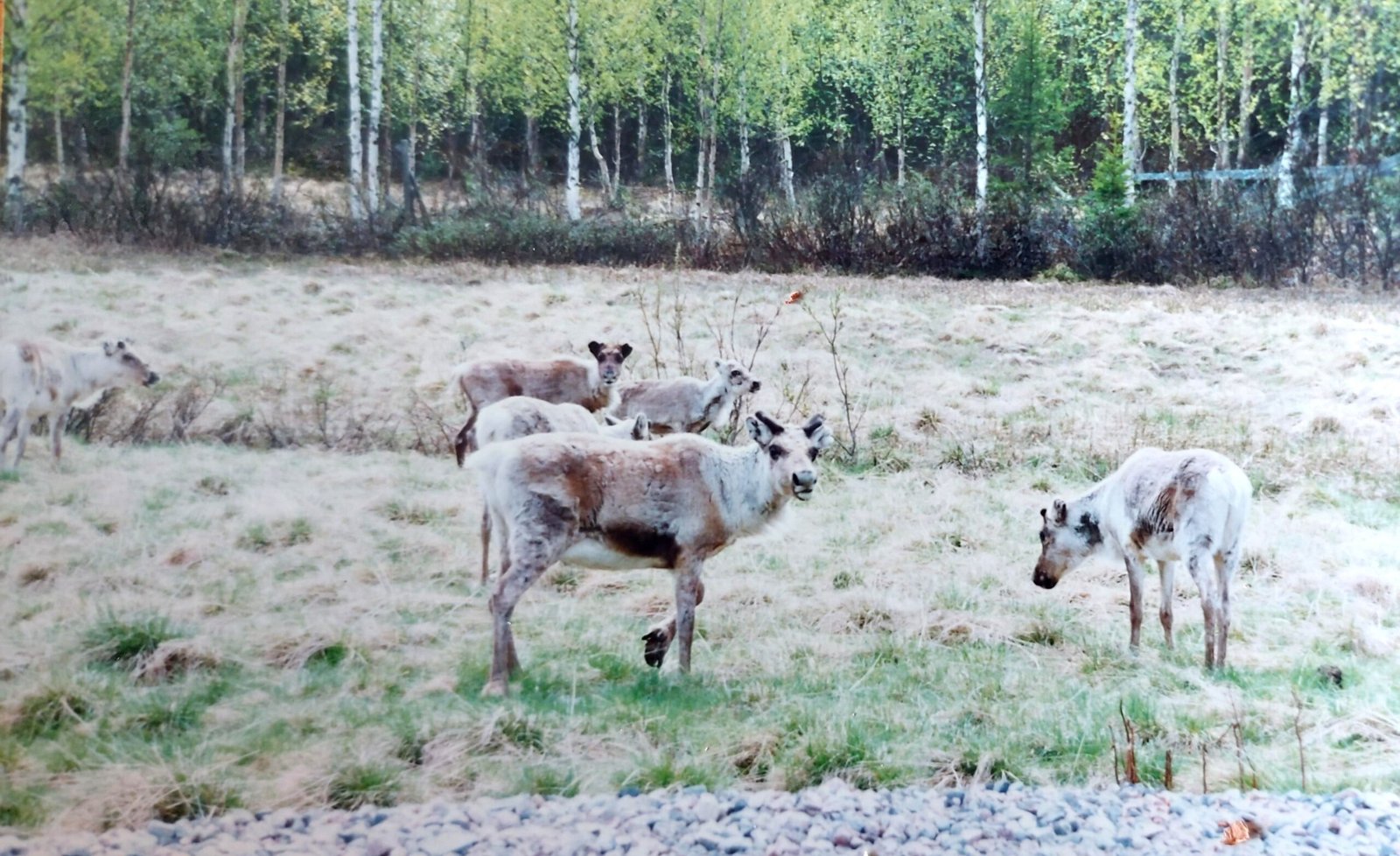
The lives of the Sámi have been intertwined with reindeer for millennia. The Sámi don’t simply herd reindeer; they live with them, migrate with them, depend on them. The animals provide food, clothing, tools, and income. They’re not livestock in the usual sense – more like partners in a long, ancient pact with the land.
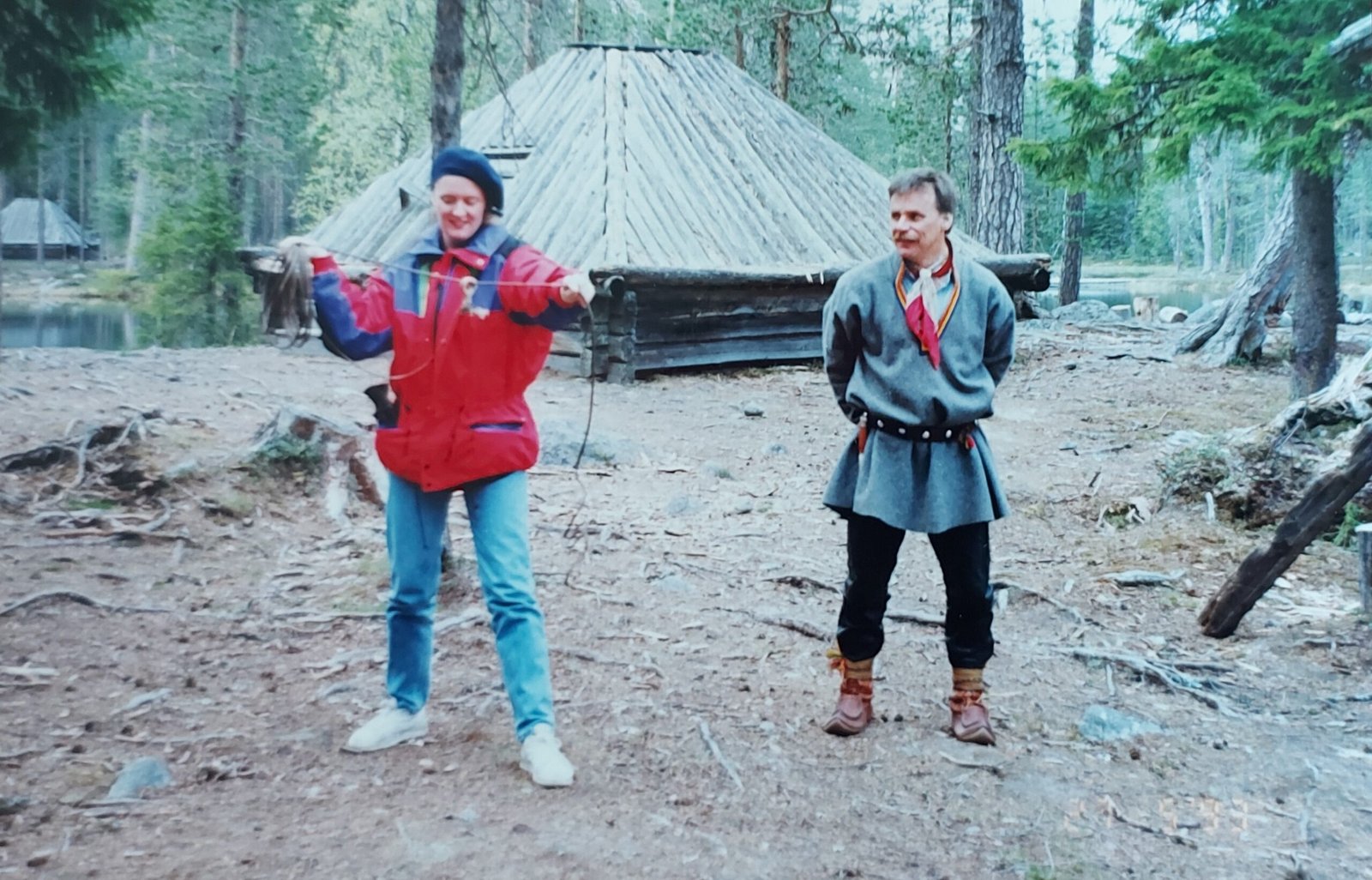
The reindeer themselves were calm, curious creatures – far more patient with us than we deserved. Their eyes, large and round, had a look that didn’t understand why tourists wanted to be with them and at times throw lassos at them.
To read another account of a people who have been displaced by the modern world, yet managed to preserve something of their culture, you can read a little about the Mon people in Thailand here.
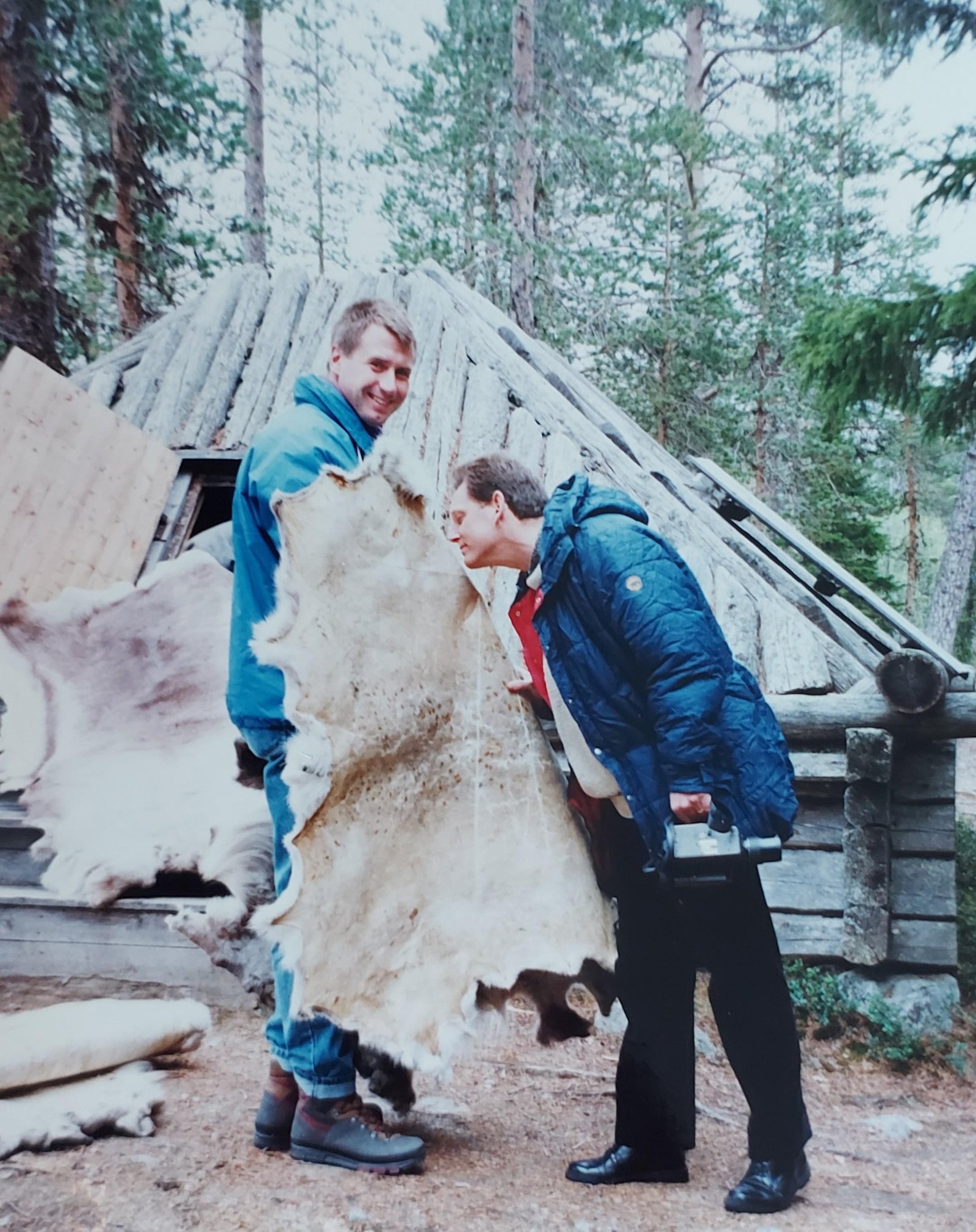
Pier Olaf had arrived to drive us back to Arvidsjaur, and together we briefly visited the slaughterhouse, saw a large collection of antlers and felt the pelts being stretched and dried. The economic relationship was loud and clear.
On the way back to Arvidsjaur, we talked about reindeer, about how the Sámi make their living, including through hosting visitors like us. Ingrid had taken me somewhere extraordinary to glimpse a culture based on a relationship between people, animals and their land.
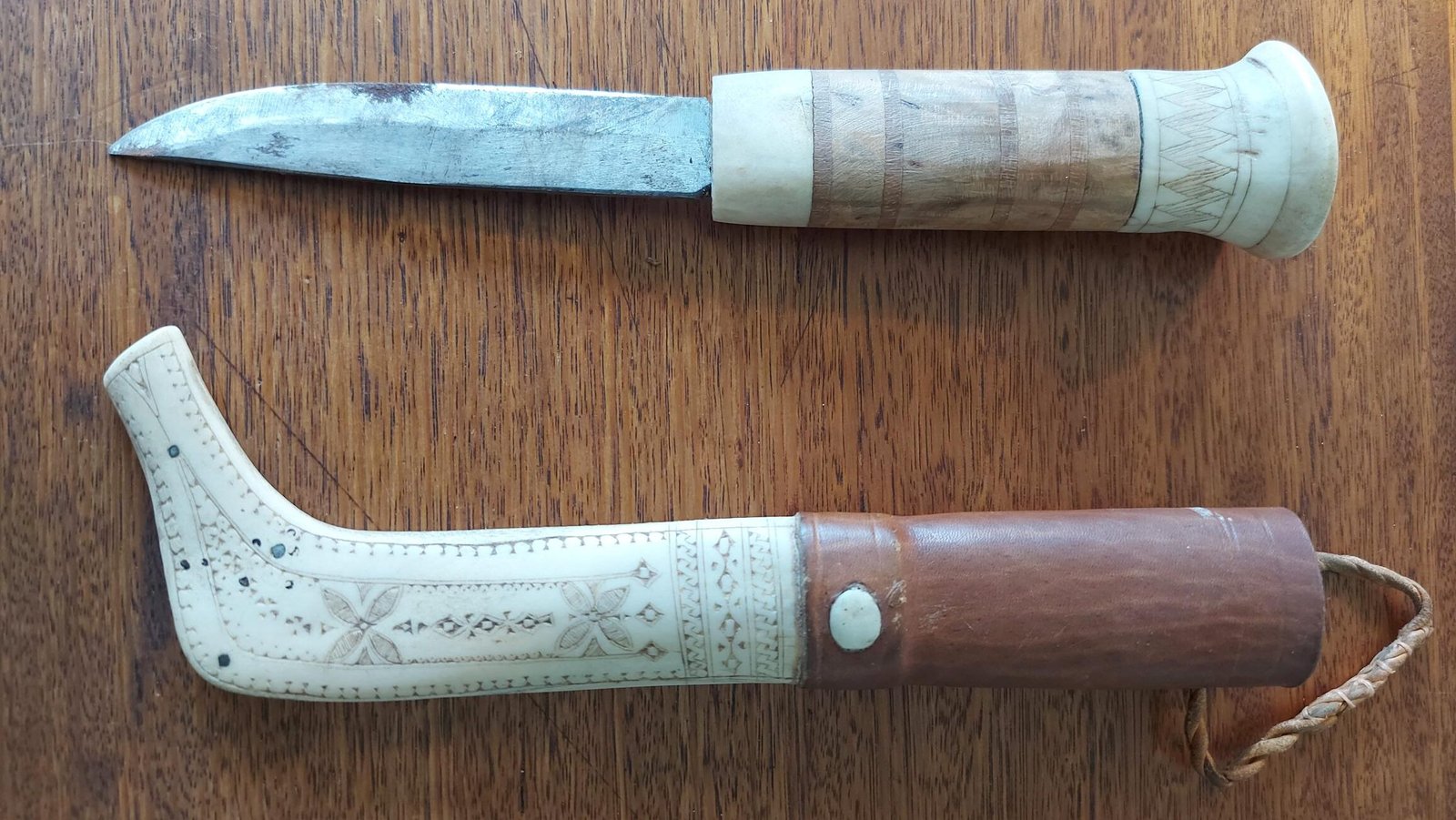
Today, there are between 20,000 and 40,000 Sámi in Sweden (depending on which population estimate you use). Roughly 2,000 to 4,000 are directly involved in reindeer husbandry as their main income. Many more participate seasonally or culturally – helping with roundups, migration, or festivals – while working modern jobs (with Saab, Volvo and Ikea) the rest of the year. PS: I collect cultural knives and pocketknives on my travels. From Sweden I have a beautiful Sámi knife.
A Bit About the Sámi
The Sámi are the indigenous people of Sápmi, a vast region stretching across the northern parts of Sweden, Norway, Finland, and Russia’s Kola Peninsula. Traditionally semi-nomadic reindeer herders, fishers, and hunters, their identity is deeply rooted in a spiritual and practical connection to the Arctic landscape.
In Sweden, the relationship with the Sámi is characterized by a ‘heavy history’ of forced assimilation and displacement. During the 19th and early 20th centuries, the Swedish state implemented discriminatory policies, including the ‘Lapp should be Lapp’ doctrine, which segregated Sámi and subjected them to racial biology research.
Today, while the Sámi Parliament (Sametinget) gives them a political voice and their culture is celebrated through films like Sámi Blood, tensions remain. Contemporary conflicts often center on land rights, as mining, forestry, and wind farm projects frequently encroach on traditional grazing lands. While Sweden recognizes the Sámi as an indigenous people, the struggle for self-determination and the protection of reindeer husbandry continues to be a defining issue in Swedish domestic politics.

Allan is a former Army officer and logistics specialist. In retirement he writes articles and books ranging across military and naval history, biography and anthropology. He publishes through various association newsletters and websites and on Amazon. He lives in Sydney.
[…] To read another encounter with people who have been displaced but still retain their culture, read our article on the Sami people in Lapland here. […]