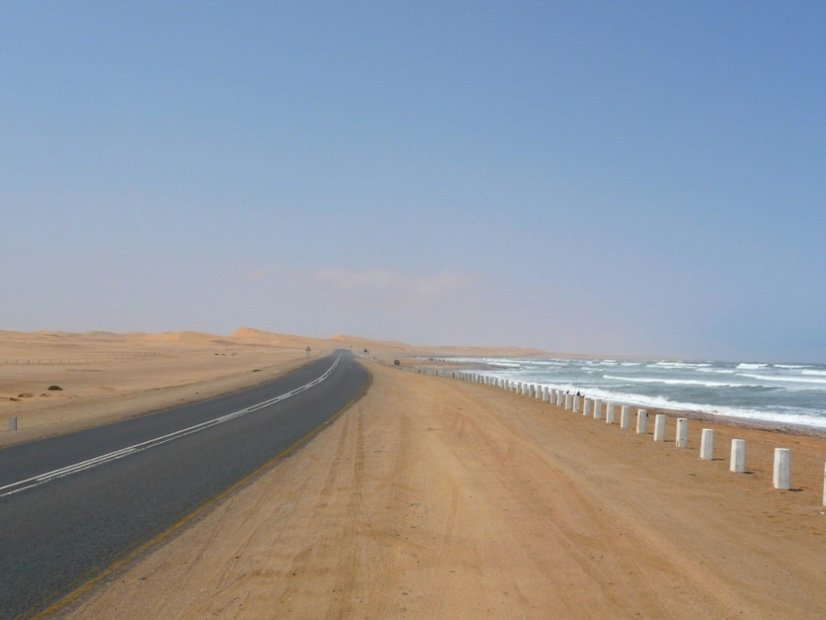
On the west coast of Africa, the Skeleton Coast is variously defined as the Namibian coast between the Swakop River in the south, to the Kunene River/Angola border to the north, or the entire Namib Desert coastline. Regardless, it is a stark, sparsely populated region where the sand dunes of the desert meet those of the coast. It has a harsh, inhospitable climate. Powerful unpredictable currents, dense fog, strong winds and rough seas have caused a multitude of shipwrecks. One such vessel, the Eduard Bohlen which ran aground in 1909, is now 500 metres inland due to wind and shifting sand. The coast was originally named after the many bones of whales and seals littering the shore.
This story is part of our Remote Landscapes series. Read more here.
In the middle, or the south, of the Skeleton Coast, depending on the definition, sits the city of Swakopmund. It has the feel of a large town and is a coastal resort – the Gold Coast of Namibia, without the crowds or the white shoes. Its German colonial architectural roots are evident from the time it was the main harbour for German South West Africa.
My companions, Steve, JB and I rented a house in the burbs of Swakopmund for a quick visit of a day and half. As we were all linguistically challenged, we settled on calling the city ‘Swampcommand’ as we could remember that. While Namibia is safe by African standards, you still see a lot of high walls, razor wire, barred windows and alarm systems. Steve picked up the keys and briefed us on the alarm system remote control which had a number of coloured buttons. As he unlocked the house he appeared to use different coloured buttons than he’d briefed us.
After a long hot drive I was in need of sustenance so quickly grabbed a palette-cleansing vodka and stood in the small front yard having a lung-cleansing smoke. Idly gazing up the street I saw the rapid approach of a vehicle with roof lights flashing and wasn’t surprised when a security company car pulled up in front of me. The concerned faces of its two uniformed occupants softened immediately as they concluded I was the wrong colour to be a burglar. I said we had stuffed up disarming the alarm, they agreed, and after a cordial chat they departed.
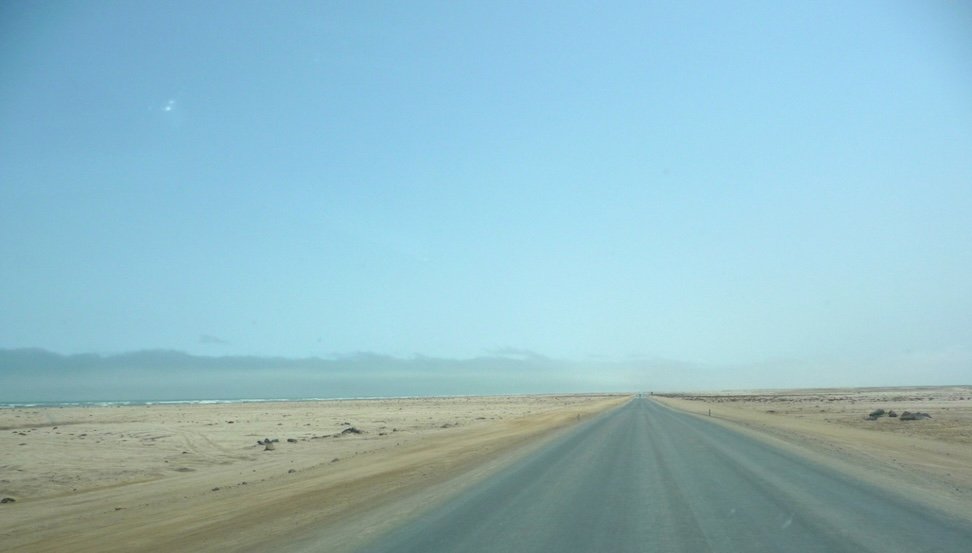
The next day we drove 70km north to Henties Bay. Like many roads in Swampcommand, the road north is a mixture of salt, sand and gravel. It is the smoothest road I’ve ever driven on and, subscribing to the theory that you can’t crash a hire car, the Hilux hummed along beautifully at about 120kmh. The countryside is desolate flat sand, with random shipwrecks and the seemingly deserted tiny village of Wlotzkasbaken on the way.
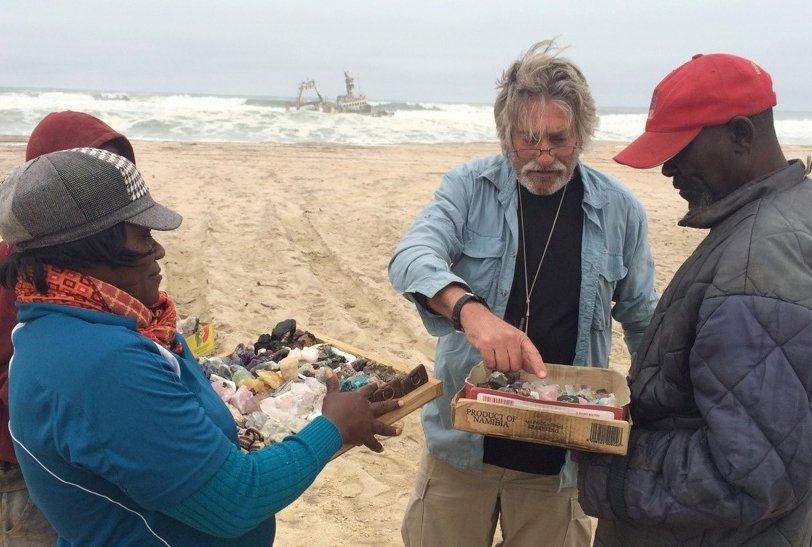
When we stopped at the Zeila shipwreck, out of nowhere appeared a bunch of rock salespersons. The spot is pretty much flat sand with nowhere to hide, but they managed to hide somewhere. For his amusement, JB told them I was very interested in rocks (which is true, but he didn’t know that) and then he watched as I reeled under their relentless hard sell antics. After a while we managed to retreat to the Hilux, my pants nearly falling down with the weight of my newly purchased geological treasures.
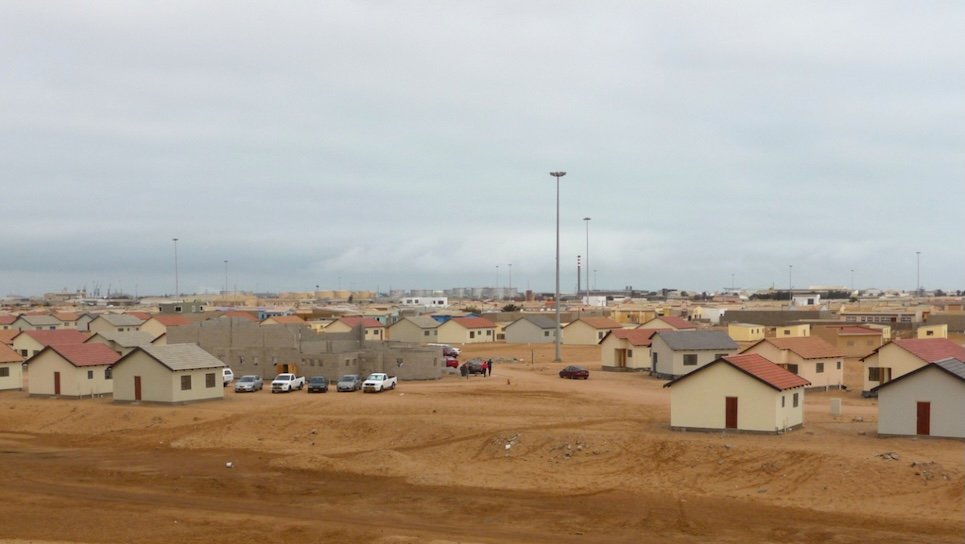
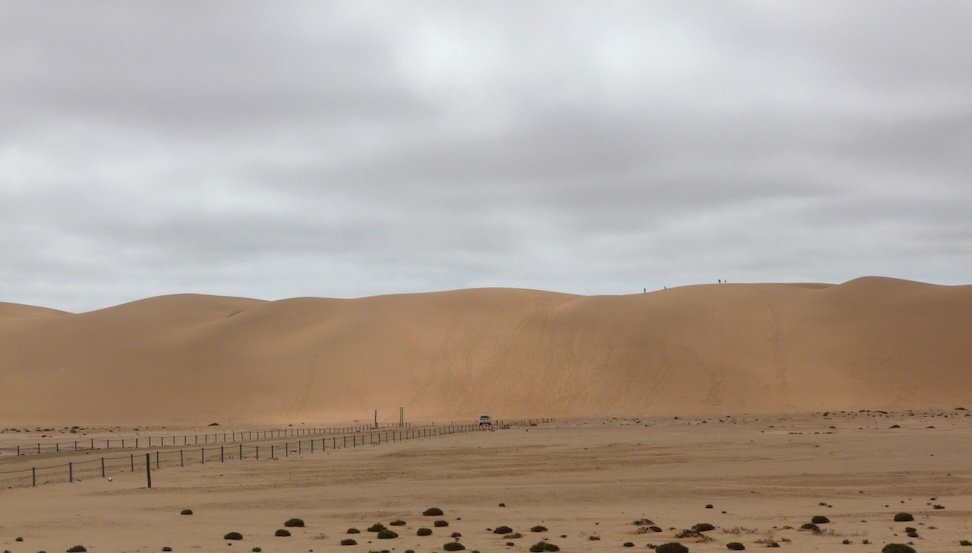
Heading 35 km south of Swampcommand, we suffered having to drive on a tar road to the busy port city of Walvis Bay – a place that has any Wilbur Smith fan trembling with excitement. While very flat to the north, here a strip of high dunes running along the shore makes Stockton Beach look like a kid’s sandpit. The bay had a very large collection of flamingos going about their business, and a considerable number of newish houses.
While it was a very brief visit to a very small section of the Skeleton Coast, if you like the sea, sand, salt roads and shipwrecks, it’s the place to be.
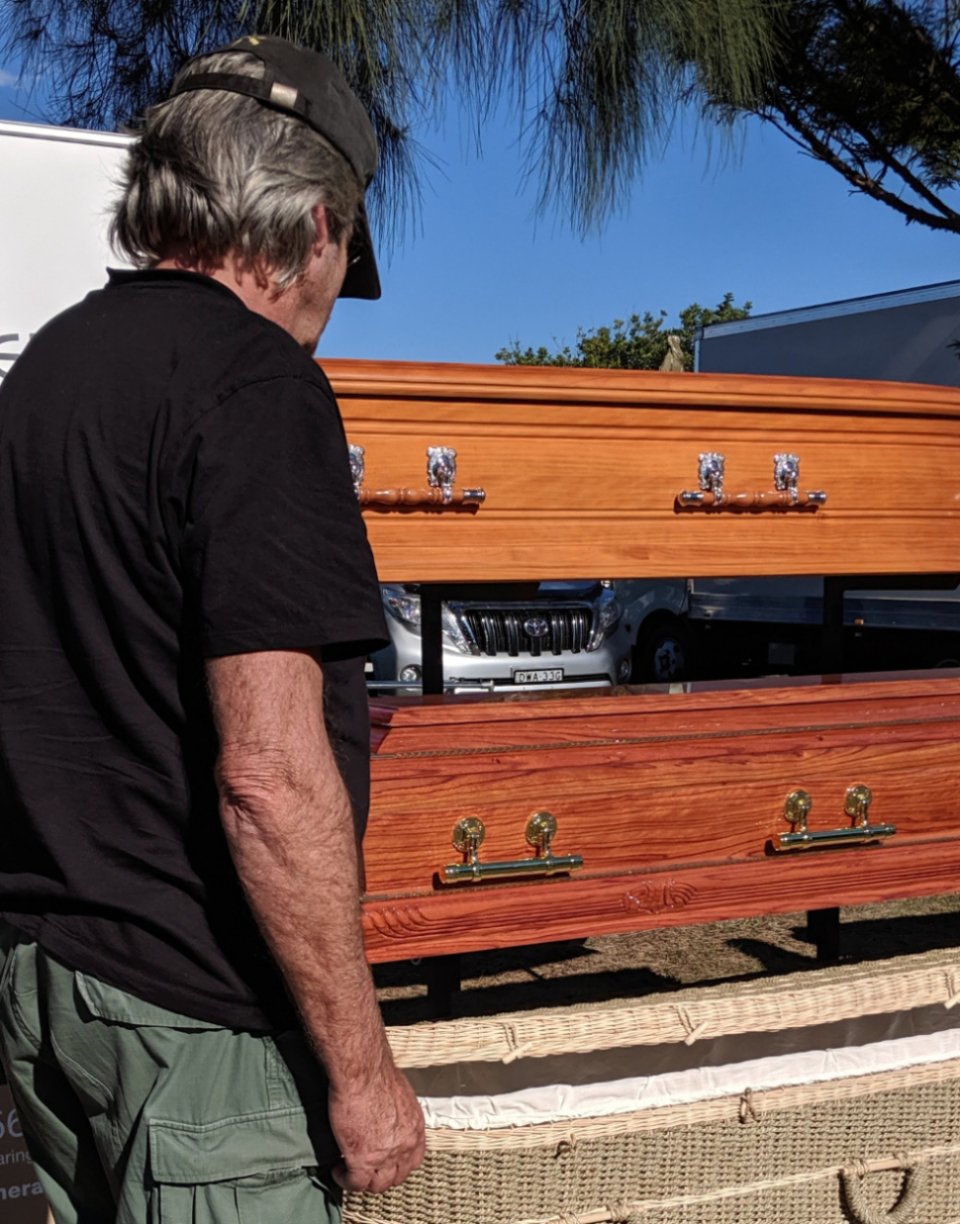
Neale is a former defender of the nation with a natural inclination to avoid most people. He enjoys travel to random, hopefully sparsely populated, locations with interesting architecture, old trains and cemeteries. He is retired and lives near Newcastle in a large patch of vegetation.
Neale, Lovely to read your words on this wonderful website. And to see a picture of the international man of mystery you have become. Best regards.
Thanks Al, I usually have a strict ‘keep my face off the net policy’ and I hope I don’t regret the above act of non-compliance.