
This story is part of our Travel Writing and Reflection series.
It was a first visit to Northern Ireland for both of us. Muz and I arrived in Londonderry late in the afternoon for a 24-hour stay carved out of a longer trip. The town was also known to republicans as just Derry – a name that had lived in our imaginations long before our feet ever touched its pavements.
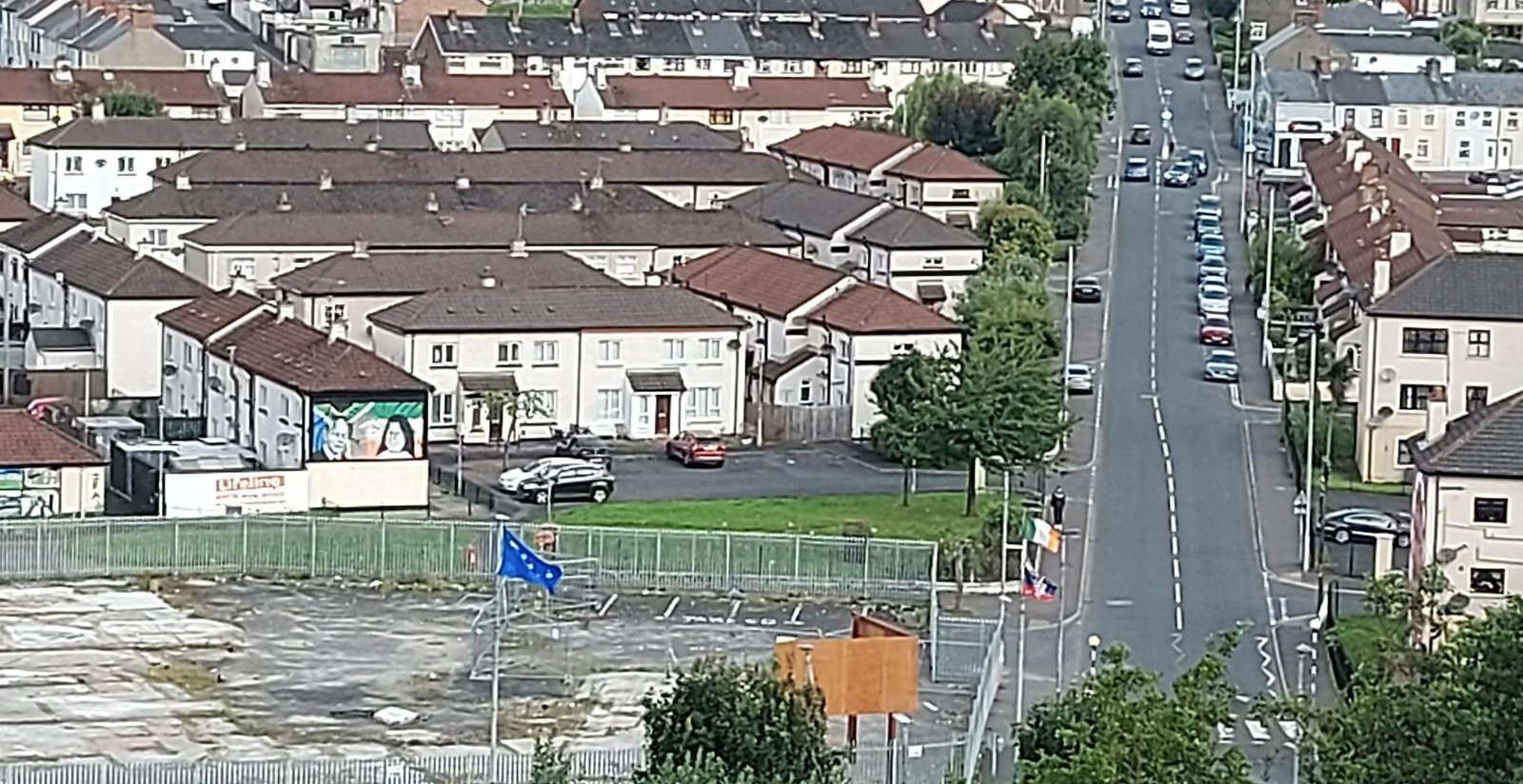
As the summer light faded, we made our way toward the walled city. From a high point, looking north east, the Bogside stretched out in a patchwork of rooftops and murals, a neighbourhood both ordinary and extraordinary for several thousand residents.
We’d both grown up hearing about ‘The Troubles’; it lasted half of our lives, from grainy news footage in the 1960s to full colour carnage in the 1990s. But July 2023 felt like a lifetime away from all that. It was twenty‑five years since the Good Friday Agreement that brought peace. A generation born after the ceasefire was now old enough to have children of their own.
After a quiet night in the Airbnb, we visited the Bogside in the morning, before departing on the next leg of the drive around Northern Ireland. We expected change, something softened by time. Perhaps even renewal. Instead, the Bogside felt like a place frozen in time.
Murals and Memorials
The first thing that struck us were the murals – enormous, defiant, and emotive. Some towered over the streets, others smaller and more pointed. The Irish tricolour, slogans, ‘Free Derry Corner’ and the faces of the dead. They weren’t relics; they were declarations, as vivid as if they’d been painted yesterday.
We stood in front of the Bloody Sunday mural for a long time. Just stared at the depiction of events long ago – a young man bloodied and being carried. Local kids kicked a football nearby, but the mural held our attention.
From Muz, ‘It’s like it never ended.’
And he was right. The peace agreement had stopped the gunfire, but it hadn’t erased the desire to remember. The Bogside clung to its past like soldiers rallying around the colours.
We wandered deeper into the estate, past terraced houses with peeling paint and patched roofs. Poverty wasn’t dramatic here; it was enduring, having become part of the landscape.
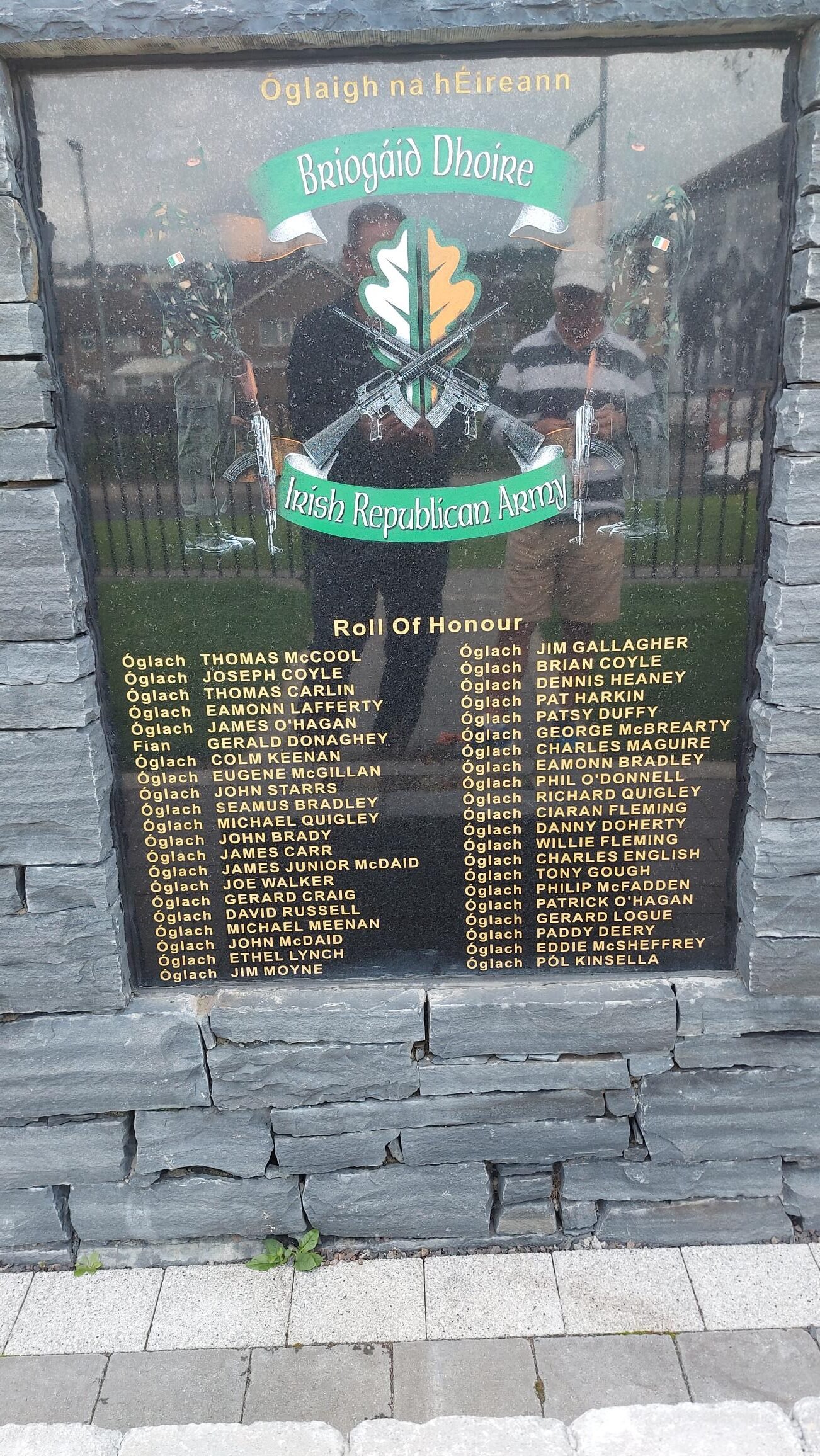
Small memorials appeared at corners and alleyways – plaques, flags, faded wreaths. Many honoured dead IRA volunteers. Some were tended with fresh flowers; others had been left to weather. They weren’t hidden or apologetic – they were part of the neighbourhood’s identity, woven into its fabric.
Despite the sombre feel and the high emotion on display, the few locals we encountered had that gentle Northern Irish politeness, the kind that makes you feel welcome even when you’re clearly a foreigner.
Frozen
As we walked, Muz said something that stuck with me: ‘It feels like the rest of the world moved on, but this place didn’t get the memo.’
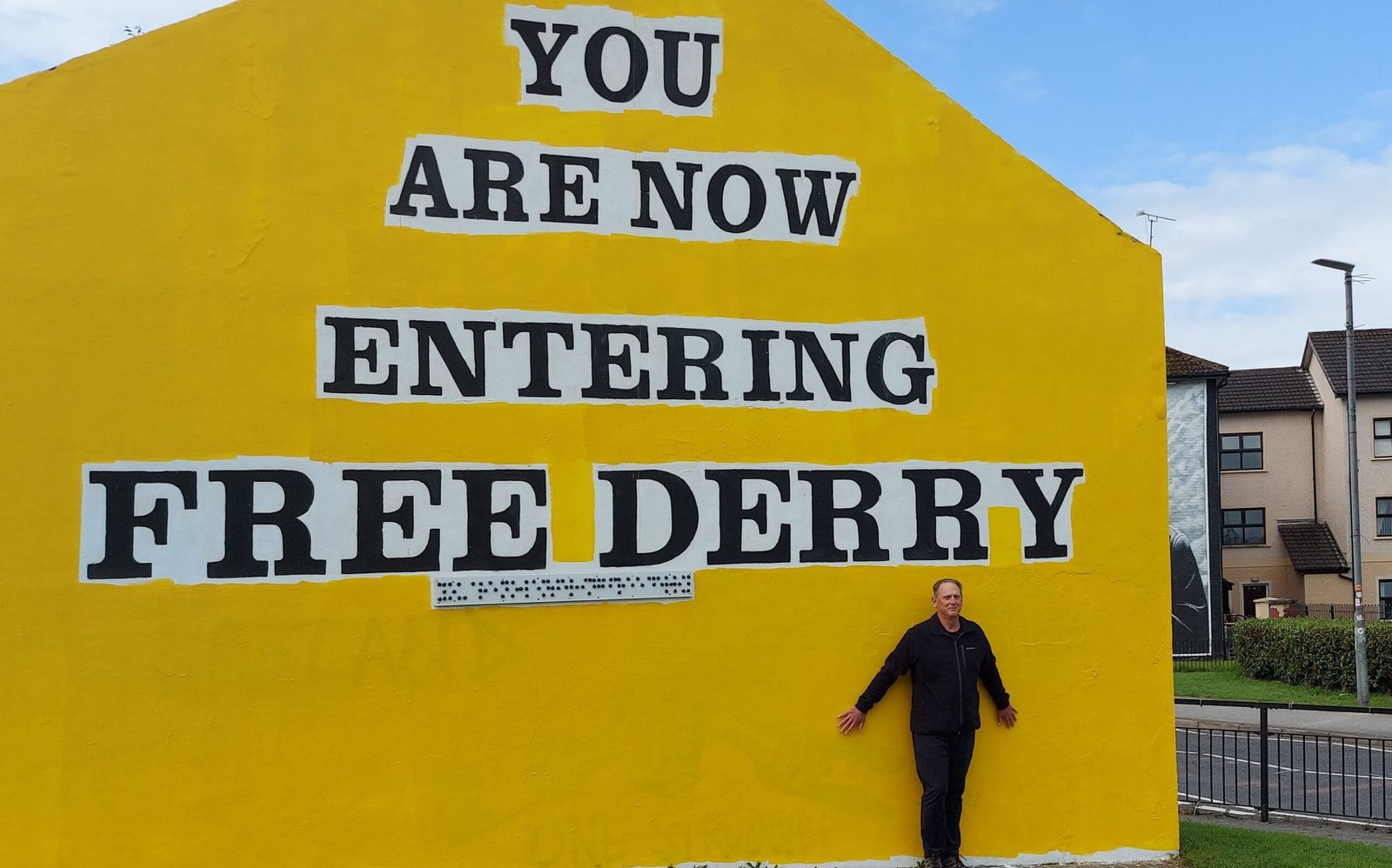
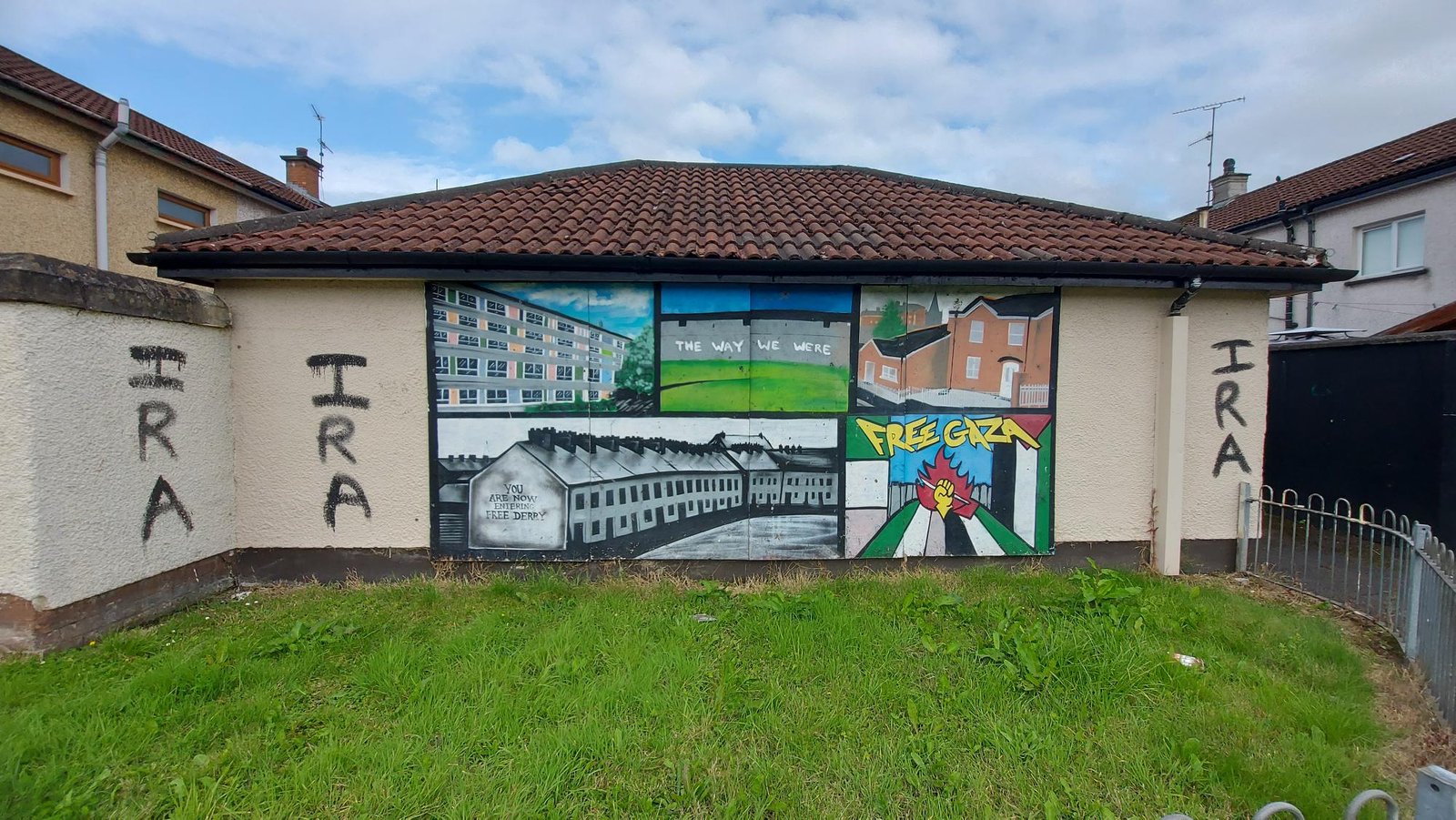
The Bogside wasn’t violent. It wasn’t hostile. But it felt suspended – as if the peace agreement had pressed pause. The housing estates looked tired, the shops sparse, the opportunities thin. We took photos in front of ‘Free Derry Corner’. The famous gable end proclaimed ‘You Are Now Entering Free Derry’. It was freshly painted, defiant as ever.
Most residents were Catholic and republican, and the symbols of that identity were everywhere: tricolours, murals of hunger strikers and the letters ‘IRA’. They weren’t aggressive so much as insistent. A reminder of who lived here, and what they passionately believed in.
The Question of the Future
What future does a place like this have?
Regeneration projects had touched parts of the city, but the Bogside felt left behind. I assumed young people left in search of work, but old grievances still simmered. And while the guns were gone, the divisions remained – schools separated by religion, neighbourhoods defined by identity, politics still shaped by old loyalties. Few if any mixed marriages.
We talked about the tension around Orange Order marches – how for many Protestant communities they were expressions of heritage, while for many Catholic communities they were reminders of repression and pain. History had left deep grooves, and people still walked in them.
Driving away from the Bogside and deeper into the countryside of Northern Ireland, I felt sorrow. Sorrow for the lives lost, for the lives limited, for the weight people still carried. Sorrow that peace had come, yet healing appeared distant. Neither of us spoke for a while. Bogside was not what we expected. I pondered, was the Bogside frozen because people wanted it to be? Or was it frozen because wounds that deep don’t close on schedule? They close slowly, unevenly, with setbacks and departures. Would they ever close for the republicans?
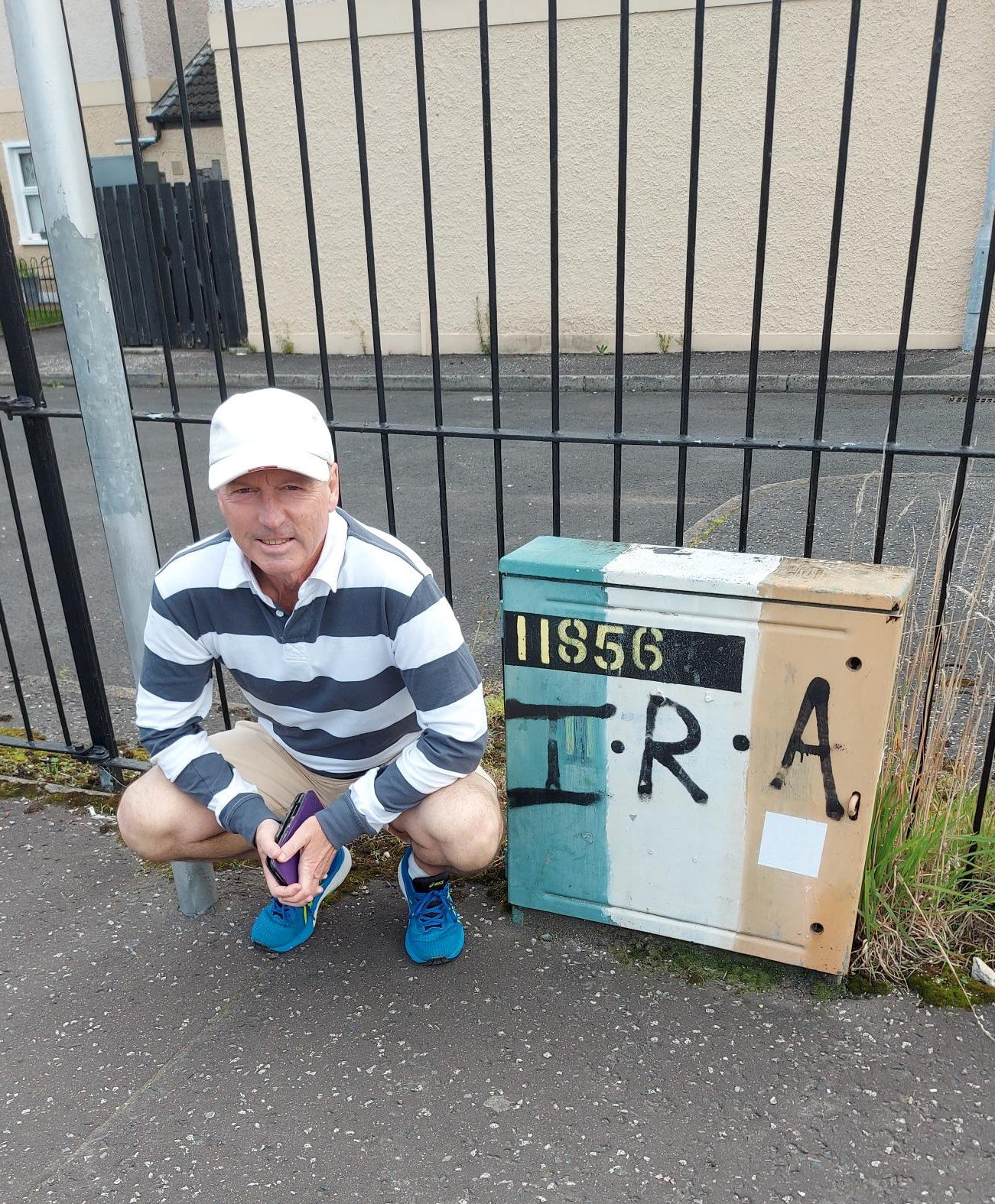
The Good Friday Agreement
To understand the modern landscape of Northern Ireland, one must look to April 10, 1998. The Good Friday Agreement (or Belfast Agreement) effectively ended three decades of violent conflict known as ‘The Troubles’.
It was a delicate diplomatic balancing act built on several key pillars:
- Power-Sharing: It created a devolved government where Unionists and Nationalists would govern together.
- The Principle of Consent: It affirmed that Northern Ireland would remain part of the UK unless a majority of its citizens voted otherwise.
- The Border: It led to the removal of security checkpoints, creating the ‘invisible’ border with the Republic of Ireland that exists today.
- Decommissioning: It facilitated the surrender of paramilitary weapons and the release of political prisoners.
While the agreement successfully transitioned the region from ‘bullet to ballot,’ it remains a fragile peace. In places like The Bogside, most of the physical scars of the past are gone, but the cultural and political memory remains vivid.
Scars of conflict can take decades to heal. For other examples, see our articles on Cambodia and Mozambique.

Allan is a former Army officer and logistics specialist. In retirement he writes articles and books ranging across military and naval history, biography and anthropology. He publishes through various association newsletters and websites and on Amazon. He lives in Sydney.