
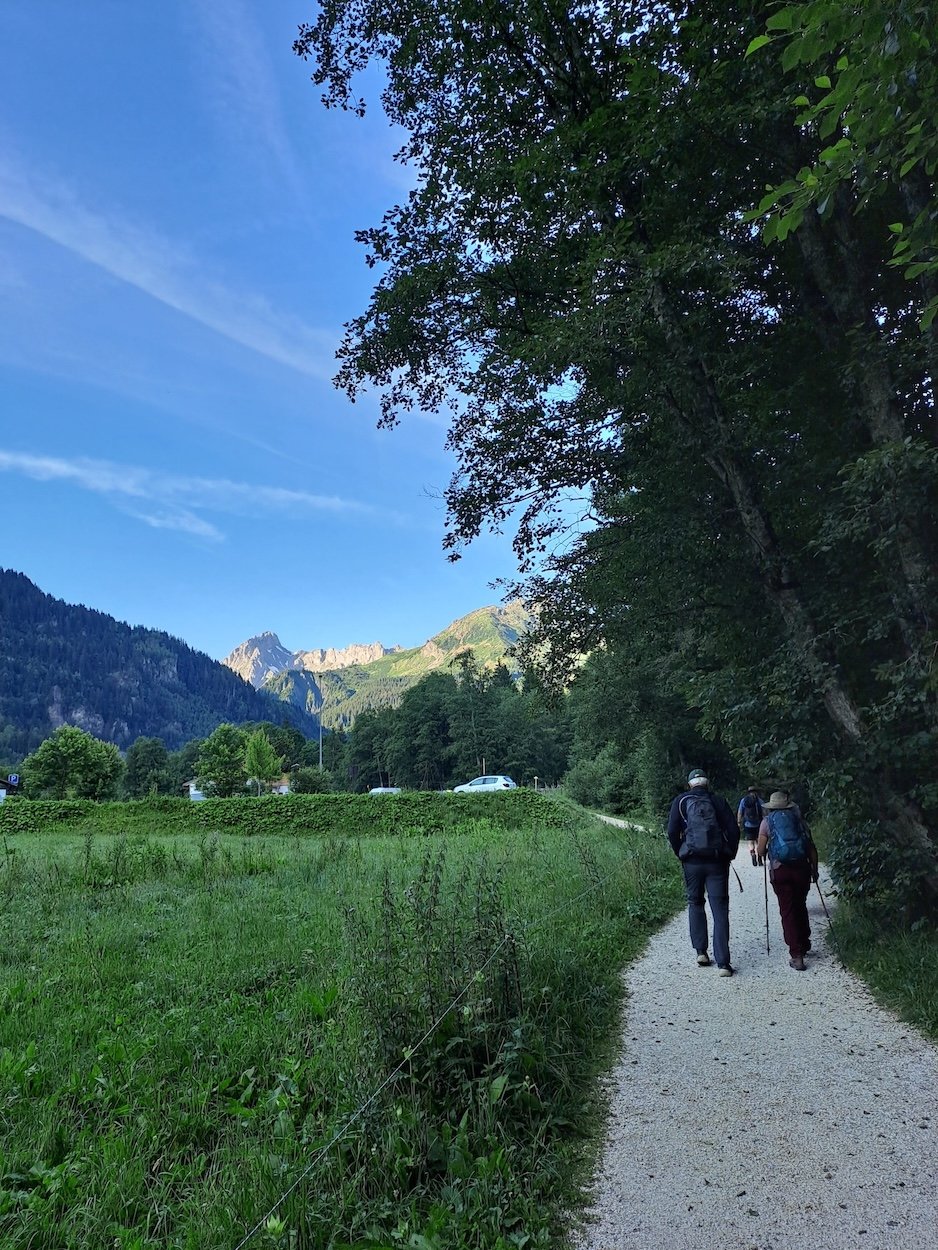
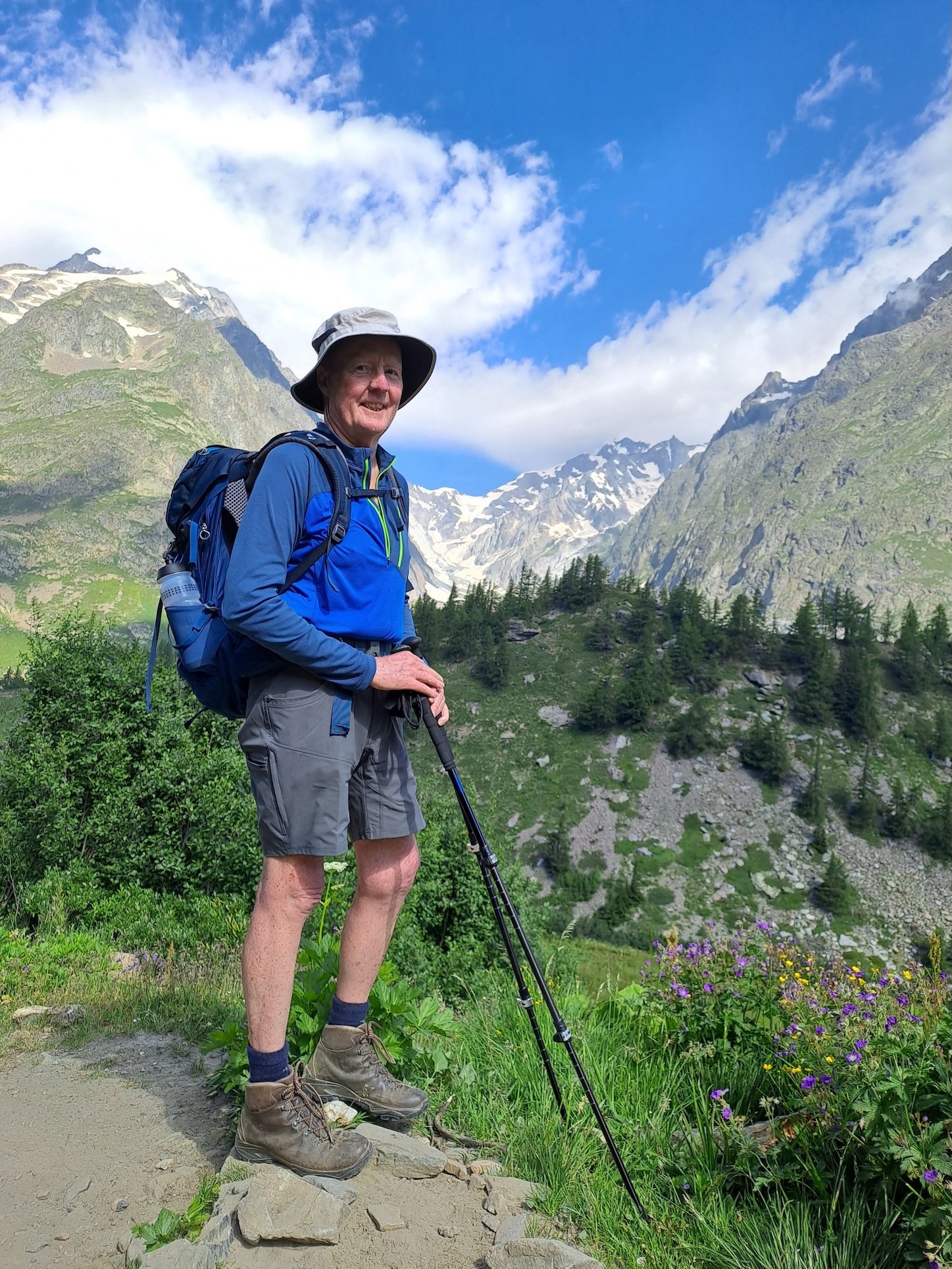
The Tour du Mont Blanc (TDM) is a 170km walking path around the Mont Blanc massif. The popular route is anti-clockwise. It starts and finishes in Chamonix, via France, Italy and Switzerland. The mountain passes at the borders are spectacular. So is the scenery.
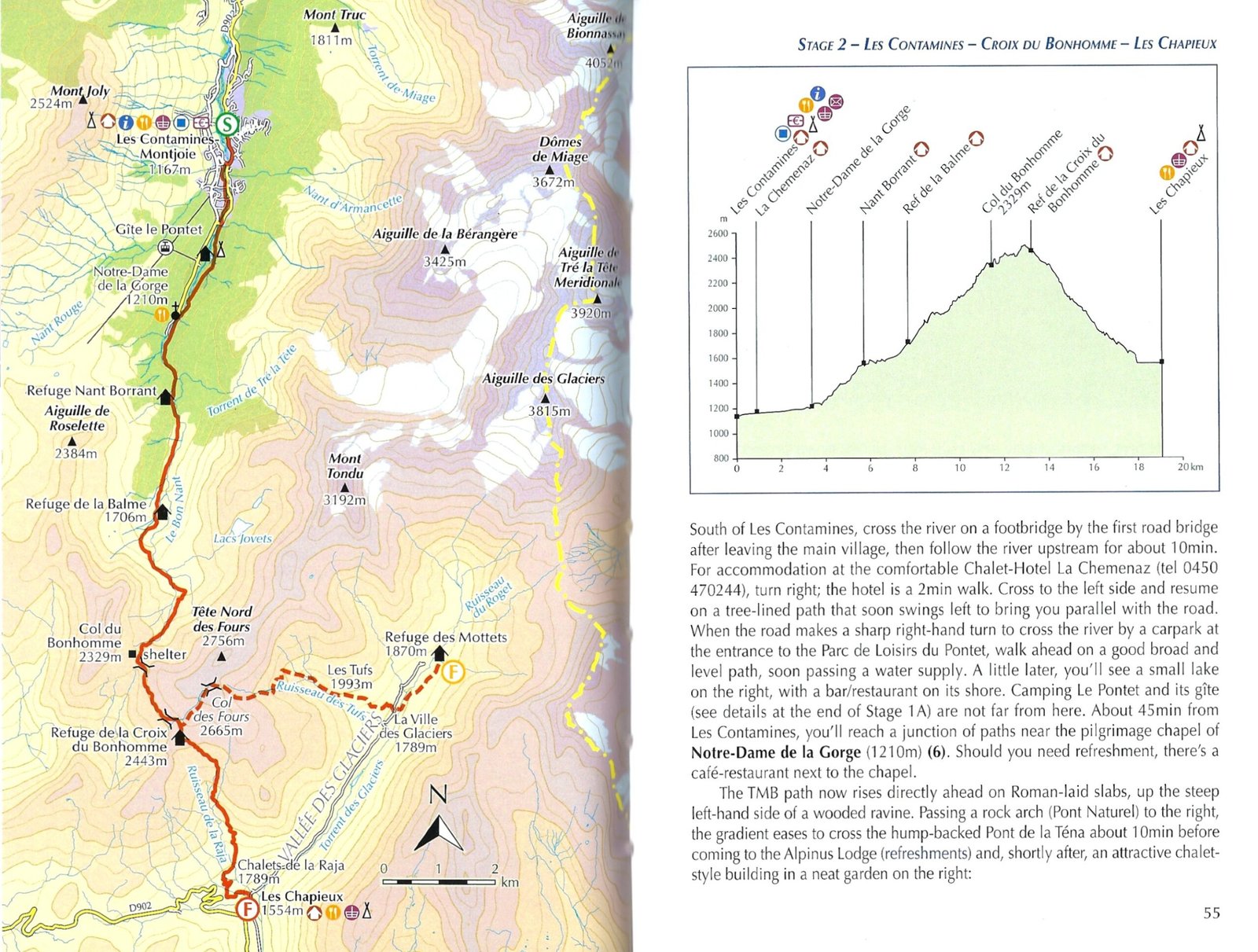
Stage Two, from Les Contamines to Les Chapieux in France, is the hardest day of the circuit. At 19.5km, it climbs 1360m up the Val Montjoie, crossing the Col du Bonhomme at 2329m. It snakes through massive fields of rock to the Col de la Croix du Bonhomme at 2483m. Then it drops 970m into the Vallée des Glaciers at Les Chapieux. It includes shady, riverside walking along flat gravel paths, steady climbing along unsealed roads up the valley floor, steep, relentless, zig-zagging ascents, and careful steps amongst alpine rock.
Along the way, there are mountain refuges offering communal accommodation, meals, drinks and camping spots. There are beautiful alpine meadows and cool patches of forest. There are endless views of rocks and crags and ‘aiguilles’ and glaciers and snowy mountain-tops. Energetic little streams tumble out across the track from the bordering grasses and rocks and wildflowers, and surging torrents cascade through the barren, high moonscape. Everything has been shaped by snow and water and ice, growing and receding over millennia. Even the lush, green, u-shaped valleys were ground into shape by slow-moving ice hundreds of thousands of years before we started worrying about global warming.
There are other walkers, heaps of them. Some of them jog past in trail runners and minimal packs, wielding lightweight fibreglass walking poles. You envy their dancing from rock to rock, shorts flapping, as your feet stumble and the perspiration drips from the end of your nose. There are electricity pylons, vapour trails in the brilliant sky, temporary electrified enclosures with sheep enjoying the pasture, and slabs of road laid by the Romans. You know that you are walking in the tracks of people who have passed this way for thousands of years.
But, if you stop too long to drink any of this in, you run the risk of missing your transport connection at Les Chapieux that will take you 15km to your little hotel in Bourg Saint Maurice. Also, if you are the oldest walker in the group, you don’t want to be a drag on the others. You are stubborn, and determined to keep good time. So you ignore, as best you can, the wonderful sensations unfolding all around you and you keep walking; reasonably easily at first, then labouring up the sudden ramps and fighting the burning desire to stop at the top. What is there to celebrate when you have only covered a few hundred metres horizontally? Finally, on the zig-zag climbs to the Col du Bonhomme, you are reduced to counting 20 steps and pausing for a few seconds, and then, occasionally, 10 steps.
This story is part of our Walking, Hiking and Meaningful Routes series. Read more here.
David, one of the other guys in our group, said that it was the hardest day he’d ever experienced since he’d left the Army. Everyone found it deeply challenging. Descending 900m continuously is as hard as climbing over 1300m. As experienced walkers know, the ‘downs’ are more shattering than the ‘ups’, especially at the end of the day.
We fell into two groups on leaving our hotel. David, Muz and I were in one and Christiane and Brian in the other. We had talked the evening before about this being the hardest part of ‘the circumnavigation’. We knew we were in for a big day.
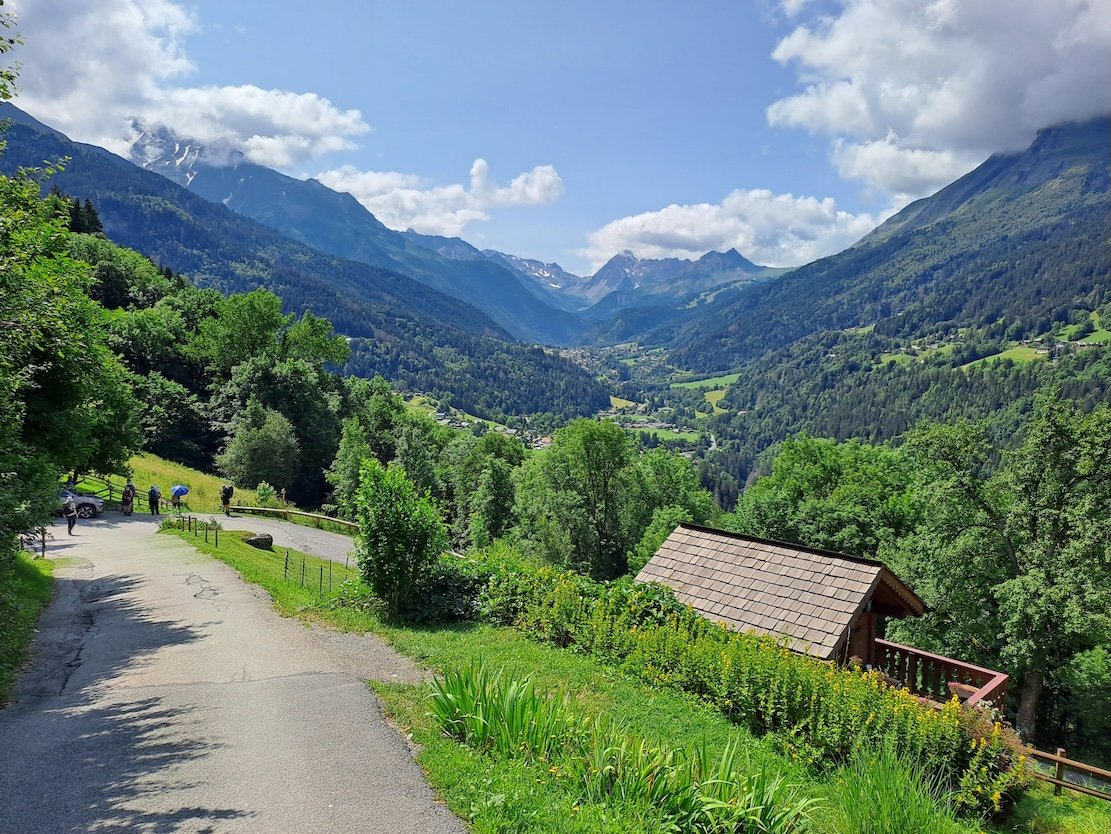
The going rose steadily over the first k’s, but the walking was easy along a shaded path. David and Muz were in front. They’ve known each other for nearly 50 years, so they always find something to talk about. Their pace was moderate; perhaps they were looking after me. Deciding that I needed to walk at my natural pace, and aware that I would slow during the day and the taxi wouldn’t wait, I left them behind.
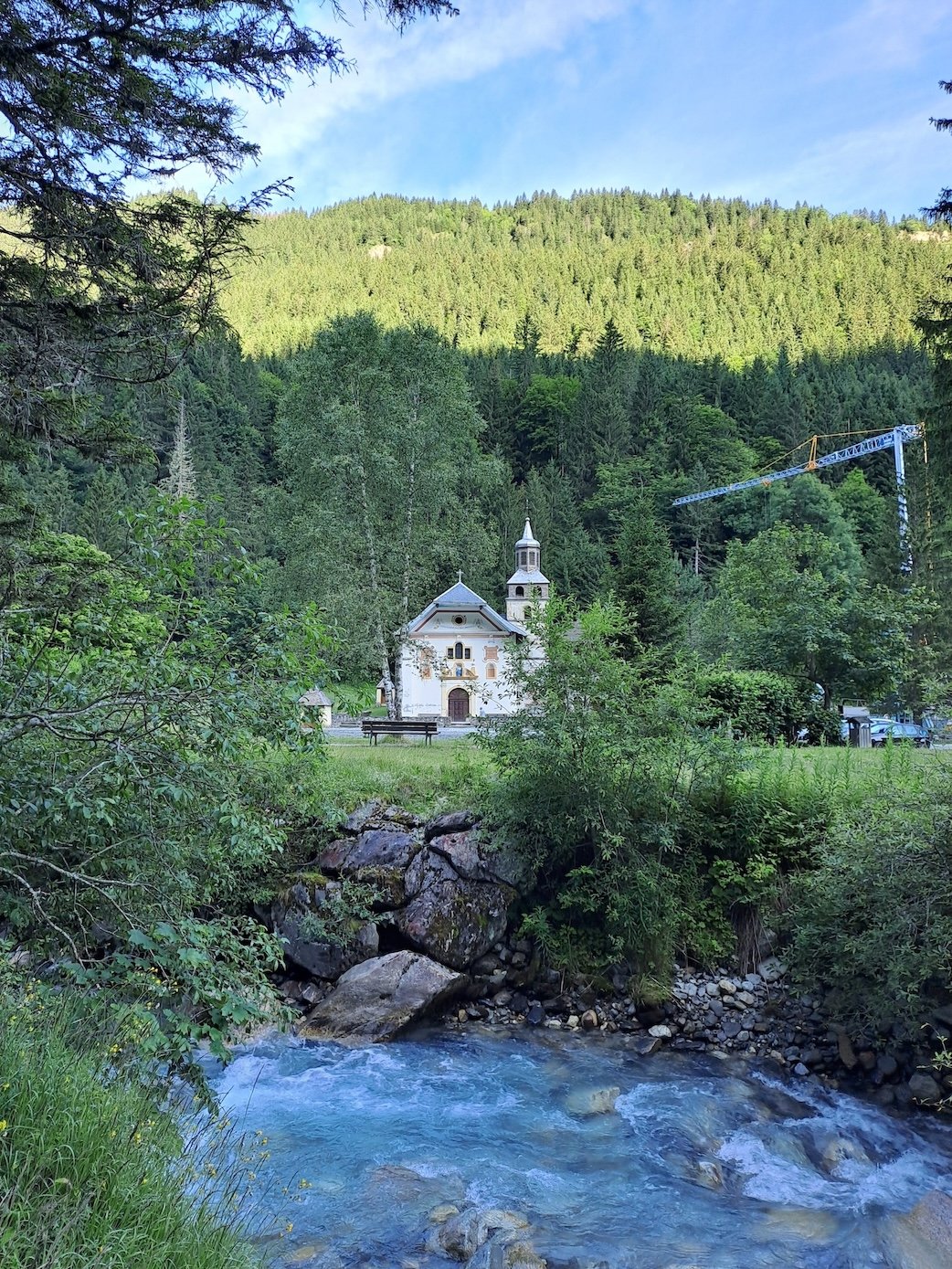
The valley road finished at the chapel of Notre Dame de la Gorge, with the Bon Nant stream gurgling in front.
I left the little footbridge over le Bon Nant on my right, the valley became a ravine, and the path entered the dark shade of the trees on the left-hand side. What seemed like a wall of rock reared up in front of me. It wasn’t a wall, just the path, but the slope must be close to 30%. This was the Roman road.
I kept walking, but my steps got shorter and shorter. There were other people on this surreal slope in the trees, but no over-takers. I wasn’t really walking any more, just slogging, and determined not to stop. There was no grace in my movements.
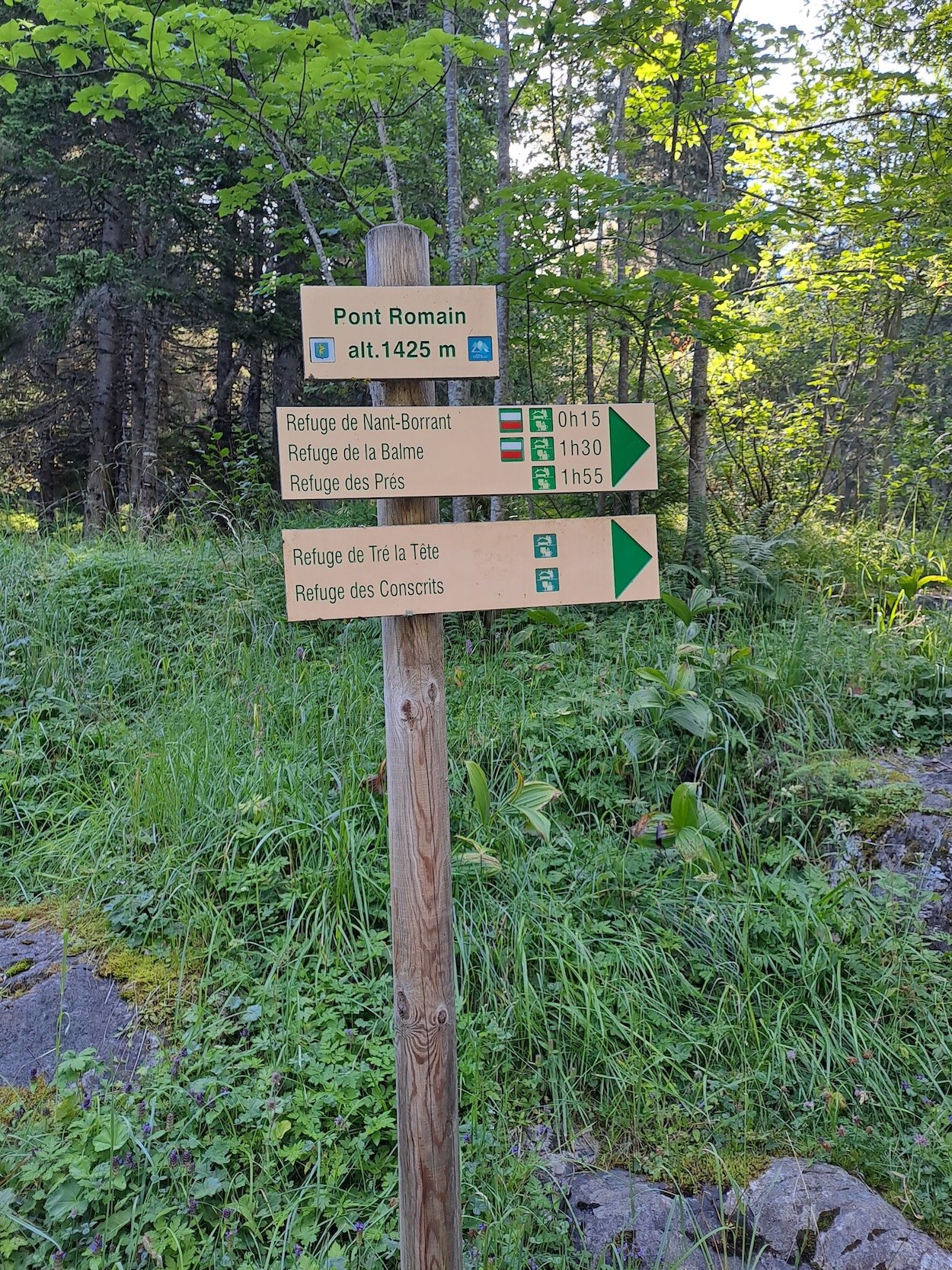
To add to the unreality, a steady throbbing behind me materialised as a glossy black all-wheel drive wagon, swaying on the uneven surface. I assumed it was taking supplies to a refuge up the valley. Over a kilometre later, I emerged into a semi-clearing. There were signs, people, a momentary easing of the slope, and a bridge. The altitude told me I had climbed 300m in a kilometre. Only a thousand metres to go for the day. Was it all going to be like this?
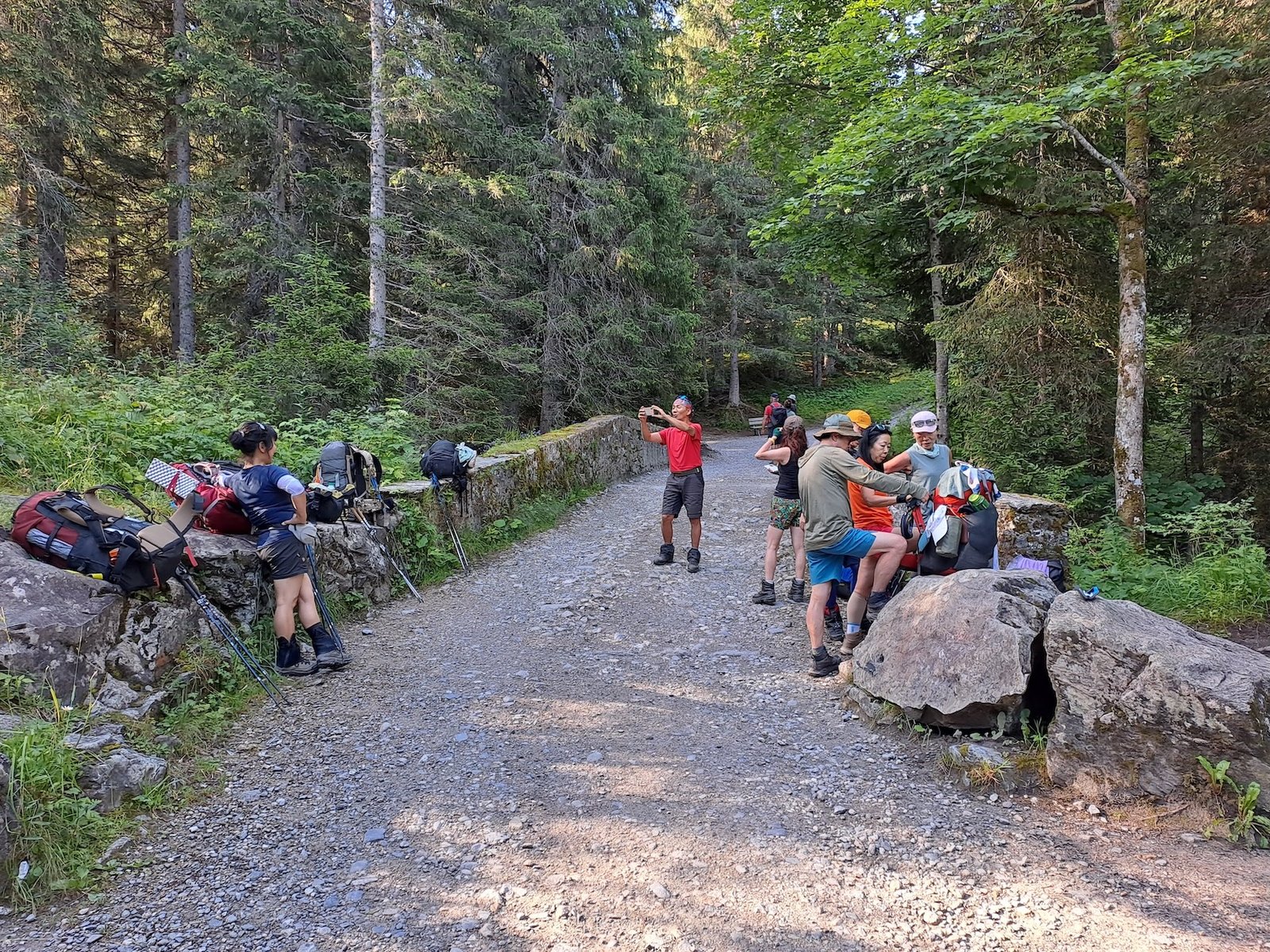
Although the bridge is ancient, it’s believed to have been built after the Romans. I was just happy to pass some people.
The path climbed steeply again, emerging into beautiful meadows. The Val Montjoie rises in a series of hanging valleys, and this was one of them.
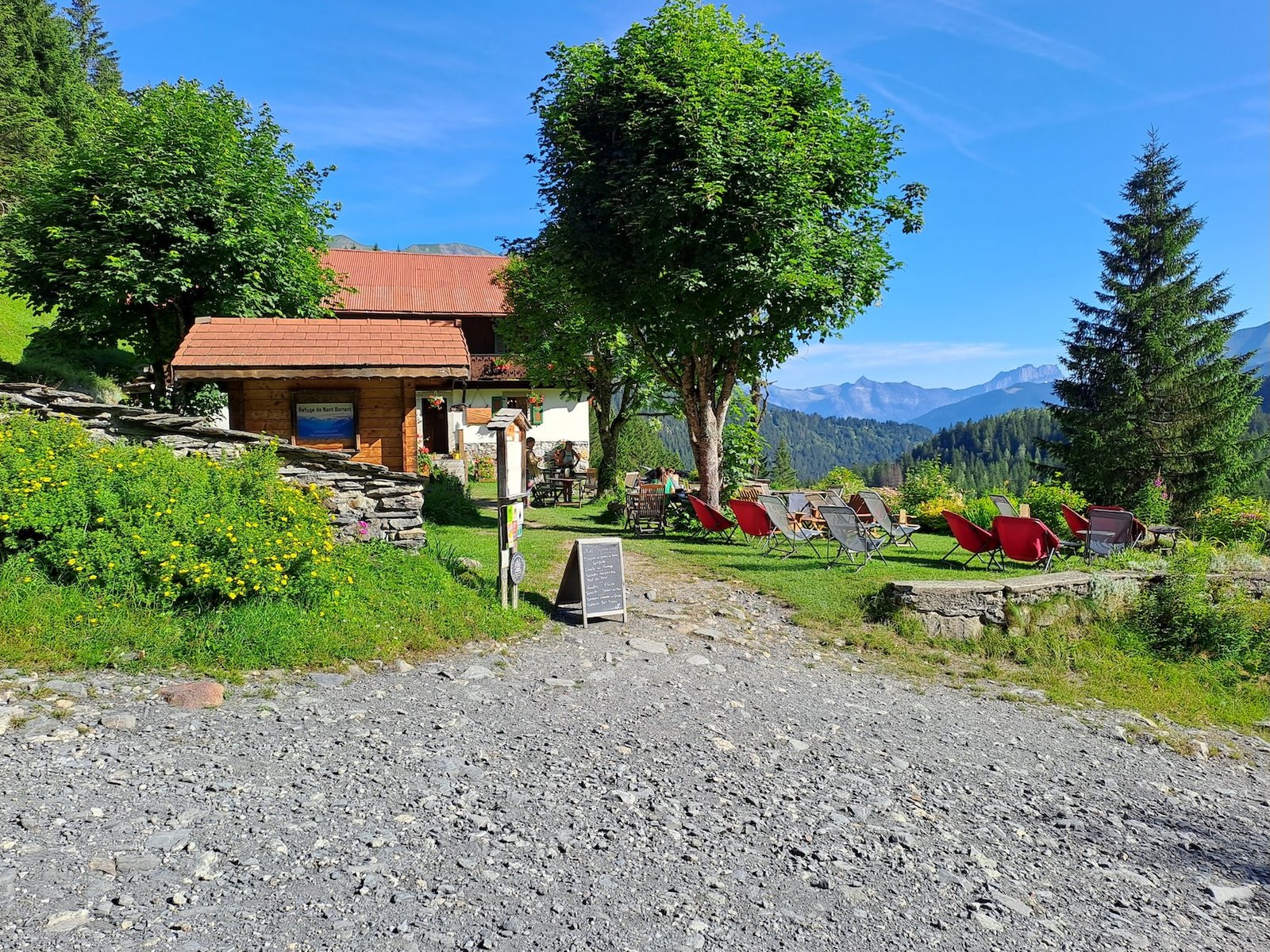
I puffed to the top of the hill and arrived at the Chalet Refuge de Nant Borrant. Les Contamines was out of sight behind me. My thumping heart was at odds with the serenity of the scene. I was only a couple of hours into the walk and this was my first real breather. I knew I would go on but I was surprised Muz and David hadn’t caught me.
I was more surprised when I turned uphill where the climb steepened again.
To be continued.
This is Part 1 of Will’s three part account of this incredible day’s walk. Part 2 is here.
William Monfries worked at the Federal level in education and training, corporate development and strategic planning. ‘Bill’ during his career, he has put that behind him and is a happy Will. He enjoys walking, cycling, both kinds of skiing, sailing and travelling with Marilyn, as well as reading and music.
I’m fatigued just reading this challenge. Looking forward to see if you make it to the top. The deck chairs at Chalet Refuge de Nant Borrant look inviting. Perhaps that’s why your companions could not catch you.
[…] This is Part 2 of Will’s three part account of this incredible day’s walk. Part 1 here. […]