
Military men and leaders for thousands of years have loved to build walls – walls built to stop conflict, walls erected after battles, walls in place to control or restrict movement. Think the Walls of Jericho and the Berlin Wall. These are not walls for climbing! Hadrian’s Wall evokes history.
My companions and I paid a visit to the wall at the Birdoswald Fort site. We had just completed half of the Coast to Coast walk, so we were pretty much trekked out. For those who are keen, there is a Wall Walk of 10 to 14 days that can be done in segments or in one hit. Maybe next time.
This story is part of our Walking, Hiking and Meaningful Routes series. Read more here.
Birdoswald is well set up, though the rangers got a bit cranky with us when we climbed onto the wall. The Roman Fort Café provided a good range of food for eat-in or take-away. Arriving mid-morning, a range of soup was available, thickened with ancient grains thought to have been available in Roman times. This gave a better sense of the diet of the soldiers of the Fort. The staff were perfectly friendly and helpful. Inevitably, to exit to the site, a museum and souvenir shop had to be traversed. The smallish museum was a treat, cleverly combining actual artifacts – coins, weapons, pottery, mosaics – recovered from the site with replicas of larger items that would have been there. A full-sized Roman legionnaire with armour and shield certainly impressed.
So we dusted off the boots and headed towards the east. Walking on the north side of the Wall, outside the Roman Empire, we encountered several trekkers on the Wall Walk as the prevailing winds drove most trekkers to walk from east to west. Several “g’days” were said. It was a cloudy sky, but the air was warm, a great opportunity to relax, explore the site and surrounds and get fresh English air into our lungs. Just walking for an hour along an almost unbroken, straight wall increased the admiration for the workmanship. Turning around, the walk back was on the other side of the Wall, inside of Roman Britain.
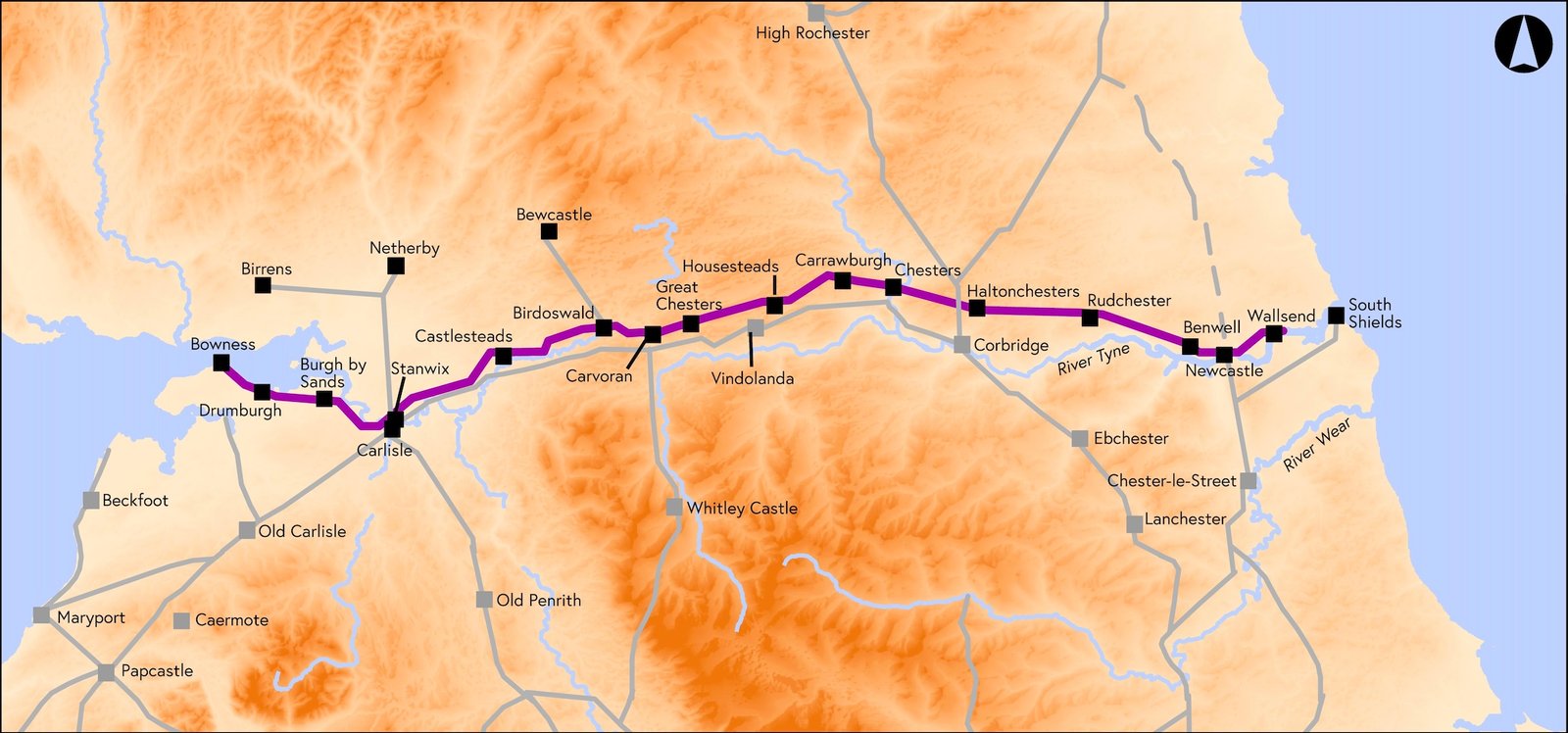
It is worth noting a bit about the layout and history of the wall. Designed to keep the barbarian hordes out of Roman England, it stretched for 117.5 kilometres, from Bowness on Solway on the west coast, to Wallsend on the east coast. As it marked the northern extent of the Roman Empire in Britain, those on the north side of the Wall were technically standing outside of the Roman Empire.
The Wall and most of its forts and defenses were built between about 122 and 128 AD. It was constructed in two parts, with the western part built first. It was originally made from turf, allowing it to be built more quickly.
At completion, the Wall ran almost uninterrupted, even across rugged cliffs in some locations. Over time, stones replaced the turf and it was up to four metres high. It was a work of engineering precision and fascinating to walk alongside.
Although much of the Wall is still visible, over the centuries people have taken away the stones for their own building purposes. For example, several monasteries near Birdoswald contain stones taken from the Wall.
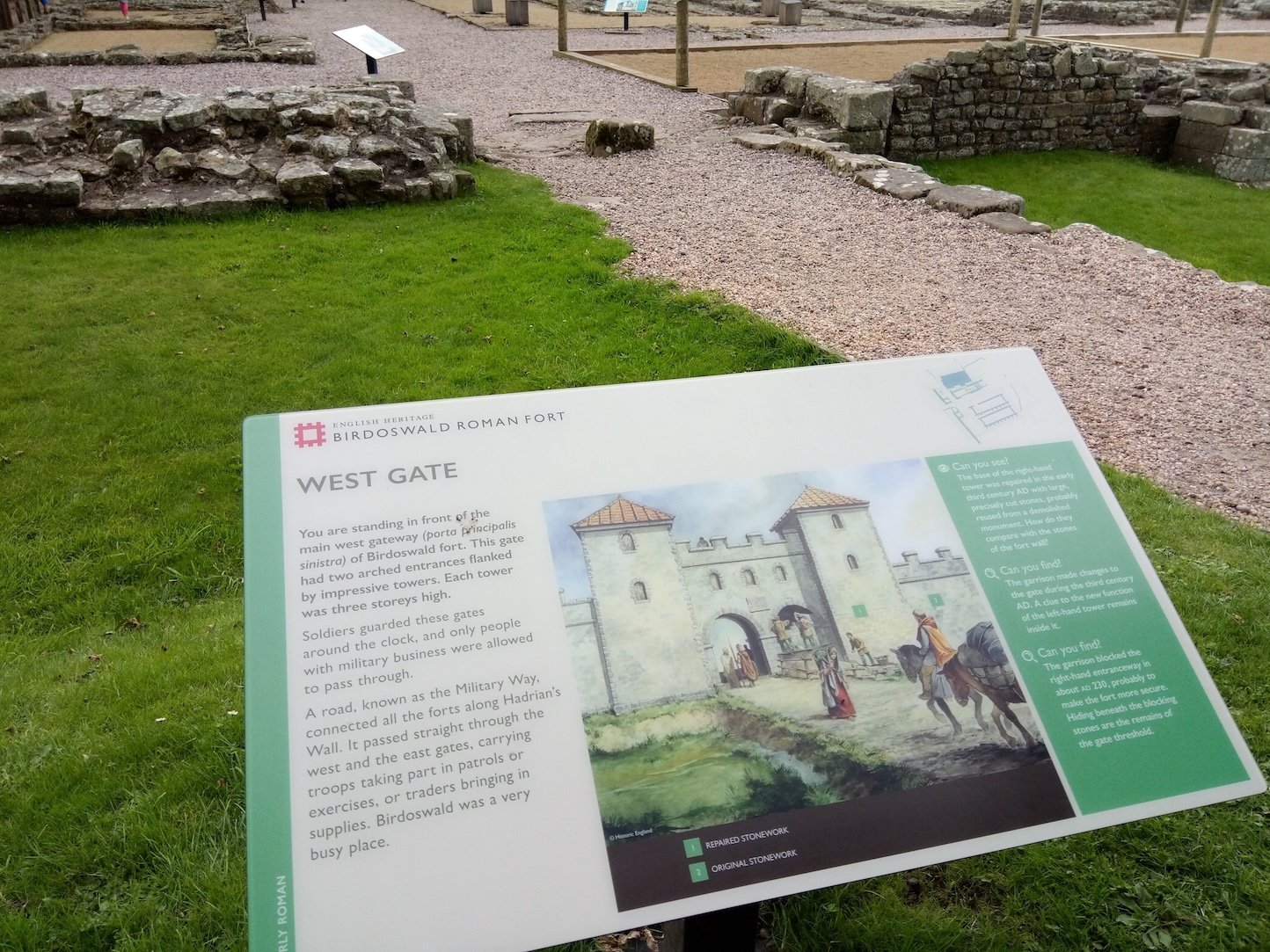
The Romans built 16 wall forts along the length of the wall and 13 outpost forts. Each wall fort could house 800-1,000 soldiers and had its own prison, hospital, bakery and stables. Birdoswald Roman Fort was once home to about 1,000 soldiers. Soldiers guarded these gates around the clock and only people with military business were allowed to pass through.
The Emperor Hadrian, after whom the Wall was named, wanted to make sure the soldiers stationed on Hadrian’s Wall were happy. He personally met with the troops to encourage them and observe their training and routines. Whilst the original purpose of Hadrian’s Wall has now passed into history, to be able to walk the Wall and fort, to see the precision of Roman engineering, to glimpse life in Roman Britain, and to be able to stand at the physical expression of its northern boundary was a great experience.


Allan is a former Army officer and logistics specialist. In retirement he writes articles and books ranging across military and naval history, biography and anthropology. He publishes through various association newsletters and websites and on Amazon. He lives in Sydney.