
Sangkhla Buri is a bit out of the way – plan on staying a couple of days if you make the trip. I did it as an extension of my visit to the Burma-Thailand Railway and Hellfire Pass. It is about a three hour drive from Sai Yok and is in the area where Thai, Burmese and Mon cultures overlap. The roads are good and you pass some nice scenery including the vast and much-dammed Khao Laem Lake. Watch out for large numbers of stray dogs as the road climbs and then descends into the town around the northern point of the lake. They were about the only thing I saw on the trip that outnumbered 7-11s.
This story is part of our Borderlands & Crossings series. Read more here.
I checked into the Sangkhla Village Resort. There is creative terminology involved here but it does have a small and refreshing pool so therefore must qualify for resort status under some UN convention or something. My room was pleasant but lacking a window; no big deal because it would have overlooked scrub and let mosquitos in – so I took this as deliberate and considerate design. Few people speak English here, so you make do with hand gestures, occasional common words and Google Translate. As I was thus communicating with the reception lady about clothes washing and motorcycle rental, she took it upon herself to proudly display on her phone ‘Breakfast is pork rice porridge’. Armed with a mighty sense of anticipation for the next morning, I headed out to the bridges.
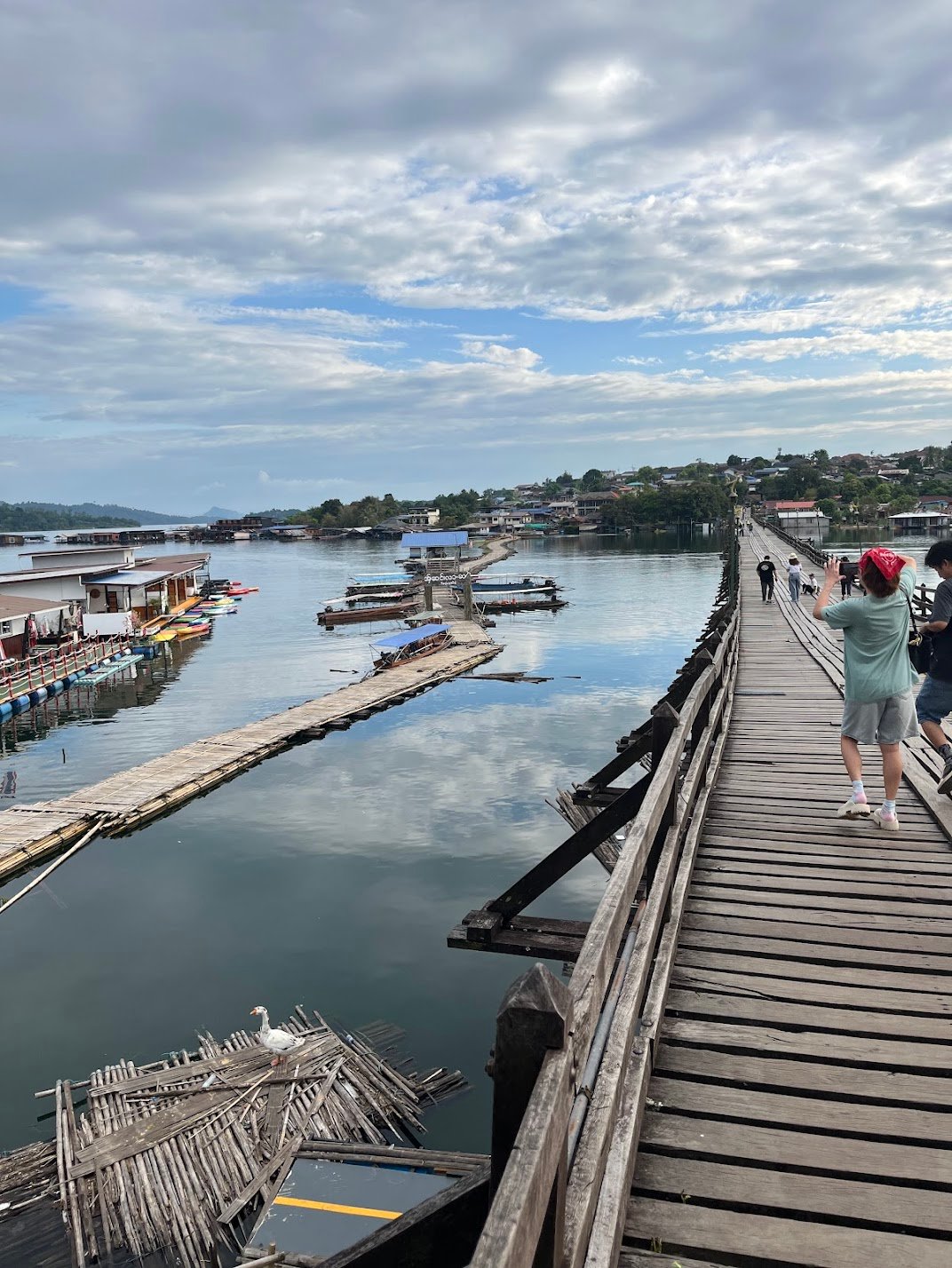
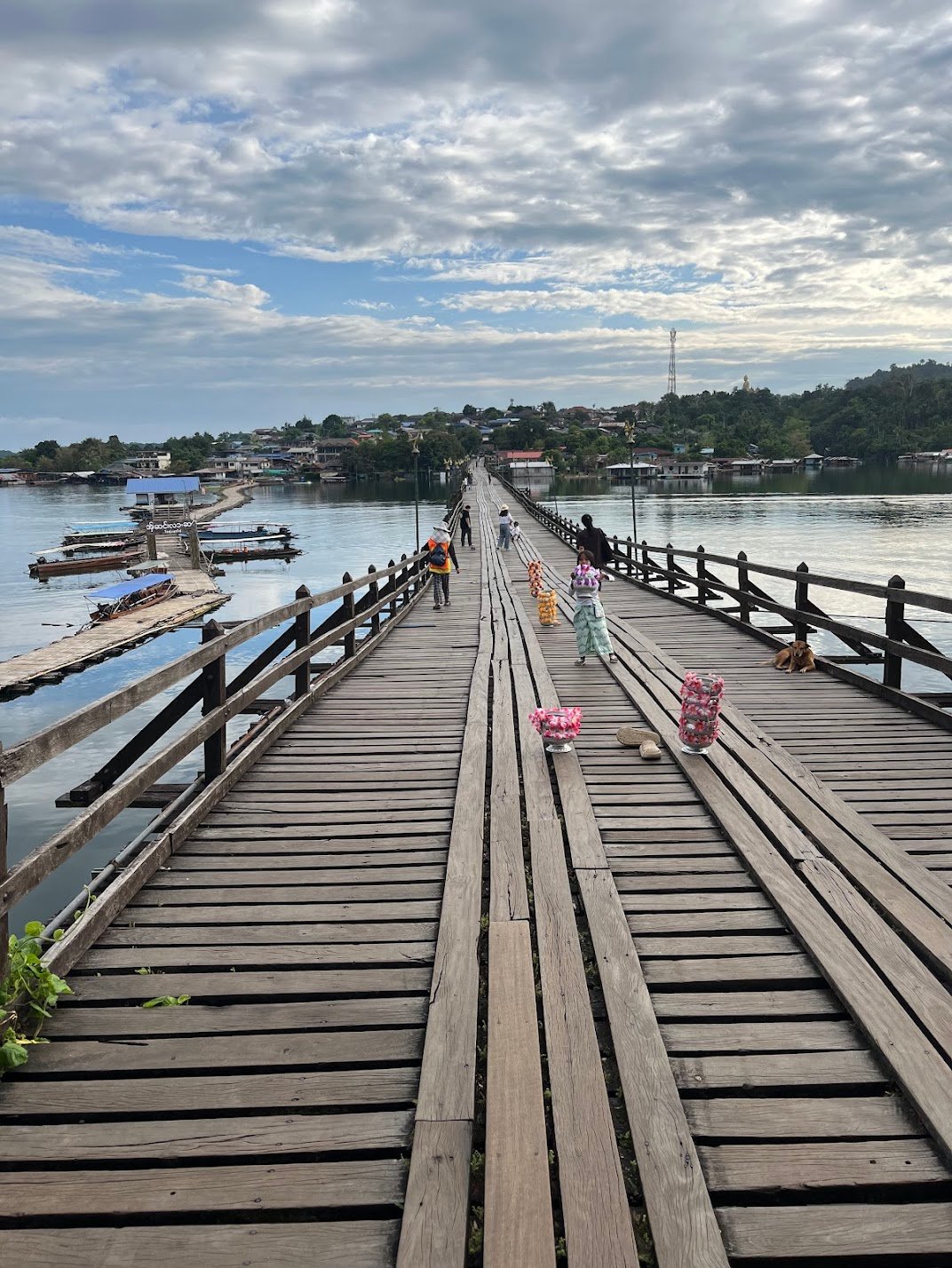
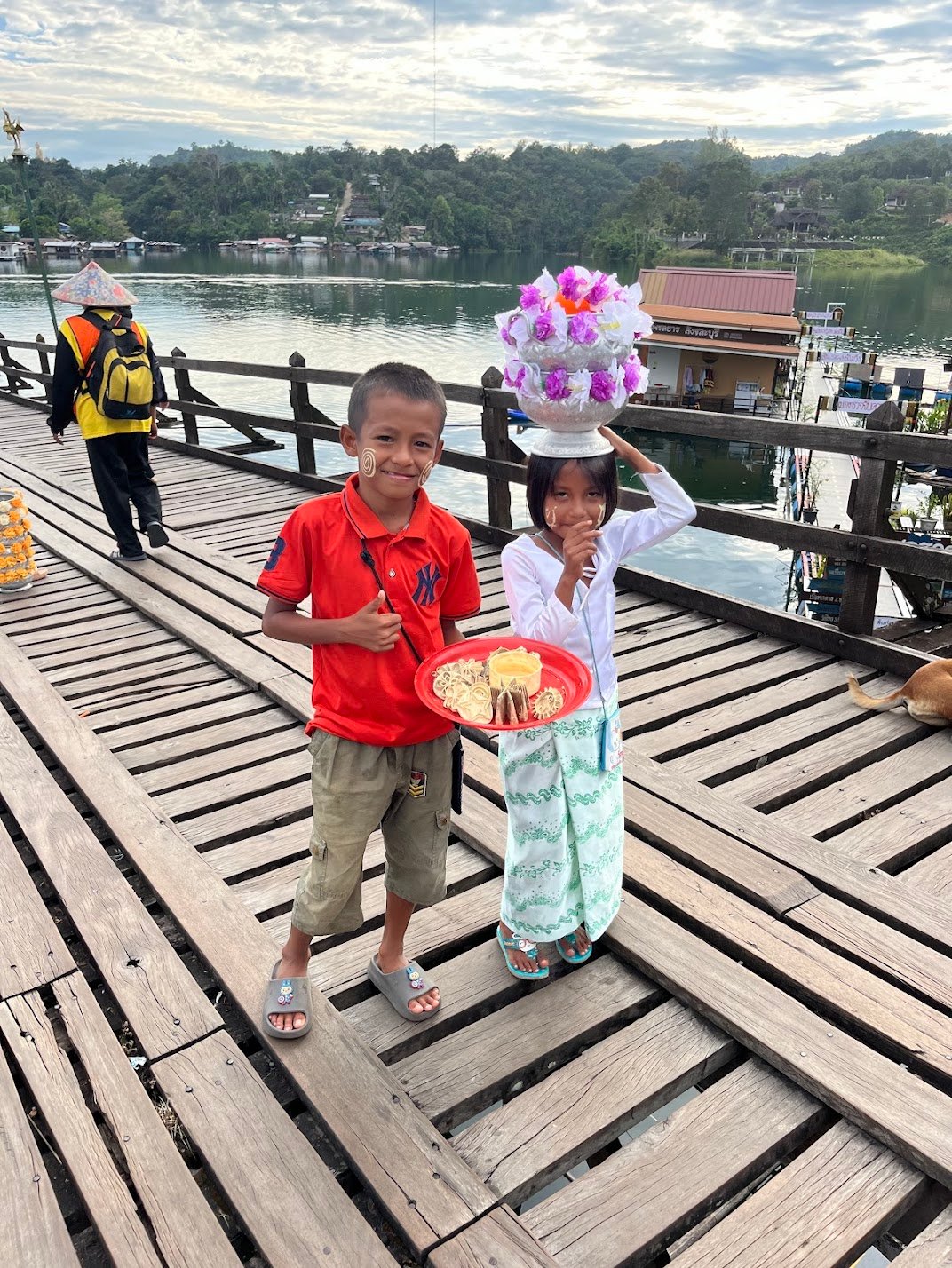
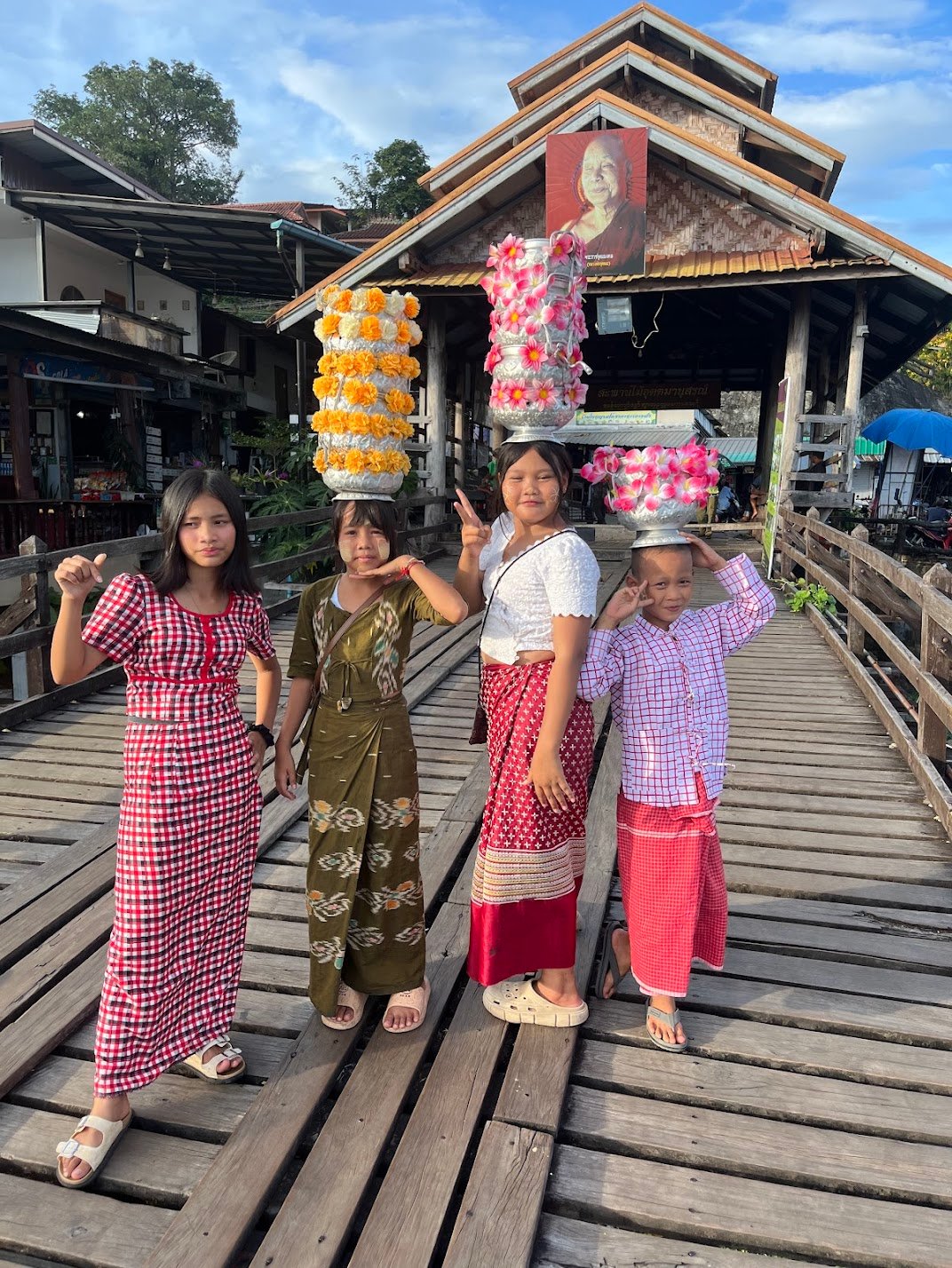
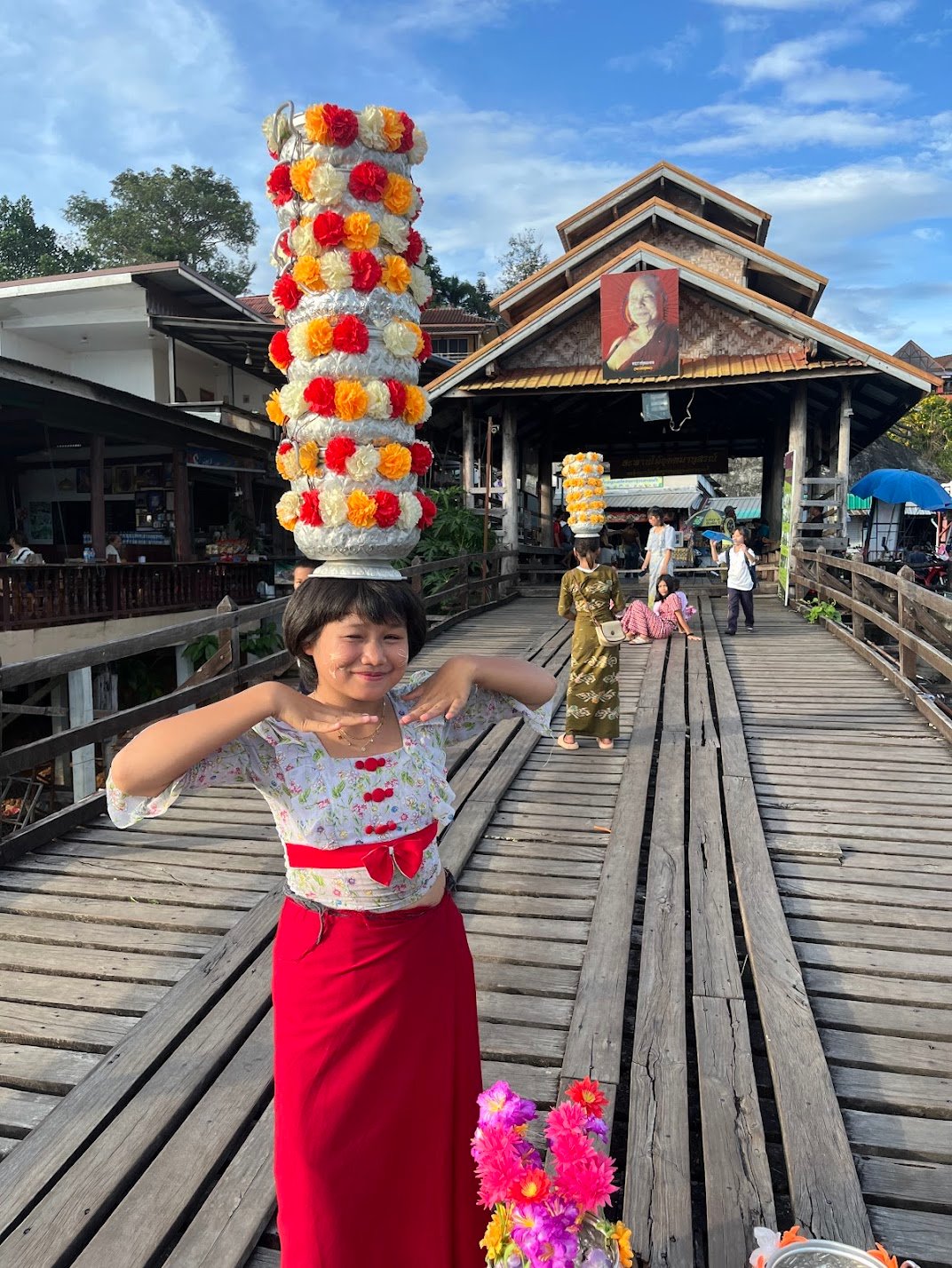
The best known bridge is the Uttamanusorn bridge, known as the Mon Bridge. At 450m long it is the second longest wooden bridge in the world, and connects Sangkhla Buri with the Mon village, otherwise known by its sniggerworthy name of Wang Ka. The bridge was constructed in the 1980s out of necessity when they built a dam nearby. It has been washed away or damaged by floodwaters numerous times since. It’s a nice walk as the sun dips in the afternoon and the markets on both sides start to stir. When you get to the other side, it really has a different feel. While I can’t tell a Mon person by looking at them, the outfits, hats and face adornment are much redolent of Myanmar, which is where about two-thirds of all Mon people live. Girls and young women were strolling across the bridge in traditional robes and headwear, accompanied by the men in traditional board shorts and Nirvana t-shirts.
Next to the wooden bridge is a floating bamboo bridge. I wasn’t able to get onto it as it is for locals only, specifically those who live in the floating houses alongside it. I’ve seen similar bridges elsewhere in Asia but this is a big one. It gets washed away regularly but the people here do great bamboo.
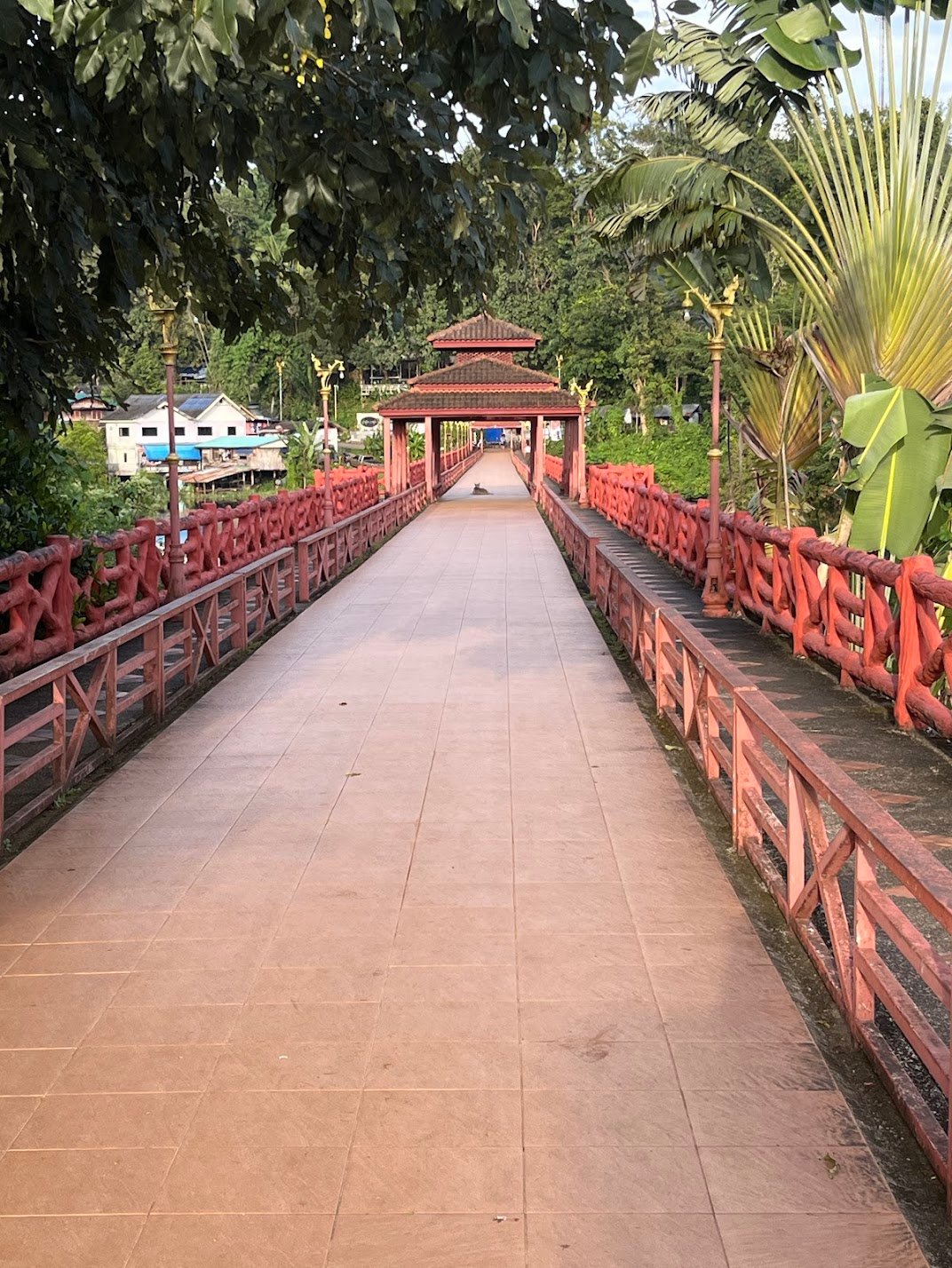
The third bridge is known as the Red Bridge, for obvious reasons. Its real name is the Srisuwan Khiri Bridge and is made of cement with bits painted red. It connects one part of the town with another. That’s about it.
The two other main attractions for me in Sangkhla Buri are the trip to Three Pagodas Pass, on the Myanmar border, which is where the Burma-Thailand Railway crossed between the two countries; and the sunken temple. More on them later, after my pork rice porridge.
If you enjoyed this story you might also like Mae Sai, Thailand: A Day at the Edge of the Map.

Steve is a former Army officer and technology manager, now semi-retired and living in Melbourne. He enjoys adventurous travel and believes that good stories should be shared. He founded the Dusty Boots Journal as a means to connect those with similar interests.
It’s always good to find another off-the-beaten-track opportunity. Thanks for your report, it is now on our travel list.
[…] To read another account of a people who have been displaced by the modern world, yet managed to preserve something of their culture, you can read a little about the Mon people in Thailand here. […]