
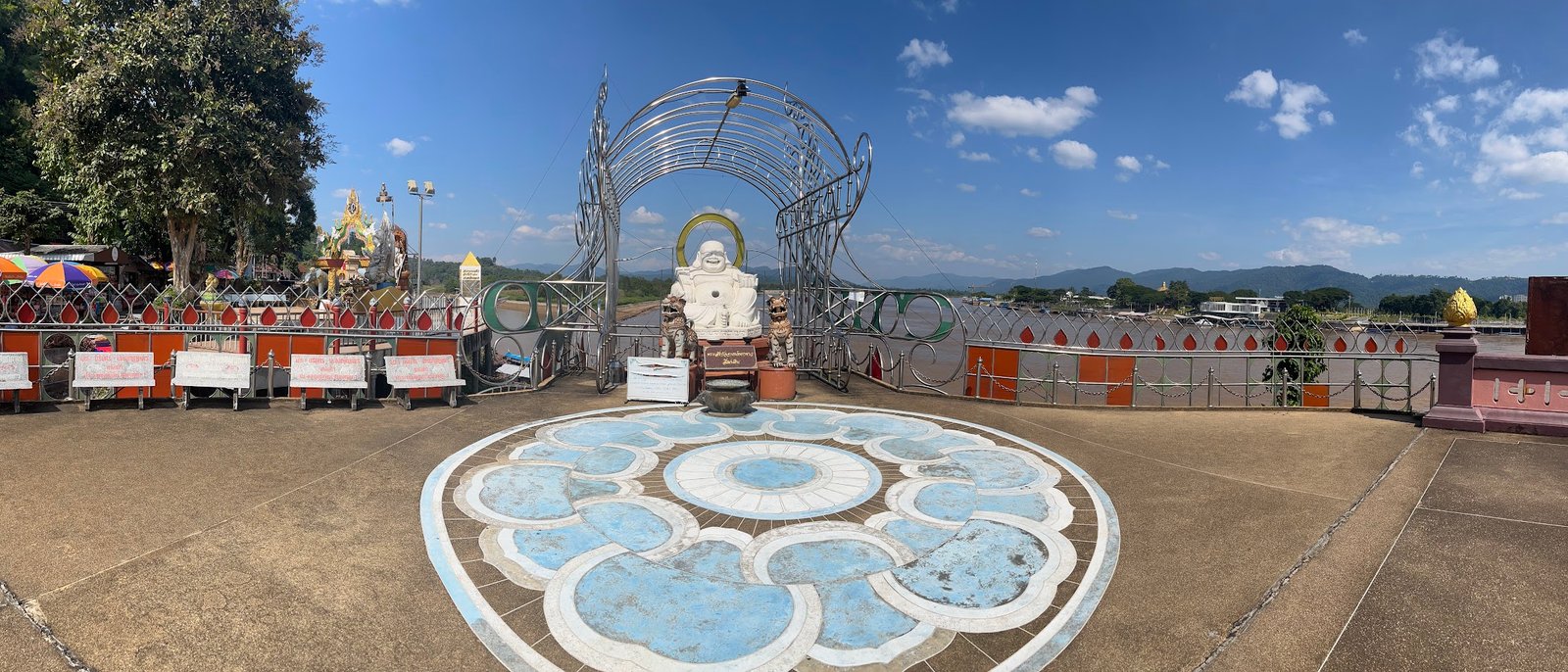
The town of Mae Sai is the northernmost point in Thailand, and is a busy crossing point into Myanmar. It is about 60km by road from Chiang Rai, and easy to get to by bus. I recommend the local bus which leaves hourly and costs 50 baht ($2.50) for a ticket. It is a ‘milk run’ bus which picks up and drops off people anywhere, and you get to see a bit of local life and commerce.
Mae Sae itself is not particularly exciting. Very few people speak English, there is no night life and the place basically shuts down at 8pm when the market sellers pack up their stalls. But you can get good street food along the main road at any time of day, and the people are friendly and honest. Two nights is plenty for a visit, and I have suggested a one day itinerary which takes you out of town to the east along the Mekong River. You can hire a motorcycle to do this trip, or pay for a car and driver for the day.This story is part of our Borderlands & Crossings series.
This article is part of our Slow Travel in South East Asia series. For other Thai scootering experiences, have a read of our accounts of riding around Sangkhla Buri, Bang Saphan, Koh Lanta and Chiang Rai. And for the Dusty Boots guide to renting a scooter and staying safe on the roads, click here.
Market, Border Crossing and Wat Phra That Doi Wao
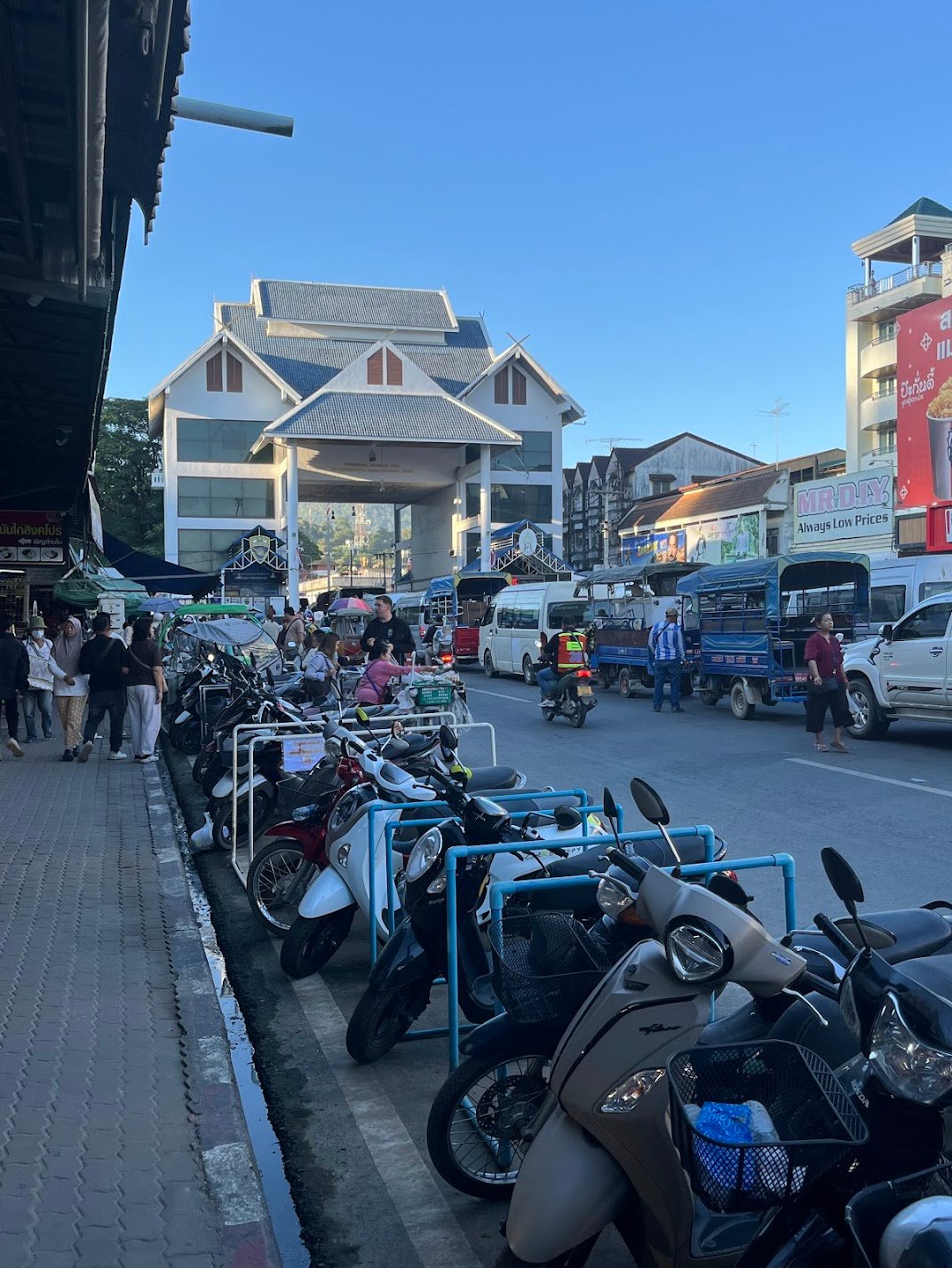
Walk through the market towards the end of the day. There is plenty of activity, good food and you can follow a rabbit-warren of little streets to the west of the main road. Pause for a few minutes to watch the chaos at the crossing point.
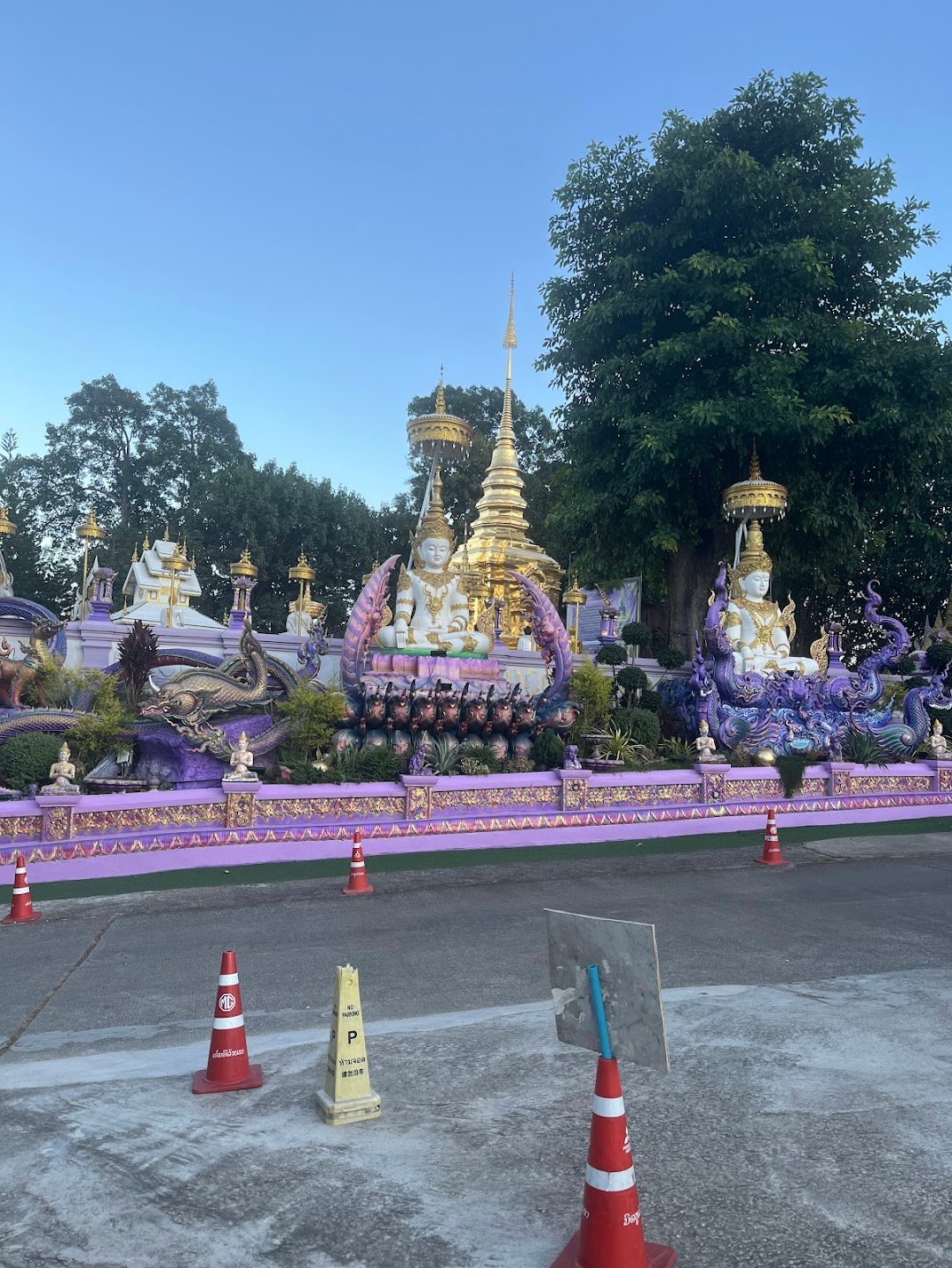
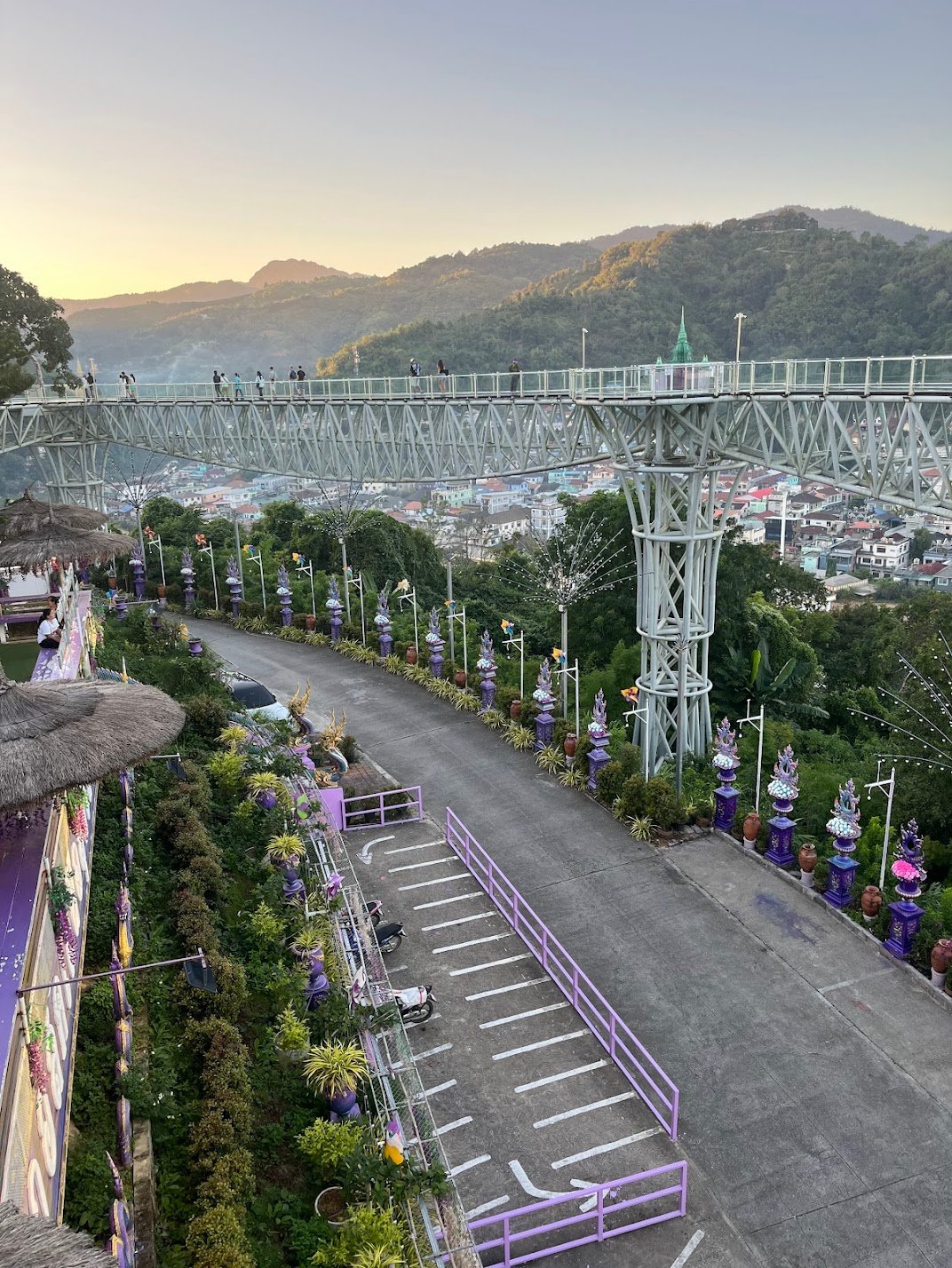
Follow the paths upwards through the market until you get to the bottom of the stairs to the Wat. You can drive up the hill to the temple or climb the 208 steps. Once there you can spend a fun hour exploring the various temples, pagodas and odd buildings – everything is a purple hue, and lights up in the evening. The Sky Walk is a must-do and is spectacular at sunset.
If you want to visit Myanmar:
Border crossing rules can change, so always check the latest immigration regulations.
Day Pass: To cross into Tachileik, you generally pay a fee of 500 THB (or US$10) for a day pass valid for the Tachileik district. Your passport is usually held by Myanmar immigration until your return.
Border Crossing Hours (Thailand-Myanmar Friendship Bridge): Generally 6:30 AM to 9:00 PM daily.
Local Transportation: From the Mae Sai bus terminal (about 5 km south), take a local red Songthaew (shared pick-up truck) to the border gate for around 10-15 THB. Or you can hire one yourself – haggle, you should not pay more than 150-200 THB for a one way trip to the gate. Grab cars are scarce in Mae Sai.
Rent a Motorcycle
Rent from the Honda dealership on the main road. They are professional and the bike I rented was well maintained and clean. 300 baht for 24 hours and they require your passport for security. I did look at one other rental place off the main road but the guys there looked like they would just as soon slit my throat as rent me a bike.
Check out the Dusty Boots guide to scooter rental.
Follow Route 1290
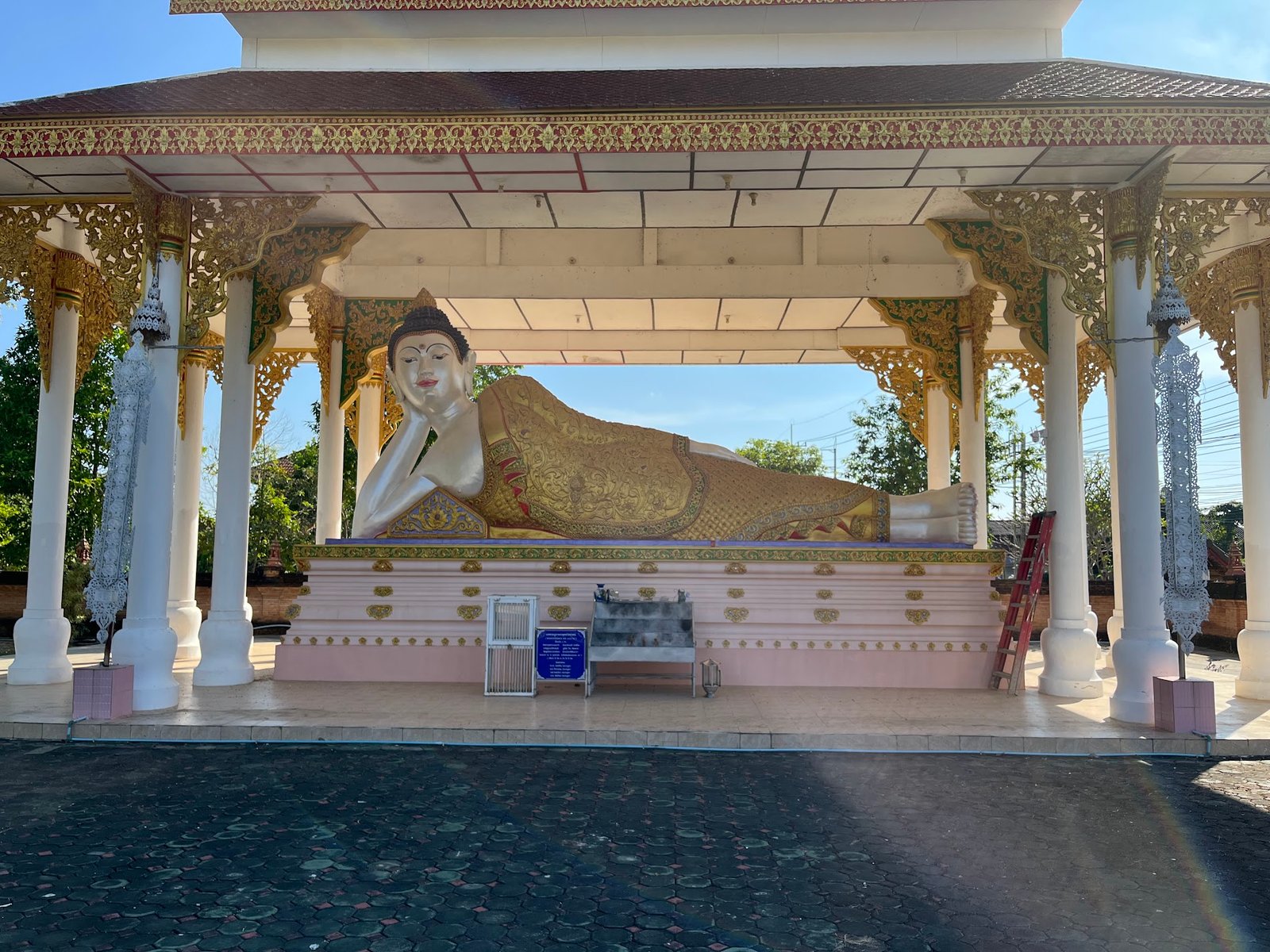
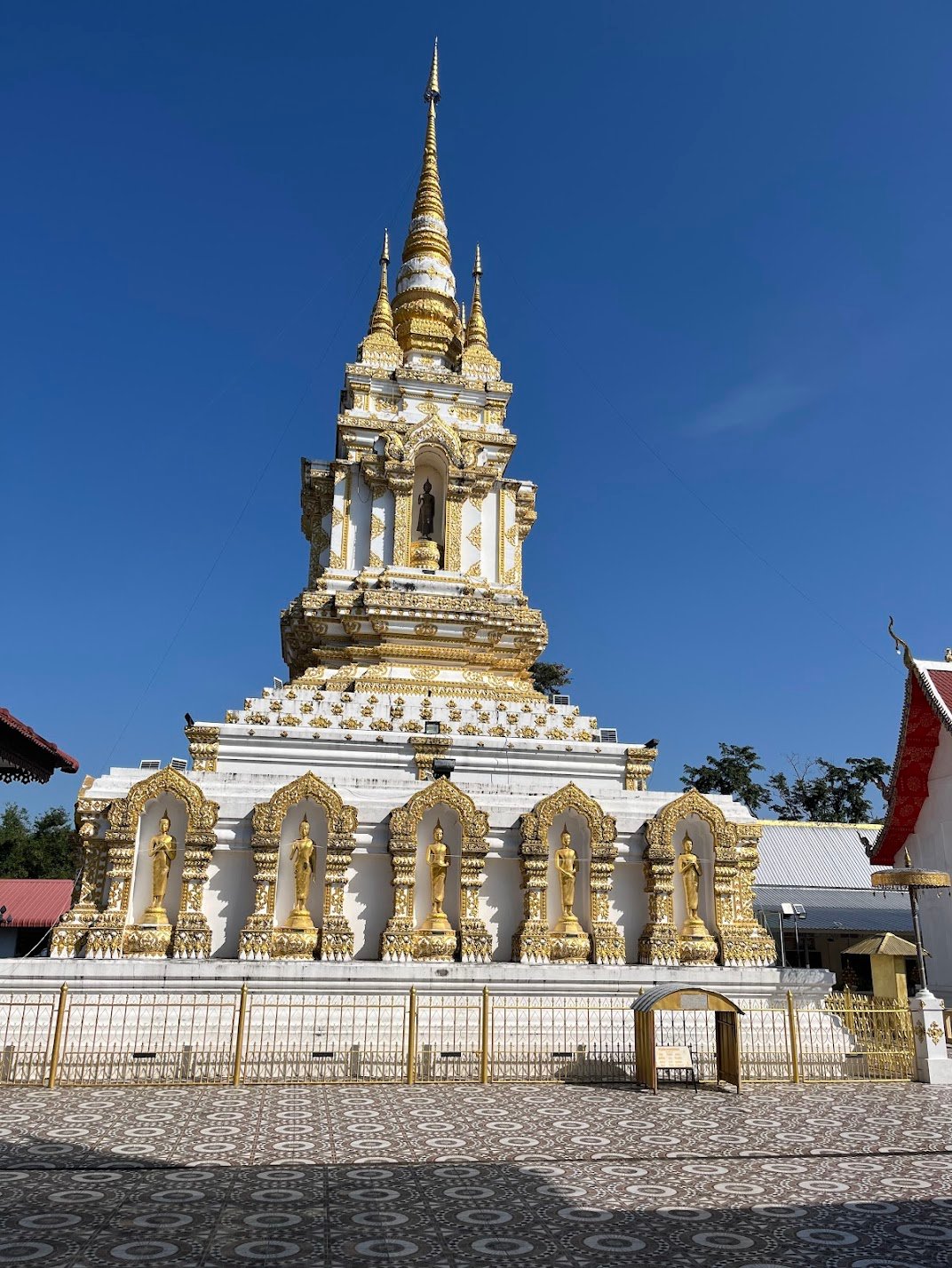
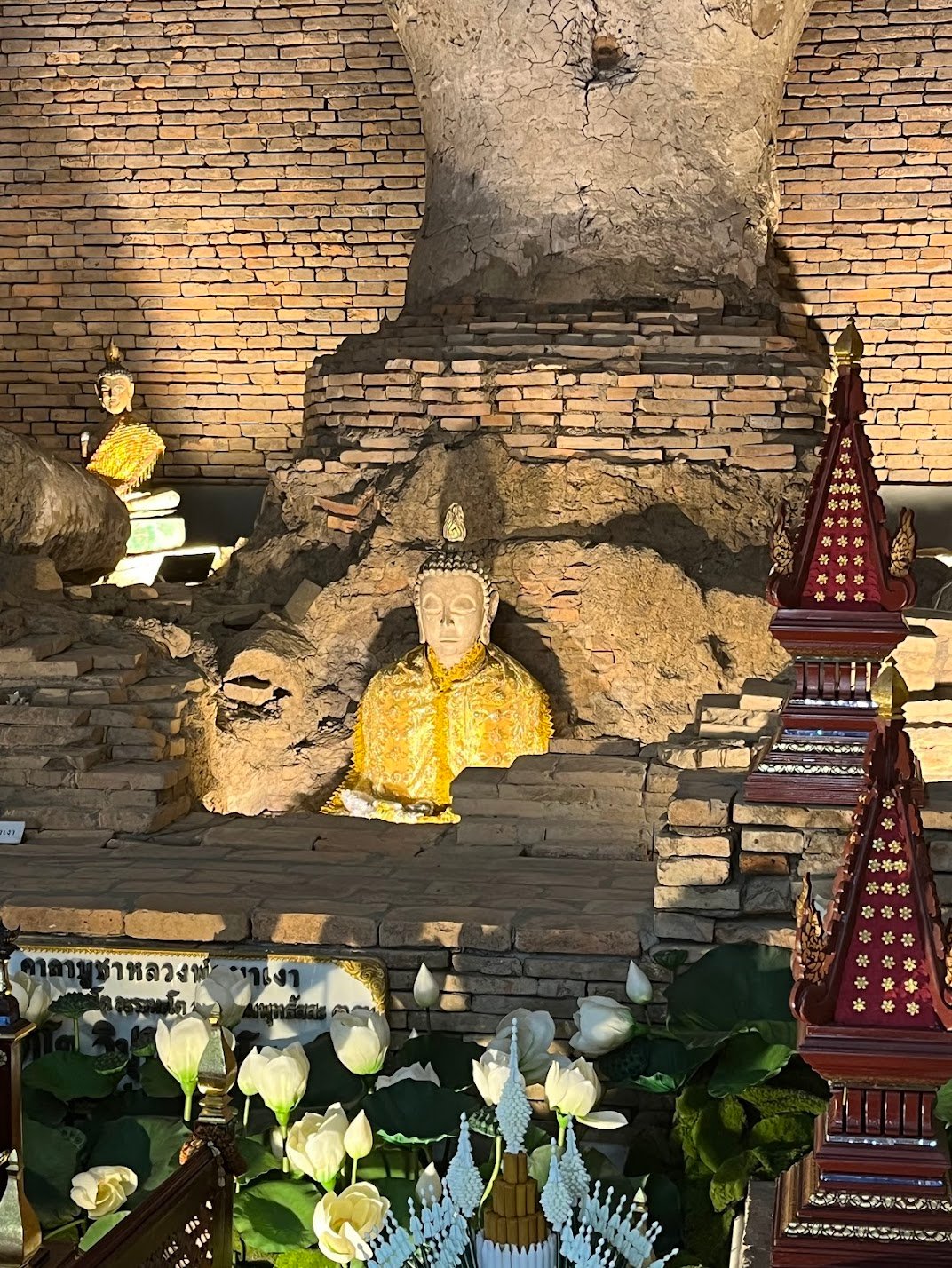
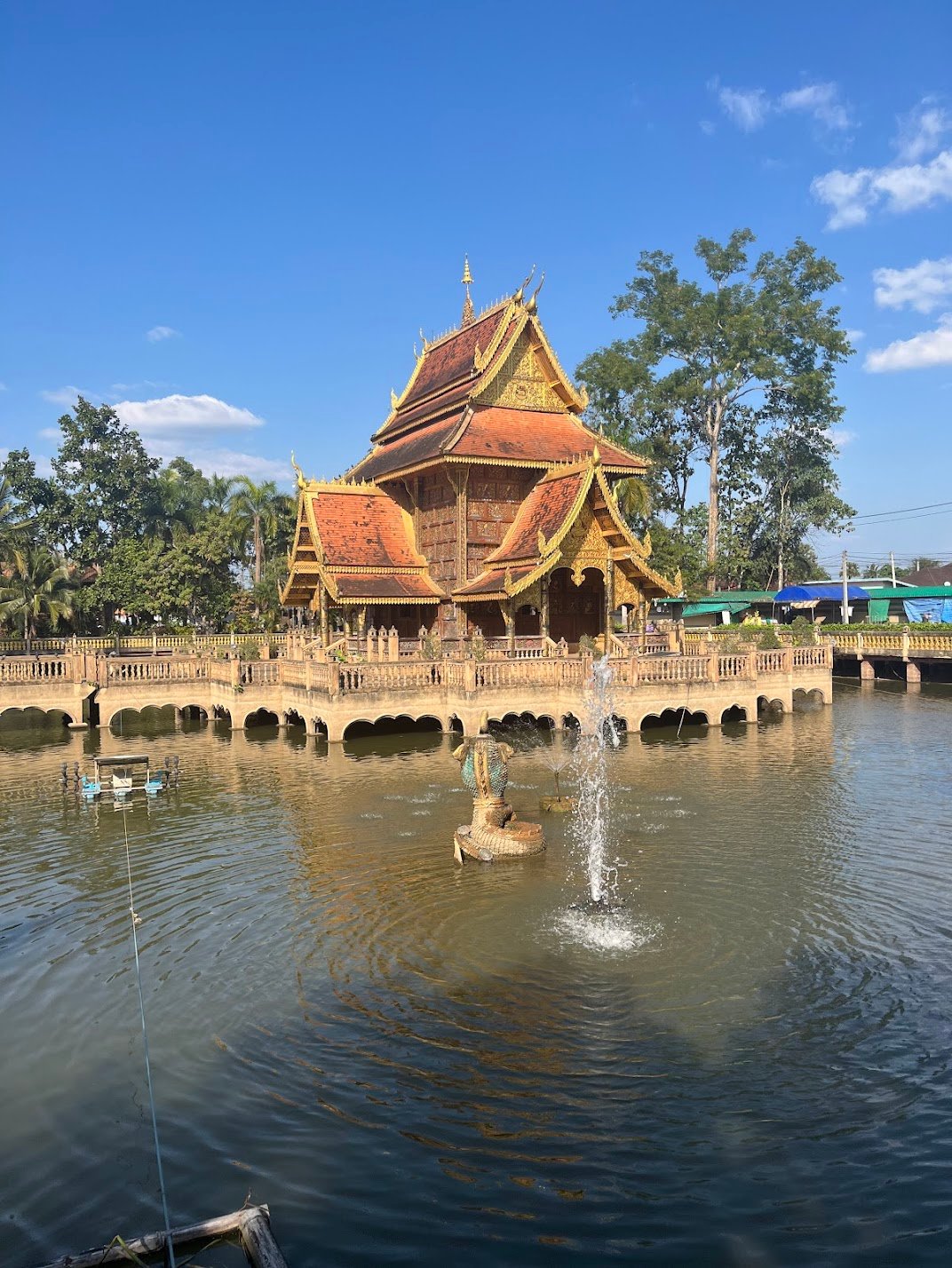
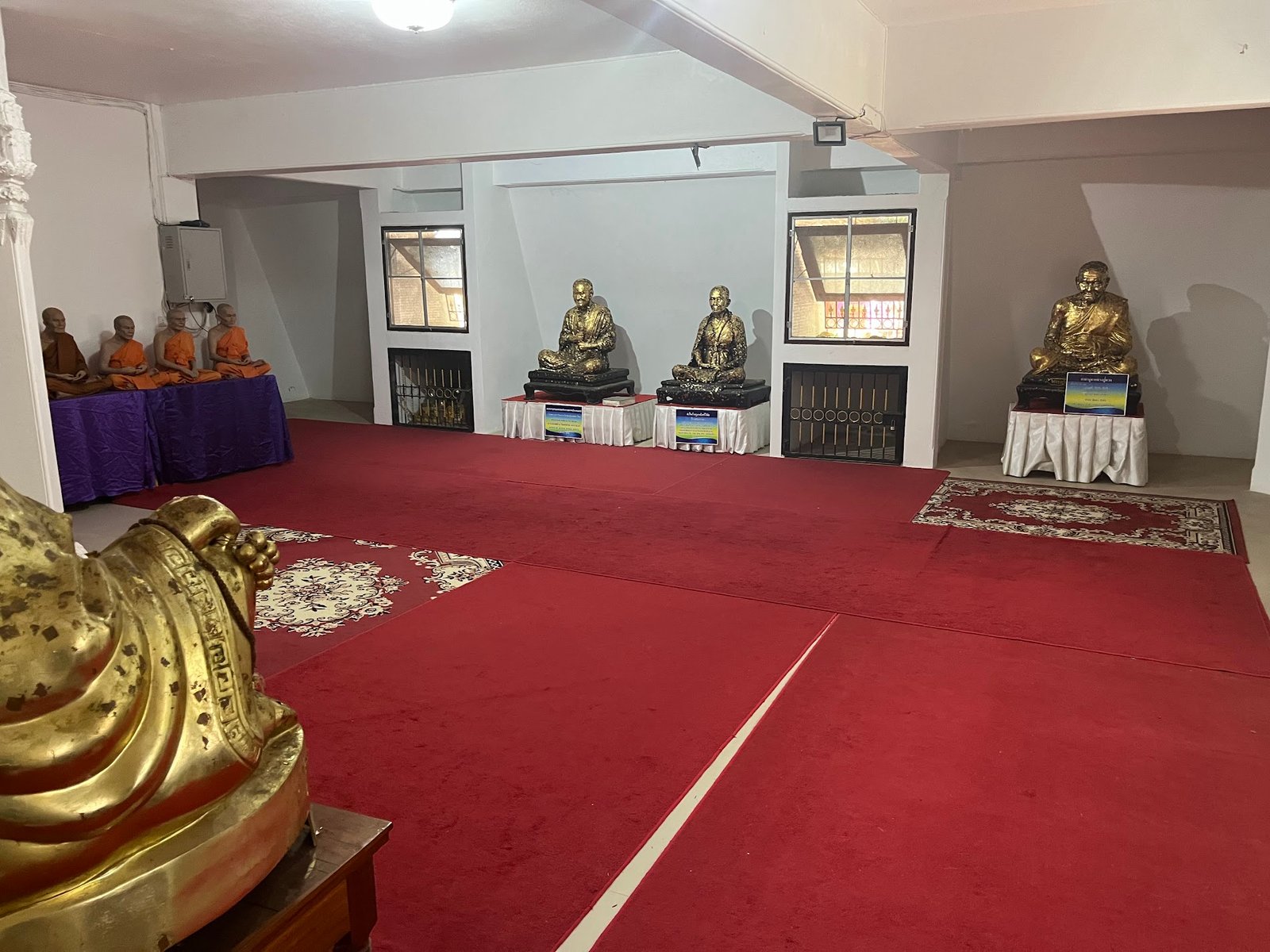
Stick to this route and you won’t get lost. A good first stop is at Wat Chetiwarayam, about 14km out of town on the left. There is a big reclining Buddha, and the main pagoda has many Buddha statues making various gestures, so you can brush up on your mudhras. There is a smaller temple festooned with bells which make a pleasant sound in the breeze.
Doi Sa Ngo
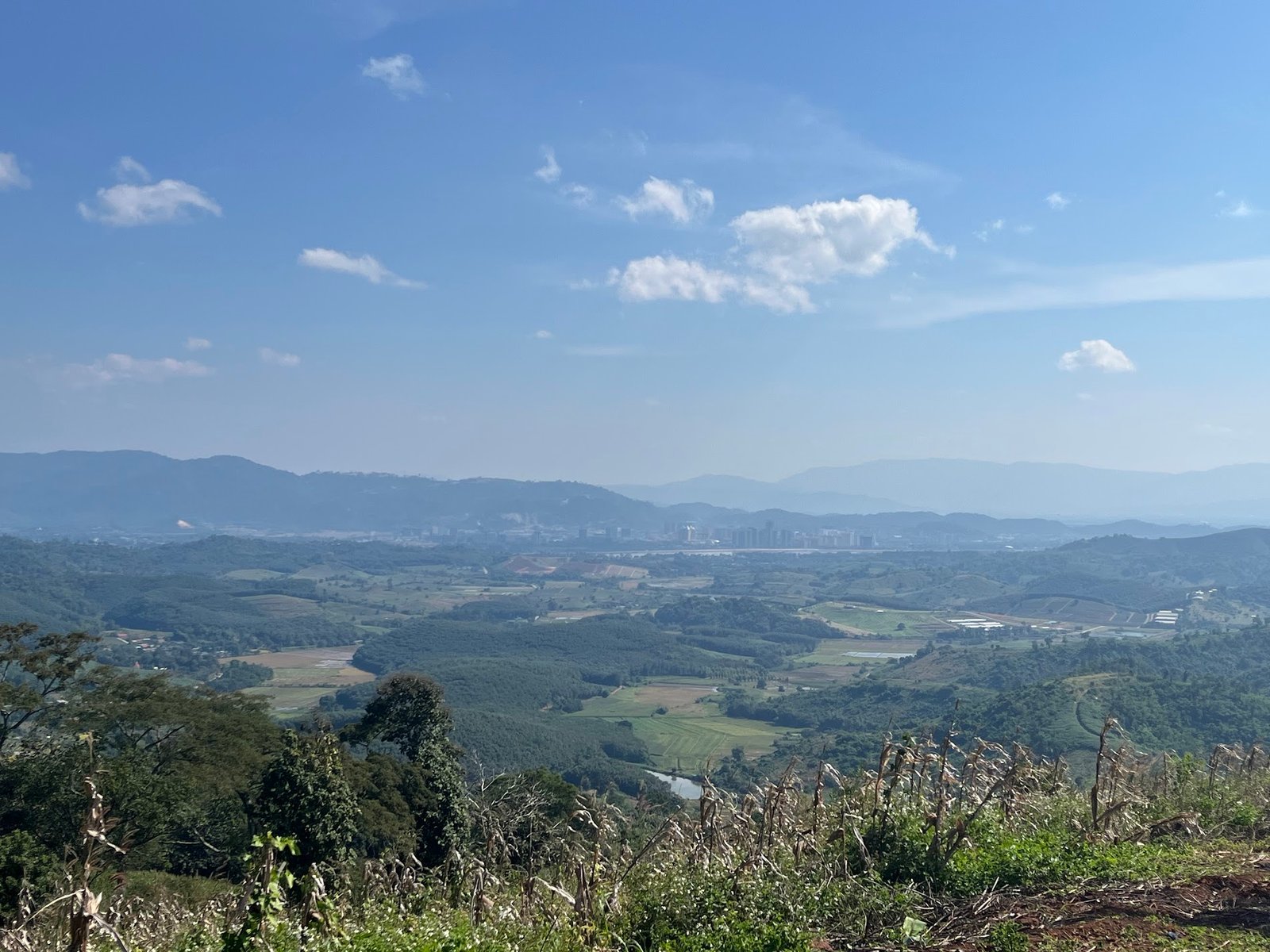
A little further along on the right is the turnoff to this lookout point. The detour will take you about 45 minutes, and don’t try it if it has been raining heavily as the last 500 metres to the summit are over a dirt track. The drive up is pleasant and steep in parts through a couple of villages and you get to see farming close up. From the top, the view is to the north and east. The big buildings you can see are the hotels and casinos in Laos.
On the way down, instead of returning to the highway, there is a back road to the Golden Triangle. Set your Google Maps and it should pick this route up.
Hall of Opium
This museum is well worth a visit; plan on an hour or two. From the ticket counter you enter through a spooky 100 metre concrete tunnel which has frescoes of tortured, drug-crazed faces. The museum consists of two floors with galleries about the spread of opium through the world, the history of the trade, the various measures to contain it, and how they have given Thai poppy farmers new opportunities. One gallery shows some very clever smuggling techniques, and it finishes with some hard lessons involving celebrities and ordinary people.
Golden Triangle
‘Golden Triangle’ is a term steeped in mystique – the inaccessible convergence of three countries where opium farmers, smugglers and bandits ruled Asia’s drug trade for decades – which is true. But sorry to disappoint you; the triangle on your map refers to the spot on the river where the three countries meet, and it is now a tourist spot. Market stalls line the streets and tourist buses edge past each other. The most entertaining thing I saw was a group of portly tourists squeezing into life jackets prior to a jaunt on the water. 15-20 minutes to take some pictures is sufficient here.
Chiang Saen
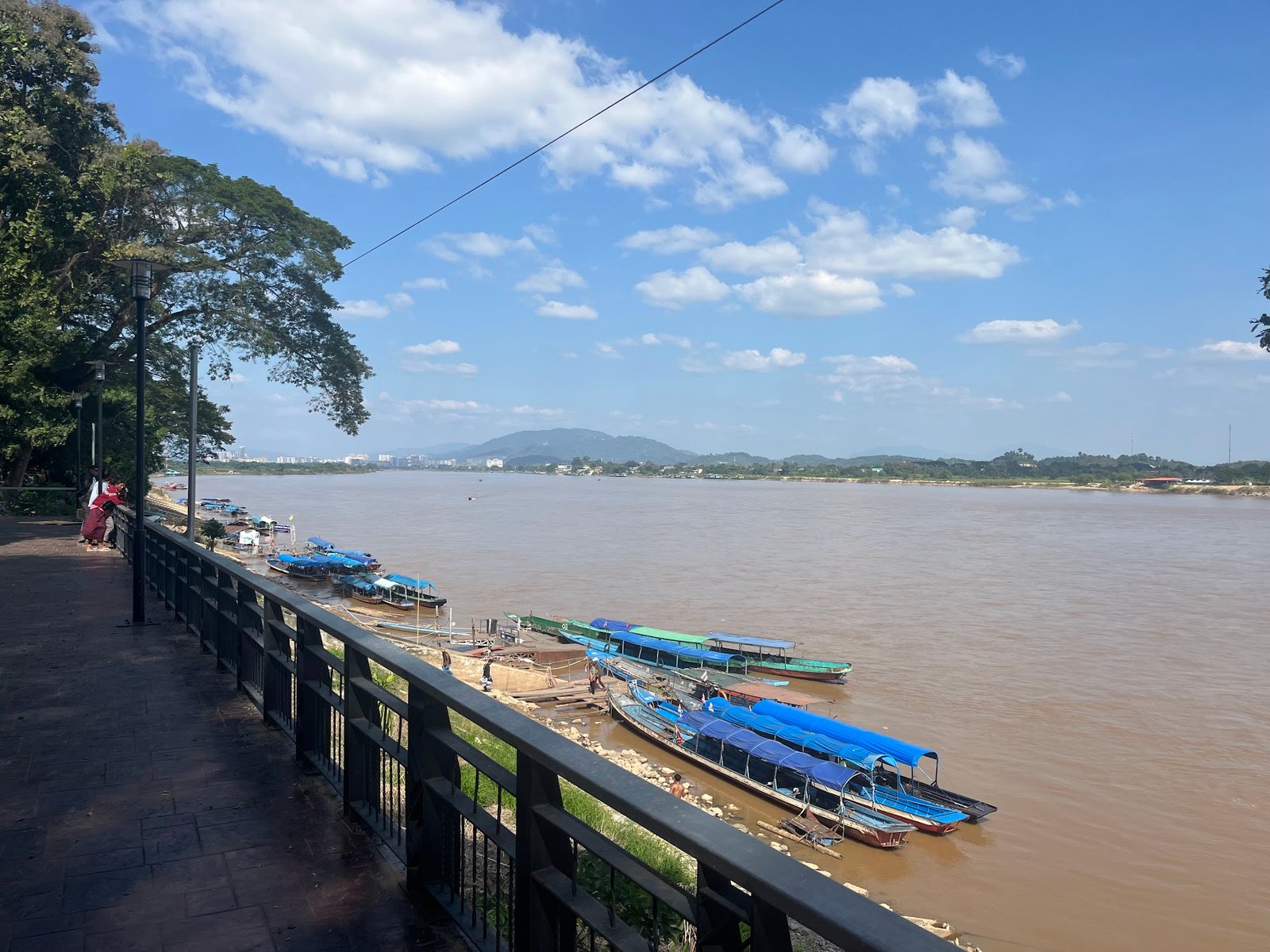
Another 15 minute drive gets you to Chiang Saen, and it is a nice drive beside the river. Chiang Saen is a busy town with a customs and immigration point for boat crossings into Laos. Stop for a while and watch people loading and unloading the river boats. There are some restaurants along the waterfront selling grilled meat and cold beer overlooking the Mekong.
Wat Phra That Pha Ngao and Another Skywalk
This temple complex is on the right around 5km to the east of Chiang Saen. You could easily spend a couple of hours there. The original temple is around 400 years old and there are lots of buildings and trails to explore. Make sure you drive to the top of the hill to visit the chedi. Do the Skywalk; it enhances the view.
For more detail, this website is good: https://www.chiangmai-alacarte.com/blog/chiang-saen-wat-phrathat-pha-ngao/
Beyond Chiang Saen
Keep driving east along 1290 and you turn away from the river and pass through farming country and small towns. You will hit the river again north of Chiang Khong, and from there you can proceed to the Friendship Bridge. It depends on how much time you have.
Frequently Asked Questions About Mae Sai
Is Mae Sai worth visiting as a day trip from Chiang Rai?
Yes. Mae Sai is about 60km north of Chiang Rai and easily reached by local bus in around 90 minutes for 50 baht. A full day gives you time for the Skywalk at Wat Phra That Doi Wao, the border crossing into Tachileik, the main market strip, and a detour to the Doi Sa Ngo lookout if you have your own transport. It is a genuinely interesting destination rather than just a border formality.
What is the Mae Sai Skywalk and is it worth visiting?
The Skywalk sits above Wat Phra That Doi Wao and looks directly north over the Sai River into Myanmar. It is one of the most dramatic viewpoints in northern Thailand and largely unknown to tourists. Entry is free with a temple donation expected. Go in the morning before haze builds and before any tour groups arrive.
Can tourists cross from Mae Sai into Myanmar?
Yes, with some conditions. Most nationalities can cross into Tachileik on a day pass for 500 THB (approximately USD 10). Your passport is held by Myanmar immigration until you return. The crossing hours on the Thailand side are generally 6:30am to 9:00pm daily, but border rules can change without notice — check current conditions before you go.
How do I get from Chiang Rai to Mae Sai by public transport?
Local buses depart Chiang Rai bus terminal for Mae Sai roughly every hour and cost 50 baht (about AUD 2.50). The journey takes 60 to 90 minutes depending on traffic. From the Mae Sai bus terminal, take a red songthaew (shared pickup truck) to the border gate for 10 to 15 baht, or hire one privately for around 150 to 200 baht one way.
What temples are worth visiting near Mae Sai?
Wat Phra That Doi Wao is the main temple and home to the Skywalk — do not miss it. Wat Chetiwarayam, just off the highway east of Mae Sai, has a large reclining Buddha and an intricate pagoda. Both are easy additions to a day itinerary.
Is there a night market in Mae Sai?
Yes. Mae Sai has a night market along the main border road that operates from early evening. It is a working local market rather than a tourist production, which makes it more interesting. Street food, clothing, goods crossing from Myanmar, and the general energy of a busy border town.
When is the best time of year to visit Mae Sai?
November to February is the coolest and clearest period and the most comfortable for walking around. March and April bring heat and smoke haze from agricultural burning, which affects visibility from the Skywalk significantly. The wet season (May to October) keeps things green but afternoon rain is reliable.

Steve is a former Army officer and technology manager, now semi-retired and living in Melbourne. He enjoys adventurous travel and believes that good stories should be shared. He founded the Dusty Boots Journal as a means to connect those with similar interests.
[…] If you enjoyed this story you might also like Mae Sai, Thailand: A Day at the Edge of the Map. […]
[…] If you enjoyed this story you might also like Mae Sai, Thailand: A Day at the Edge of the Map. […]
[…] If you enjoyed this story you might also like Mae Sai, Thailand: A Day at the Edge of the Map. […]
[…] For other Thai scootering experiences, have a read of our accounts of riding around Sangkhla Buri, Mae Sai, Koh Lanta and Chiang Rai. And for the Dusty Boots guide to renting a scooter and staying safe on […]
[…] For other Thai scootering experiences, have a read of our accounts of riding around Sangkhla Buri, Mae Sai, Koh Lanta and Bang Saphan. And for the Dusty Boots guide to renting a scooter and staying safe on […]
[…] For other Thai scootering experiences, have a read of our accounts of riding around Sangkhla Buri, Mae Sai, Bang Saphan and Chiang Rai. And for the Dusty Boots guide to renting a scooter and staying safe on […]