
This story is part of our Travel Writing and Reflection series.
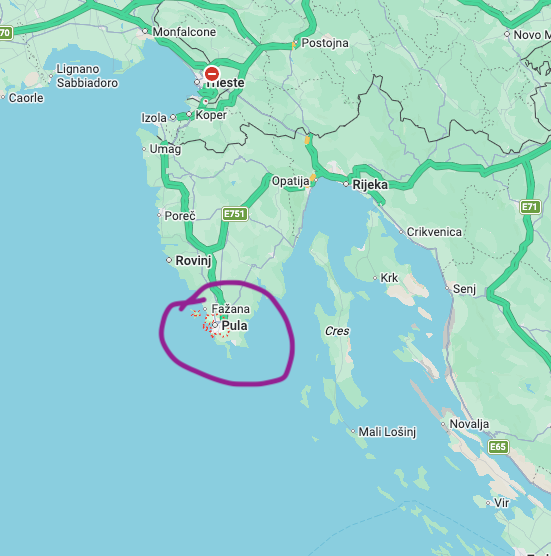
At the southern tip of the Istrian peninsula, Pula is a bit off the tourist track in Croatia. To get there you need to take a detour off the highway from Rijeka to Trieste, which is the main route. We went there on a whim, to escape the madhouse traffic of the Adriatic coast in August.
Pula’s population is listed as 60,000, but it is much bigger than that when you count the broader coastal sprawl, and it swells further in summer. There are some nice settlements along the coastal cliffs where you can find a hotel or B&B away from the city centre. The roads in and out are punctuated by massive numbers of roundabouts, which locals speed through like Mad Max, but which I approached like Mr Magoo, peering intensely through the windscreen while clutching the wheel like a newly-found gold nugget. I got honked at on several occasions.
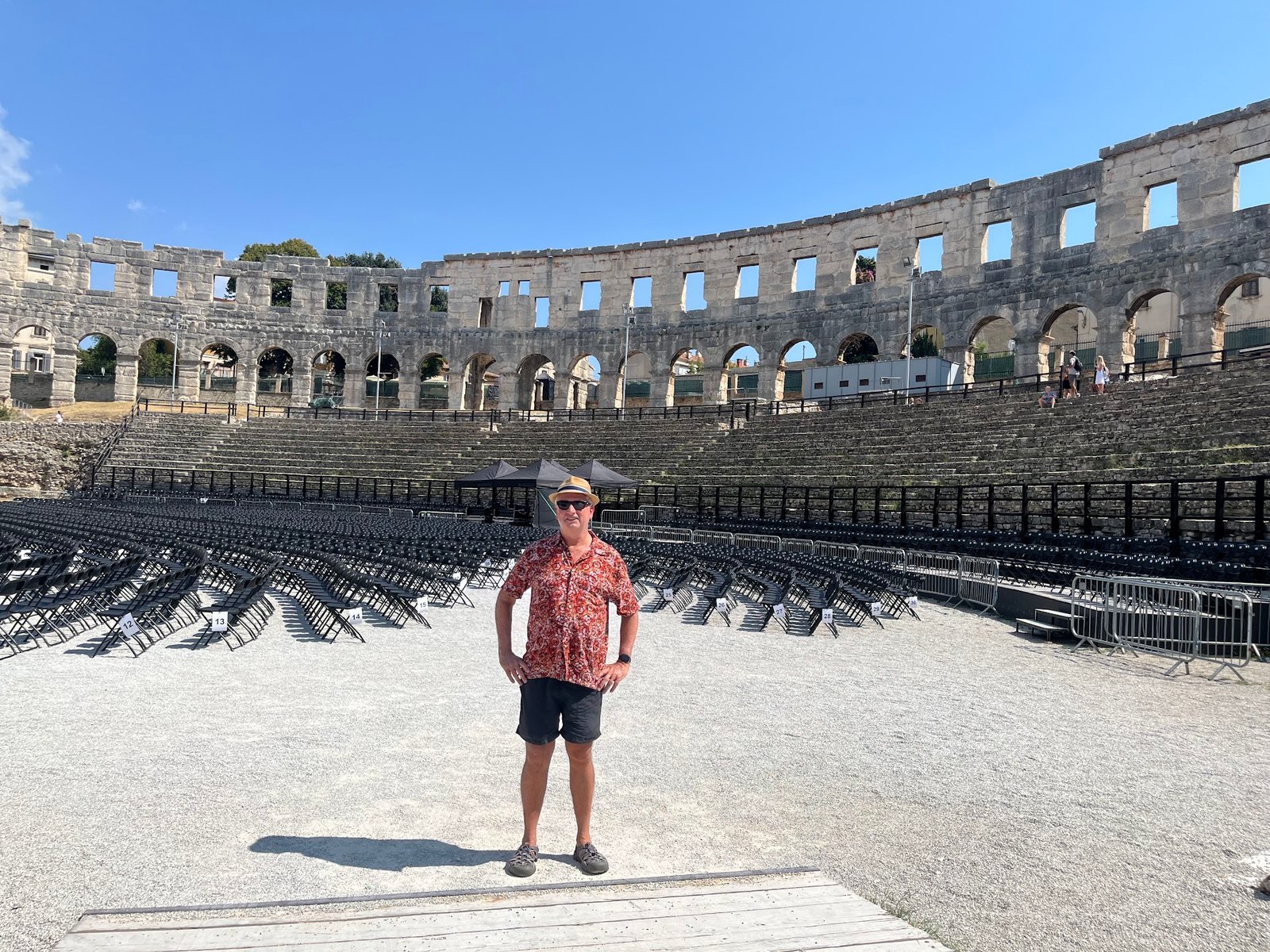
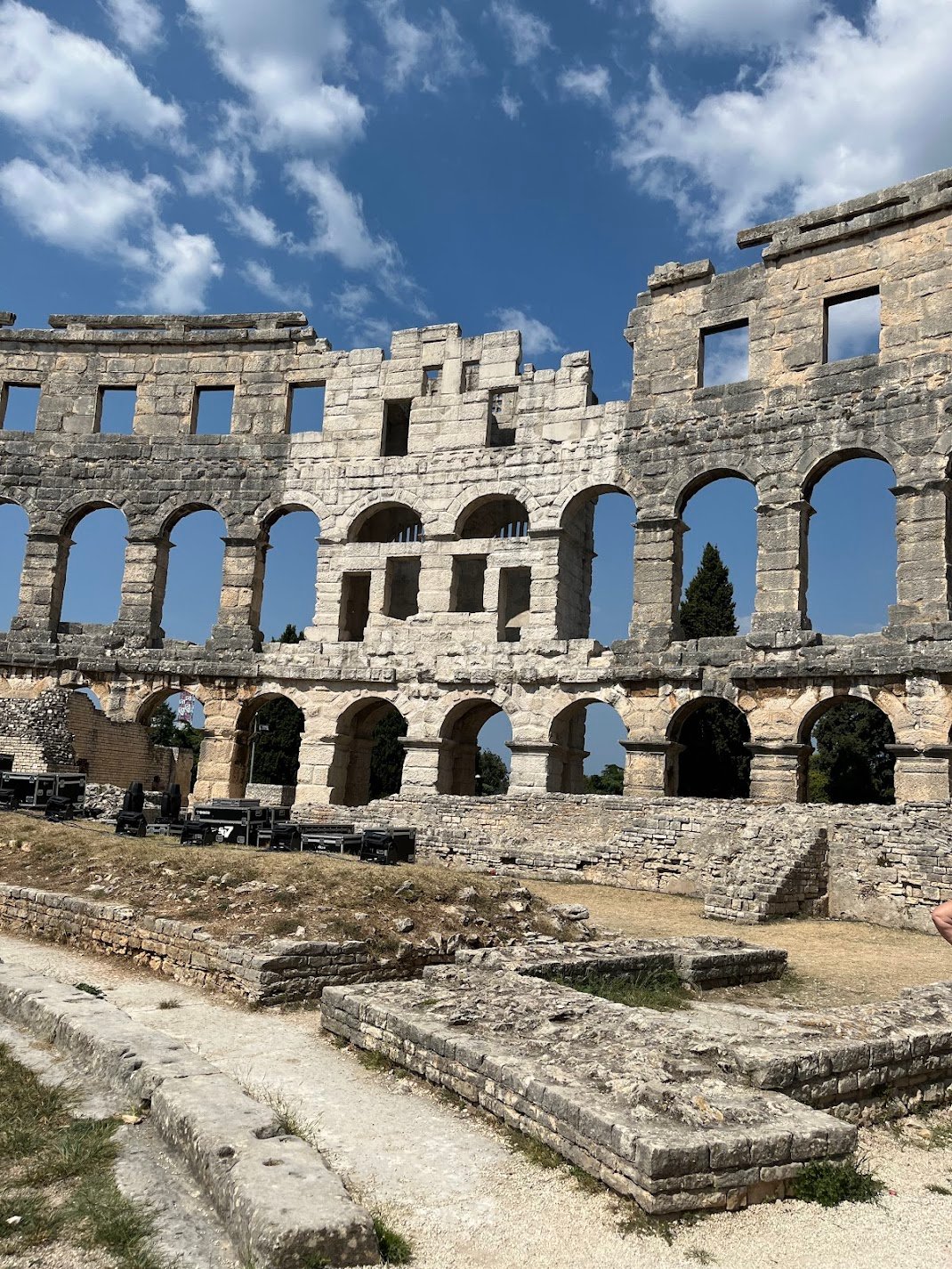
The big drawcard is the Arena, one of only seven Roman amphitheatres left standing in the world. It is well worth a couple of hours of your time. Built between 27 BC and 68 AD, it hosted all the legendary Roman events – triumphs, gladiators, animal battles, Christians and other wrong-thinkers meeting their fate. It could hold around 23,000 spectators.
Built from local limestone, it measures 130m by 105m. It retains much of the original circular wall structure and the walls are higher on the western side due to the slope of the land – the ground is quite steep as it slopes down to the beach. The significance of the arena was recognised in the 19th century when preservation and later limited restoration commenced.
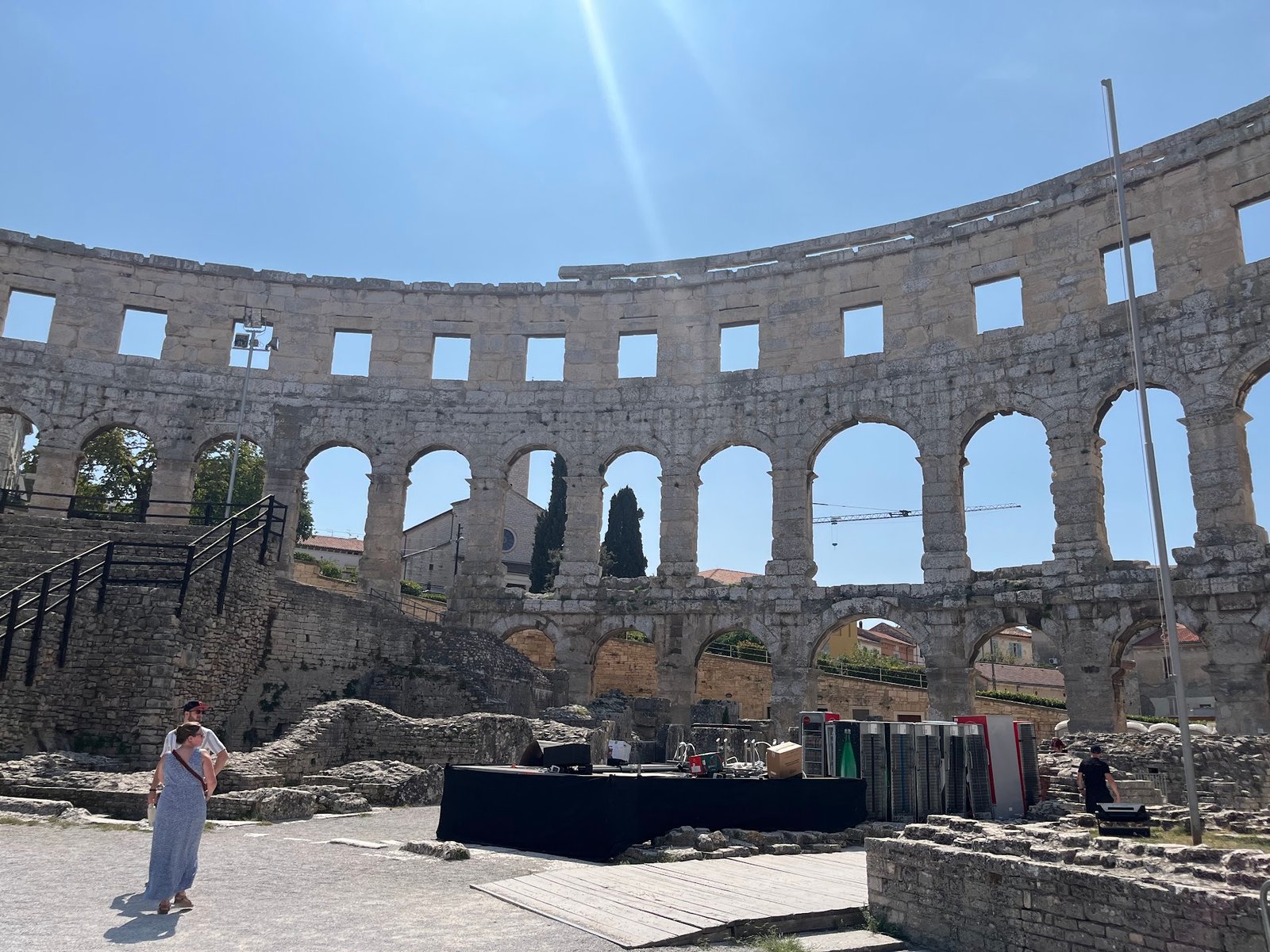
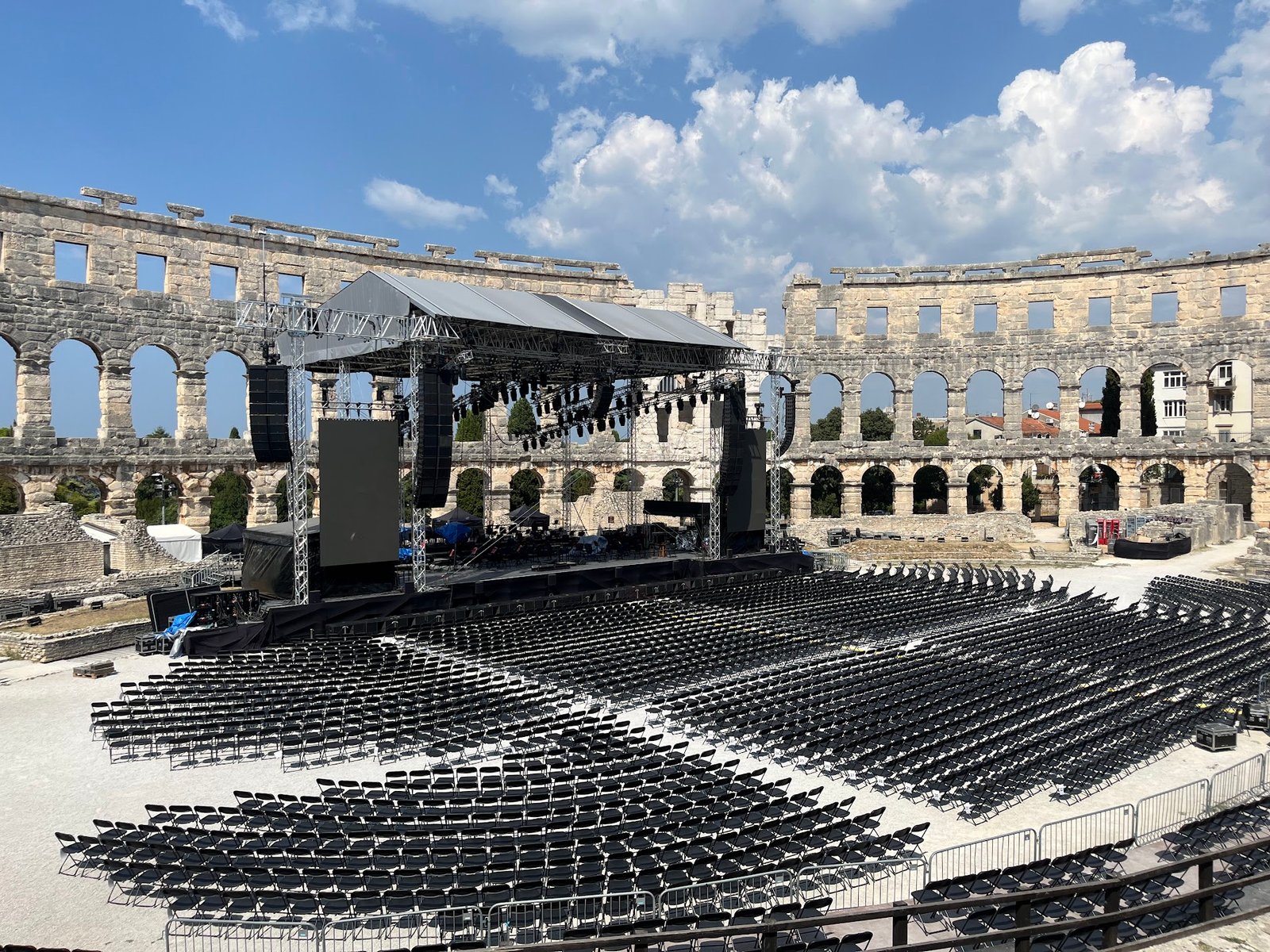
These days it is used for concerts, fireworks shows, plays, military pageants and all sorts of public events. Seating capacity is 5,000 and up to 12,000 including standing room. Much of the revenue goes to preservation and maintenance. Walking around, there is no attempt to hide the modern functions – chairs, sound systems, vending machines and portaloos were all scattered around under the blazing August sun.
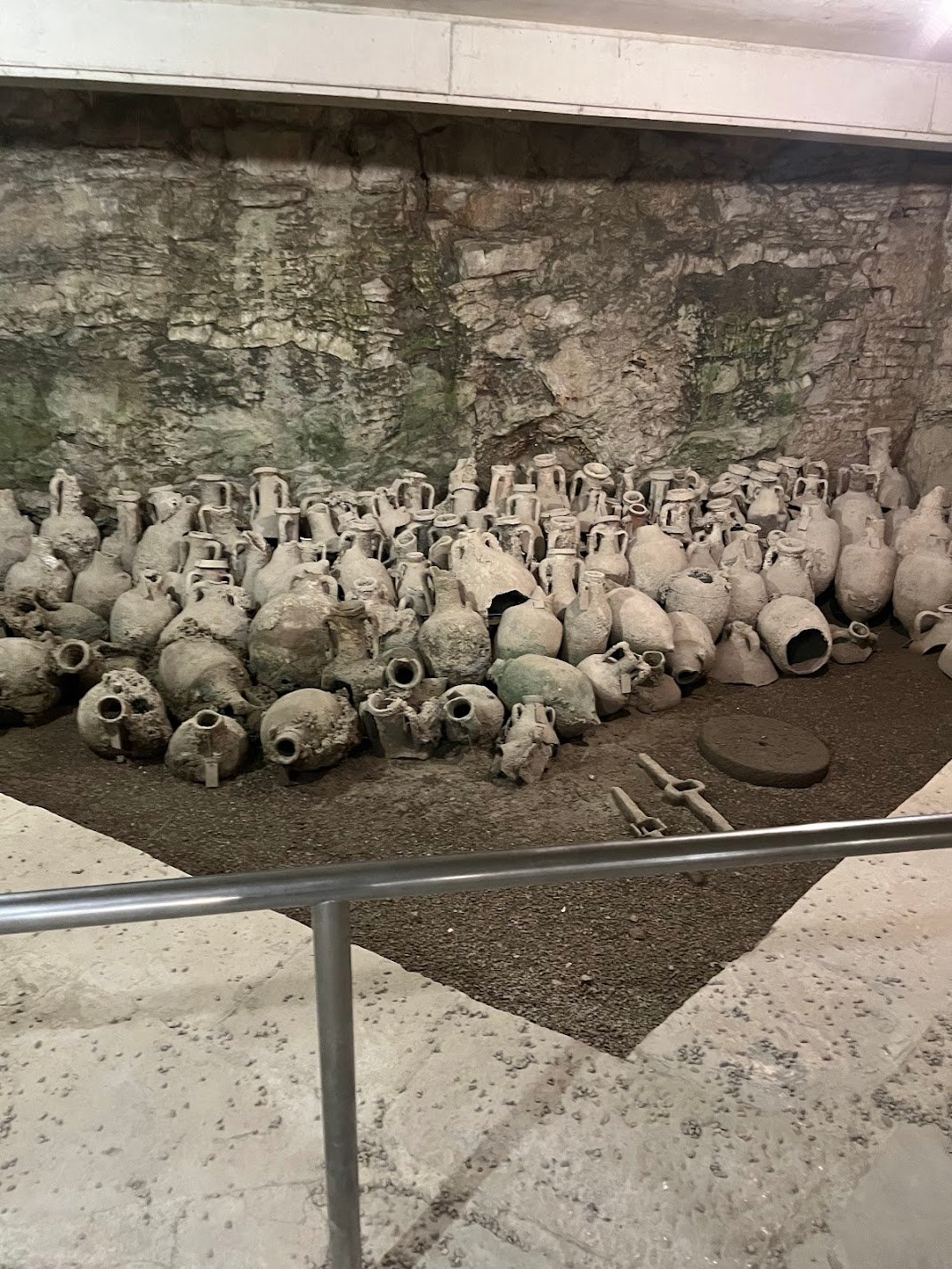
There is a museum underground in the area where the dungeons and preparation facilities once were. As well as the history, preservation and architectural details, there is a large number of Roman amphorae in various degrees of decay. These containers for wine, olive oil, juices and perfumes have been found all over the empire, and have enabled detailed research into the trading routes and what products went where.
As an additional bonus on the day I got a parking ticket. 25 Euros. Pay attention to the signs – ignorance of written Croatian is not a valid excuse.
Visitor’s Guide to the Arena
The Exterior
Before you buy your ticket, walk the full perimeter of the exterior. The Pula Arena is unique because all four side towers and the three stories of the outer wall are entirely preserved.
- The Slope: Notice how the arena is built into a hillside. On the side facing the sea, the wall has three stories of arches; on the uphill side, it only has two.
- The Gutters: Look for the stone grooves at the top. These were part of a sophisticated system to pull a velarium (a giant canvas awning) over the spectators to protect them from the Istrian sun.
The Subterranean World
Most visitors spend their time in the central arena, but plan on spending some time in the passages and chambers below.
- The Tunnels: These cool, limestone corridors once held the gladiators and the animals before they were hoisted into the arena.
- The Museum: Today, the passages house a permanent exhibition on ancient olive oil and wine production in Istria. It sounds like a strange jump from bloodsports, but it highlights the Roman obsession with Istrian exports. This is where you will find the amphorae (clay jugs) and stone presses.
Practical Tips
- Timing: To avoid the crowds and the midday heat, arrive at 8:00 AM when it opens. Alternatively, visit an hour before sunset when the limestone turns a deep golden-pink.
- Footwear: The ground inside is uneven stone and gravel. This is not the place for flip-flops; wear your dusty boots or sturdy walking shoes.
- Duration: Allow 1.5 to 2 hours to walk the tiers, explore the underground, and read the historical plaques.
For another Roman site, see our article on Hadrian’s Wall.
And for the definitive travellers guide to the amphitheatres of the world, try this Archaeology Travel site.

Steve is a former Army officer and technology manager, now semi-retired and living in Melbourne. He enjoys adventurous travel and believes that good stories should be shared. He founded the Dusty Boots Journal as a means to connect those with similar interests.
Steve, A nice Easter story of a place the Romans visited.
We owe Easter to the Romans!