
This story is part of our Travel Writing and Reflection series.
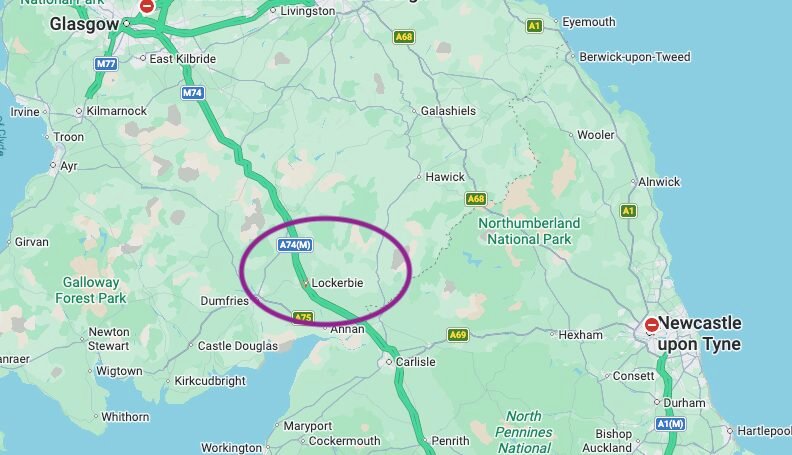
Three of us left Carlisle, England around mid-morning, heading north. As we crossed the border into Scotland, the M6 became the A74. The light seemed to fall gently rather than blaze. Muz was driving the hire car, Deb had the window cracked to let in the crisp Scottish air, and I sat in the back seat controlling the daily completion of the crossword from the newspaper.
We were still a bit tired but also elated, the day before we had completed the first half of the coast‑to‑coast trek. A road trip around Scotland was our next adventure, with Fort William being our destination for the day.
It was 15 August 2019.
About 15 kilometres into Scotland, a road sign to the town of Lockerbie appeared. It wasn’t meant to be a stop, but it was a name we knew for the worst of reasons, the site of the Lockerbie Air Disaster of 21 December 1988. As we approached the turn off, the conversation quietened. I said, “we should have a look”.
Muz slowed the car, a memorial to those who lost their lives was a stone’s throw away.
There was plenty of parking, we were at the public cemetery of a small Scottish town, a corner of which was now designated as the Lockerbie Air Disaster Memorial. As we walked towards it, I remembered the news coverage from the time in the media, the long search for those responsible for the bomb on the aircraft and the trial of the Libyan suspects many years later. Pan Am Flight 103 was front of mind.
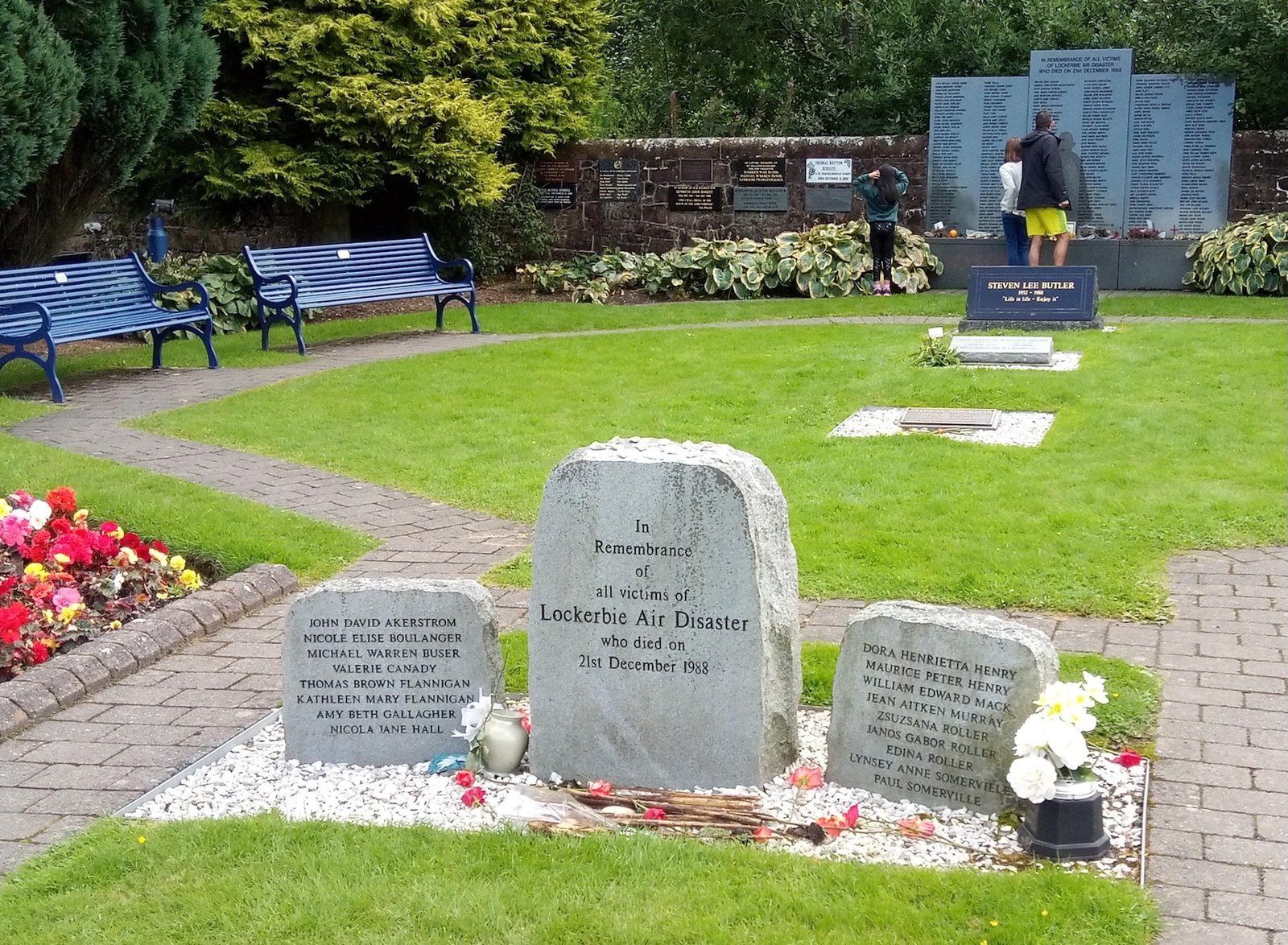
We walked through the gate without speaking; the crunch of gravel under our boots was the only sound. The memorial sits quietly in a garden setting. There was a particular stillness, and the handful of other visitors were silent. The grass was bright green, the sky a clear blue and the flowers in full bloom. The colour juxtaposed the mood of the memorial.
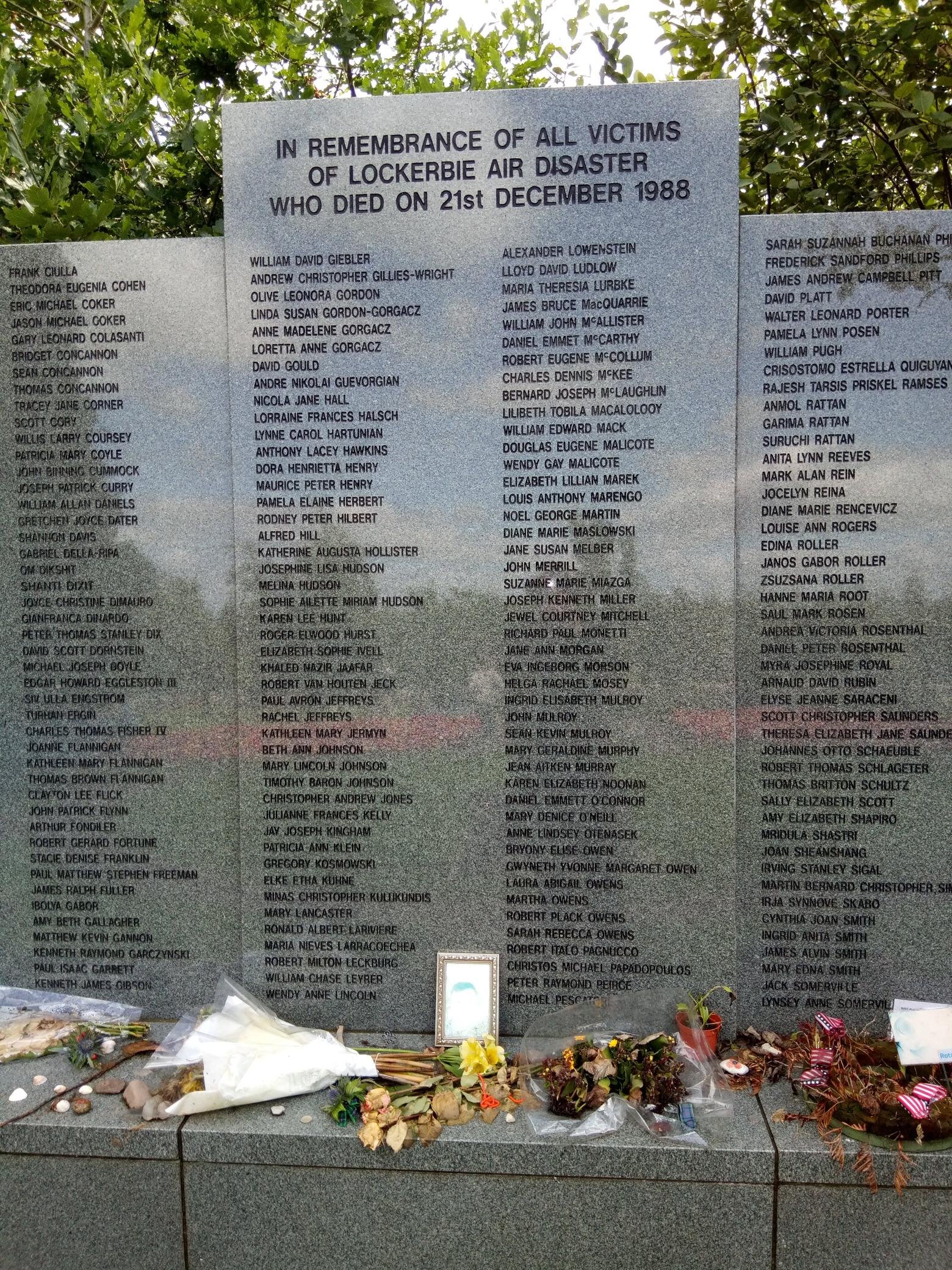
The most powerful image was the tall wall with the names of those lost on the plane carved with the precision and care they deserved. There were six long columns, 259 names – passengers and crew. Bench seats nearby invited me to sit, think of the tragedy that befell these people and not let the memory fade.
A terrorist attack upon a civilian target is the most abhorrent form of military activity. This was the deadliest terrorist attack in the history of the United Kingdom.
Before I got to the tall wall, there were other markers. The names of the 11 locals from Lockerbie killed when the aircraft remnants landed upon their small town.
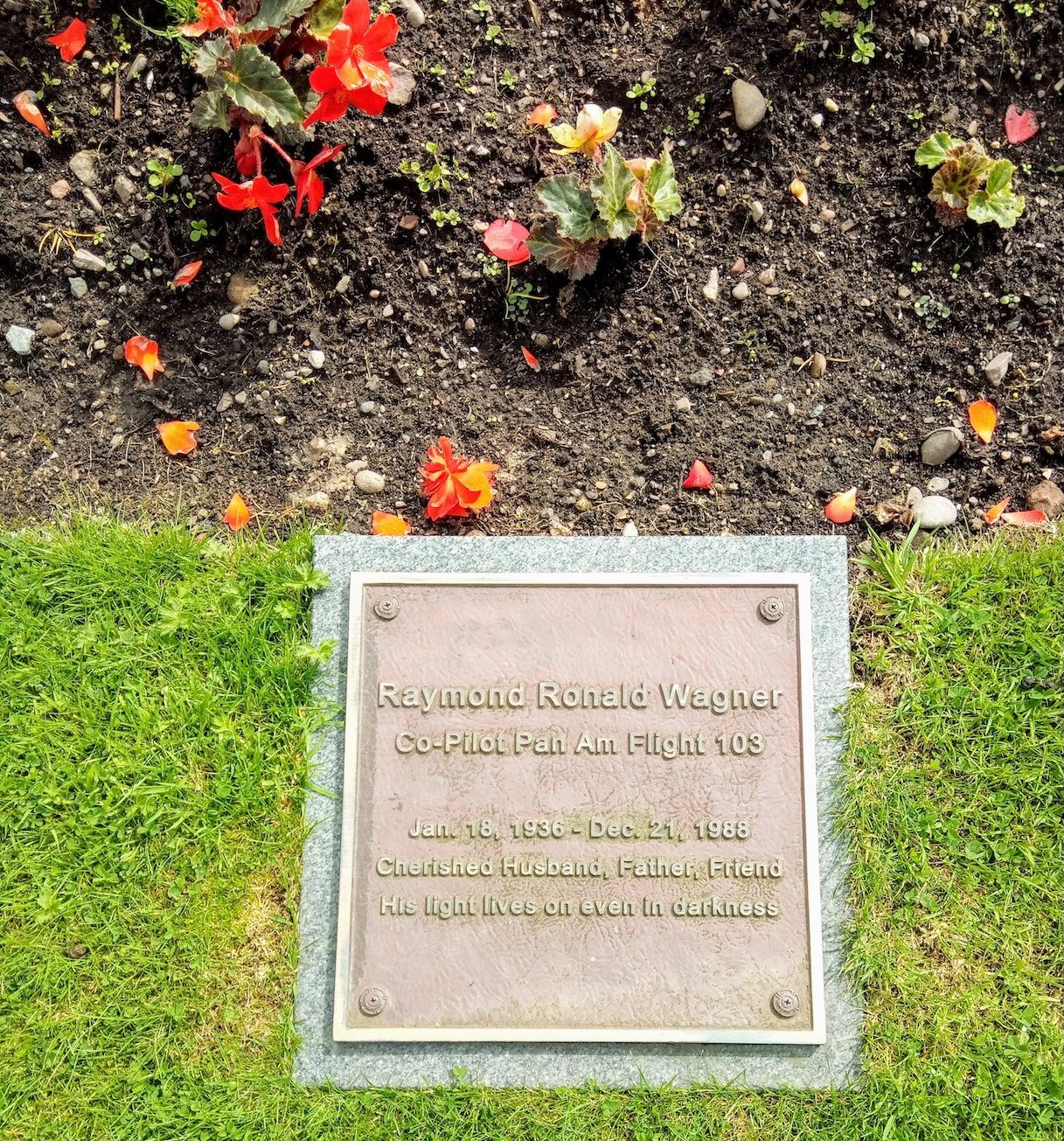
We wandered separately at first. Muz drifted toward the far end of the garden, Deb moved slowly along the tall wall, reading names as though she were meeting each person. I found myself drawn from the bench to various other markers – including for the co-pilot of Pan Am Flight 103, Raymond Ronald Wagner. I doubted that he was buried here, but his family wanted to record his name here on an individual plaque. There were markers in other places for some passengers whose families chose to bury them here, in the place where their lives ended so abruptly.
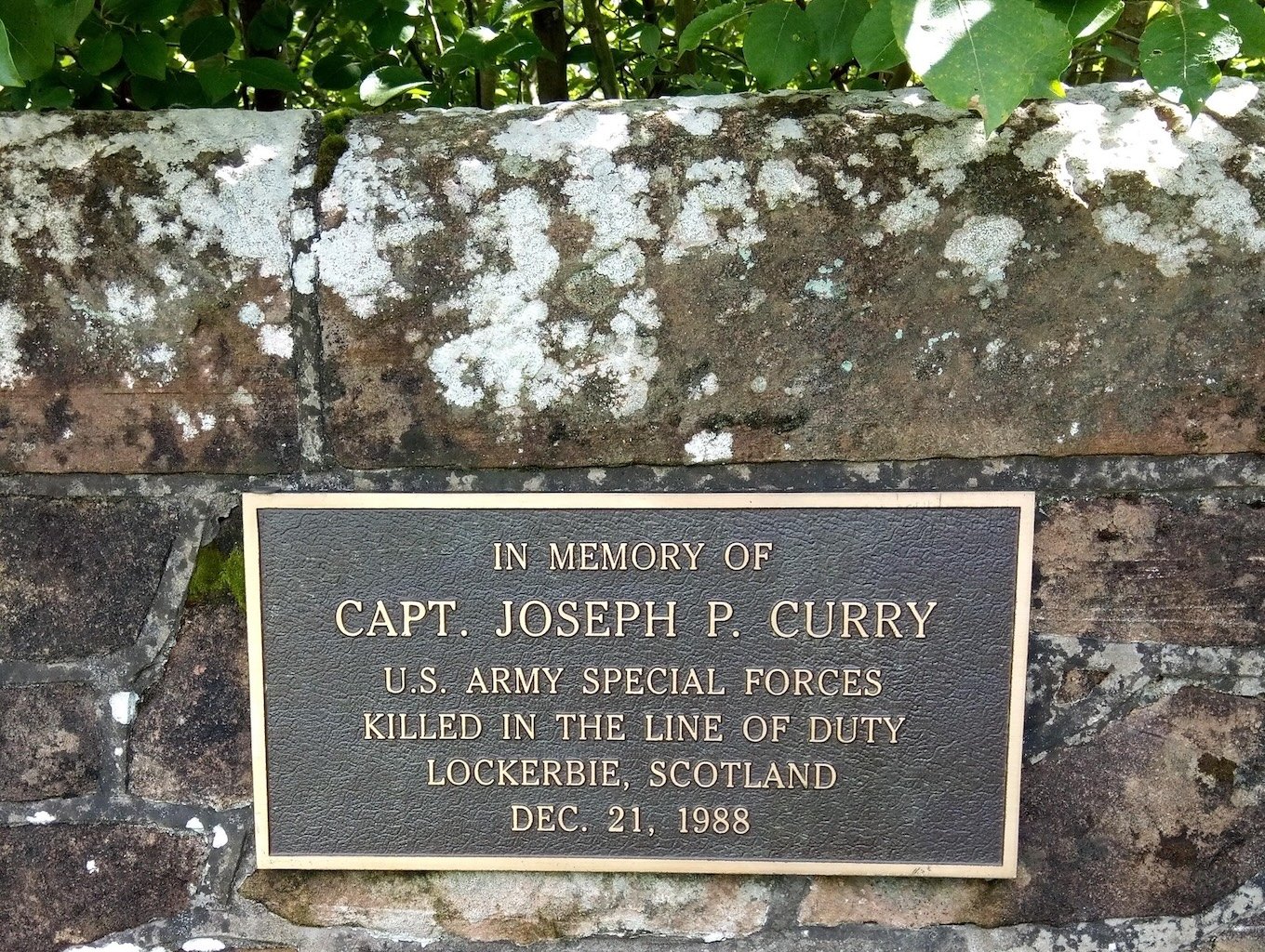
There’s something about seeing a name and a date. This is where and when their life ended. A child. A parent. A student. A musician. I stood in front of one stone longer than the others. Captain Joseph P. Curry of the United States Army Special Forces. I had once been a Captain in the Army. I knew that a career of promise had been cut short.
Deb eventually came to stand beside me. She didn’t say anything. Muz joined us a moment later. We stood there, the three of us, a small cluster of living people trying to comprehend the scale of loss that had unfolded in this quiet town three decades earlier.
It was impossible not to feel the weight of it all, but also impossible not to feel the quiet strength that had grown here in the aftermath.
It was only a short stop. As we drove away, Lockerbie quickly slipped behind us. Some stops on a journey stay with you long after the road has moved on. Lockerbie left a big impression.
The 1988 Lockerbie Tragedy
On December 21, 1988, the quiet Scottish town of Lockerbie became the site of the deadliest act of terrorism in British history. Pan Am Flight 103, a Boeing 747 named Clipper Maid of the Seas, was traveling from London Heathrow to New York City when a bomb was detonated in its forward cargo hold while cruising at 31,000 feet.
The explosion shattered the aircraft, raining debris over 845 square miles of the Scottish Borders. The tragedy claimed the lives of all 259 people on board, representing 21 different nations—including 35 students from Syracuse University returning home for Christmas. The impact was equally devastating on the ground; the fuselage hit the residential area of Sherwood Crescent at over 500 mph, creating a massive crater and killing 11 Lockerbie residents.
The subsequent investigation lasted years, eventually leading to the 2001 conviction of Libyan intelligence officer Abdelbaset al-Megrahi. Today, Lockerbie is defined by its dignified remembrance, centered at the Garden of Remembrance in Dryfesdale Cemetery, where the names of the 270 victims are etched in stone, forever linking a small Scottish community to a global moment of mourning.
To learn more, follow this link to the website of the visitor’s centre.
Allan’s article on his visit to The Bogside in Derry, Northern Ireland, is another sobering reminder of the consequences of long-term conflict.

I am a former Army officer and logistics specialist. In retirement I write articles and books ranging across military and naval history, biography and anthropology, which I publish through various association newsletters and websites and on Amazon. I live in Sydney.
Thanks Al, so beautifully wordsmithed that I felt I was there with you guys and I don’t need to actually visit it myself. But I will if the opportunity presents as I love Scotland and, as you’ve mentioned, cemeteries.