
This is part of our Slow Travel in South East Asia series.
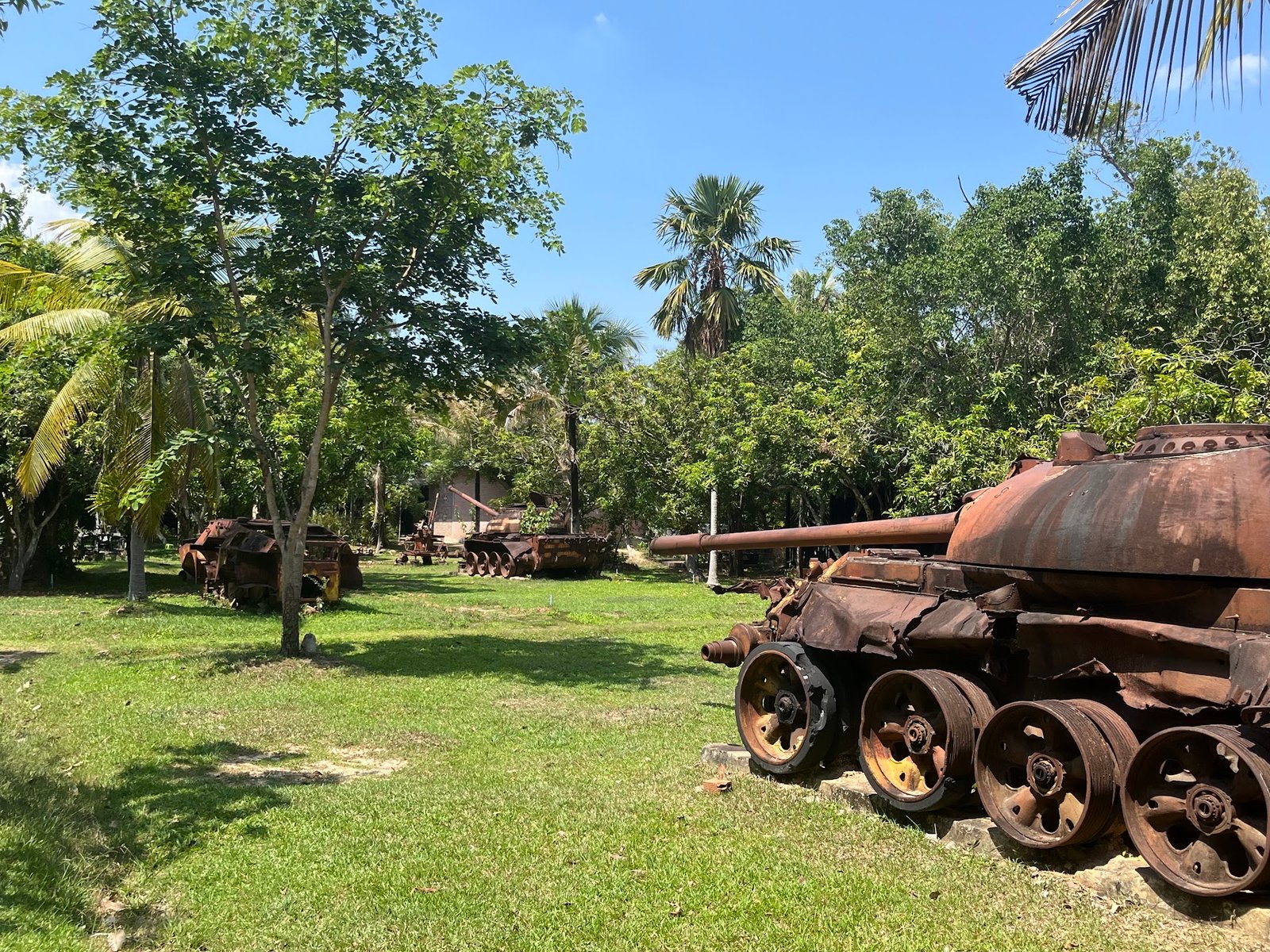
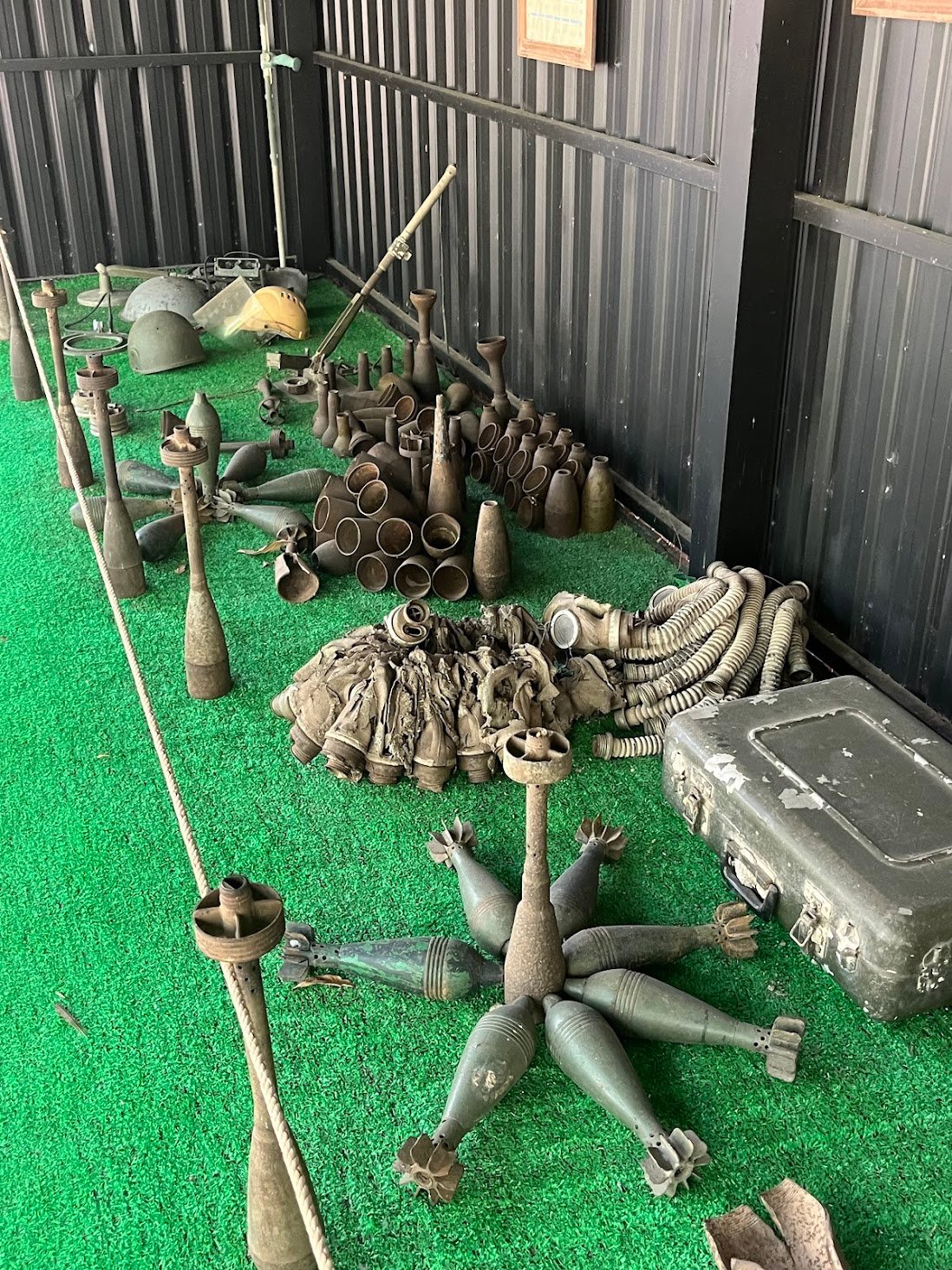
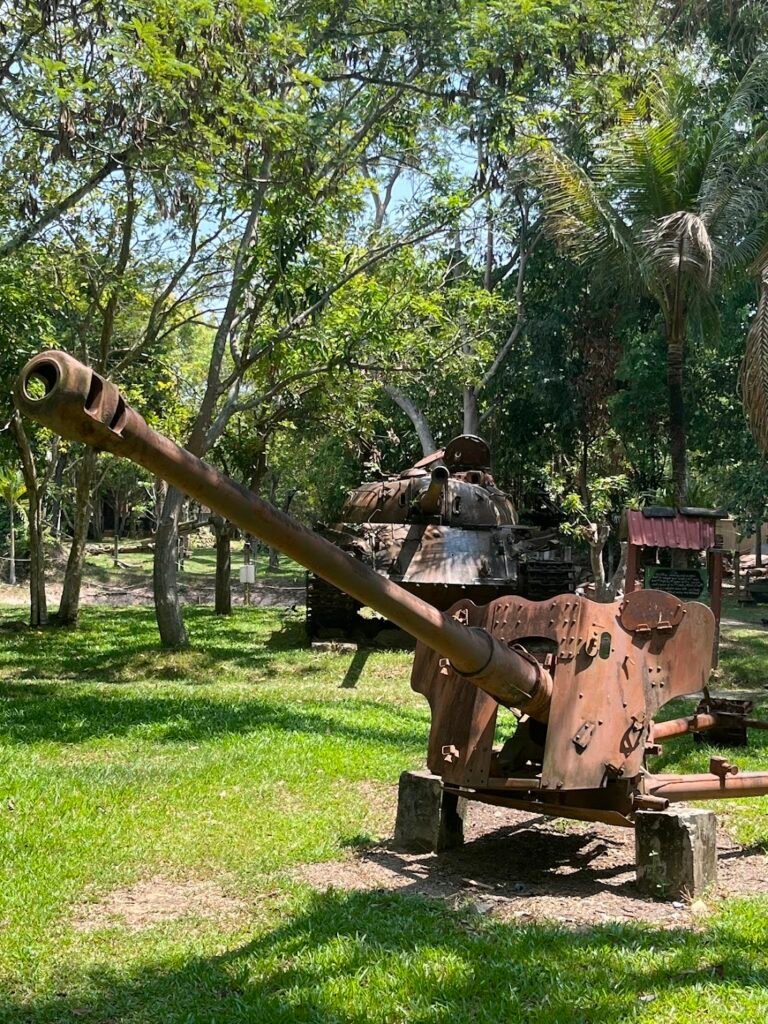
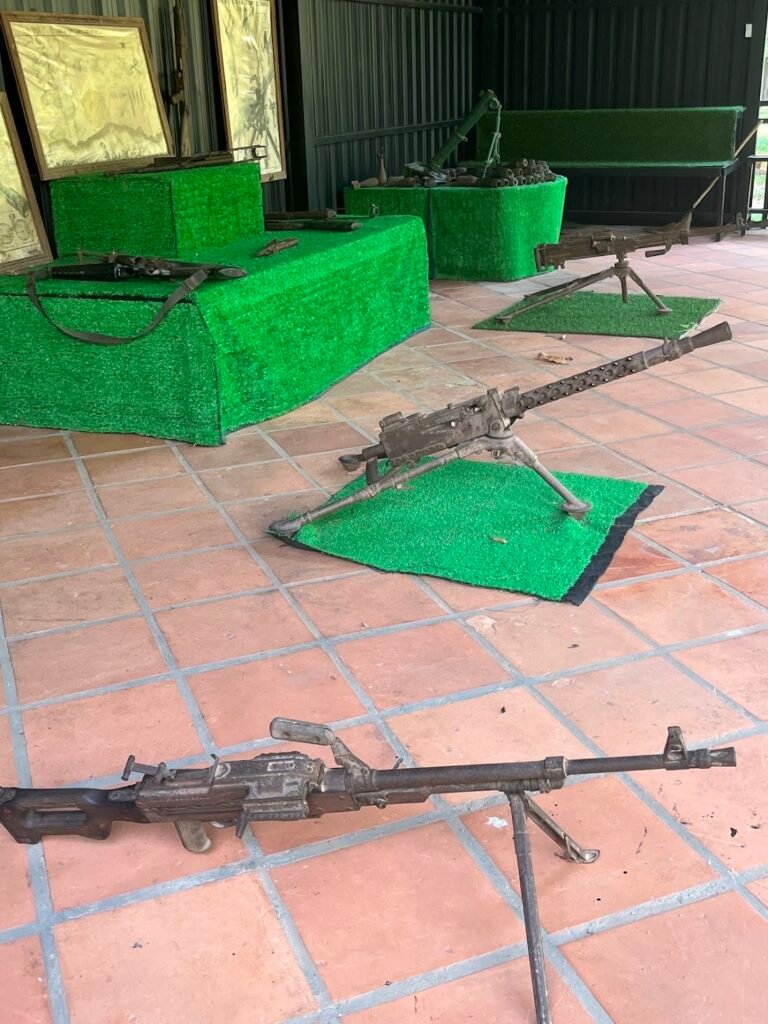
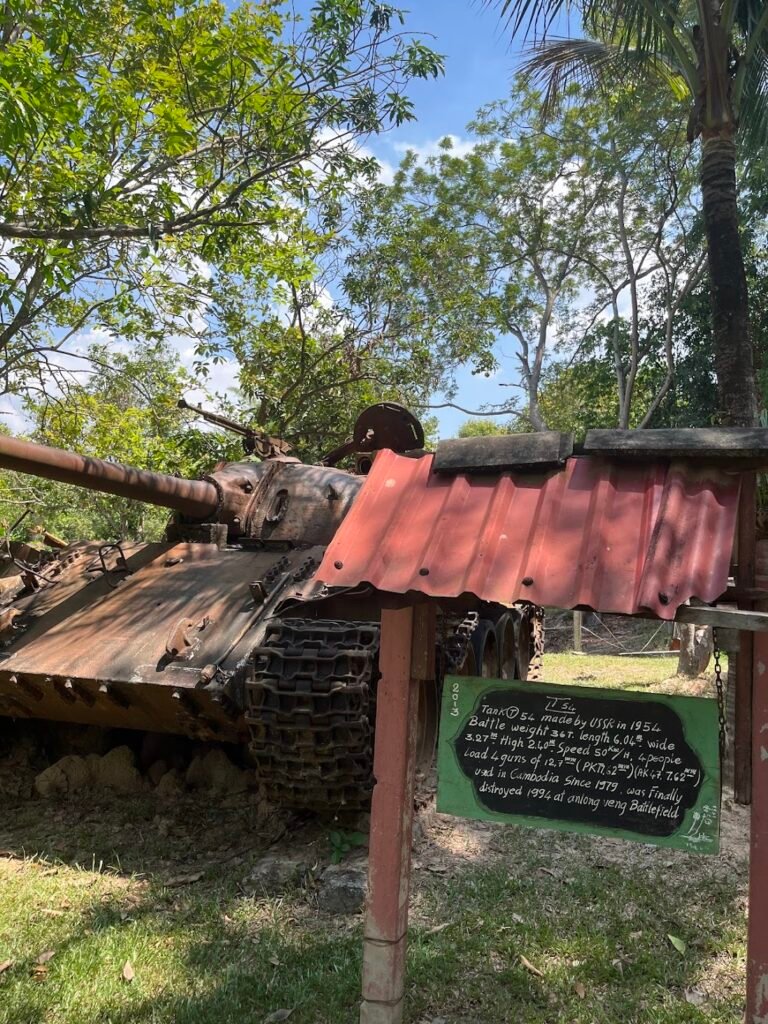
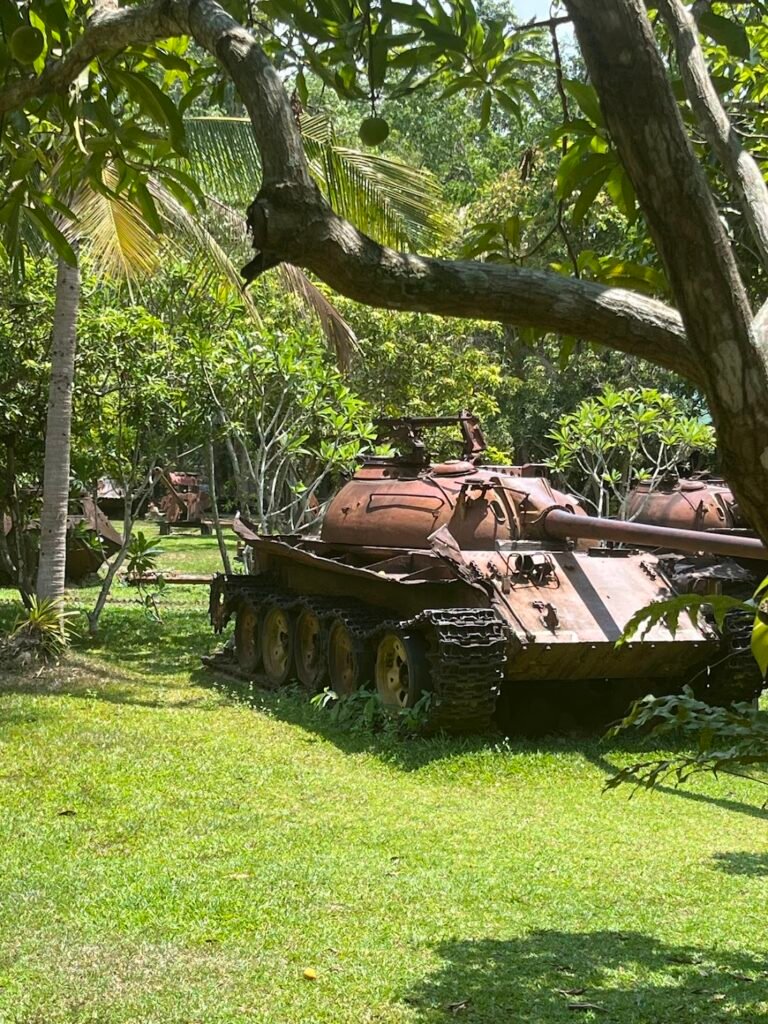
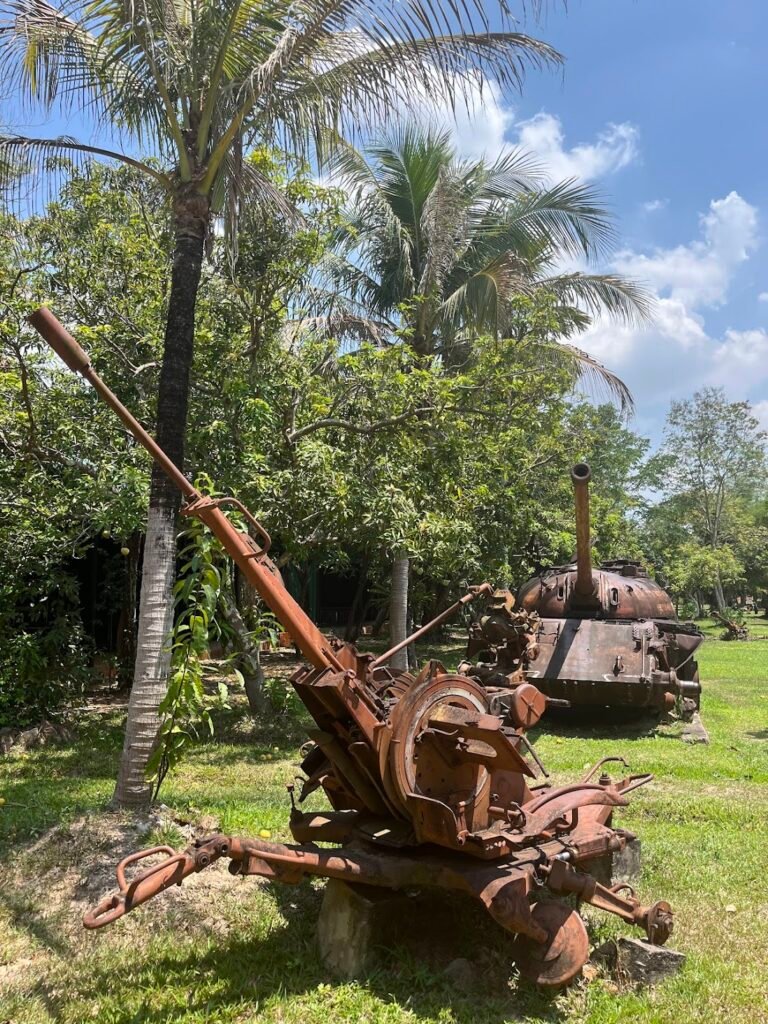
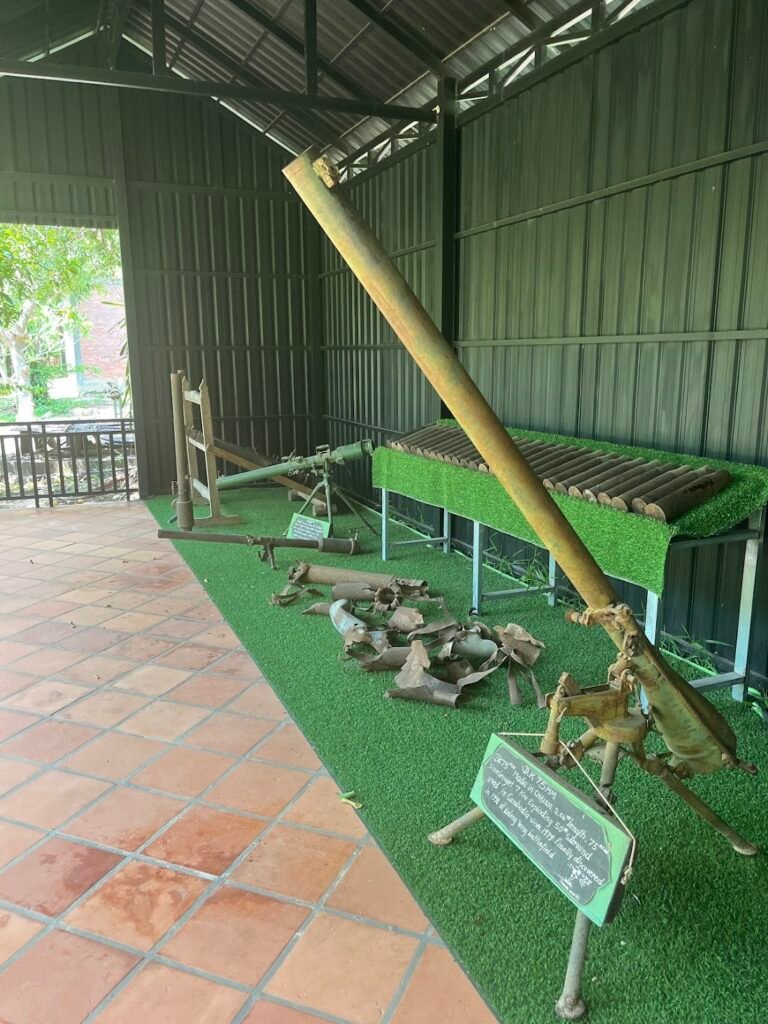
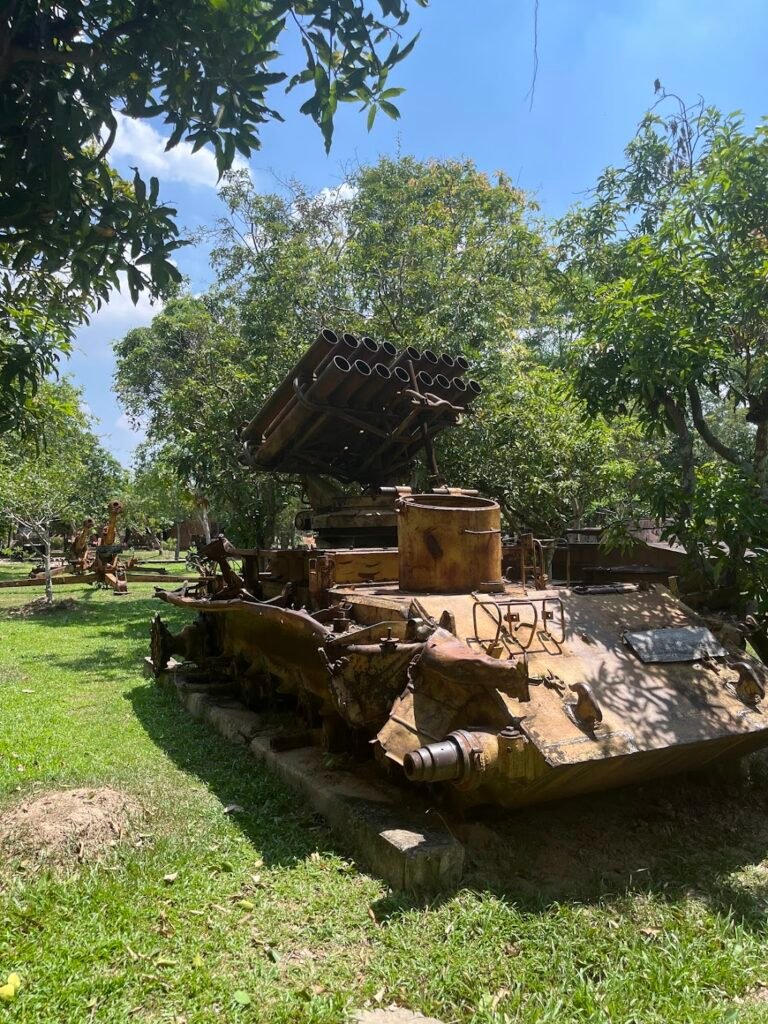
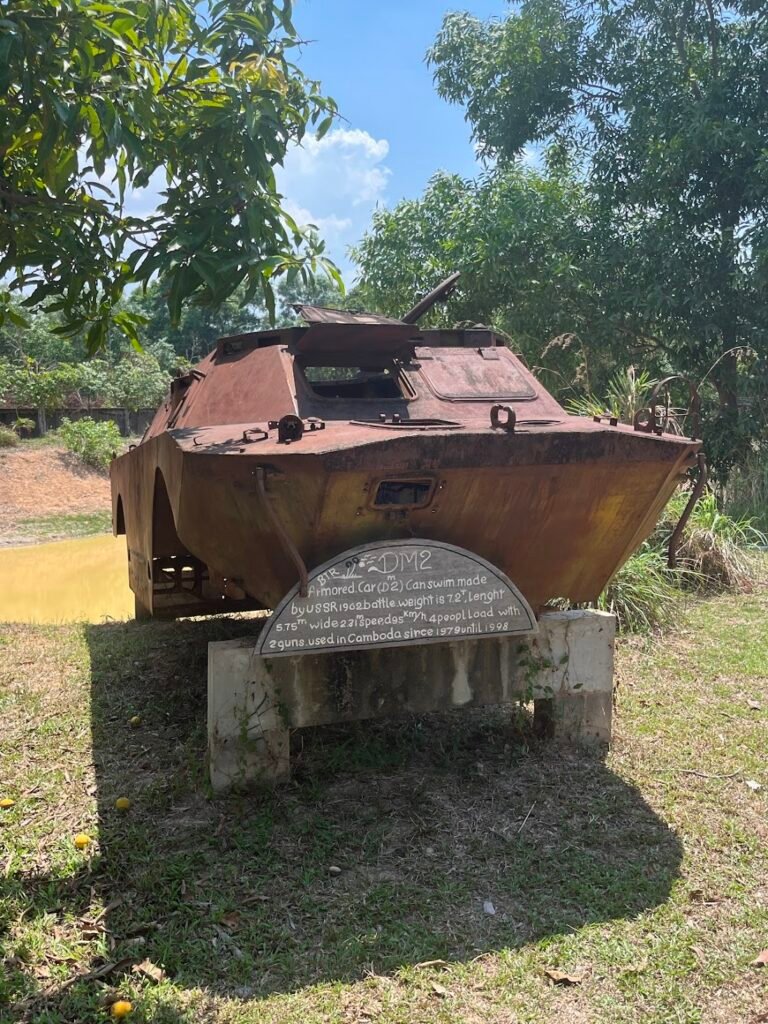
To call this place a museum is a misnomer. About 10 minutes by tuk-tuk outside Siem Reap is a couple of acres inhabited by the rusting hulks of tanks, armoured cars, artillery pieces and other hardware collected from the battlefields of the Cambodian civil war. And there is a MIG fighter and a large Soviet-made helicopter.
Most people have an inkling of Cambodian history, in particular the horrors of the Khmer Rouge period in the 1970s. But what gets forgotten is that the war dragged on as an insurgency for another 20 years, ending with Pol Pot’s death in early 1998 and the first (mostly) democratic elections at the end of that year. This period was characterised by deprivation, local atrocities and landmines, mostly around the Khmer Rouge’s last strongholds along the Thai border.
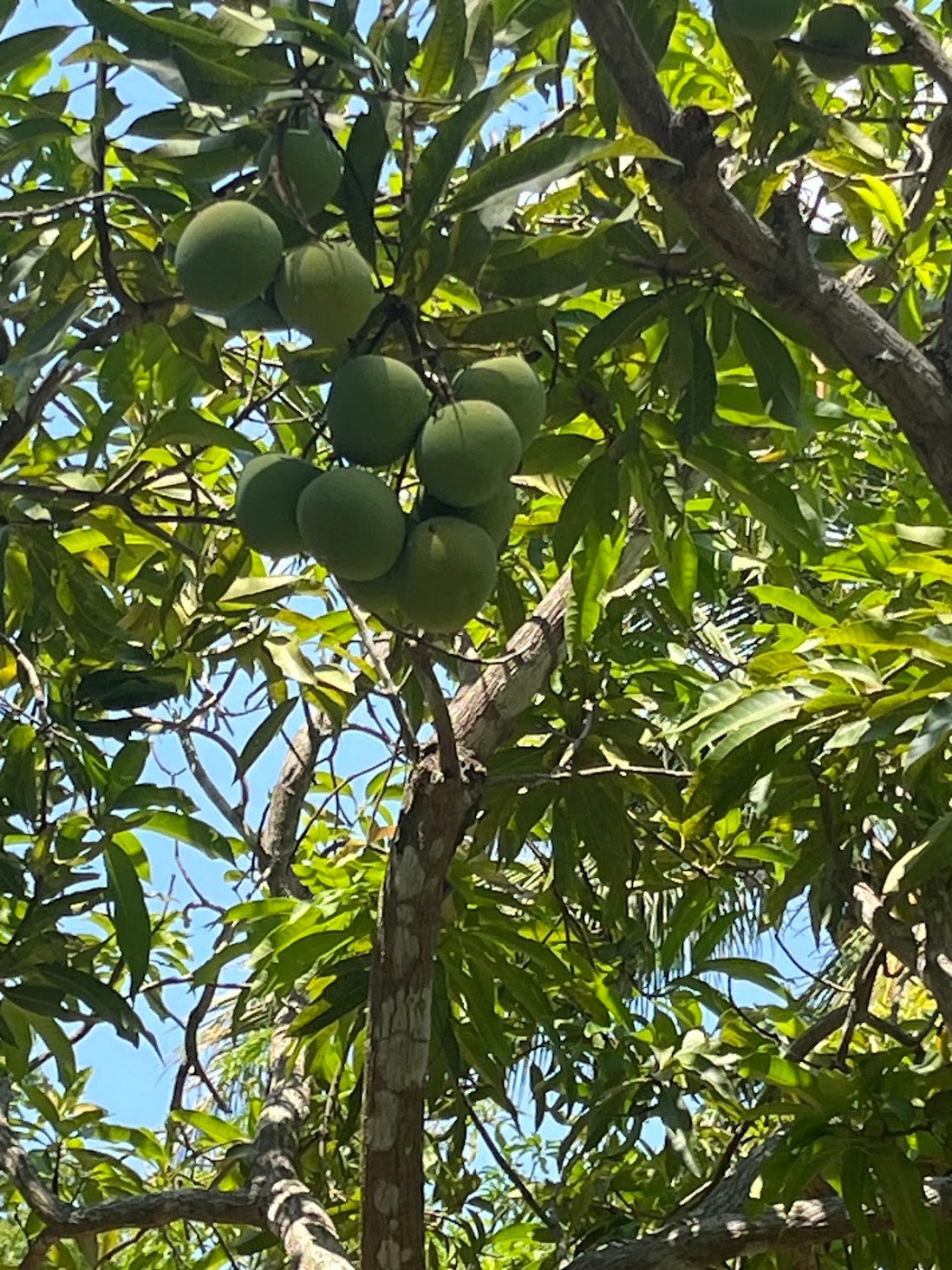
I spent around 45 minutes wandering around the grounds, which would be plenty for most people. It is all Chinese and Soviet kit – the main beneficiaries of the conflict. Some pieces have simple painted signs; some are left to guesswork. It costs $US5 to get in – you hand your cash to a sleepy lady at the entrance. There were only two other visitors, both Westerners, while I was there. There are mango trees throughout and I helped myself to a juicy snack picked up off the ground.
The place is worth an hour of your time if you are interested. It doesn’t look like the locals care very much, and zero effort goes into preservation and upkeep. Over time the hulks will rust more, as the memories of conflict fade and the country moves on.
If you want a bit more detail, here is the Wikipedia page.
For another insight into Cambodia and its legacy of conflict, have a read of our article on the ageing couple who survived the Khmer Rouge and have raised a family on a cashew farm.

Steve is a former Army officer and technology manager, now semi-retired and living in Melbourne. He enjoys adventurous travel and believes that good stories should be shared. He founded the Dusty Boots Journal as a means to connect those with similar interests.
[…] you enjoyed this read about Cambodia, you might also like our articles about the Siem Reap war museum, peanut farming, cashew farming and Kampot pepper. These articles all touch on the modern history of […]