
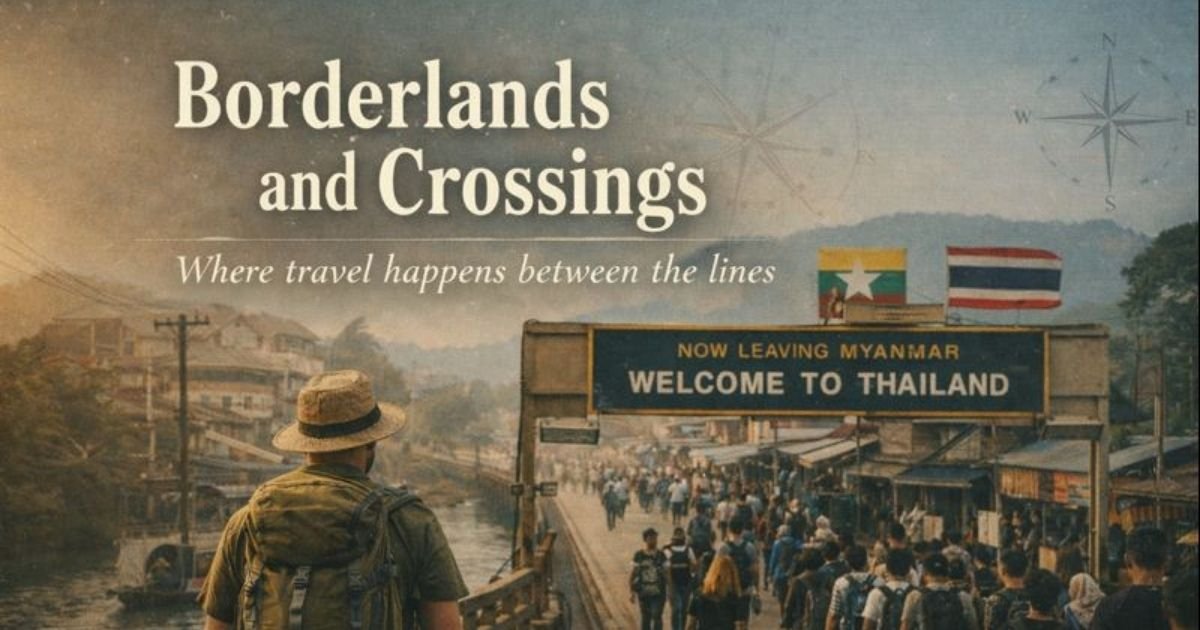
Some places exist in the margins.
They sit near borders, along old rail lines, beside rivers that once divided empires or still do. These are towns shaped by crossing and waiting, by trade and tension, by memory and routine. You don’t pass through them quickly. You notice them slowly.
This collection of stories explores borderlands and the places where cultures meet. Not as geopolitical flashpoints, but as lived environments. Places where daily life continues under the shadow of history, where cultures overlap without fully blending, and where travel feels less like arrival and more like observation.
This is where Dusty Boots Journal feels most at home.
What we mean by Borderlands
Borderlands are not just lines on a map. They are places where identities overlap, languages soften into each other, economies adapt to circumstance, and history is present but not necessarily displayed in a museum.
These places reward patience. They resist neat conclusions.
Travel here is rarely about highlights. It is about noticing.
Featured Borderlands stories
Mae Sai, Thailand
Thailand’s northern edge, where trade, migration, and routine life meet the border.
Mae Sai feels temporary and permanent at the same time. A town built around movement, paperwork, markets, and waiting. This story explores what daily life looks like when a border is both obstacle and opportunity.
Sangkhla Buri, Thailand
Waterlogged temples, displaced towns, and a bridge that still connects.
- Sangkhla Buri and the Mon Bridge: Three Bridges, One Town
- The Three Pagodas Pass and Sangkhla Buri’s Underwater Past
Sangkhla Buri is shaped by borders, dams, and memory. These stories look at a place that was partially erased and rebuilt, where cultures persist even as landscapes change.
Yangon, Myanmar
A circular train line that reveals the city beyond headlines.
The Circle Line doesn’t cross borders, but it reveals one. Between the global narrative of Myanmar and the everyday rhythm of its people.
Cambodia’s Village Economies
Agriculture, economics, and lives shaped by history.
These villages are shaped as much by past conflict as by soil and seasons. The stories focus on work, resilience, and quiet continuity rather than trauma tourism.
Bangladesh
Childhood, memory, and rural life near the edges of global attention.
This is a personal account of growing up and returning, where borders are less visible but just as influential.
Why Borderlands matter to travel writing
Borderlands resist simplification. They are not easily ranked, marketed, or summarised. That makes them unfashionable in mainstream travel content and essential in good travel writing.
They remind us that most people live between categories, history doesn’t end cleanly and travel is often about listening, not consuming.
These stories are not guides. They are records.
Explore more stories like this
If these places resonate, you may also like:
- Slow travel stories that focus on daily life and local economies
- Walking routes shaped by history rather than scenery
- Remote towns where geography dictates rhythm
You’ll find those woven throughout Dusty Boots Journal.
Want to contribute a Borderlands story?
Have you spent time in a place shaped by borders, crossings, or in-between identities? We would love to hear from you.