
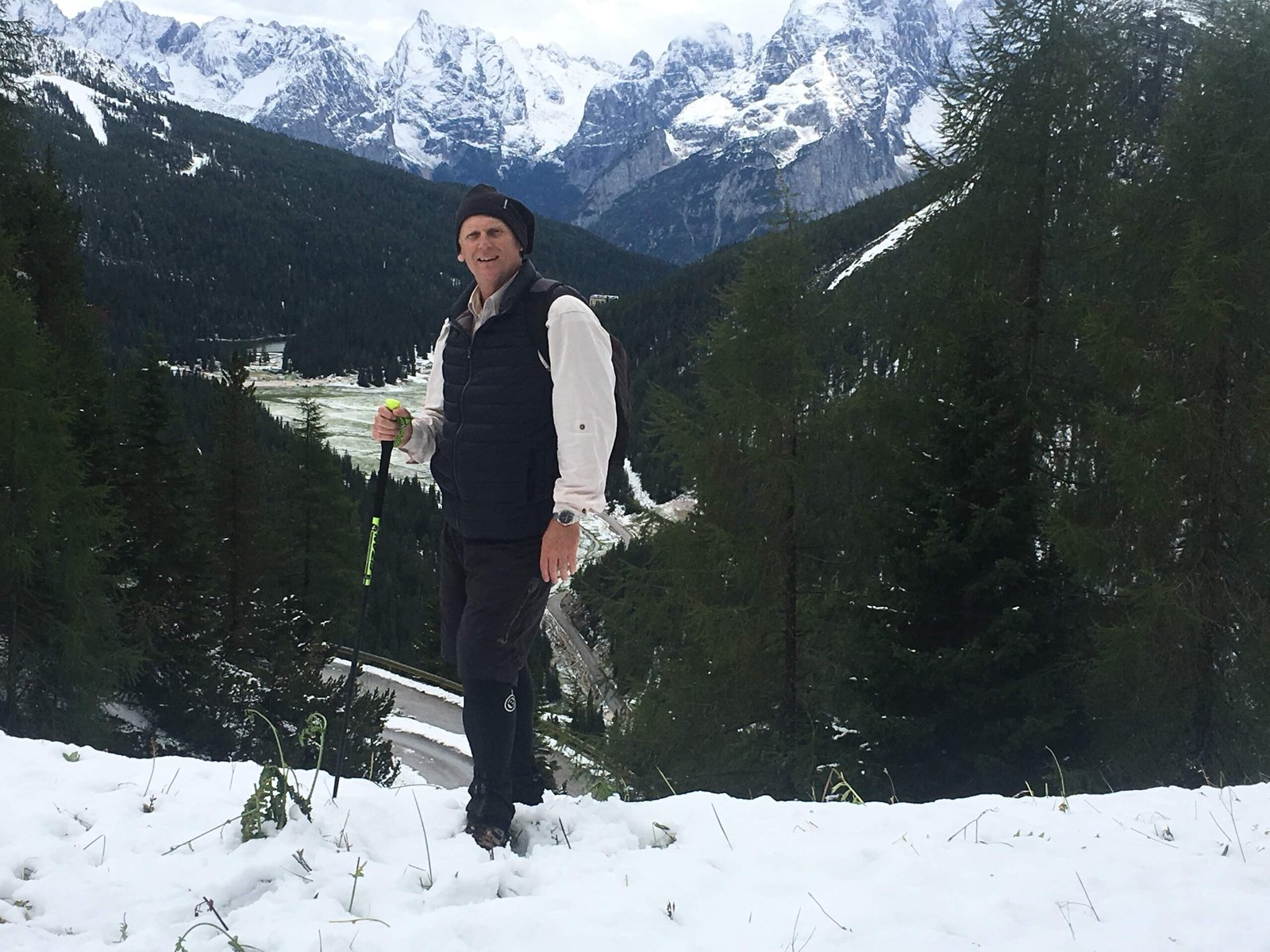
Serendipitous, that is the best word for it!
This is a short story exemplifying how nature can unhinge a thoroughly planned and organised tourist circuit trek, lead you down a completely unplanned path and you are absolutely delighted with what you find.
I believe it is the raison d’etre for the Dusty Boots Journal to share such stories. Mine unfolded like this.
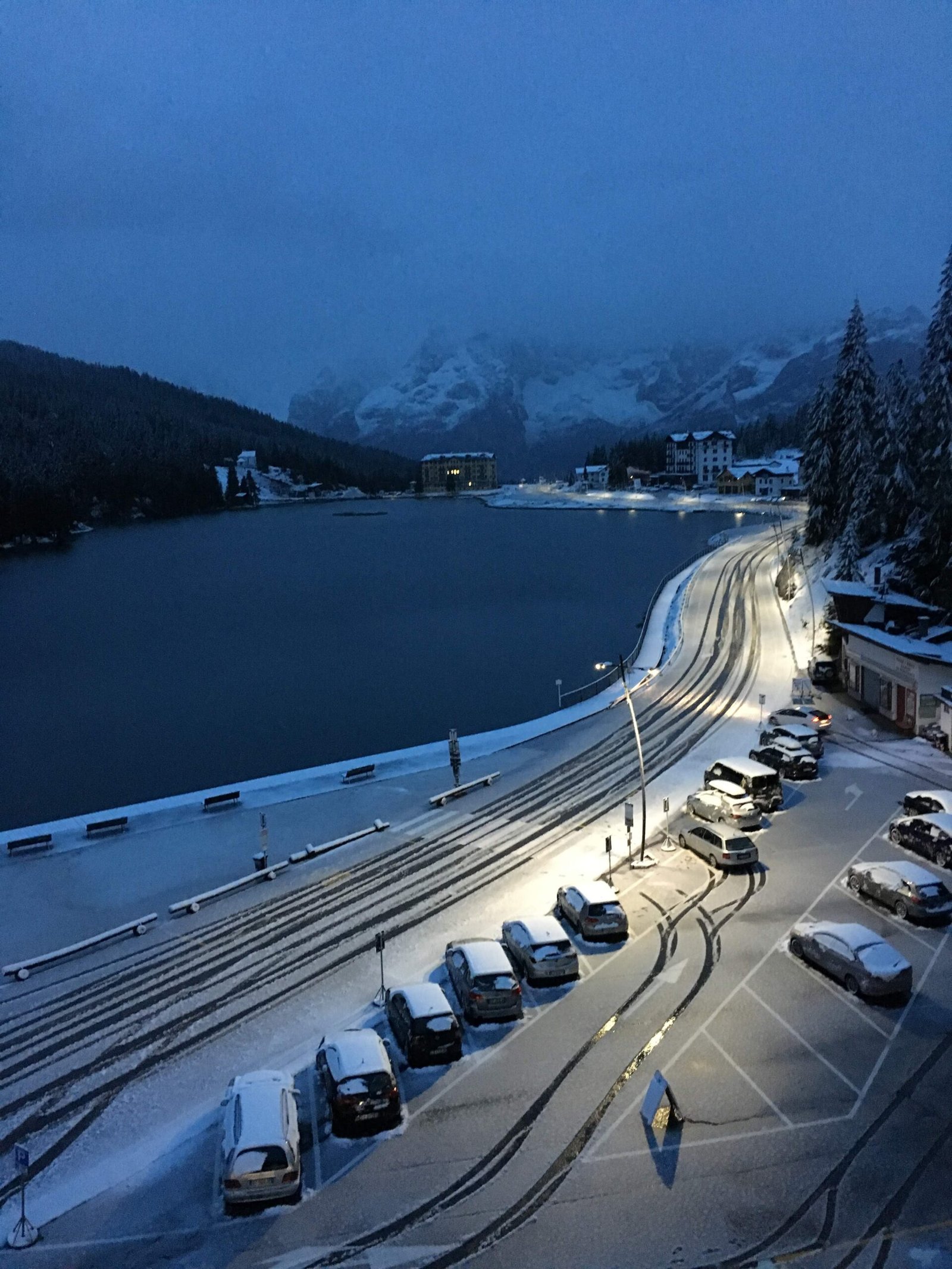
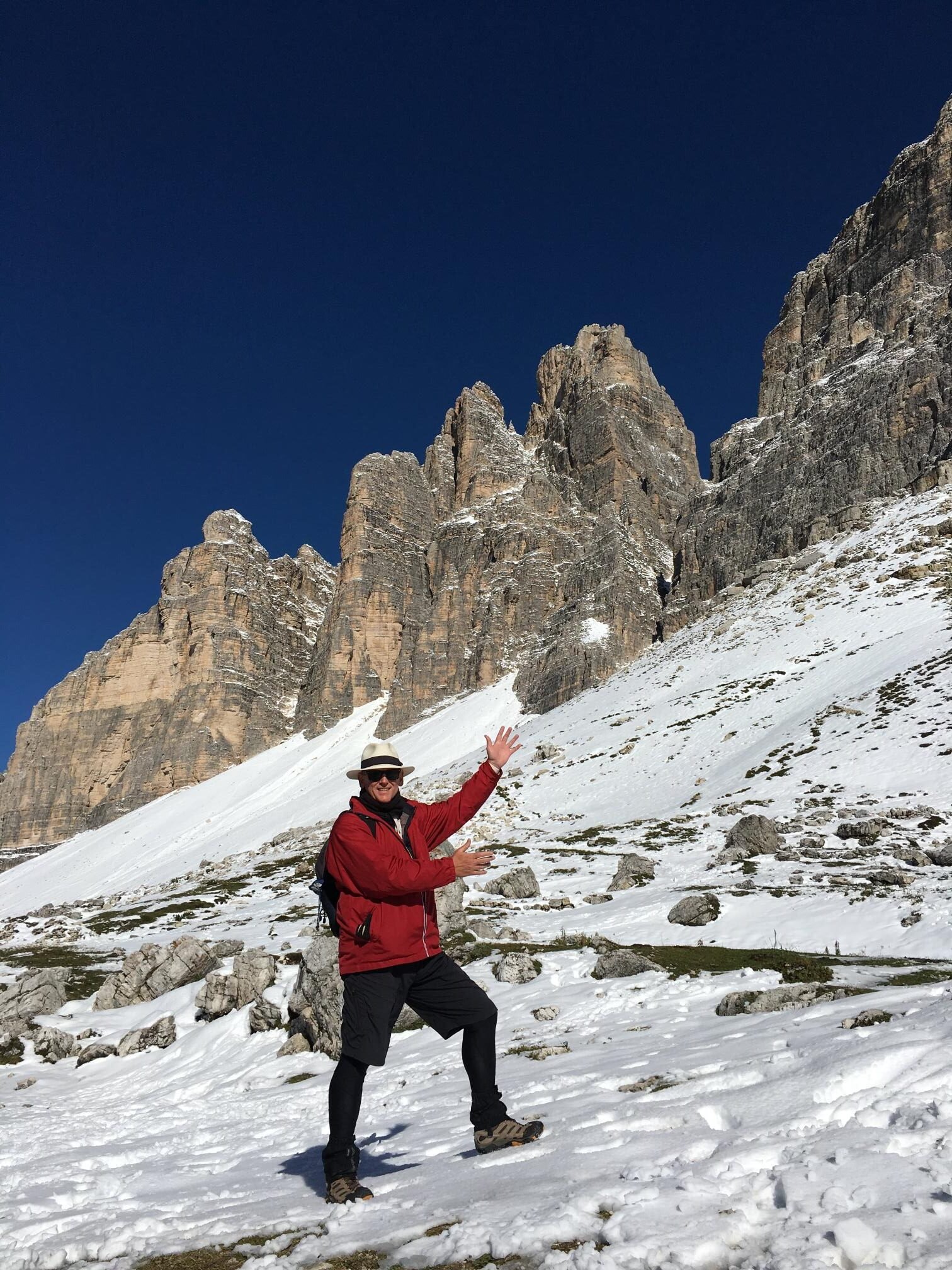
Several days into trekking around Monte Cristallo in the Dolomites, Italy in the warmth of August, my group of mates and associates reached the lakeside tourist town of Misurina. The next day was to be a highlight, a one-day trek around the base of the imposing Tre Cime di Lavaredo. Nature intervened and unexpectedly, that night it snowed. We were pleasantly surprised – the snow uplifted the scenic beauty immeasurably without overly affecting the temperature. But also disappointed as the road to Tre Cime was closed. We had to spend the day in Misurina.
This story is part of our Walking, Hiking and Meaningful Routes series. Read more here.
There is only so much of a day you can murder with screen time and hot beverages. A mate and I got very toey. We concluded … “We can’t drive, but we can walk!” I pulled out a map and found a nearby mountain to climb – Monte Piana.
Totally unplanned, we set off with day packs containing the usual stuff – water, food and a layer or two of clothes. No one else wanted to come, so the two of us trekked six kilometres along the sealed valley roads to the base of the mountain and then began to climb the ever-bending service road cutting through the steep escarpment face to the top, about 500 metres further up. The views were tremendous.
Monte Piana has a flat surface at the top, not a peak. This surface is about 1,200 metres from north to south and 500 metres from east to west. There is a smallish summit at the very north called Monte Piano. As the service road finished and the flat surface appeared, there was a small refugio and we were drawn in seeking a hot beverage. We now get to the unexpected find.
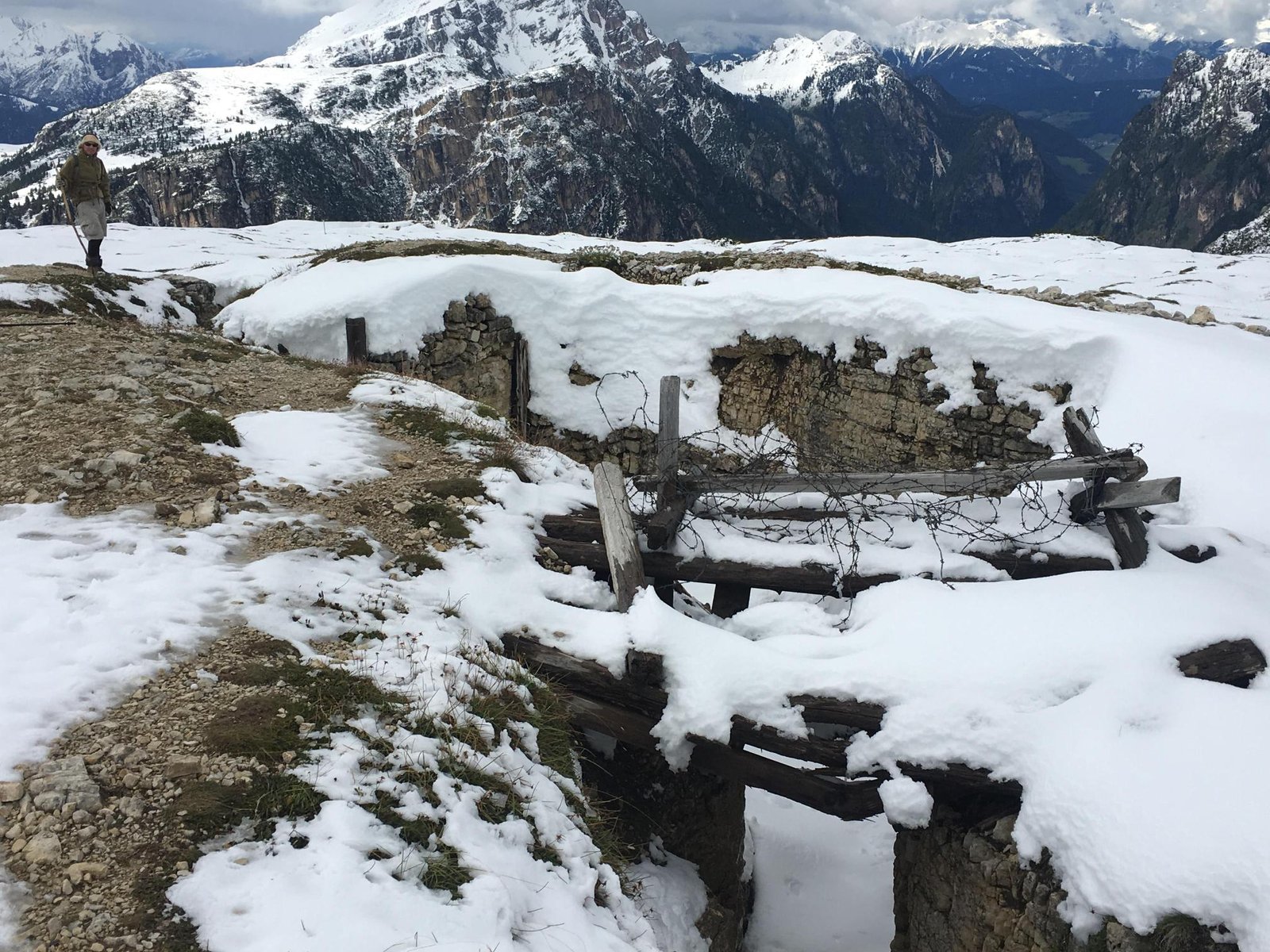
The refugio had a doorway off the café lounge into a smallish back room. As we sipped our drinks and explored this room, we found it was a museum telling the story of a World War I battle fought between the Italians and the Austrians over the course of 1915-17. Seeking to control the strategically important small flat surface on top of Monte Piana cost the lives of 14,000 men and led to a stalemate – the Italians holding the south, the Austrians dug in at the north around the small peak. Conditions in the heavy snow of winter would have been intolerable. But I guess that is a universal truth for World War I.
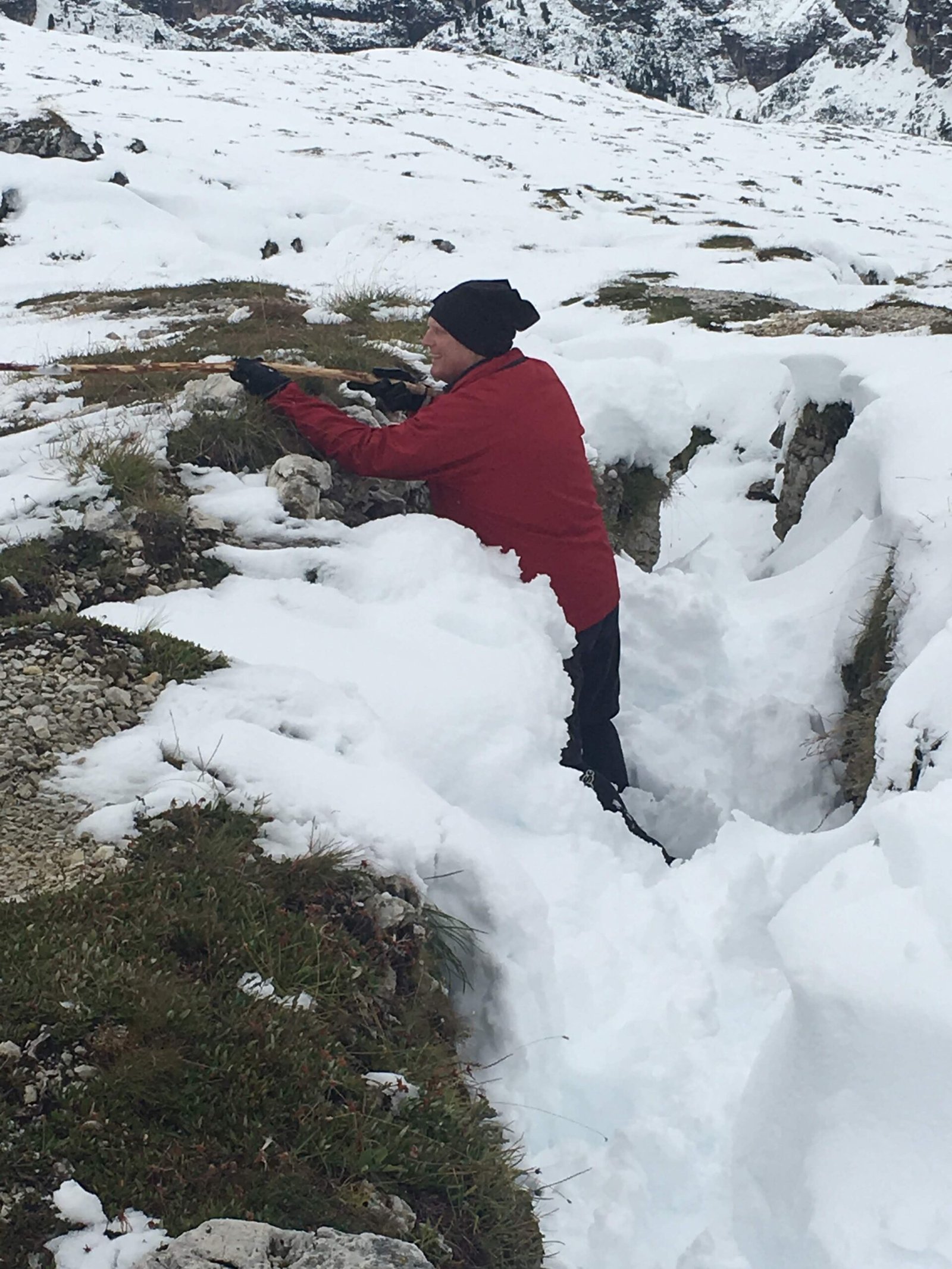
The museum was interesting, but the unexpected got better. After the war the trenches dug into the rock of the flat surface were preserved and in 1981 became the Open-Air Historical Museum of Monte Piana. We had found a very well-preserved World War I battlefield to explore. As an Army Officer, this was a real stroke of fortune. We clutched victory from the jaws of defeat that day. For an hour we explored the site, jumped into the trenches and gained a better understanding of the fighting conditions.
This is how I spent the day of 26 August 2018.
PS. My group did get to Tre Cimi the next morning. How was it? Spectacular!
Visitor Information for Monte Piana (Dolomites, Italy)
This site is significant for its dramatic views and as an open-air WWI museum.
Historical Note: The entire plateau is a protected memorial. Stick to marked trails, and be respectful of the historical remains.
Location: Above Lake Misurina, near the town of Cortina d’Ampezzo, in the Sexten Dolomites, Veneto, Italy.
Access Options:
- Public Transport: A shuttle bus service (often a 4×4 Jeep service, run seasonally) starting near Lake Misurina. Check locally for current pricing and schedules.
- Private Vehicle: Driving is often restricted during peak season; visitors are required to use the shuttle service or hike the access road (CAI Trail 103/122).
- Walking: Follow Allan’s advice and prepare accordingly.
Hours: The area is generally accessible year-round, but the shuttle service runs primarily from June to September.
Time to Allow: Plan for 3 to 4 hours to hike around the summit plateau, visit the fortifications, and explore the trenches.

Allan is a former Army officer and logistics specialist. In retirement he writes articles and books ranging across military and naval history, biography and anthropology. He publishes through various association newsletters and websites and on Amazon. He lives in Sydney.