
Most western countries are still advising citizens not to travel to Myanmar. The country again descended into isolation after the 2021 military coup. This is unfortunate, particularly for the people of Myanmar, who had been given hope for optimism during the period between 2013 and 2021. I had the good fortune to travel to this fascinating country many times on business between 2017 and 2020, and I will go there again when it is safe to do so.
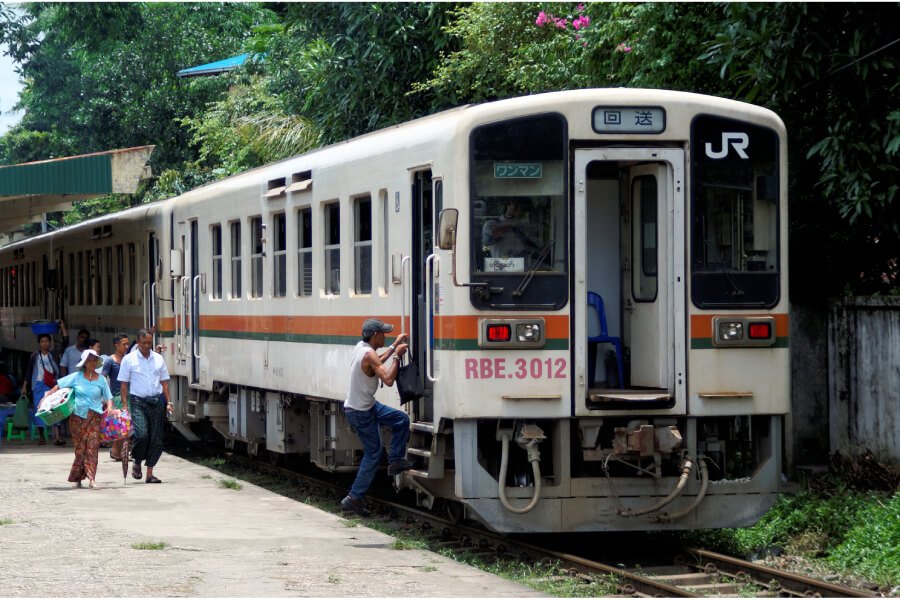
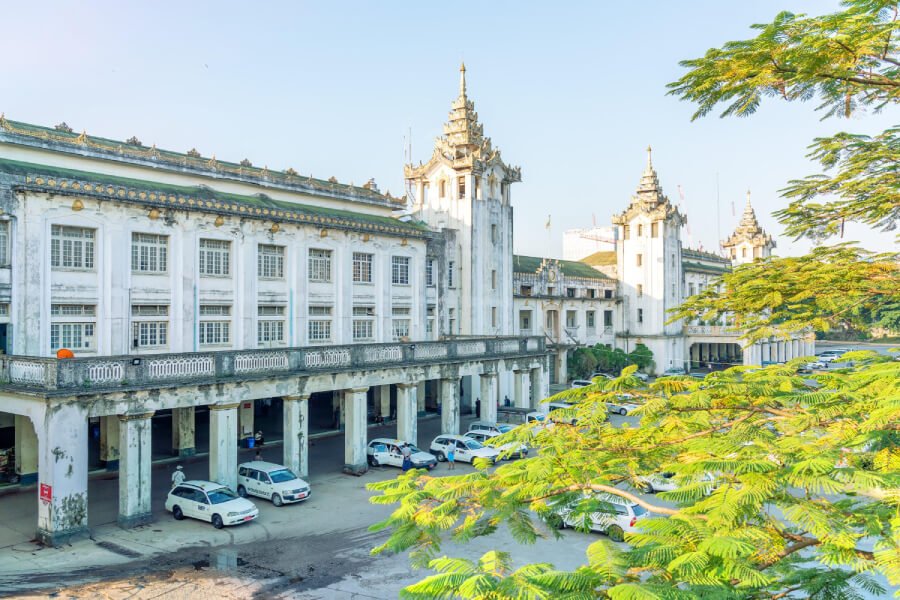
The circle line, or ‘slow train’ is a 46km rail loop that circumnavigates the Yangon metropolitan area, starting and finishing at the fading colonial Central Station and stopping at seven stations along the way. Part of the trip is through outer urban neighbourhoods and part is through agricultural country. I took the trip one Saturday. It cost me around 30c for my ticket. The train receives some tourism publicity, but I did not encounter any other foreigners the day I rode the old diesel-electric for the full trip.
This story is part of our Borderlands & Crossings series. Read more here.
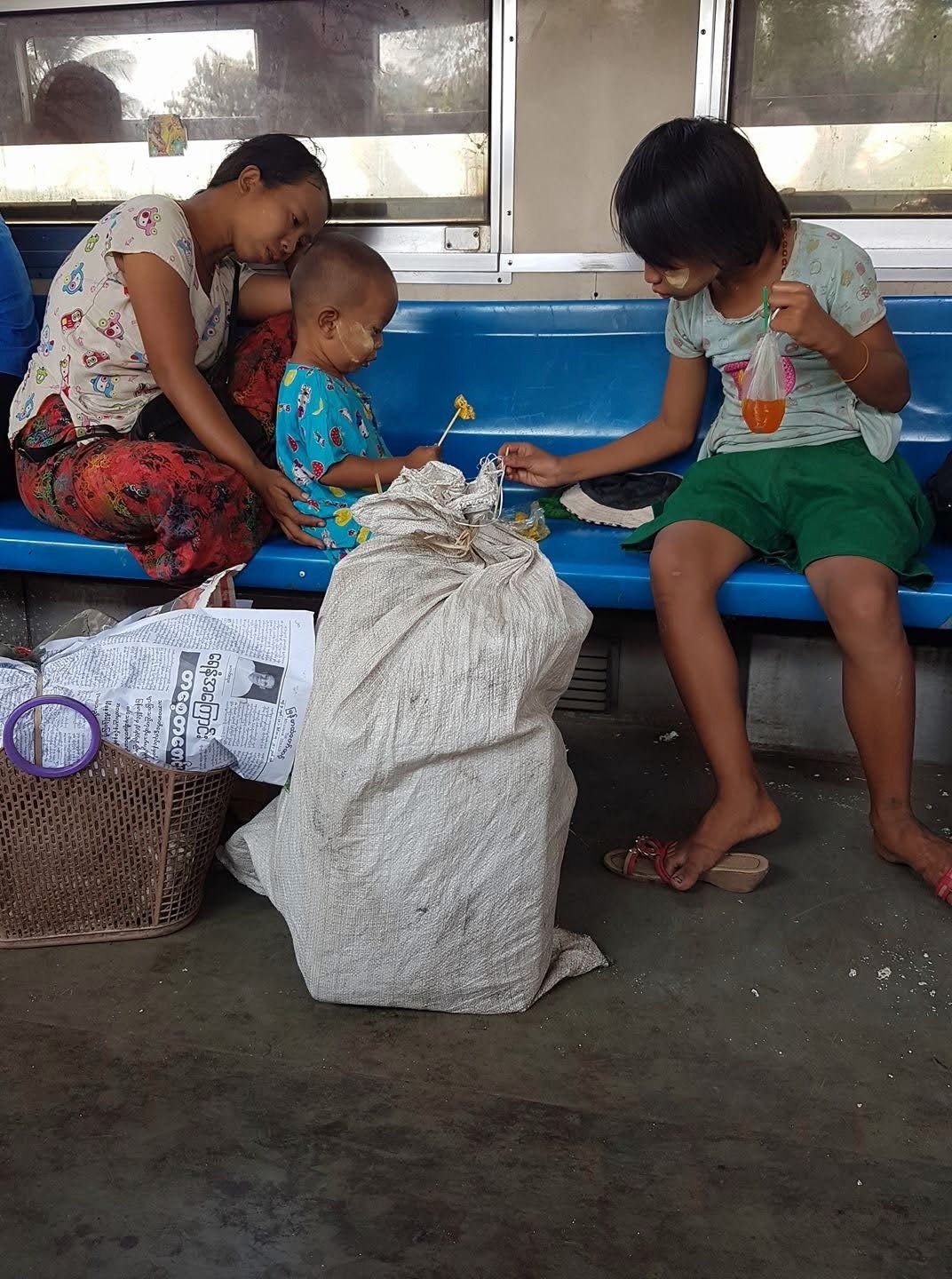
Most of the people on the train were not from the professional class or tourist economy, and the trip gave me a brief snapshot into the lives of the people who live on the edge of the city, but who are not participating in its increasing wealth.
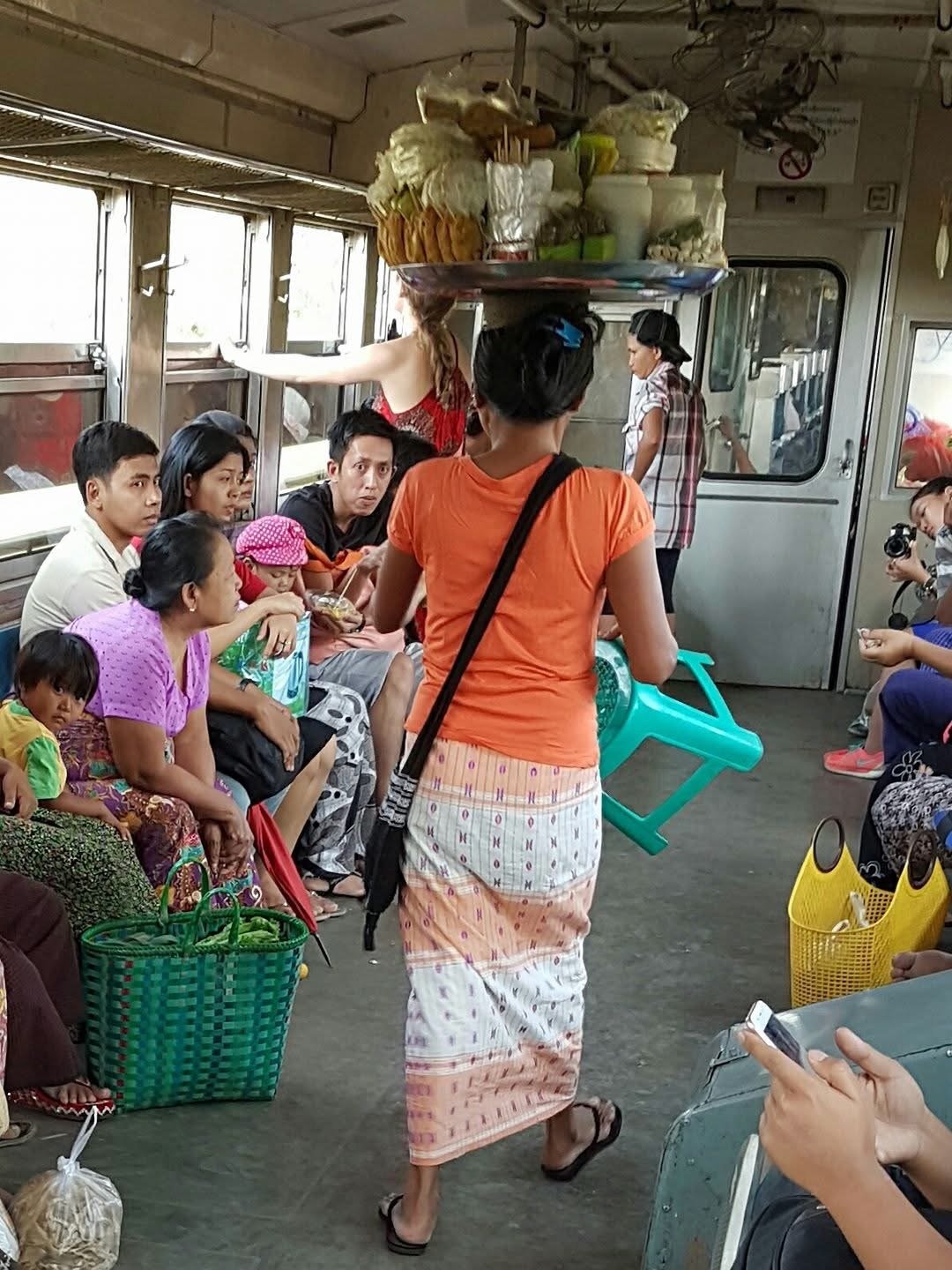
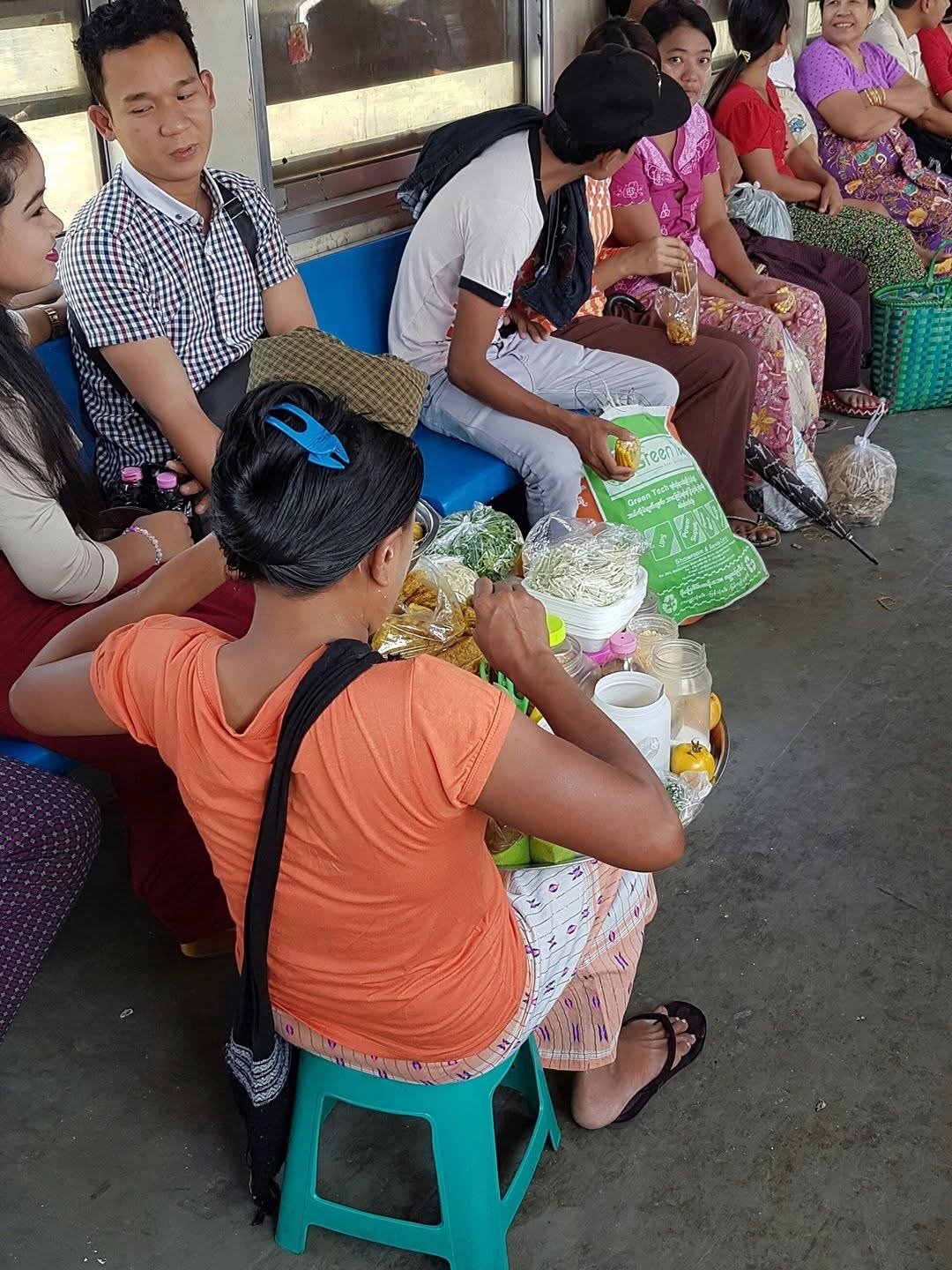
The journey took about four hours. I moved between cars a bit but it was not really necessary, as people were getting on and off at every stop, and the scene was constantly changing. Farmers, families, monks, beggars, tea-sellers and fortune tellers, the old and the young, the studious and the insane, entered the carriage and took a seat on a plastic bench if there was room. Others sat on the floor. Most passed a curious glance and a smile my way.
I wish I had taken more photos but I was aware that people can be self-conscious in a contained environment. For the most part these were not sophisticated people, and I was aware that some may hold suspicious beliefs about photography. So I mostly kept my phone in my bag, though I could not resist the temptation to take snaps of the noodle vendor lady.
A few people spoke English so I had some simple conversations. There was genuine mutual curiosity. They told me about their jobs and families and where they were going that day – to the market, the wat, to visit family or just have a day out. There seemed to be few limitations to what could be carried onto the train. As long as it could fit through the door, all seemed OK. Bicycles, engine components, live chickens and piglets, fruits and vegetables for the market. Bags of rice and bales of hay provided additional seating.
One man sat next to me for an hour. He was a school teacher with quite good English. He was a handy interpreter and people were literally lining up to ask me questions. One middle-aged lady was thrilled when she found out I was Australian. It seems that an Australian doctor somewhere had treated her sister’s cancer. This story was passed around the carriage and I received many approving nods.
People kept giving me fruit. I can only eat so many rambutans and mangosteens and I had no need to stockpile. So a couple of times when we stopped and the scene changed, I gave fruit to boarding children. This act of benevolence surely added to my aura of mystique.
I was a bit sore from the plastic bench, and quite exhausted from the heat, but it was a great way to spend half a day. Hopefully the place will open up soon but currently the signs are not good.
If you enjoyed this story you might also like Mae Sai, Thailand: A Day at the Edge of the Map.

Steve is a former Army officer and technology manager, now semi-retired and living in Melbourne. He enjoys adventurous travel and believes that good stories should be shared. He founded the Dusty Boots Journal as a means to connect those with similar interests.