
This story is part of our Borderlands & Crossings series. Read more here.
I managed about half of my pork rice porridge. I added soy and chillies and I tried to like it – but I didn’t. My hostess seemed a little surprised at my lack of appetite but then handed me the keys to the Honda Wave, and off I went.
First stop Three Pagodas Pass, a crossing point into Myanmar which has been closed for a few years. It is the spot where the Thailand-Burma Railway crossed the border. The ride from Sangklha Buri is around 25km through farming country and some winding hilly roads towards the end. I zipped along at around 50km/hr, trying not to tempt fate too much. I was about half way there when I realised I had left my passport in the hotel – and I was heading towards a border region. There are police roadblocks around the area looking for sneaky ‘Myanmars’, as they are referred to, and I thought about turning back. But then for some reason I thought about Matthew Flinders. I figured that if he had sailed half way around the world and realised he had left his cat in Portsmouth, there is no way he would have turned back.
So I forged on and sure enough encountered a checkpoint. I puttered slowly through, smiled at the policeman and cheerily said ‘Tourist!”. He waved me through and I proceeded to the border point.
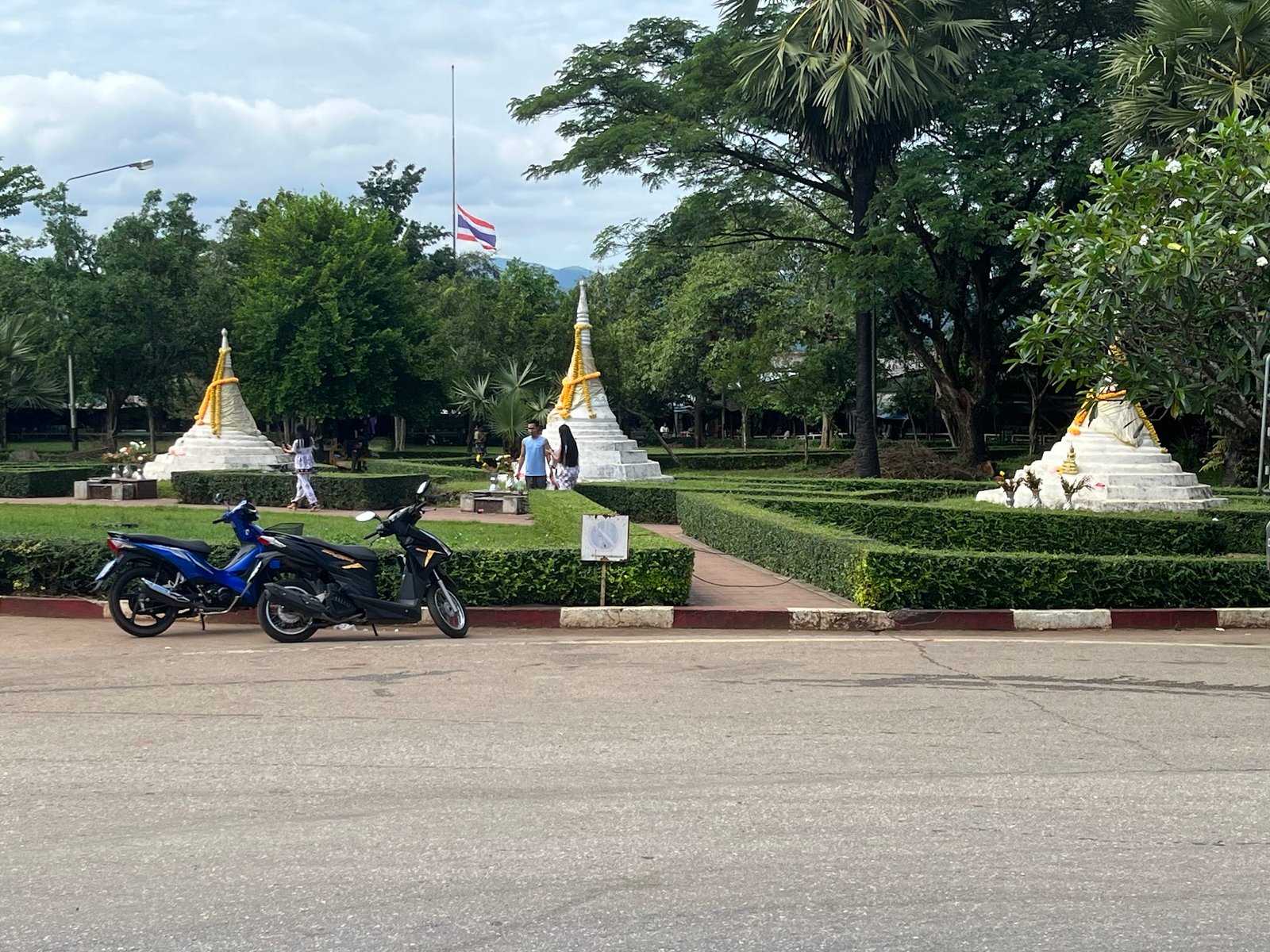
I spent about an hour and a half there. The three pagodas themselves are unimpressive in stature but surrounded by some nicely manicured lawns. You can walk right up to the border gate and I even had a chat with a border guard. He said the border had been closed for about eight years now. They block vehicle traffic but local people walk back and forth unimpeded. He said his job is easy but sometimes there are gunshots on the other side. He thinks it is teenagers just trying to scare people.
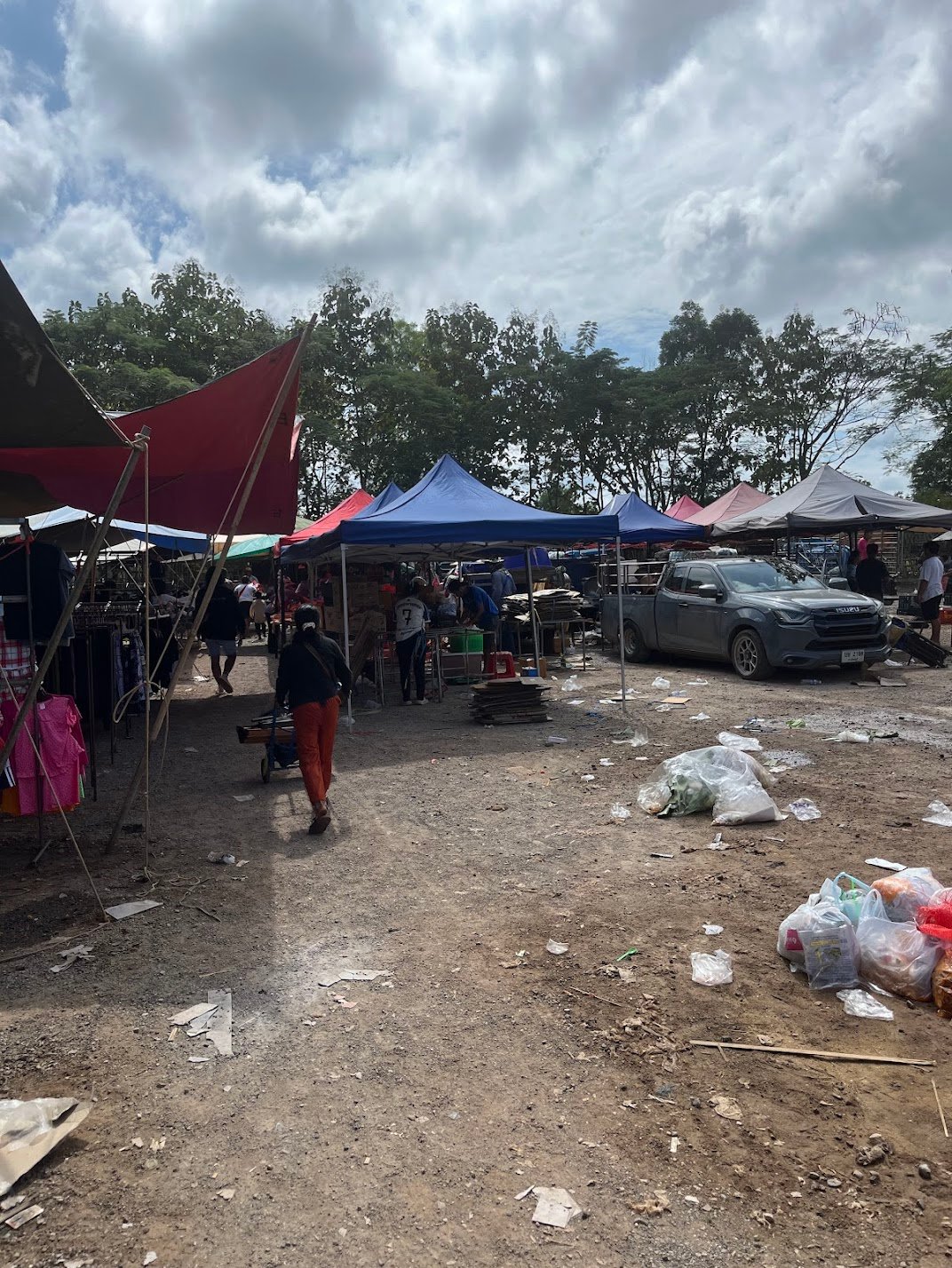
Above all, it is a marketplace. There are some permanent market stalls selling everything you could imagine. And as I arrived they were packing up an outdoor market. Again, there was everything you could imagine – except garbage bins. From my observation just about everyone doing the selling was from Myanmar – clearly they cross the border with their Chinese goods to sell to Thais. I saw plenty of vehicles with Myanmar plates, so they are getting across somewhere; and if you look at Google Maps you can see numerous roads across the border nearby.
Thinking of renting a scooter for your exploring? There are a few tricks and traps. Check out the Dusty Boots guide to scooter rental.
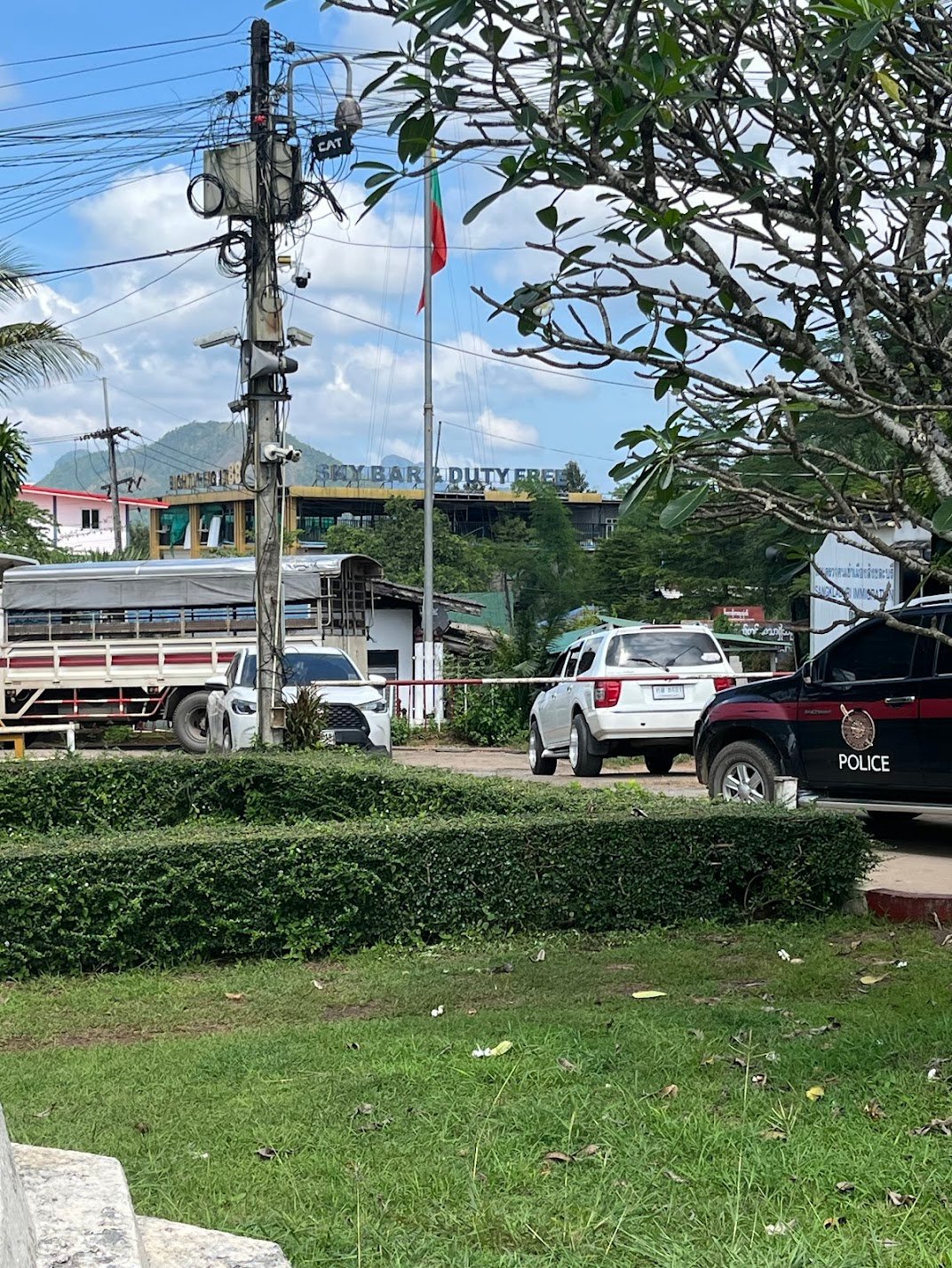
Having seen it all I departed. Another cheery wave at the checkpoint and I was able to put all thoughts of sweltering detention centres out of my mind. I returned to Sangkhla Buri and spent a couple of hours looking at various temples before taking a boat out to the underwater temples – temples submerged but partly visible under Khao Laem Lake. Depending on the time of year and water levels, the temples may be fully exposed or barely visible. I had heard of these temples before, and for some reason was under the impression that this was a result of some geological oddity. I have no idea where I got that idea from, but it is wrong, and the real reason is very mundane, and a bit sad.
The Vajiralongkorn dam was built between 1979 and 1984, and led to a rapid rise in water levels, resulting in loss of farmland and forcing the relocation of many villages. A major casualty was the Wang Wiwekaram temple, built by Mon and Karen people decades earlier. They built a most impressive new temple on higher ground nearby and the old one became a curiosity for visitors. Water levels were quite high when I was there, and there were just the tops of two rooves visible. Oh well.
To read another encounter with people who have been displaced but still retain their culture, read our article on the Sami people in Lapland here.
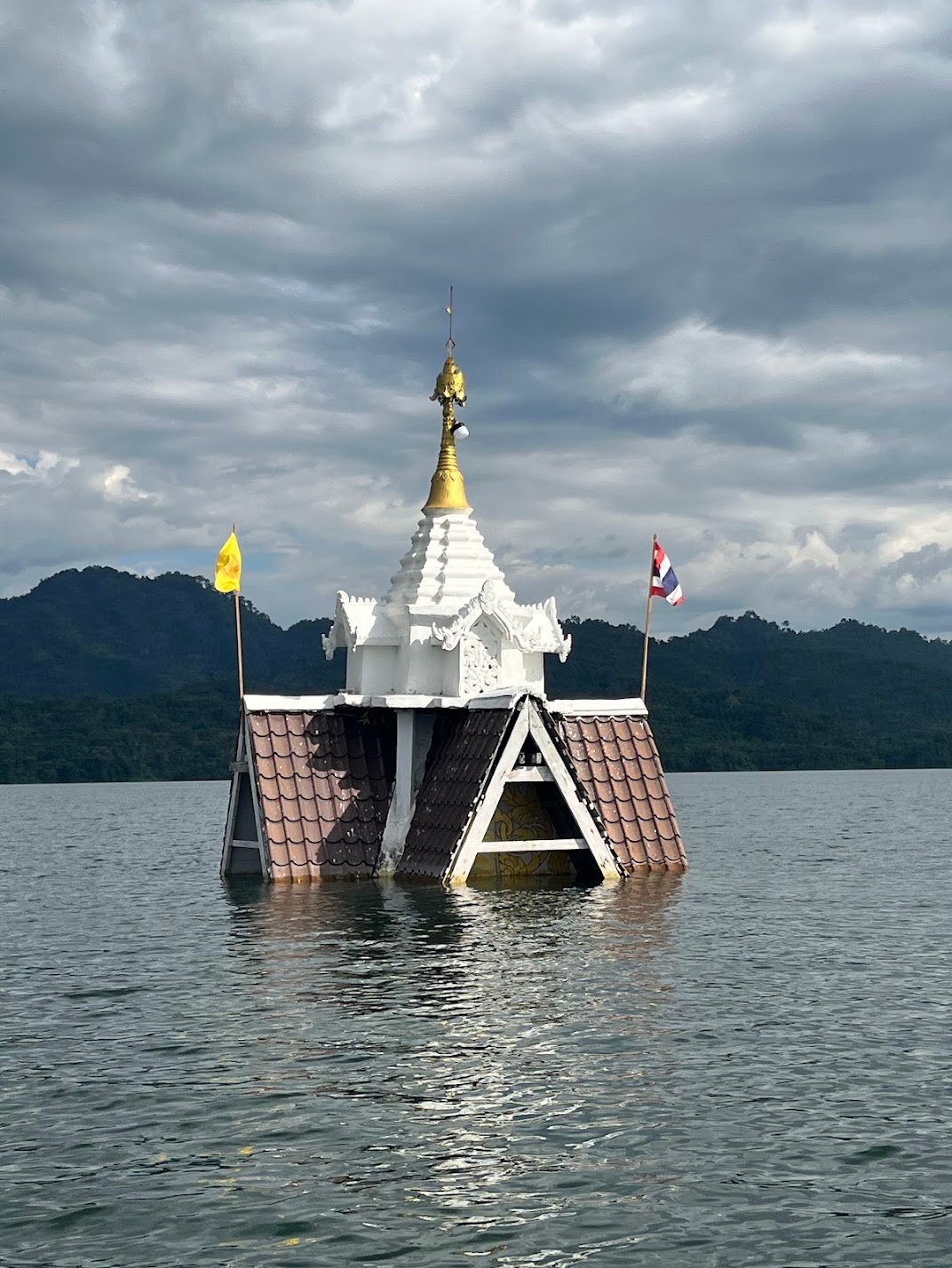
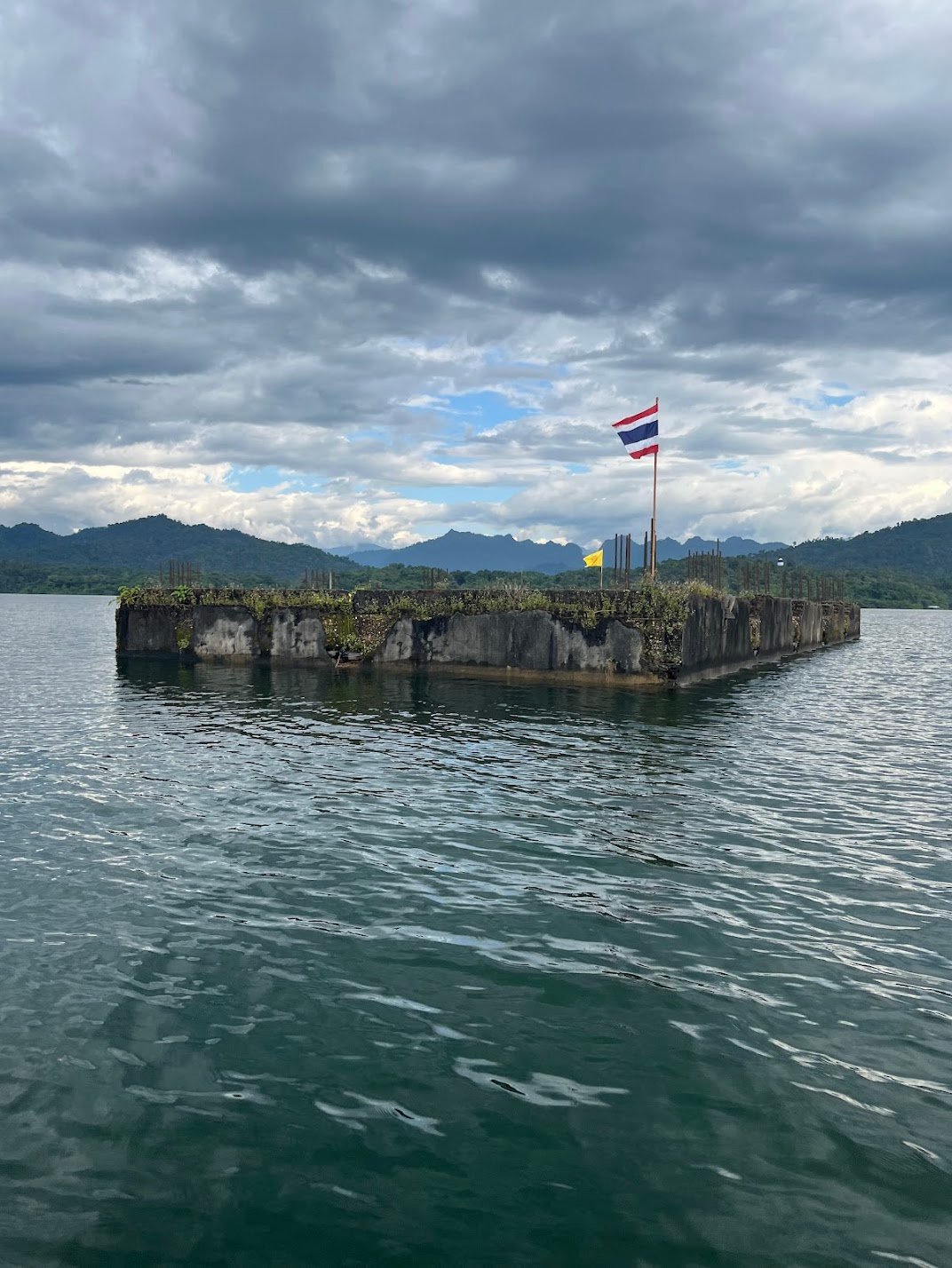
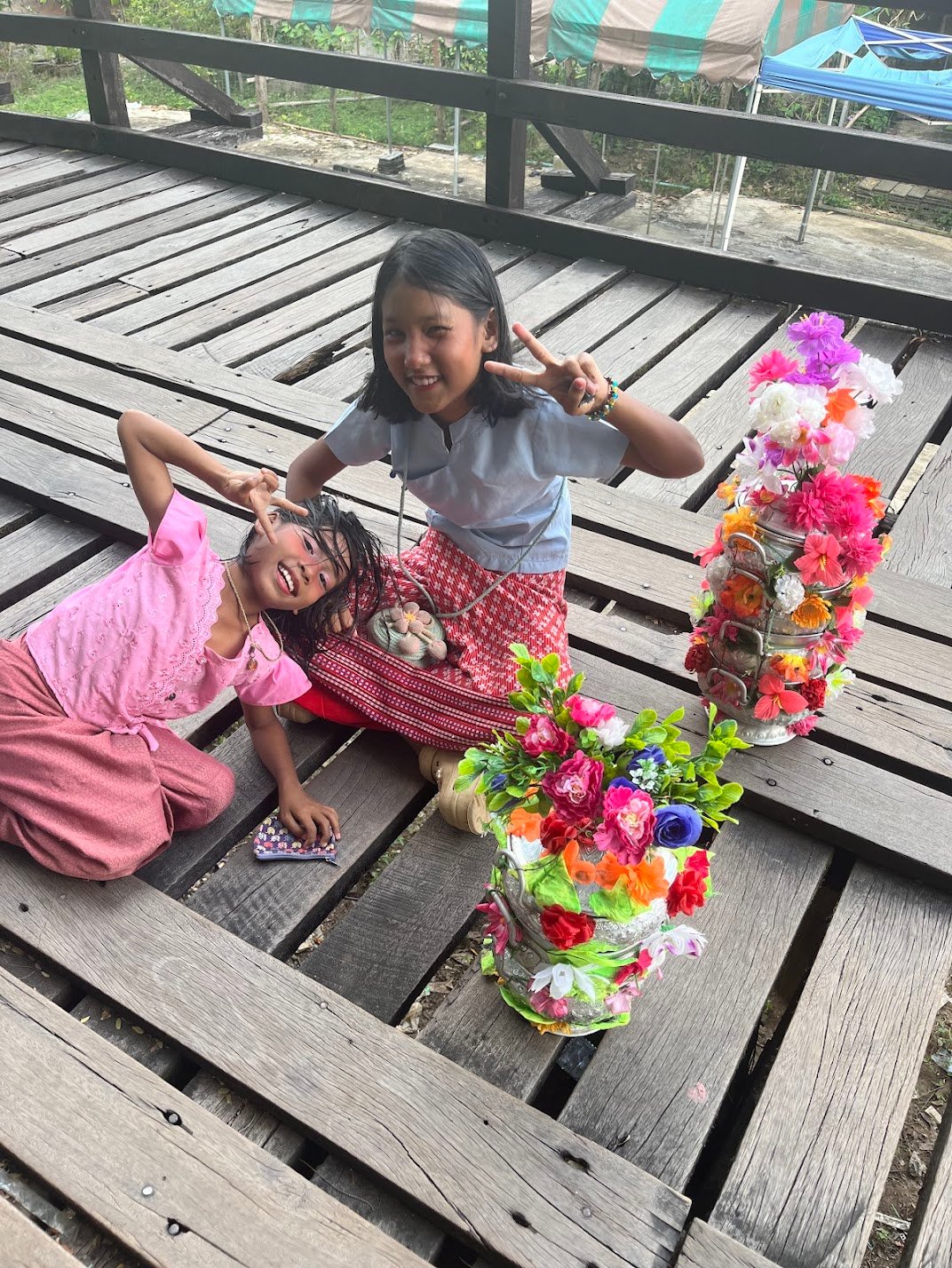
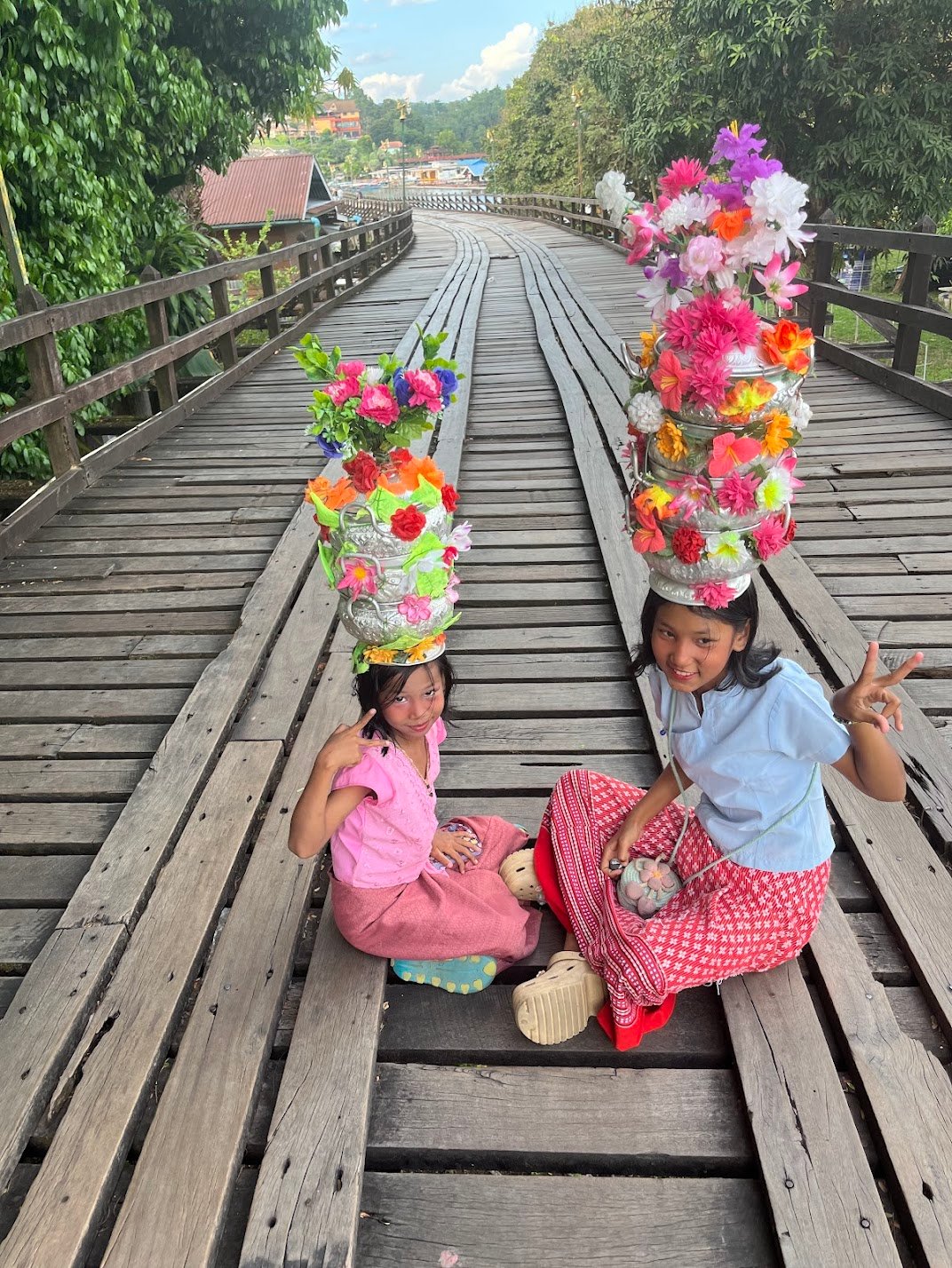
It occurred to me that the damming of the lake must have been a traumatic experience and loss of livelihood for the local people, most of whom are from ethnic minorities, and probably goes some way to explaining the shabby state of many dwellings that I saw in the Mon village. But I speculate. My final activity for the day was to walk over the Mon bridge again. I tried to learn more about the rice pot hats, but the best I could get was that they represent the offering of rice at the temple. I can’t find much reference to these hats anywhere, and I think as much as anything, it is a fun craft for girls, using readily-available materials. I’ve included some more photos below.
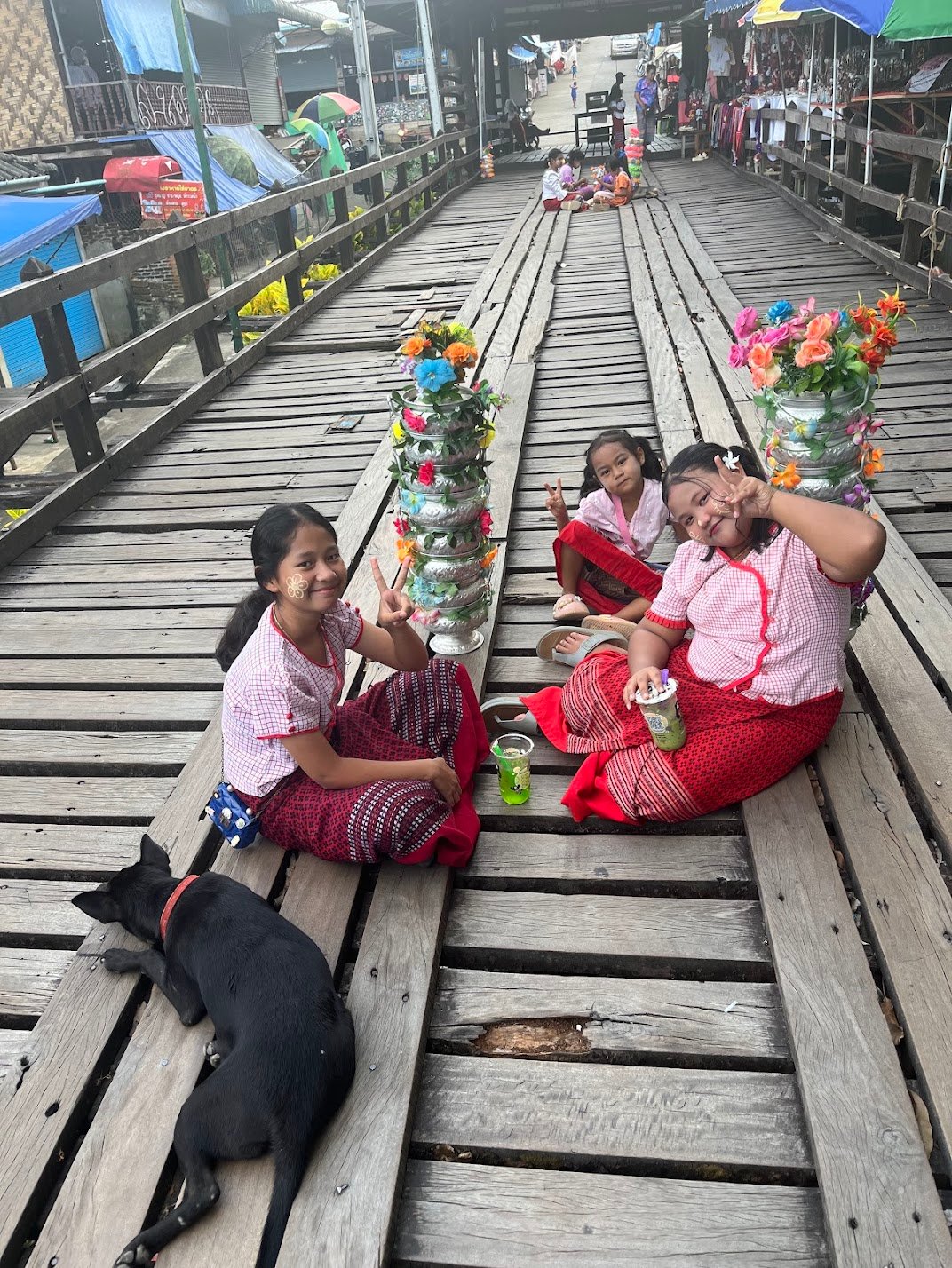
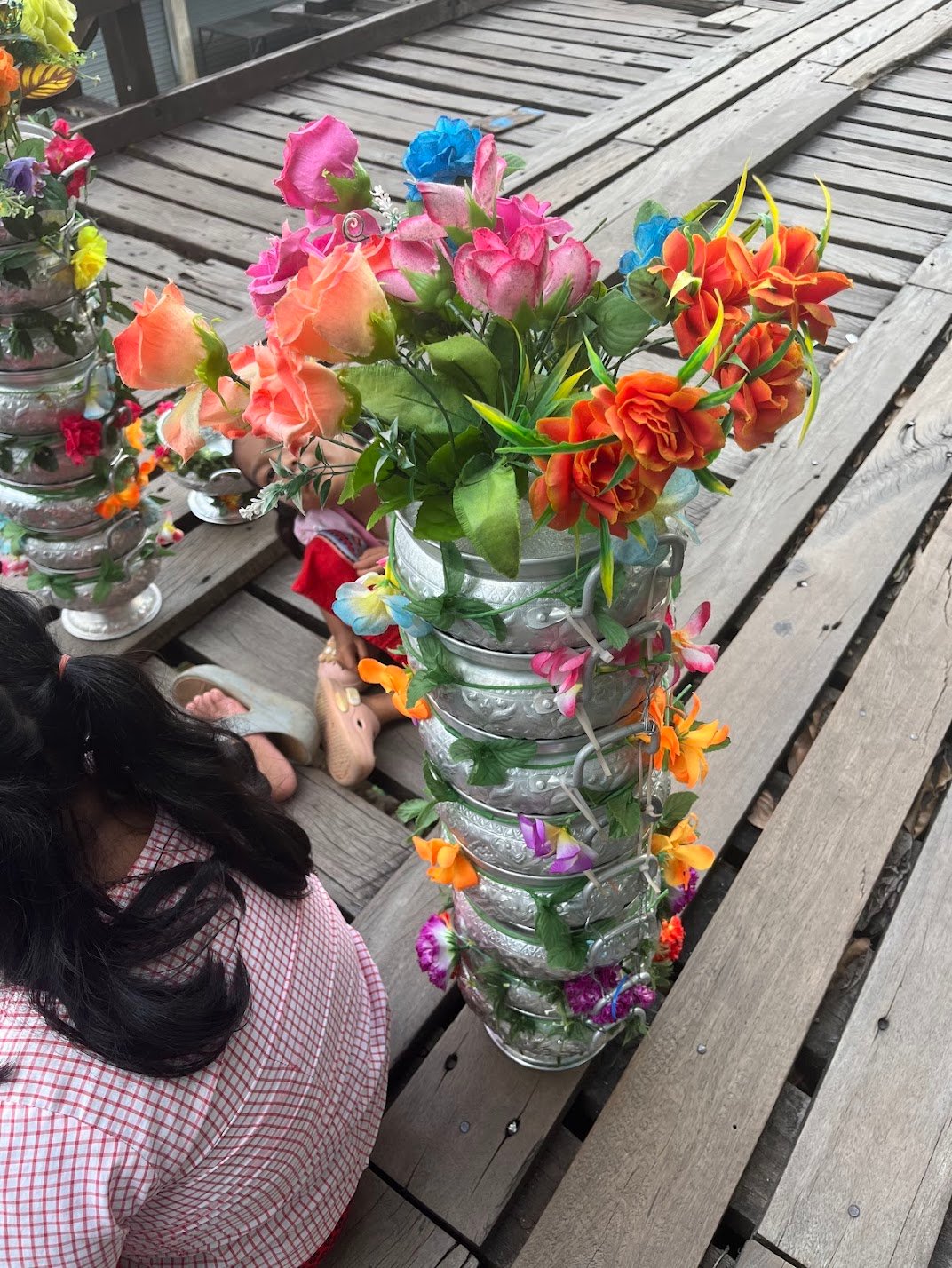
If you enjoyed this story you might also like Mae Sai, Thailand: A Day at the Edge of the Map.

Steve is a former Army officer and technology manager, now semi-retired and living in Melbourne. He enjoys adventurous travel and believes that good stories should be shared. He founded the Dusty Boots Journal as a means to connect those with similar interests.
[…] To read another account of a people who have been displaced by the modern world, yet managed to preserve something of their culture, you can read a little about the Mon people in Thailand here. […]