
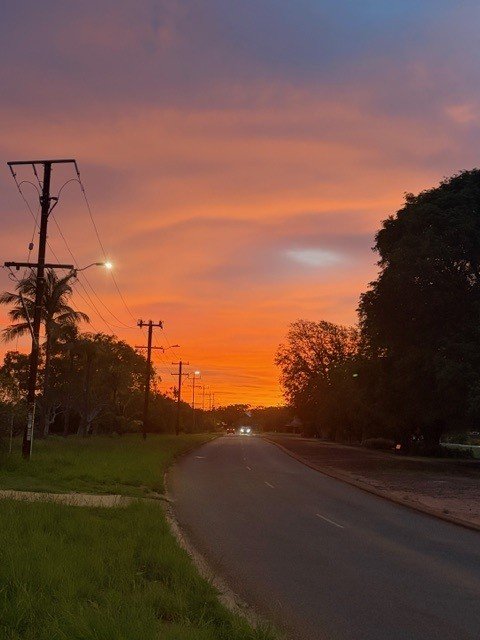
This story is part of our Australian Back Roads and Remote Travel series.
Recently I had the chance to head to Derby in Western Australia for some work with the Kimberley Wilinggin Aboriginal Corporation — and what I expected to be a straightforward work trip became something far more personal.
Some places don’t just take you somewhere new. They take you back.
For me, the North West was never just a destination. It was a big part of childhood. Towns like Kununurra, Wyndham, Broome, Derby and Port Hedland weren’t just names on a map — they were places woven through family life, travel and memory. So heading back after all these years carried a quiet weight.
And Derby? At first glance, it felt like stepping into another time.
Derby – Echoes of the Past
There was something about the town that echoed the North West of decades past — not in a romantic sense, but in that worn, weathered way that outback towns often carry. Buildings looked tired. The streets felt rough around the edges. Grass had grown wild in places, and the whole town seemed to hold onto a kind of fatigue, as if it had been pushing on for a long time.
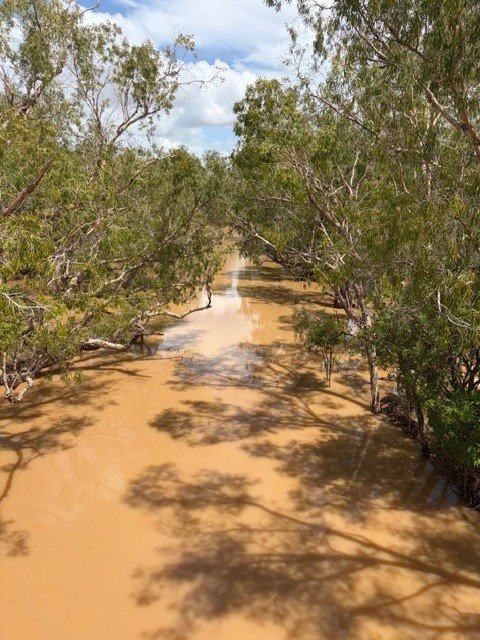
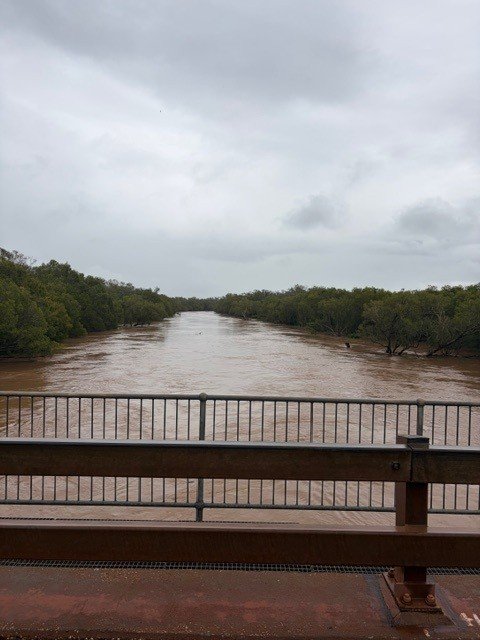
We arrived in the back end of the wet season, and the Kimberley climate was doing what it does best — settling into everything. The days were hot, heavy and humid, building slowly towards the afternoon storms. Until they rolled through, you felt permanently sticky, dusty and drained. Then the sky would break, rain would fall, and for a brief moment, the town would breathe again.
But as is often the case, first impressions only tell part of the story.
Spending time with locals, listening and observing, something else began to emerge — a quiet sense of belief. Not loud or polished, but steady and real. A feeling that, despite the challenges, there were people deeply committed to where Derby and the local region could go next.
Like many regional towns, Derby has absorbed the loss of industries that once gave it momentum. The abattoirs have moved closer to Broome, and the mineral sands industry no longer relies on the ageing port. These shifts leave their mark.
And yet, there is still a heartbeat here.
A large part of that comes from the work being led by the Wilinggin Aboriginal Corporation. Under the guidance of local Elders, there is a clear and grounded effort to reconnect people, story and responsibility back into Country.
Wilinggin Country – Communities in Ancient Lands
This work is shaped through the Healthy Country Plan 2023–2032 — a long-term vision focused on restoring both land and community.
This is the Country of the Ngarinyin people — vast, culturally rich, and deeply connected to story. Their connection to land is shaped by Lalai, the Dreaming — stories that are not just remembered, but lived, embedded in rivers, ranges and the movement through Country.
Wilinggin Country stretches across more than 6.3 million hectares of the central and northern Kimberley — one of the largest intact tropical savannah ecosystems in the world. It is part of the wider Wandjina Wunggurr cultural bloc, connected through deep ties with neighbouring groups.
It is ancient country. The kind that quietly puts things into perspective.
And like much of the Kimberley, it draws you in slowly.
Just outside Derby begins the Gibb River Road — one of Australia’s most iconic outback journeys. It’s more than just a road. It’s a pathway through cattle country, gorge country and some of the most striking landscapes in the country.
While more accessible than it once was, it still demands respect. This is not a trip to rush. The advice remains the same — take your time, travel in the dry season, and allow the country to reveal itself.
I didn’t travel the full length this time, but even a short stretch was enough.
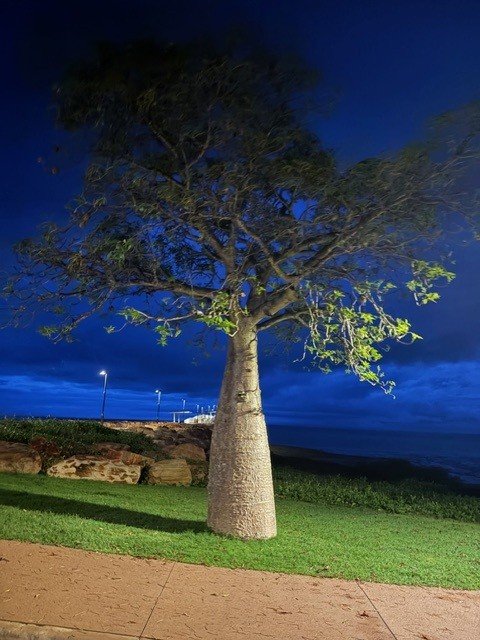
There’s a quiet beauty to Kimberley savannah country — wide skies, red earth, scattered boabs standing like old sentries. It doesn’t announce itself loudly. It settles in, slowly.
And if you want to experience it properly, the advice is simple — take a capable four-wheel drive and plan well.
Because this country rewards preparation.
A good vehicle opens access to gorges, waterfalls and places like Dimalurru (Tunnel Creek), Australia’s oldest cave system. It is remarkable country, but also serious country. Distances, heat and conditions matter. Good planning goes a long way.
Perhaps that’s part of the appeal.
It still feels like one of the last places in Australia where adventure hasn’t been softened.
Broome – The Polished Gateway
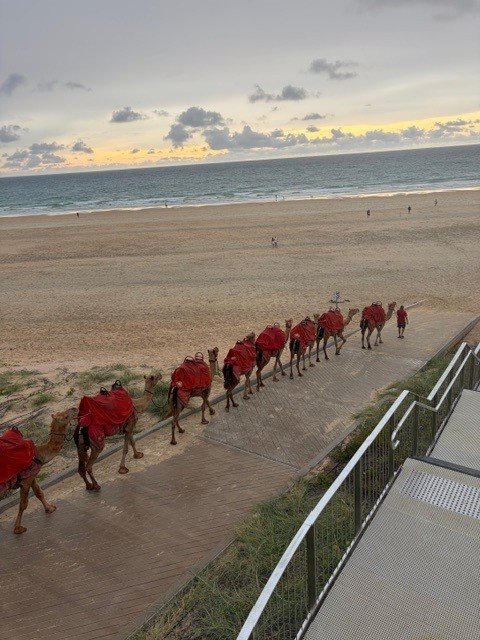
After time in the Kimberley, the trip ended with a few days in Broome.
Broome, for me, is a place of contrast. It holds memory, but it has changed.
The Broome I remember is not the Broome of today. It has become a polished gateway — a place where visitors come for a curated experience of the North West.
And it does that well.
It still offers simple stays, but now also caters comfortably to those seeking a more refined experience. That’s simply the evolution of a place shaped by tourism.
And while I enjoyed being back, it still felt like a starting point.
Because the real Kimberley lies further out.
Further north. Further inland. Away from the polished edges.
Out where the country feels older, rawer and harder to define.
That’s where it speaks most clearly.
And perhaps that’s why this trip stayed with me.
Because somewhere between Derby, Wilinggin Country and the edge of the Gibb, I was reminded that some journeys aren’t about going somewhere new.
Sometimes, they’re about returning.
For another account of someone returning to a place after a long absence, see Lone’s article on her return to the Bangladeshi town where she spent time as a child in an expat family.

After a long career in military service, corporate life, and business creation/ownership, my focus is now on new and inspiring projects, with a strong emphasis on living fully and meaningfully. I enjoy travel that goes beyond the typical tourist path, seeking out authentic experiences, connecting with local communities, and immersing myself in true culture. When I’m not exploring the road less travelled, you’ll likely find me trout fishing, camping, spending time outdoors, or enjoying the simple pleasure of being with my grandchildren.