
This story is part of our Australian Back Roads & Remote Travel series. Read more here. Want to read more of Neale’s travels? Check out his accounts of the small towns along the NSW/Queensland border, the oddities around Cameron Corner, and the Wall in the Wilderness at Derwent Bridge, Tasmania.
The bypass effect
Years ago, in areas now serviced by our modest motorway network, long road trips involved driving through many country towns. They were often annoying bottlenecks that would back up traffic for kilometres. After being bypassed by motorways, to many people such towns are now just a name on an exit sign or a collection of buildings in the distance, glimpsed through a gap in the roadside vegetation. Towns that I used to be quite familiar with have become a distant memory – Mittagong, Berrima, Goulburn – and many more. As I’m now not in as much of a hurry when travelling as I used to be, I’ve started to revisit some of them.
A few years ago on our way to catch the Tassie ferry we overnighted in one such town, Holbrook, about 500km from Sydney and 400km from Melbourne. Settled in the mid-1800s, it has a population of 1650, until World War I was called Germanton, and it has a thing for submarines. It was bypassed (by less than a kilometre) by a realignment of the Hume Highway/M31 in 2013. This removed thousands of trucks and speeding motorists from the main street overnight, leaving behind…well, not much, really.
Holbrook is a fairly typical New South Wales small country town. Blocks of land are fairly big, streets and footpaths are wide, many buildings are old, and the pace of life appears to be less than hectic. There are a couple of pubs and eateries and we stayed in a motel conveniently located on the main street in the middle of town.
The famous submarine
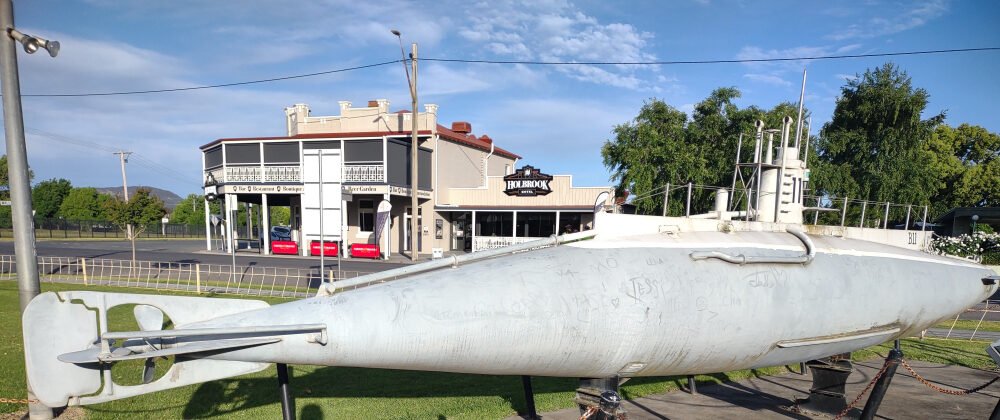
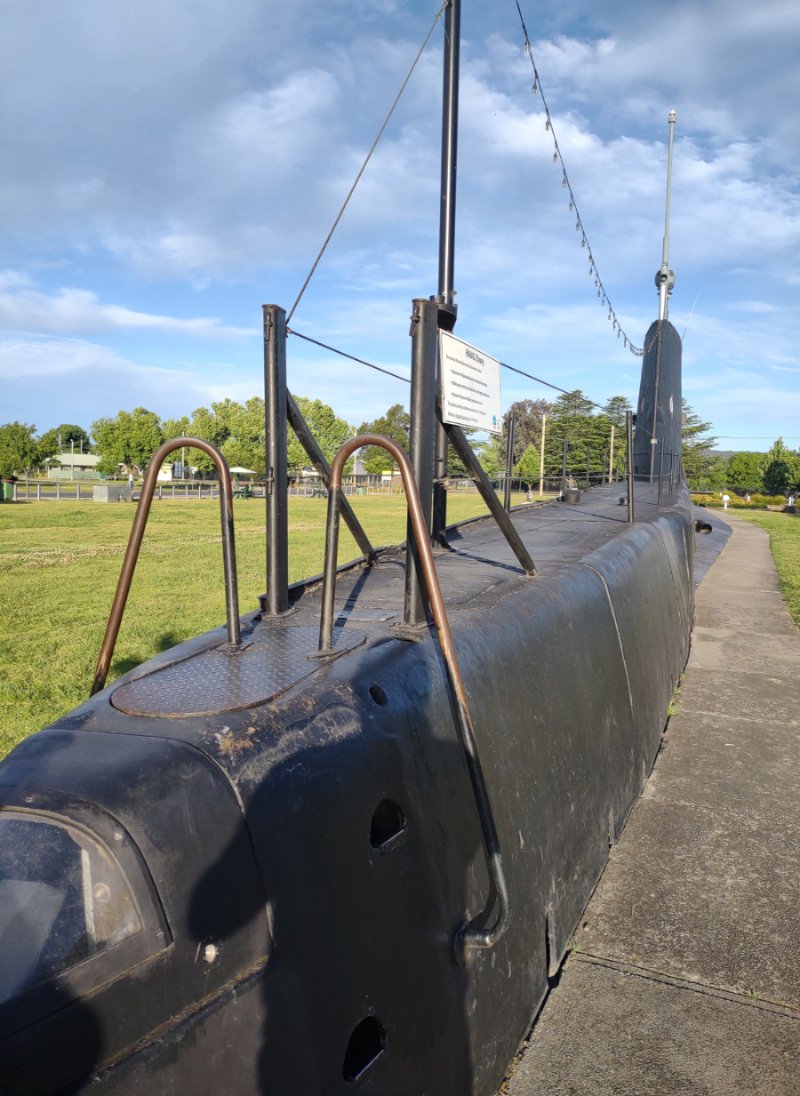
During WWI, the name Germanton was considered unpatriotic so the town was renamed Holbrook. This was chosen, after consideration of a number of options, in honour of Lieutenant Norman Holbrook, a British submarine captain awarded the Victoria Cross, who had recently made headlines across the British Empire. The submarine theme has been pursued with a passion since. In 1997, the upper half of the Oberon class submarine HMAS Otway was transported piece by piece from Sydney and placed in Submarine Park on the town’s main street. The park also has a scale replica of Leut Holbrook’s submarine (in feature photo), a museum and related memorials.
What else is there?
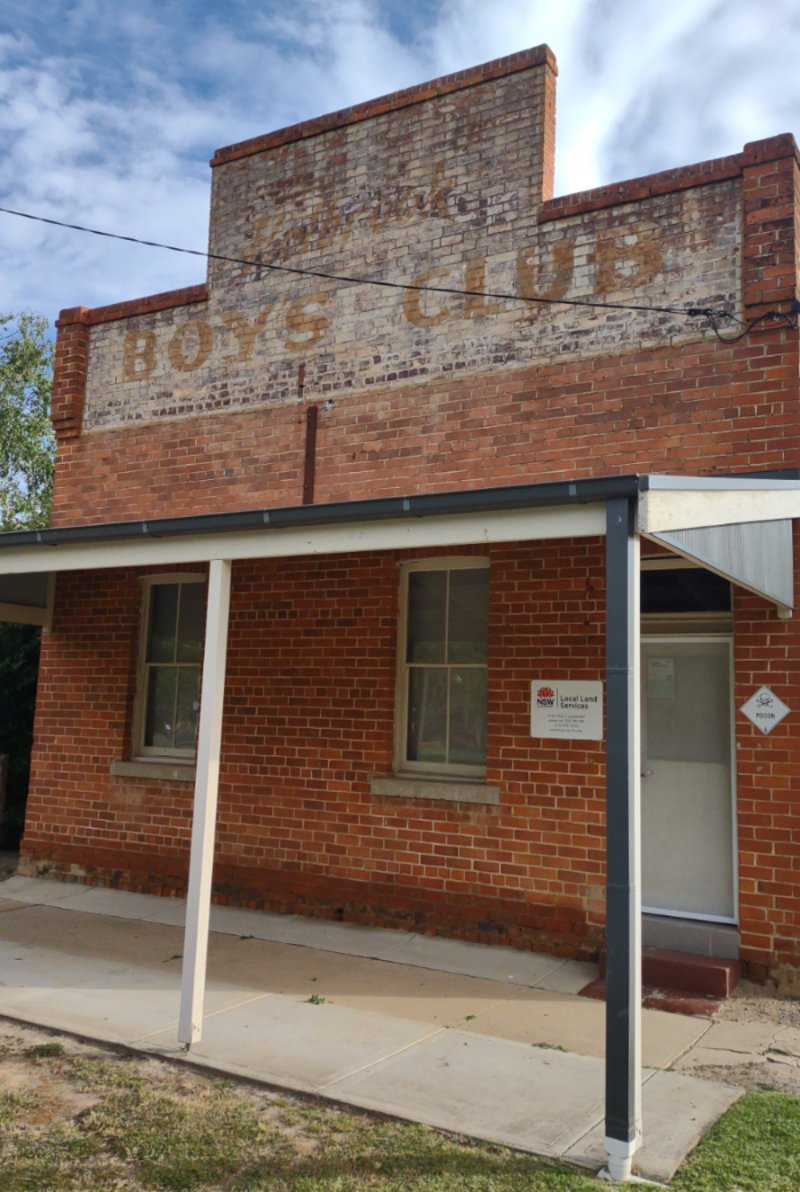
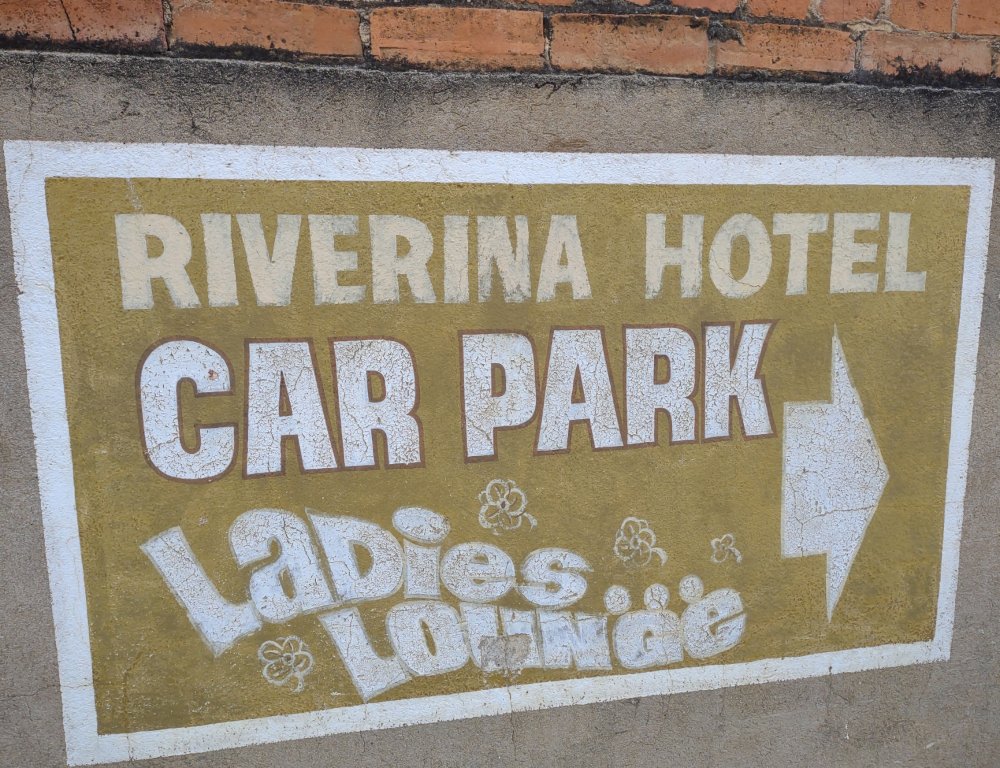
The town also boasts the National Museum of Australian Pottery, lots of roses in public places and private yards, and a passenger-carrying miniature railway in the centre of town that runs a couple of times a month. Catering for the needs of both sexes, signs indicate there is (or used to be) a ladies lounge and a boys club. Another drawcard is the Southern Cryonics facility, the only cryonics storage facility in the Southern Hemisphere, designed to store (legally dead) human bodies at ultra-low temperatures until future technology enables their rejuvenation. Up to 40 bodies can be kept inside metal flasks using liquid nitrogen to keep them below -150° Celsius (their website currently lists seven ‘patients’).
So, if you like a small town laid-back pace, submarines, pottery, roses, little railways, or getting a really good brain freeze without having to drink an ice slushy quickly, hit the indicator and exit the Hume Highway to Holbrook. If not, keep driving straight – you will eventually get to a McDonalds.
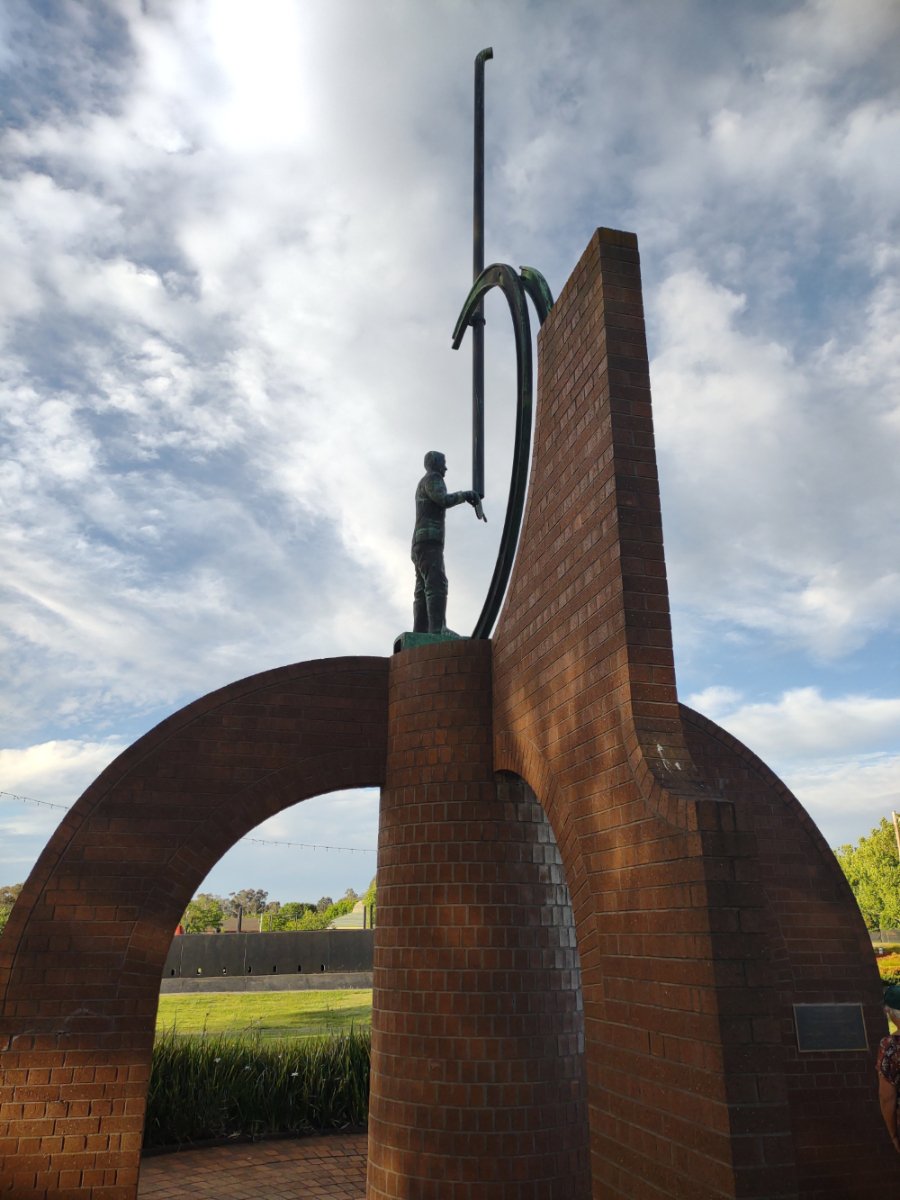
Frozen Assets
It might be hard to believe, but the Southern Cryonics Facility is a real thing. Have a look at the website…for $230,000 plus annual ongoings, you can be preserved and possibly re-constituted later (no guaranteed outcome). You get a healthy discount if you become a subscriber, which 45 optimistic souls have done.
And before you ask, Walt Disney is not preserved there. The claim that Disney was cryogenically preserved is an urban legend – he was cremated two days after his death in December 1966.
Neale is a former defender of the nation with a natural inclination to avoid most people. He enjoys travel to random, hopefully sparsely populated, locations with interesting architecture, old trains and cemeteries. He is retired and lives near Newcastle in a large patch of vegetation.