
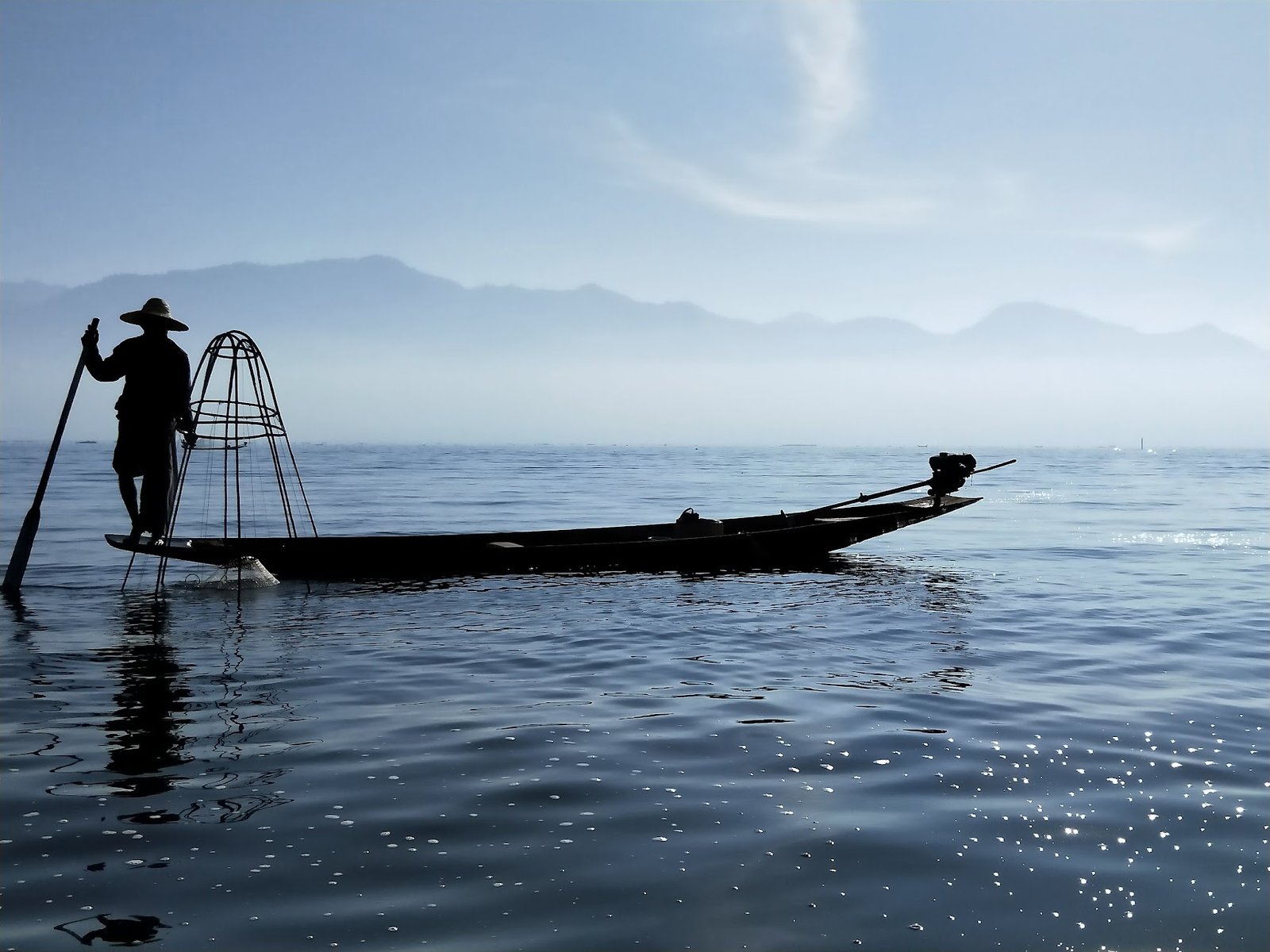
Here is an account of my visit to Inle Lake from a few years back when I was travelling frequently into Myanmar for business.
This story is part of our Slow Travel in South East Asia series. Read more here. I have posted a couple of other articles from my time in Myanmar – check out the slow train around Yangon, and the crumbling colossus that is the Mingun Pyramid.
At that time, Inle Lake had established itself as a genuine tourist destination. Inle was remote enough to require some effort, yet accessible via the small airport at Heho. Even back then, overland travel from Yangon or Mandalay was not really advisable due to the state of roads, and the unpredictable local disturbances throughout Shan State.
The accommodation was basic but good. We stayed in a waterfront hotel near Khaungtaing, at the northern end of the lake. The staff were great, in a clumsy and endearing sort of way. One evening we were in the hotel restaurant and asked for a bottle of mineral water. The waiter brought it to us wrapped in a cloth napkin, opened it up in front of us and invited me to have a taste before pouring. Sommeliers of the world, beware!
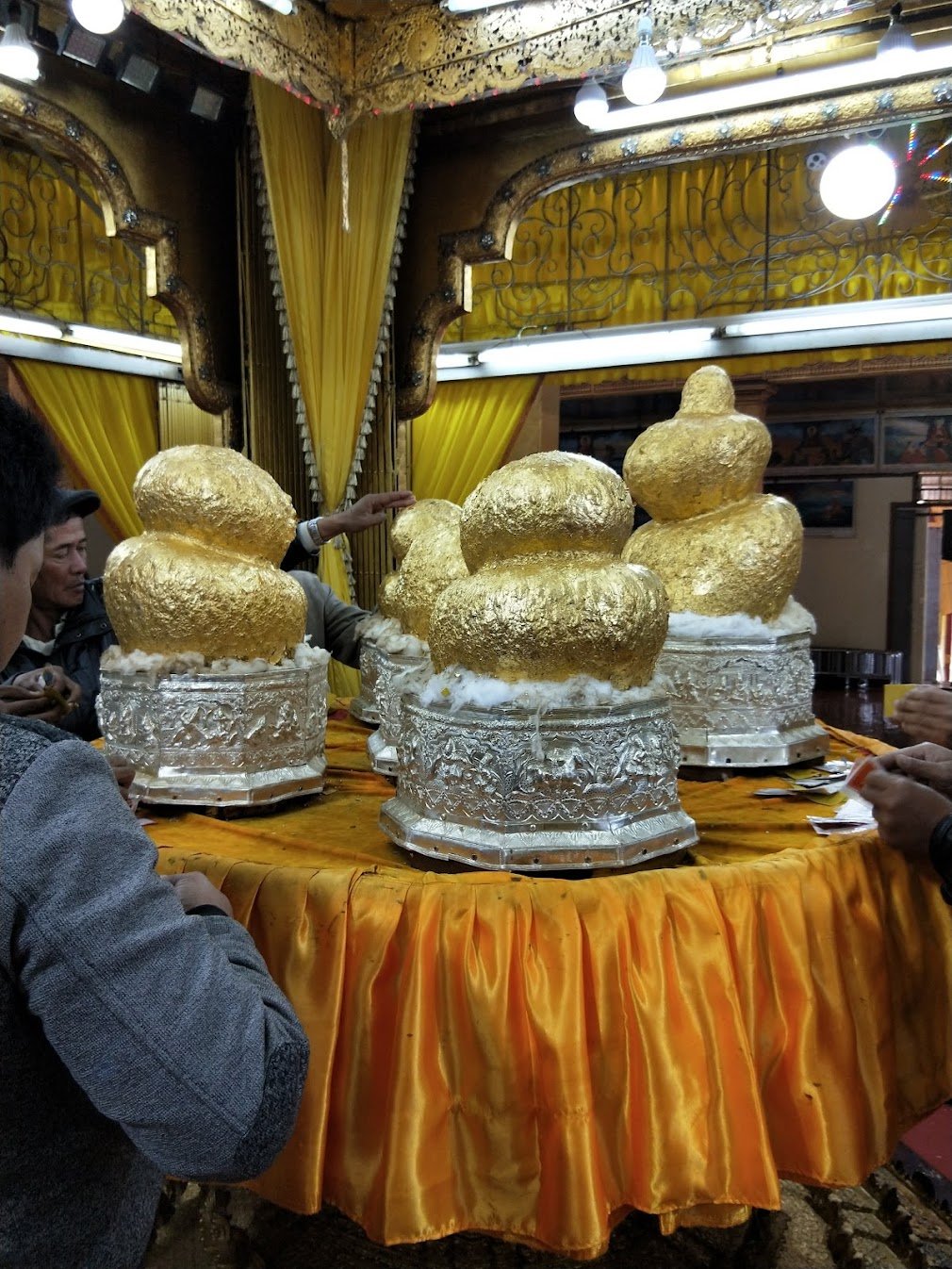
Village life off and on the water
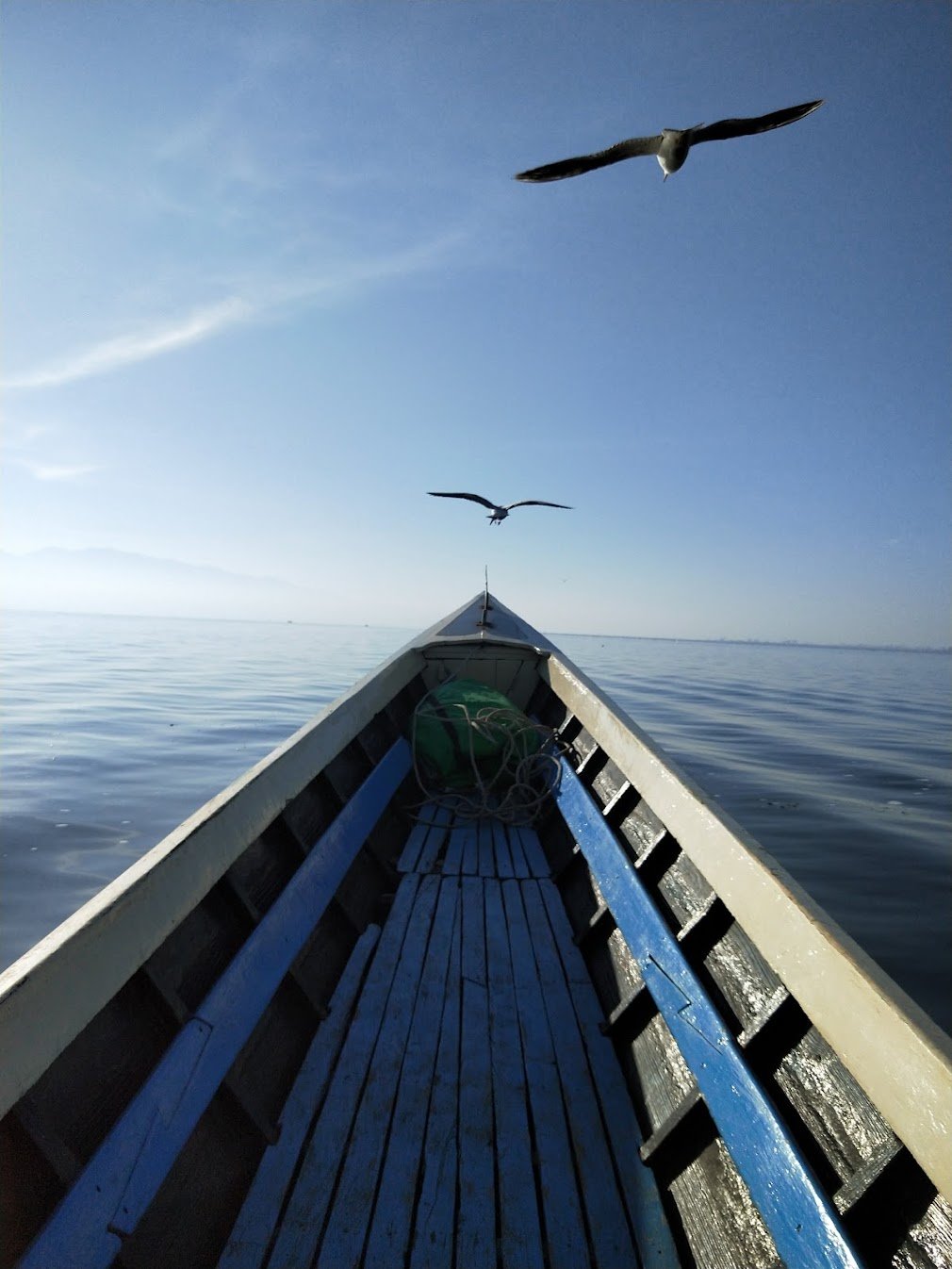
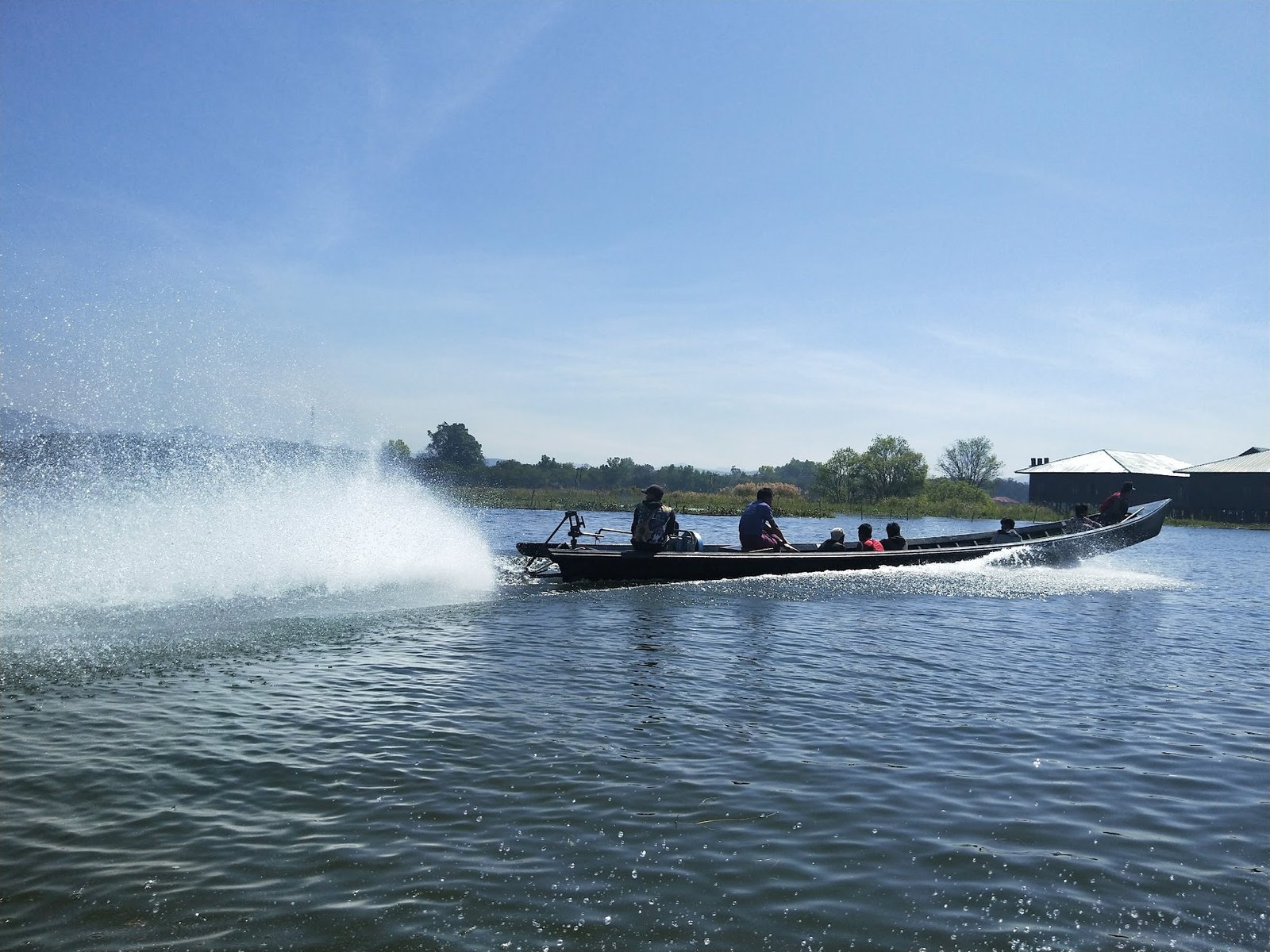
There were villages nearby and it was fun to cycle around, have a beer and kick a soccer ball with kids. Our tour operators were licensed and competent. We went around the lake on a speedy long-tail boat. The propellor screw was on a long shaft to enable easy navigation through surface weeds.
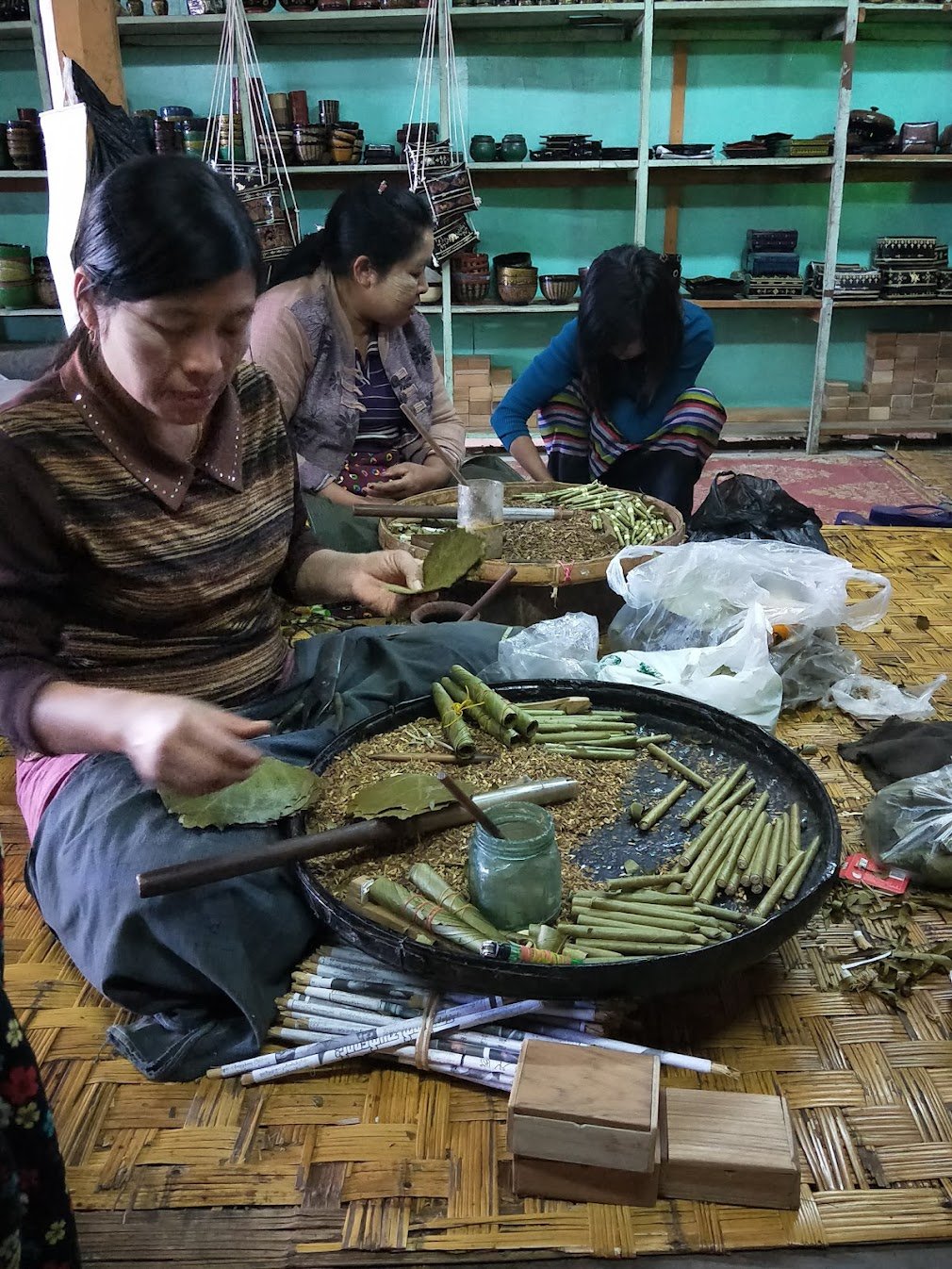
As is typical of such experiences, we stopped off at various villages to witness crafts and get gentle prodding to buy stuff. As well as the usual weaving, wood carving and buddha-making, the area specialises in cigars. The Cuban cigar industry has little to fear from Myanmar cheroots, where the rough local tobacco is blended with wood shavings and various herbs and spices. The cigars are rolled by industrious, chatty Shan ladies who brag that they can each roll 600-700 cigars per day. I didn’t hang around long enough to test this assertion.
Meet the Intha
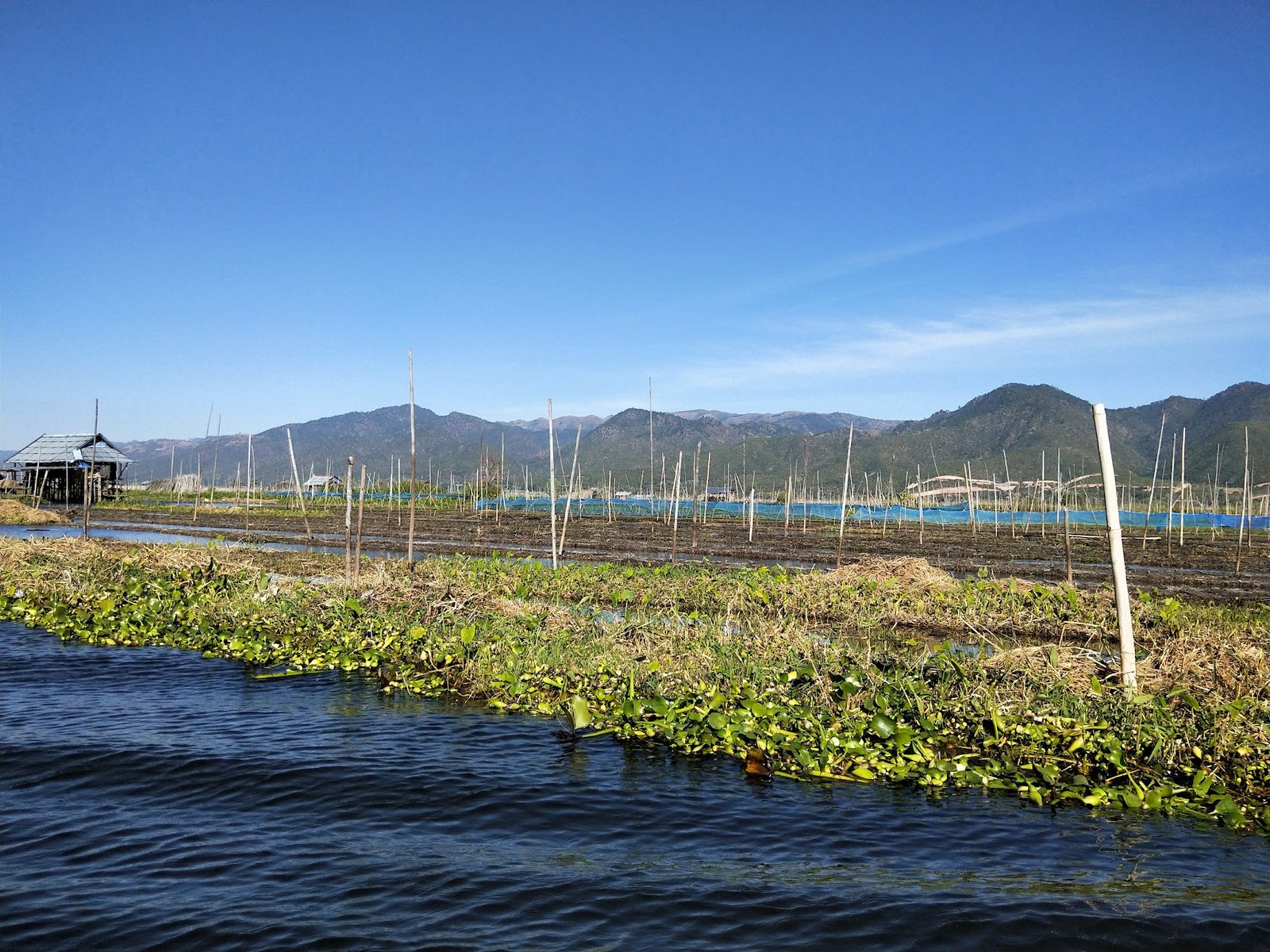
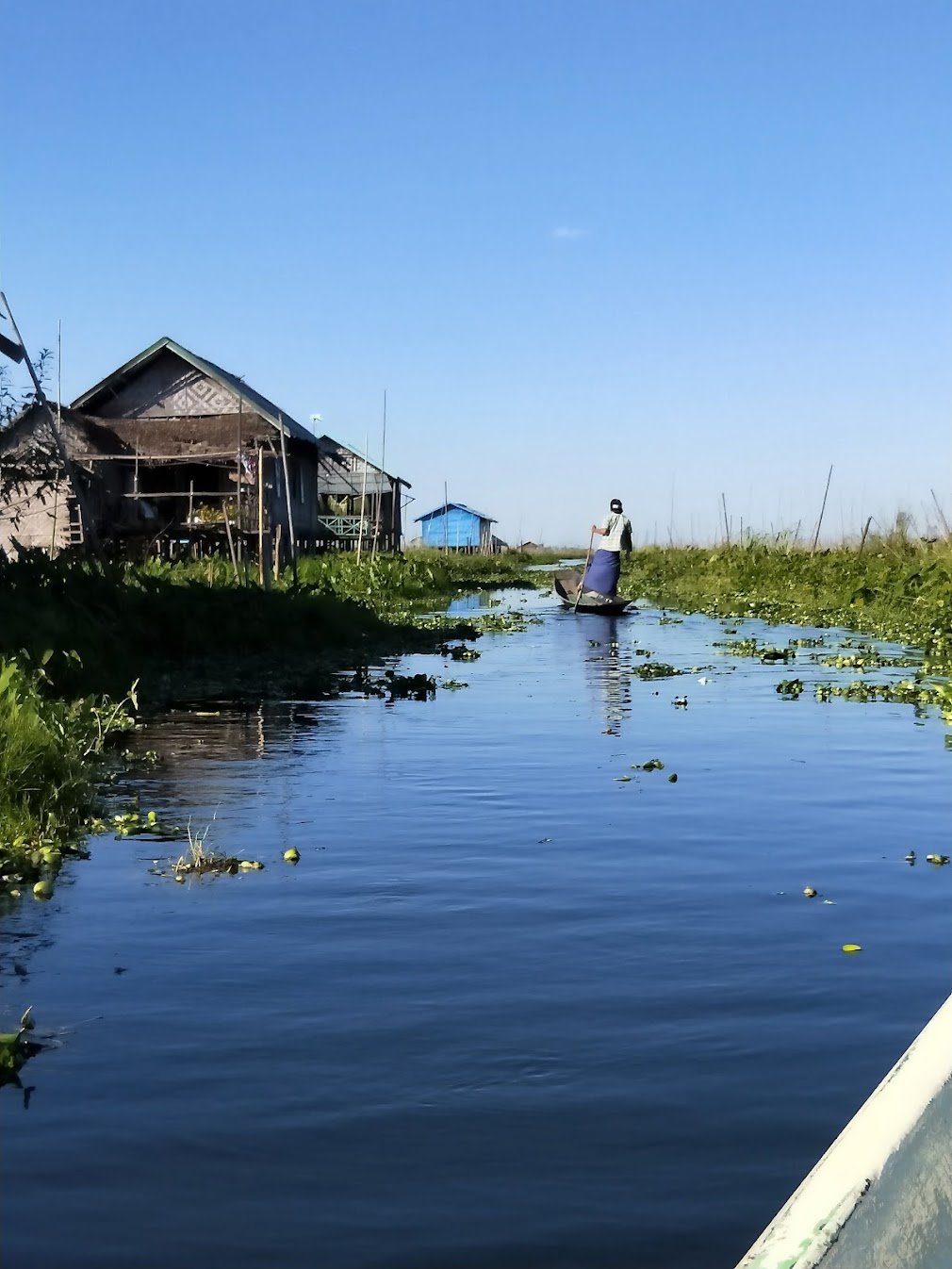
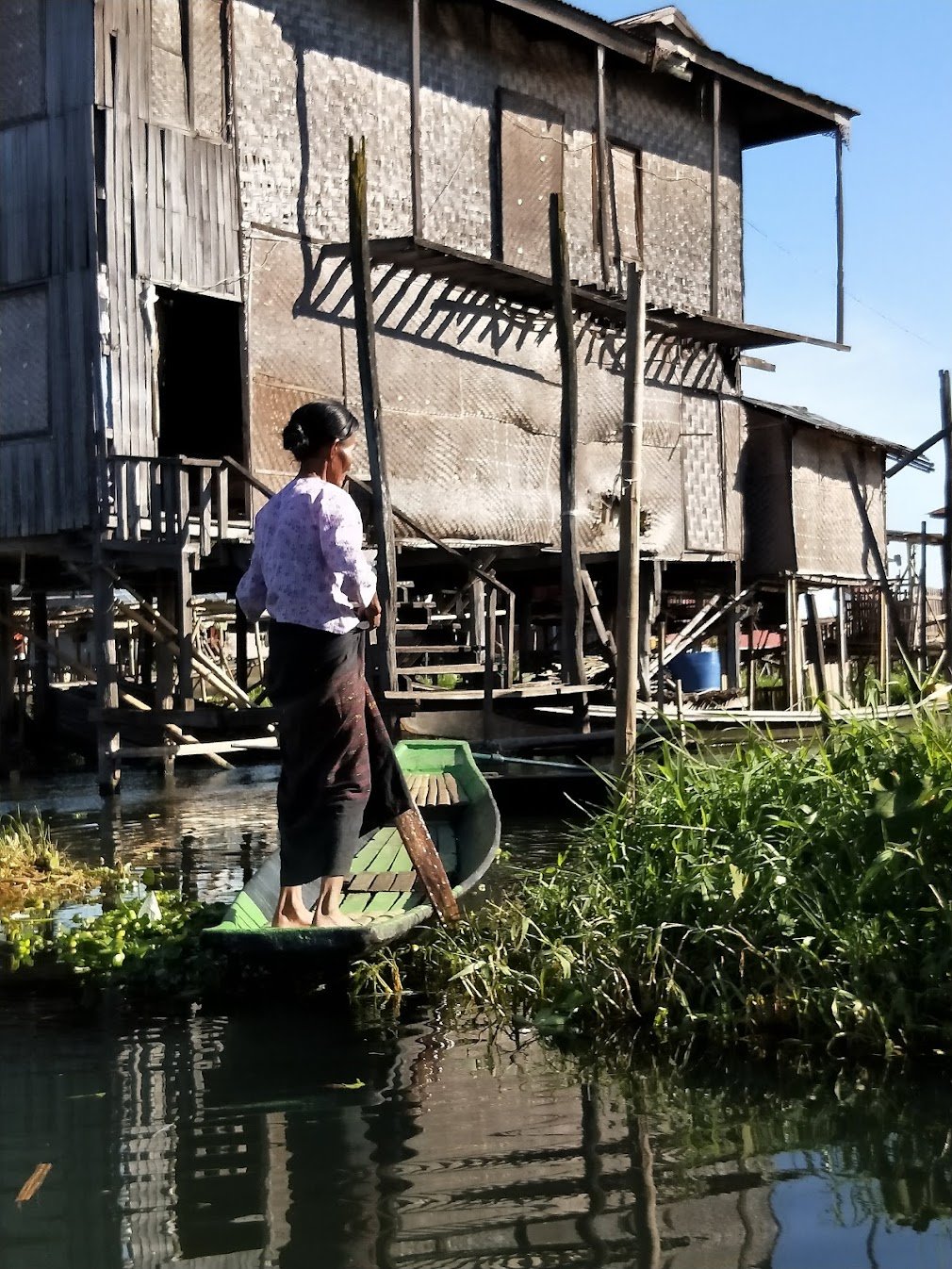
The lake is life to the people. Some 200,000 people live on or around it. About a third of these live in the floating villages. These villages were a major drawcard for tourists. Houses, schools, monasteries, shops and workshops are on stilts, and people get around on small boats. There are dense acres of hydroponic crops.
How do the hydroponic gardens work?
The floating gardens of Inle Lake are a marvel of traditional environmental engineering. Rather than planting in soil, the Intha slice long strips of naturally forming, buoyant marsh weeds and anchor them to the lake bed using tall bamboo poles. You can see these poles in the photos. Farmers scoop up nutrient-rich silt and lake mud from the bottom and layer it on top. These living, floating mats rise and fall with seasonal water levels, producing nearly 90% of Myanmar’s tomatoes alongside squash and cucumbers, all fed directly by the fresh water below.
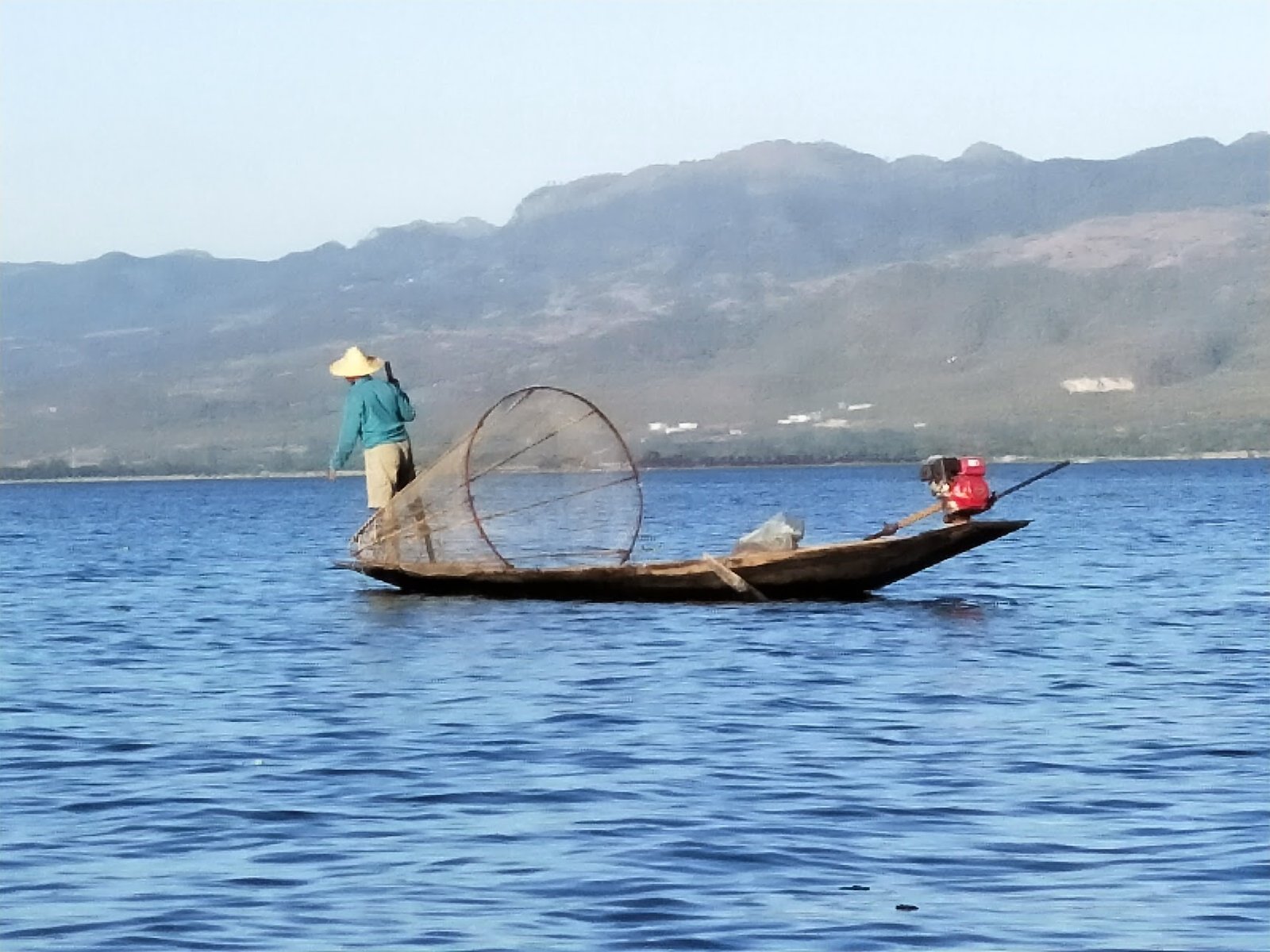
These people are known as ‘Intha’, or children of the lake. Fishing is a big part of life, and they have an odd way of paddling, standing at the back of a flat canoe and using one leg as a lever, so as to see over the dense weeds and keep one hand free. They fish with large conical nets on bamboo frames, which they lower into the water to trap the fish, which they then spear. I was told that this traditional method is being supplanted by longlines and casting nets.
A fascinating way of life for sure, but not one to envy. I sincerely hope that the country returns to its senses some time soon, and we can return and share some wealth with these friendly and humble folks.
Opportunities foregone – for now
Prior to 2020, Inle Lake was one of the premier stops on Myanmar’s ‘big four’ tourist circuit (along with Yangon, Bagan, and Mandalay), welcoming hundreds of thousands of international travellers annually. Following the 2021 coup and civil conflict, overall foreign arrivals to Myanmar plummeted. While total nationwide foreign arrivals have gradually ticked back up, this is largely driven by visitors from neighboring Asian countries like China and Thailand. Western tourism remains at a fraction of its former height due to strict travel advisories.
The immediate area around the lake has remained relatively quiet compared to active combat zones elsewhere in the country. Local boatmen, leg-rowing fishermen, floating gardens, and handicraft workshops are still operating, but the optimism and relative prosperity of the 2015-2020 period will have evaporated. Those hotels, guesthouses and restaurants that survive now operate with minimal staff or have scaled back operations.
Myanmar is theoretically open for tourism but almost every Western government advises against it, and it is difficult to get insurance cover. This is not surprising – infrastructure and medical services have decayed, foreigners get harassed at military checkpoints, ATMs are unreliable and cash can be easily extorted. And bombings and shootings are still frequent throughout the country.
So…lace up the boots, but let them take you elsewhere for the time being.

Steve is a former Army officer and technology manager, now semi-retired and living in Melbourne. He enjoys adventurous travel and believes that good stories should be shared. He founded the Dusty Boots Journal as a means to connect those with similar interests.