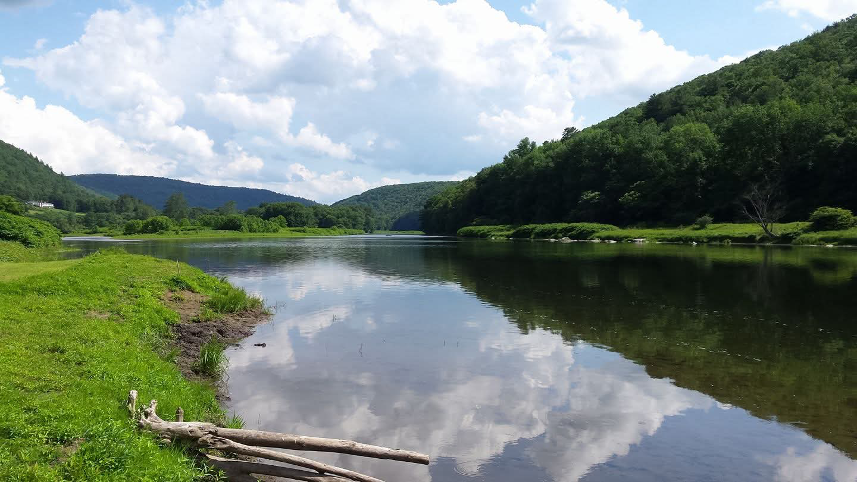
The Delaware River delineates the border between the states of New York, Pennsylvania and New Jersey in America. It played a significant role in my childhood, so when I returned to the area as an adult, I found myself wondering about its source. I knew the river began somewhere in New York State, but I wanted to see it for myself. Was it a bubbling spring? A hidden stream? One day, my travelling companion and I set off north along River Road to find out.
When we reached Milford, Pennsylvania, we stayed overnight in a very charming bed and breakfast. The next morning, we set off further north to see how far we could get and what we could find. It turns out that the Delaware originates on private property in the Catskill Mountains of New York State. It is inaccessible to the general public, so we needed to re-group. However, there is a West and East Branch, which converge near the town of Port Jervis, New York, and geologists widely consider this to be the source. Let’s go.
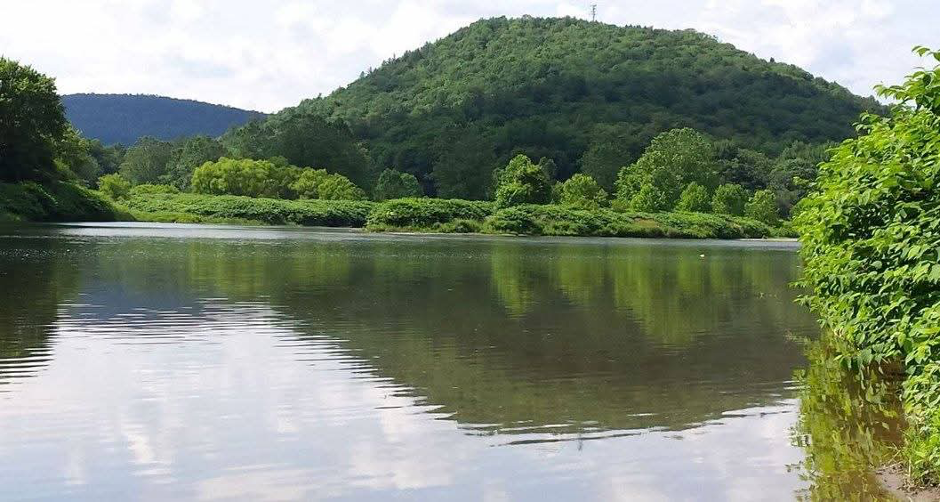
It took determination to find this momentous spot. After some trial and error, we discovered a Tri-States Monument on the New York riverbank. It was not well signposted, but the route led through Laurel Grove Cemetery, beneath the I-84 overpass, and down a dirt road and narrow laneway to a small hill.
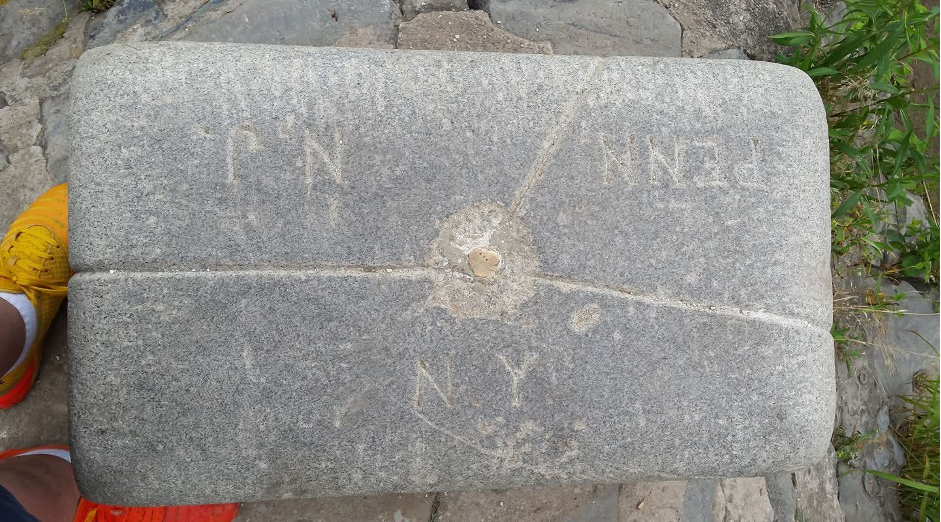
In the end, I’m not sure whether the journey was worth the effort, but it was an interesting and beautiful two days, and it certainly satisfied a decades-long curiosity. I can now say that I’ve stood at a source of the Delaware River, if not the source.
A Waterway Steeped in History and Commerce
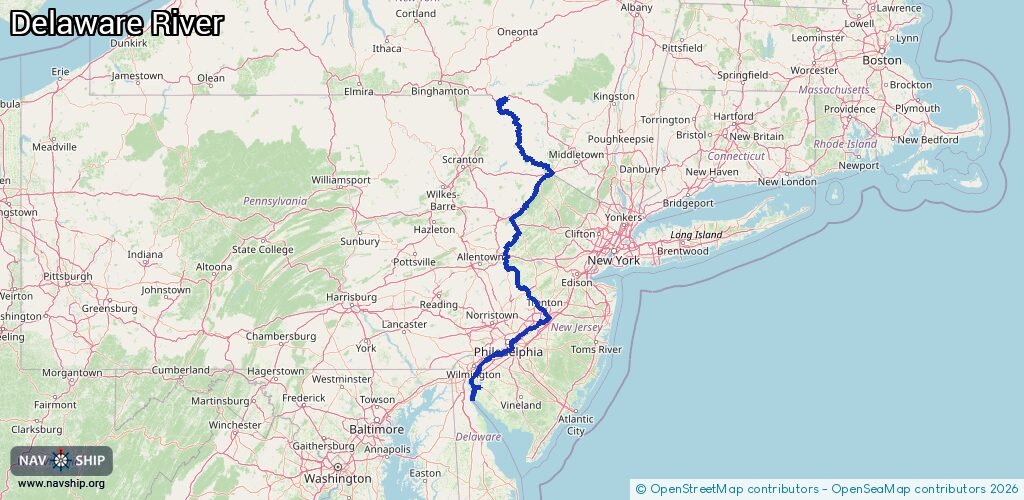
The Delaware River flows 454 km (282 miles) along the borders of New York, Pennsylvania, New Jersey, and Delaware before emptying into Delaware Bay. Long before European settlement, it was the homeland of the Lenape people. Dutch and Swedish settlers later established colonies there, and after the British takeover in 1664, the river was renamed after Sir Thomas West, the third Baron De La Warr.
Since colonial times, the Delaware has been a major commercial waterway. Ocean-going ships travel through Delaware Bay to the ports of Philadelphia and Trenton, carrying goods such as fruit, crude oil, construction materials, and scrap metal. A major dredging project completed in 2022 deepened the river’s main shipping channel. Today, 37 road bridges, 12 railway bridges, and three ferries cross the river, though dozens of ferries once operated there.
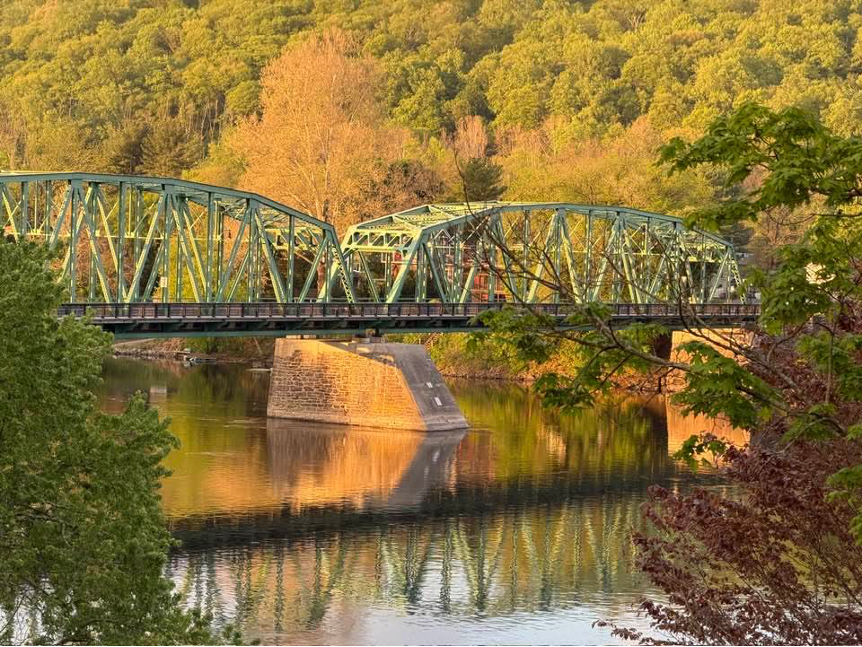
The river is also famous for George Washington’s crossing on Christmas night in 1776, when he led about 2,400 Continental Army soldiers across the icy water. Many modern steel bridges replaced the covered bridges that once lined the region, although 12 historic covered bridges still survive, including the Uhlerstown Covered Bridge built in 1856.
The Delaware River drains more than 36,000 square kilometres (14,000 square miles) across five states and supplies drinking water to 17 million people, including half of New York City. At Philadelphia, the river is about 1.6 km (one mile) wide. A devastating flood in August 1955 left some streets navigable only by canoe for weeks afterwards.
Today, the river is known for its scenic towns and outdoor recreation. Towns such as Frenchtown, Lambertville, and New Hope attract visitors with galleries, antique shops, and historic streetscapes. Hiking, cycling, kayaking, tubing, and walking along the Delaware Canal towpaths remain popular activities, especially near the Delaware Water Gap National Recreation Area.
Elizabeth has earned degrees in International Relations and Education. She has worked in public service and as a teacher of English to adult migrants in Australia. She spends her money on travelling instead of technology.