
Most people who go to Siem Reap head straight to Angkor Wat. No surprises as it is a spectacular site, brilliantly preserved. And you can build a two or three day itinerary around the nearby temples including Angkor Thom, Bayon and Ta Prohm…all highly recommended.
However if you linger a little longer, and are not templed-out, there is a nice day trip to the east of the main temple complexes, where you can visit some lesser-frequented archaeological sites, and see a bit of rural and village life along the way. I will share with you a trip I did recently which included three locations – Bantay Srei, Kbal Spean waterfall and Beng Mealea.
A couple of points before we look at the sites. First, don’t try to overdo it. Three sites is plenty for a day. Take your time at each place, stop for tea, take some time out of the heat, and make it a leisurely day. There are numerous other sites in the area, but you won’t get much marginal benefit by squeezing more in, just because they are there on the map. Similarly, don’t be tempted to add Koh Ker or Kulen Hills into your itinerary. These places are further away and warrant a longer trip.
Second, invest in a car with a driver. Cambodian roads are chaotic and frankly dangerous…I would advise against driving yourself or even scootering. Best to put yourself in the hands of a friendly driver with an airconditioned car who knows what he is doing. Your hotel will find you someone; expect to pay US$70-90. If you are strapped for cash you can hire a tuk-tuk for the day (US$25-35), but expect your buttocks and kidneys to take a pounding from the roads.
Finally, you will need a temple pass to get into the sites. Best value is the three day pass you may have picked up at Angkor Wat. A one-day pass will set you back around $US35.
Bantay Srei
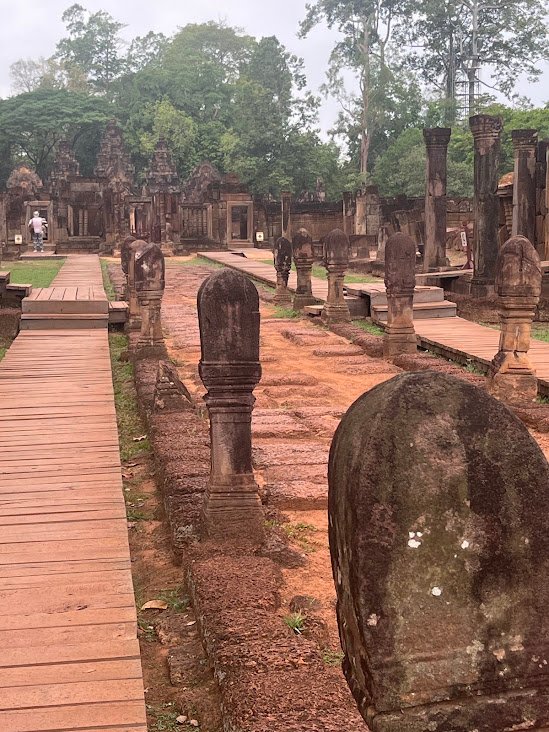
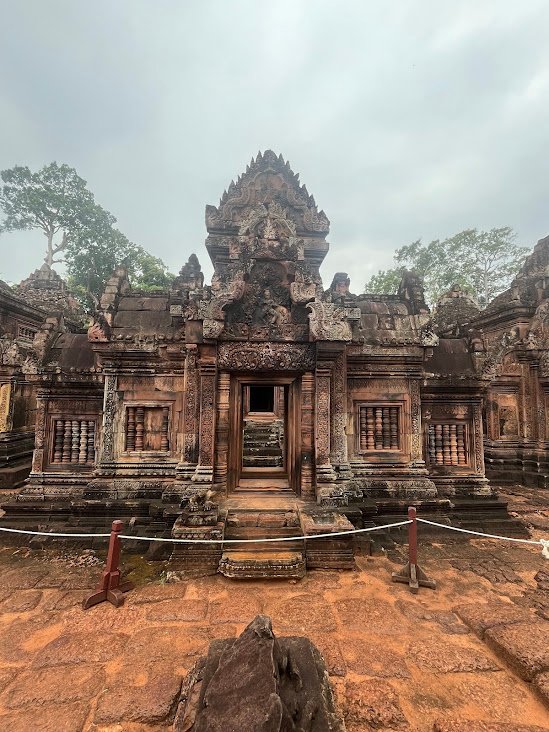
This is one of the oldest of the Angkor temples, and was in use 100 years before the Norman Conquest. Dedicated to the Hindu gods Shiva and Parvati, it is made of red sandstone. It is often referred to as the ‘Lady Temple’, and there are various theories regarding this. Some say it is because its dimensions are smaller scale than most of the later temples. Others think the name is derived from the nature of some of the deities in carvings.
Parts of the site are well-restored and you can see most of it in 45 minutes. There are also some pleasant walks around the perimeter. As you leave, prepare to be ambushed by the village of trinket sellers that are set up inside the temple grounds.
Kbal Spean Waterfall
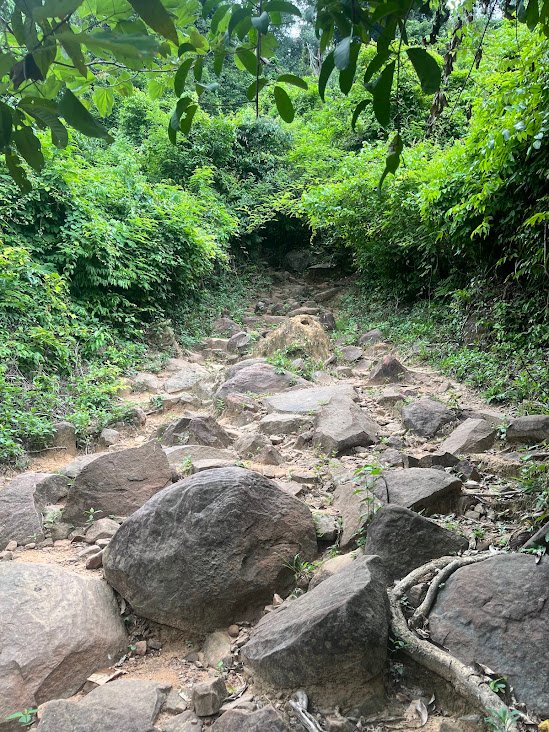
This is an interesting spot, but it involves a climb up a 1.5km trail from the car park which is steep and rocky in parts, so you need to be moderately fit. And remember it is always hot. I did it in the dry season…mud underfoot would add to the challenge. Oh, and there are mosquitos.
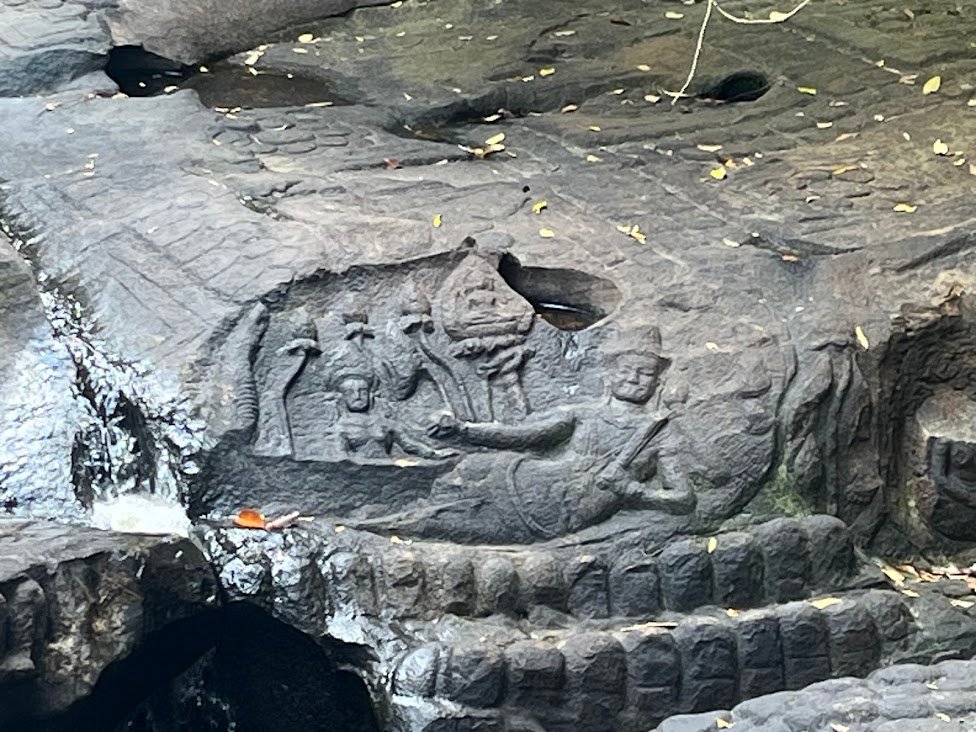
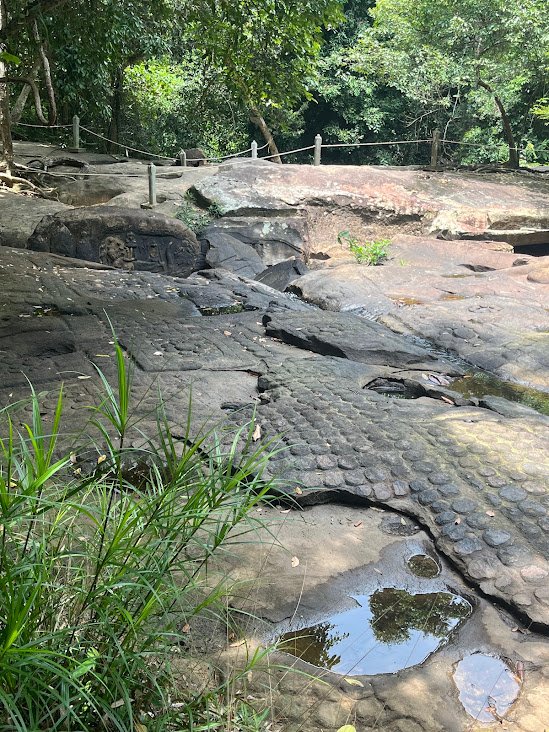
Once you get to the top, you can see the waterfall and the numerous carvings in the riverbed. The carvings are of various Hindu gods, numerous lingas, and animals including cows and frogs. They date from the 11th and 12th centuries. You can see there has been vandalism over the years and they have put a fence around it. Not the most spectacular edifice in the area but it is a good little side adventure if you are up for it.
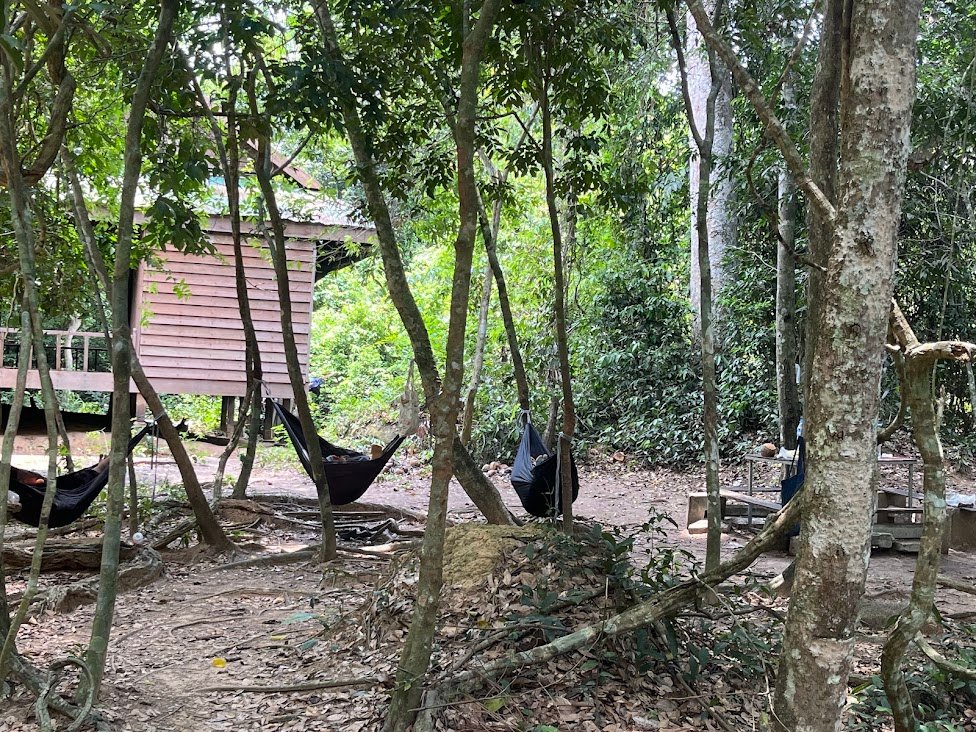
There is also a little hamlet at the top of the hill, and a few camping sites. I saw several hammocks with feet hanging out of them in true Cambodian style.
Beng Mealea
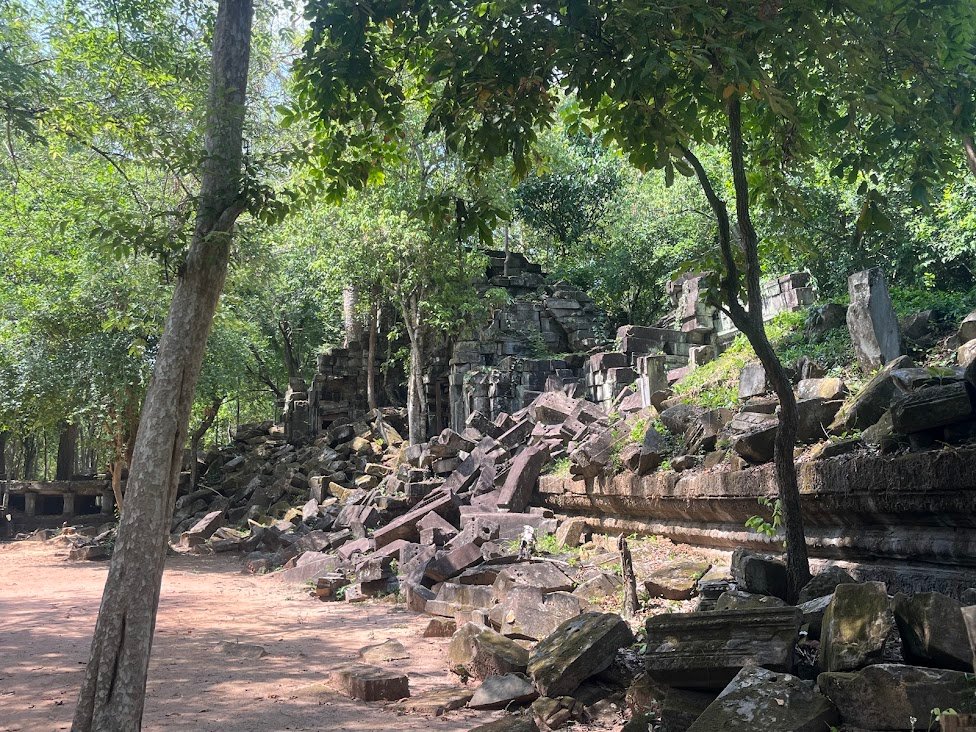
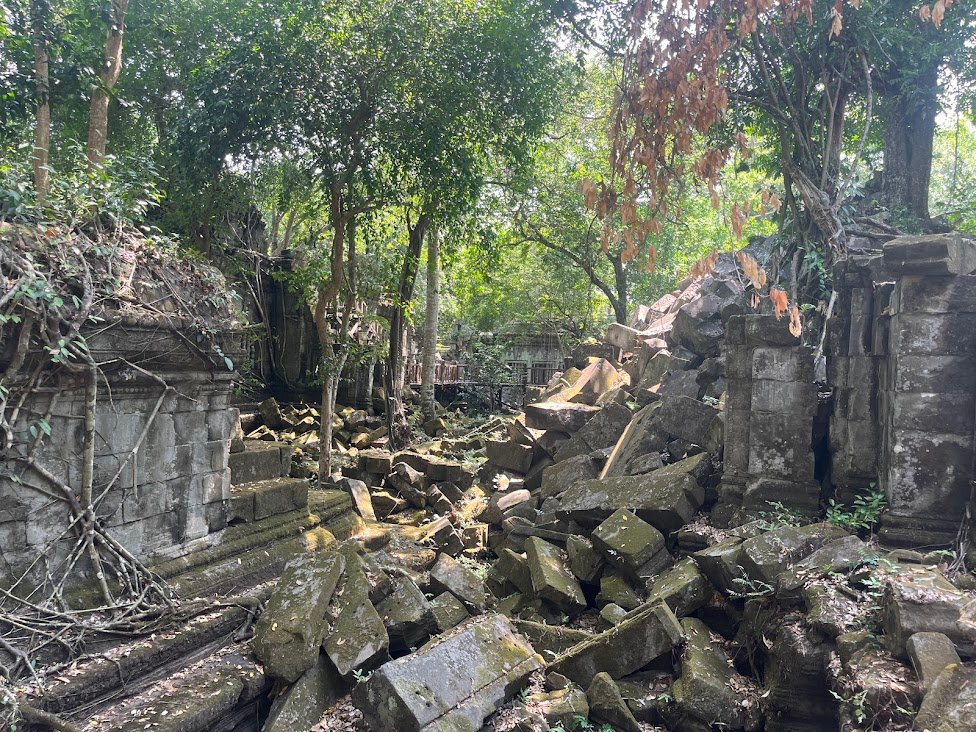
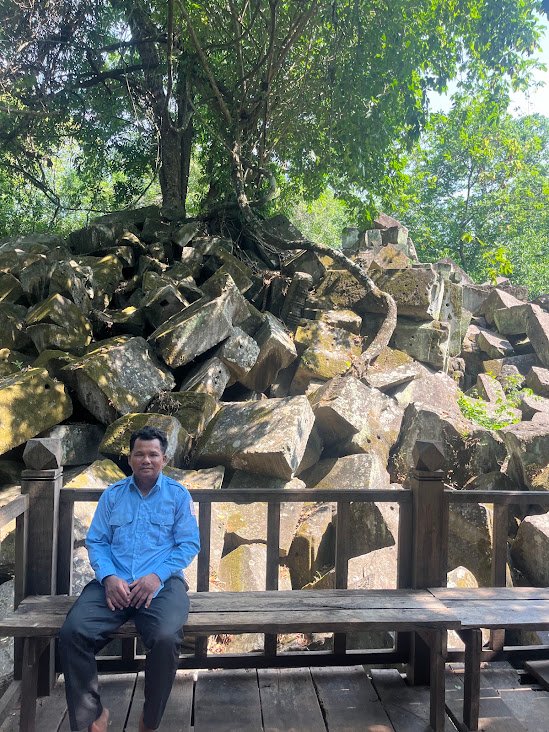
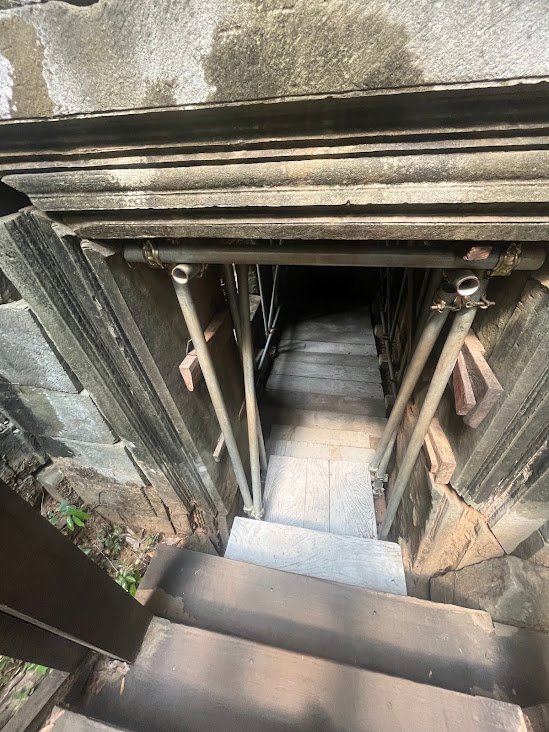
This site is around 60km from Siem Reap and the limit of your day’s journey. It is a massive ruin, smaller than Angkor Wat but with a similar layout. Some walls remain standing and there have been some efforts at restoration, but much of it is a spectacularly huge amount of rubble, intertwined with trees and vines.
It was built in the early 12th century, around the time of Angkor Wat, and gives insight into how big the Khmer building enterprises were. The road to the site is relatively new so it has only come onto the tourist map recently. It was UNESCO listed in 2020. Plan on spending at least an hour and a half. It will take you that long to climb through it. Also spend a little time walking out and back along the moat wall – gives you perspective on the size of the place. And have a chat with the guards. They are super friendly and like to practise their English. Then reward yourself with a drink from a chilled coconut from one of the vendors near the car park.
Get around to these three places and you will have had a pretty good day.
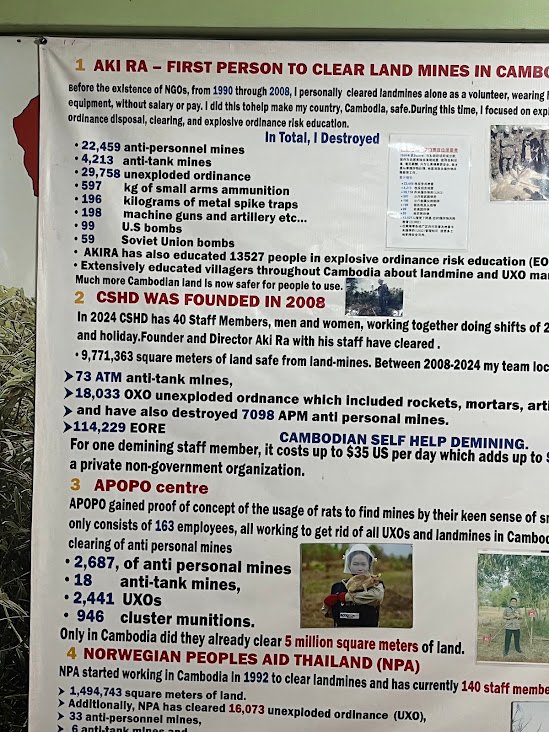
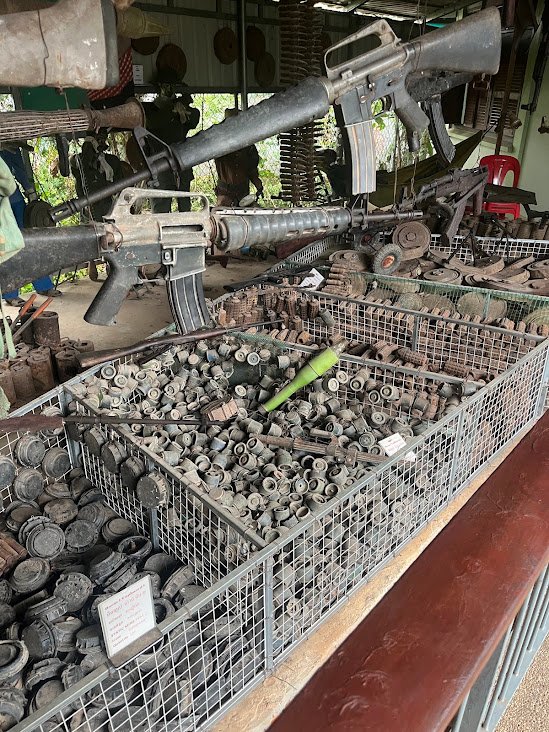
You might also like to drop into the Cambodian Landmine Museum on the way in or out of Siem Reap. The story of Aki Ra, a former child soldier who cleared some 50,000 landmines himself and founded the museum, is a fascinating one. He lives in a house nearby, and sometimes shows up to talk to people. The museum is full of mines and weapons, and the storyboards are detailed – and confronting.
De-mining is ongoing, so make a donation on top of the modest entrance fee. There are some earnest young European volunteers circulating around, pushing for more donations. I found them annoying, and just dropped some money in the box.
This article is part of our Slow Travel in South East Asia series. For other accounts of recent travels in Cambodia, have a read of the posts on the Poipet border region and the Siem Reap war museum. For older postings, type ‘Cambodia’ into the search bar.

Steve is a former Army officer and technology manager, now semi-retired and living in Melbourne. He enjoys adventurous travel and believes that good stories should be shared. He founded the Dusty Boots Journal as a means to connect those with similar interests.